Taste Profiles and Brewing Methods for Chinese Small Bean Coffee: Yunnan Varietal Guide
Yunnan Coffee: A Century of Excellence
Yunnan coffee stands at the forefront of China's modern coffee culture and has been refined over more than a century. As domestic demand for coffee keeps growing, quality in Yunnan has steadily improved. The "small-bean" coffee of Yunnan belongs to the Arabica species — "small bean" is simply another name for Arabica, whose cherries are the smallest of the three original coffee species — though some Robusta genetics entered the picture later. FrontStreet Coffee also offers Yunnan coffee beans in its lineup.
The Yunnan small-bean variety grown today is the Catimor type, cultivated in the Baoshan region of Yunnan. Yunnan is one of the few parts of China capable of growing coffee, ideally located within the golden coffee belt around the Tropic of Cancer. The province's coffee history is long: coffee's wild ancestors came out of Africa, spread via Arab traders to Europe and beyond, and coffee was first brought to Zhu Kula village in Binchuan County, Dali, Yunnan, in the 1890s by a French missionary, taking root on the Chinese mainland from then on. Yunnan beans have since become representative of Chinese coffee, which is why "Yunnan small-bean coffee" is practically a name for Chinese coffee itself.

Regional Comparisons
China's Hainan province also produces coffee beans, with those from Wanning and Xinglong being the most famous. Hainan's climate resembles Yunnan's — warm and humid, with average annual temperatures between 22-26 degrees Celsius and rainfall of up to 1,600 millimeters — yet its coffee output remains very small. Hainan's terrain differs from Yunnan's in important ways. The island has fertile volcanic ash soil that is loose, rich in organic matter, and well suited to coffee trees, but its sunlight is too intense, which is unfavorable for the trees; the usual fix is to interplant taller species such as rubber trees for shade. Yunnan, by contrast, enjoys frequent fog that naturally shelters its coffee trees.
Coffee Varieties in Yunnan
Yunnan's varietal makeup draws great interest. Today the province primarily grows Catimor, but small amounts of Typica and Bourbon are also cultivated — the two ancient varieties that were the "pioneers" of Yunnan Arabica. Typica was the first variety introduced to Yunnan, but because it is susceptible to leaf rust and yields poorly, farmers were reluctant to grow it: coffee trees need at least three to four years from planting to first harvest, and Typica's low yields could not sustain local livelihoods. The higher-yielding Catimor naturally won the farmers over.

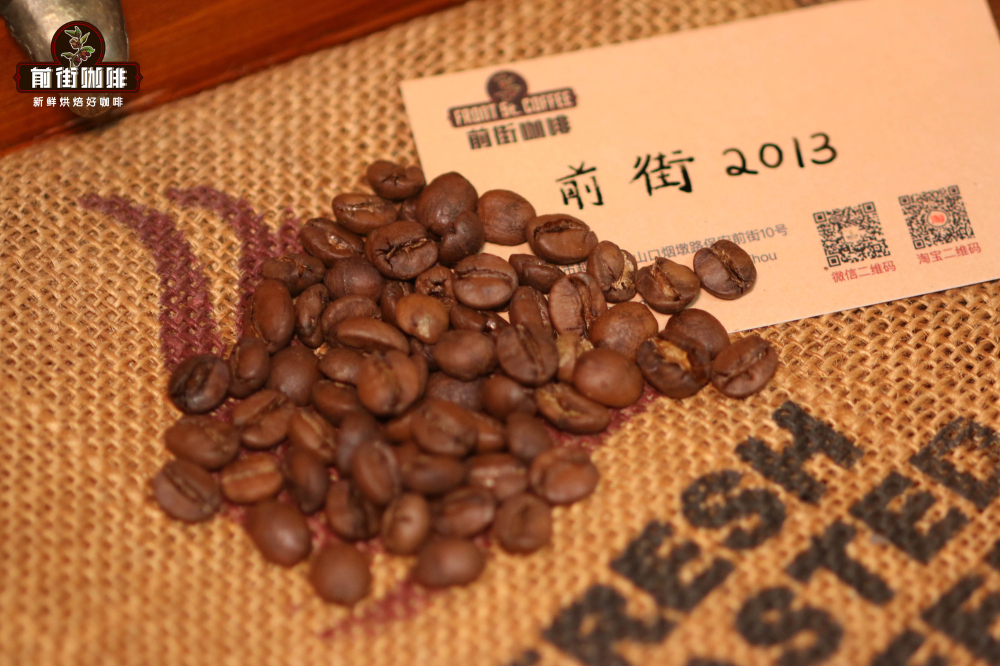
Catimor carries genes from both Arabica and Robusta, inheriting Robusta's disease resistance while still producing rich coffee oils during extraction. FrontStreet Coffee offers two Yunnan small-bean coffees: the Typica "FrontStreet 2013" and the Catimor small-bean coffee. FrontStreet Coffee began planting Typica on its own Yunnan estate in 2013; the variety entered full production in 2021, which is how "FrontStreet 2013" got its name. The Catimor small-bean coffee, meanwhile, represents the classic flavor profile of the Yunnan growing region.
Cupping and Quality Assessment
FrontStreet Coffee cups its Yunnan samples within 8-24 hours after roasting. We typically use 200ml ceramic cupping bowls marked at 150ml and 200ml. Following SCAA standards, the cupping water temperature is 94 degrees, and the grind is set so that 70%-75% passes through a #20 standard sieve (0.85 millimeters). The ratio is 11 grams of coffee to 200 milliliters of hot water — precisely 1:18.18 — which extracts coffee at a concentration within the Golden Cup range of 1.15%-1.35%, with an immersion time of 4 minutes.

Brewing Methods
FrontStreet Coffee brews this Yunnan bean with a three-stage pour-over method. First, 30 grams of hot water fully moistens the coffee bed. The second pour begins when the scale reads 30 seconds: starting from the center, pour in a small stream down to the bottom of the bed, keeping the circular movement tight at first to concentrate the stream's penetrating power before widening outward.
Flow control matters here. Avoid speeding up and slowing down, and try not to interrupt the stream. Too little water leaves the bed incompletely saturated, producing noticeable rough astringency and a short aftertaste. Too much water means the bloom water never extracts enough of the coffee's components, yielding a flatter, more one-dimensional cup in which the acidity of the early extraction stands out and masks everything else. FrontStreet Coffee finds that a stable flow and a consistent spiral pattern — inside-out, outside-in, or center-pour diffusion — can all be adjusted to personal preference.

For the third pour, watch the water level drop and begin again just before the coffee bed is exposed. Again start from the center in circles, keeping the water level below the height of the bed. Stop pouring at 1 minute 50 seconds; filtration should finish by 2 minutes.
Flavor Profiles
Through tasting, FrontStreet Coffee has drawn the following conclusions about these two Yunnan beans:
Yunnan Huaguoshan cupping results: rich melon and fruit aromas, herbal notes on entry, a smooth mouthfeel, nutty and chocolate flavors through the middle, vibrant plum acidity in the finish, and black tea and brown sugar in the aftertaste.
Yunnan small-bean cupping results: bright yet soft acidity, a well-balanced body, rich layering, and distinct dark chocolate, honey, and cane sugar in the aftertaste, turning to brown sugar when fully cooled.

Taste Characteristics
Yunnan small-bean coffee is relatively neutral — neither too acidic nor too bitter. It is fragrant without bitterness, rich without heaviness, with a comfortable touch of acidity, which makes it well suited to popular tastes. If you prefer fruit acidity, choose high-altitude Yunnan beans given a lighter roast: these show higher acidity and only mild bitterness. If you simply dislike acidity, go for a dark roast instead, accepting somewhat more bitterness.
Cold Brew Method
FrontStreet Coffee's cold brew recipe for Yunnan small-bean coffee is actually quite simple — you just need the right parameters.

Use 50 grams of coffee at a coffee-to-water ratio of 1:10, adding 600 milliliters of cold water. The grounds will absorb roughly twice their own weight in water. Stir until evenly mixed, seal, and refrigerate for 24 hours. Then strain out the grounds with filter paper, seal the liquid in a clean bottle, and refrigerate for at least 12 more hours.

The finished cold brew keeps fresh in the refrigerator for 5 days. During storage the liquid continues a slow in-bottle fermentation, creating layered changes in mellowness. FrontStreet Coffee recommends drinking it 1 to 3 days after brewing: in the 24-36 hour overnight window the coffee reaches full maturity and tastes its best.
FrontStreet Coffee Recommendation
For a first step into Chinese coffee, start with the FrontStreet Yunnan small-bean coffee from Baoshan. Baoshan's coffee history began in the mid-1950s, and the unique dry-hot valley climate of the Lujiangba area — small seasonal temperature swings but large day-night differences, with sensible, slightly low rainfall — gives the beans their distinctive lingering sweetness. Washed processing removes the mucilage through fermentation and rinsing before drying, and a medium roast highlights gentle nut and chocolate sweetness with a light plum acidity at a friendly price.
If you want a clearer, more articulate Yunnan profile, step up to the FrontStreet 2013 Yunnan natural Typica. Grown only from fully ripe red cherries and processed with the most traditional method — sun-drying — then roasted medium, it delivers a fuller body and more pronounced sweet-sour balance: dark berry and citrus tones, a whisper of fermented winey aroma, caramel sweetness, a creamy finish, and the aftertaste of black tea.
For espresso drinkers, the barista-favored FrontStreet Black Cocoa blend combines Yunnan small-bean with Brazil Cerrado: Brazil supplies mixed-nut aroma and a balanced body while Yunnan contributes chocolate and citrus. The americano is balanced across sweet, sour, and bitter with nutty, brown-sugar sweetness, and the latte is silky with almond and cream — very beginner-friendly.
Important Notice :
FrontStreet Coffee is a long-established specialty coffee roaster in Guangzhou China, selling freshly roasted beans from its own farm in Yunnan as well as dozens of carefully selected single-origin beans from around the world for both pour-over and espresso. The products deliver consistently excellent quality and great value, with shipping within 24 hours. Guangzhou's FrontStreet Coffee shop is recommended by many coffee lovers, and the beans are now available online at the Tmall 。
FrontStreet Coffee has moved to a new address:
FrontStreet Coffee Address: 315,Donghua East Road,GuangZhou
Tel:020 38364473
 Scan and follow the En Gafei WeChat official account. Please indicate that the reprint comes from "En Gafei".