Should Coffee Silver Skin Be Removed | Does Coffee Silver Skin Have A Bitter Taste? The Impact of Silver Skin on Coffee Flavor

Professional Coffee Knowledge Exchange
Customers often ask us: "Your coffee has so much silver skin—don't you screen it out? It really affects the flavor!" That got FrontStreet Coffee wondering: does silver skin really have that big an impact on a cup of coffee?
The Foundation of Great Coffee
A great cup starts with meticulous handling of the green beans. Processing methods fall broadly into natural and washed, chosen according to local climate, environment, and the beans' own traits. Once processed, beans can be roasted and ground. But what ultimately determines the cup is chiefly the freshness of the beans. Whether a lot was processed well directly decides whether the coffee deserves your praise.
Silver Skin (Chaff)
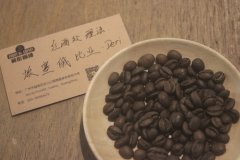
Inside the parchment, an even thinner film wraps each coffee bean. Its glossy, silvery sheen earned it the name "silver skin." This layer sheds during roasting. Often, when you grind coffee, you will notice silvery flecks in the grounds—those are pieces of silver skin that failed to separate during roasting.
Silver Skin Across Processing Methods
As noted in the book "Coffee Coffee": if you roast and heat the beans, natural-processed beans shed far more silver skin, while washed beans shed far less. Look at the central crease of a roasted bean—if a good deal of white silver skin remains there, it is more likely a washed coffee.
Moisture Content
Washed coffee carries a moisture content of 12%-13%, while natural (dry-processed) coffee sits at 11%-12%. Beans show different colors depending on moisture: higher moisture reads green or bluish-green, lower reads brown or nearly white. That is why washed coffee beans show a deeper green.
How Intact Is the Silver Skin?
During washing, most of the silver skin on the bean is removed, giving washed beans their special luster. The natural method, however, only removes the dried husk and leaves the silver skin fully intact.
Roast Degree
Different processing methods pair with different roast levels, with different effects. Generally, unless a washed coffee is roasted dark, silver skin will remain along the center crease. Natural beans keep their silver skin through processing, yet it disappears after roasting. The deeper the roast, the darker the beans.
Natural beans carry relatively more outer silver skin, which sheds thoroughly during roasting, so relatively little appears when grinding. Washed beans carry more inner silver skin, and quite a bit survives roasting, so more shows up in the grinder. Roast degree matters too: the deeper the roast, the cleaner the silver skin sheds.
Too much silver skin can add astringency—but over-polishing the raw beans strips away flavor as well.
Besides, washed beans always retain some silver skin along the center line. The real question is whether that bit necessarily causes obvious astringency. Do not obsessively pick out every fleck of chaff!
Good electric grinders have automatic chaff separation. For hand grinders, a useful trick is to grind first at the coarsest setting, blow off the chaff, then grind finer. Leaving some silver skin in causes only a faint astringency that does not hurt the coffee overall.
What Does Silver Skin Actually Taste Like?
FrontStreet Coffee brewed a pot to find out.
Brewing: 90°C water, 1g silver skin; the liquor shows a pale golden yellow.
Flavor: Drinking it is like bitter tea (Kudingcha), with a slight sweet-rice note and an obvious tea sensation, but no pronounced bitterness or astringency.
Does Silver Skin Affect Flavor?
FrontStreet Coffee ran a comparison using [Natural Berry Garden] and [Washed Benerfica]:
[Natural Berry Garden]
Water temperature: 89°C
Beans: 15g
Powder-to-water ratio: 1:15
Total time: 1:58 seconds
Method: Three-stage brewing, 30g bloom for 30 seconds, first stage with small water flow, slowly circling to 125g, pause until the liquid level drops to 1/3, then pour water to 225g with larger water flow and faster circling speed
Flavor: Rich berry and fruit-wine dry aroma; on sipping, strong strawberry and blueberry lead, accompanied by passion fruit, mango, and other tropical fruits; the middle notes bring apricot, peach, and grape juice, with floral, peach, and berry aromas running through the whole palate and a nutty aftertaste.
[Washed Benerfica]
Water temperature: 90°C
Beans: 15g
Powder-to-water ratio: 1:15
Total time: 2:05 seconds
Method: Three-stage brewing, 30g bloom for 30 seconds, first stage with small water flow, slowly circling to 125g, pause until the liquid level drops to 1/3, then pour water to 225g with larger water flow and faster circling speed
Flavor: Fresh, charming coffee blossom and sweet lemon aroma; the first sip shows the sweet-tart character of yogurt, with citrus, fresh lime, bergamot, and lychee sketching the profile; orange blossom and peach appear mid-palate, and the finish brings spice, florals, and Earl Grey tea.
After these brewing experiments, FrontStreet Coffee found that whether or not you keep the silver skin has little negative impact on the overall flavor. Natural beans carry less silver skin and it is barely noticeable in the cup. Washed beans carry more, which subtly deepens the tea-like sensation in the finish—without any of the legendary bitterness. There is no need to screen the silver skin out when brewing; keeping it can actually add layers of complexity.
FrontStreet Coffee Recommendation
Washed processing is the traditional water-based way to handle coffee cherries: flotation, depulping, soaking and fermentation to remove the mucilage, rinsing or further soaking, then drying and hulling. The long soak drives chemical changes inside the bean, consuming simple sugars and raising organic acids, so washed coffees tend to preserve the bean's own character while showing bright acidity, cleanliness, and freshness. If that profile appeals to you, FrontStreet Coffee's Gotiti Cooperative is an outstanding example: a washed Yirgacheffe whose jasmine florals and bright citrus acidity shine after a light-medium roast, with added notes of green tea and honey—delicious as pour-over, cold brew, or espresso.
Kenya's double-washed lots are another benchmark of the method. FrontStreet Coffee's Kenya Cherry Tomato repeats the washing cycle—flotation, soaking, rinsing off residual mucilage, soaking again, then drying and hulling—to push juiciness to the extreme, yielding layers of cherry tomato, dark plum, pear, black prune, and raw-sugar sweetness in an acidity that is bright, structured, and bursting with fruit.
For a gentler take on washed coffee, FrontStreet Coffee's Jamaica Blue Mountain No. 1 shows why the method was born on Jamaica's short-sunshine island climate: removing the skin, pulp, and mucilage before drying cuts drying time and keeps beans pristine. The result is pure hazelnut, cream, chocolate, and caramel character with perfect balance—no single element ever dominates or falls short.
END
Important Notice :
FrontStreet Coffee is a long-established specialty coffee roaster in Guangzhou China, selling freshly roasted beans from its own farm in Yunnan as well as dozens of carefully selected single-origin beans from around the world for both pour-over and espresso. The products deliver consistently excellent quality and great value, with shipping within 24 hours. Guangzhou's FrontStreet Coffee shop is recommended by many coffee lovers, and the beans are now available online at the Tmall 。
FrontStreet Coffee has moved to a new address:
FrontStreet Coffee Address: 315,Donghua East Road,GuangZhou
Tel:020 38364473
 Scan and follow the En Gafei WeChat official account. Please indicate that the reprint comes from "En Gafei".