Heard of Panama's Red Wine Processing Method? What About Ethiopia's Red Wine Processing?
Professional Coffee Knowledge Exchange
For many coffee lovers, Ethiopian coffee is the doorway into the whole subject. Yet the coffee grown there is almost always either washed or natural processed, with honey processing being genuinely rare. Today, though, FrontStreet Coffee wants to introduce an Ethiopian coffee that uses the red wine processing method.
Ethiopia GUJI Hambella Deri
Ethiopia · Deri
Origin: Ethiopia
Region: GUJI
Variety: Local Heirloom
Altitude: 2000-2200 meters
Grade: G1
Processing Method: Red Wine Processing
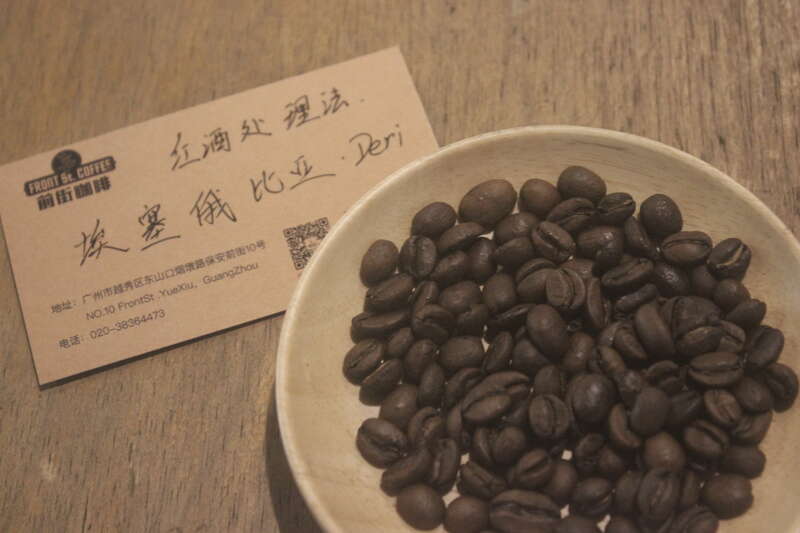
Ethiopia Guji
Ethiopia sits in Africa and is one of the world's best-known coffee-producing countries. Among so many origins, it holds an almost legendary status - first because it is the birthplace of Arabica coffee, and second because the coffee grown there tastes unlike anything from other producing countries.
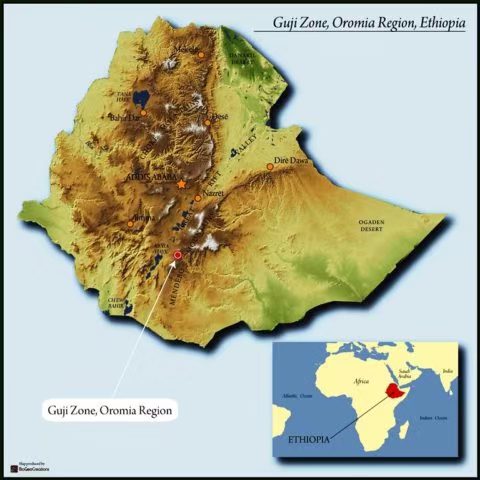
Guji has been an area worth watching in recent years, delivering impressive results in both flavor expression and quality. It was once part of the Sidamo region, but in 2010 the Ethiopia Commodity Exchange (ECX) established it as a new, independent region.
Sitting southeast of Yirgacheffe, Guji borders Sidamo and Gedeo and features dramatic shifts in topography, from towering mountains and highlands to plateaus, valleys and plains.
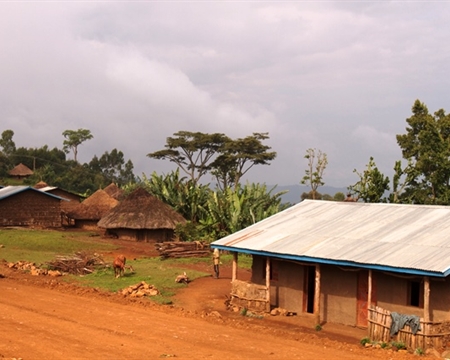
The local geology is built on fertile black soil (Vertisol) nearly two meters deep, with an average altitude above 1,800 meters. The wide day-night temperature swing created by this geography gives the area all the terroir conditions needed to produce high-quality specialty coffee.
The greatest advantage here is that soil vitality is maintained through the circulation of natural organic matter, with fallen leaves and debris from surrounding trees, plant root residues and the like serving as natural fertilizer.
Local Heirloom
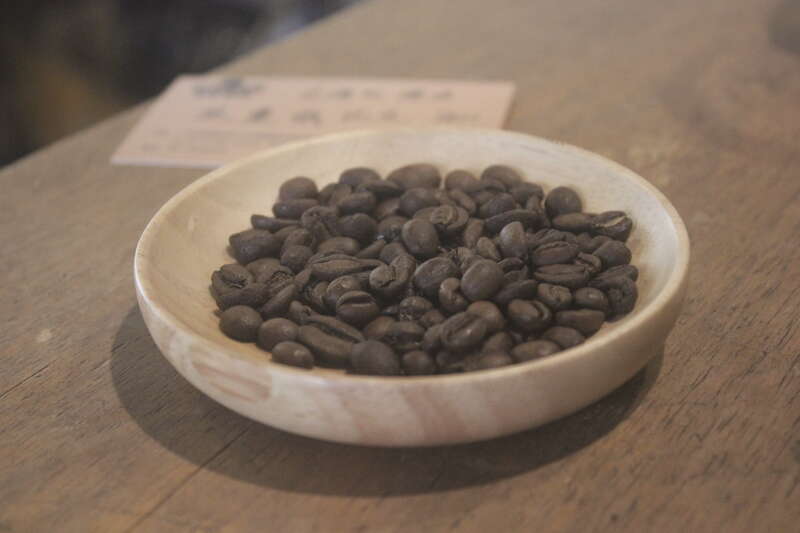
Anyone who drinks much Ethiopian coffee has probably come across the term "Heirloom." Most Ethiopian varieties are labeled this way simply because there are far too many of them to name. The country is effectively a natural gene bank for Arabica. On one hand, the sheer abundance of varieties makes identification and classification difficult; on the other, the Ethiopian government, for reasons of protection, is unwilling or unable to disclose information about them. In agriculture, naming a variety normally follows a process of selection and breeding. But because coffee is native to the region and the various types grow intermingled rather than being deliberately planted, they are grouped together as "Heirloom." This is also why the flavors can be so variable and hard to pin down.
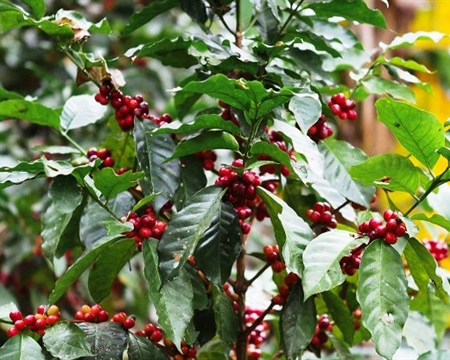
Red Wine Processing
The red wine processing method, also known as carbonic maceration, is inspired by winemaking. Unlike traditional winemaking, where grapes are pressed before fermentation, this approach places whole clusters of grapes straight into a sealed container filled with CO2. Slow anaerobic fermentation then yields a red wine that is lighter in color, intensely fruity on the nose and excellent on the palate.
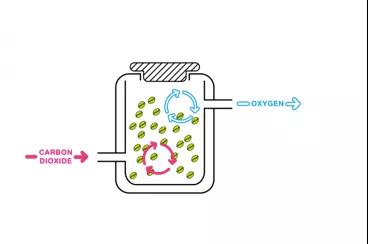
Transplanting that idea into coffee, the beans are stripped of pulp and skin and placed in stainless steel fermentation tanks, where carbon dioxide is introduced and oxygen excluded to create a sealed, anaerobic environment. The cherries then undergo strictly controlled anaerobic fermentation inside the tanks, developing more aromatic compounds and finer acidity in the coffee.
FrontStreet Coffee Roasting Curve Analysis
Roasting machine: Yangjia 800N (300g batch size)
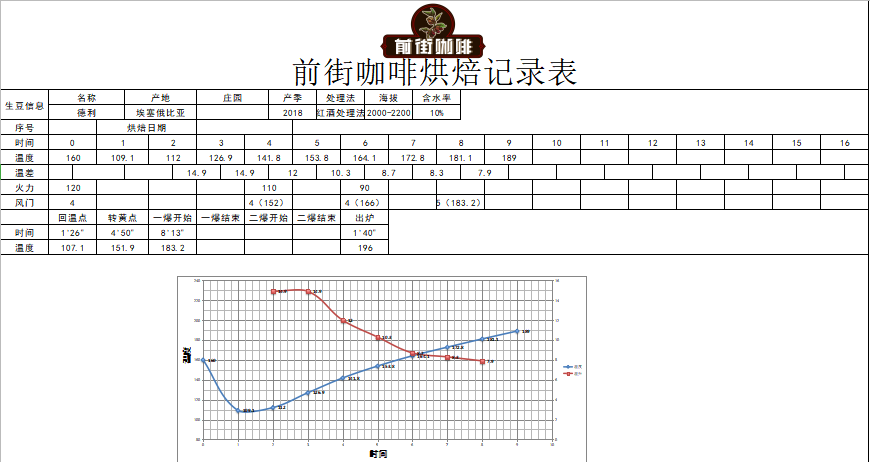
Roasting begins when the drum temperature reaches 160°C, with the damper set to 4, heat at 120, and the return temperature point at 1'26", 107.1°C. Once the drum reaches 140°C the bean surface starts to turn yellow and the grassy smell disappears completely, marking the start of the dehydration stage. When the drum reaches 152°C, adjust the heat to 110; at 166°C, adjust the heat to 90°C, keeping the damper unchanged.
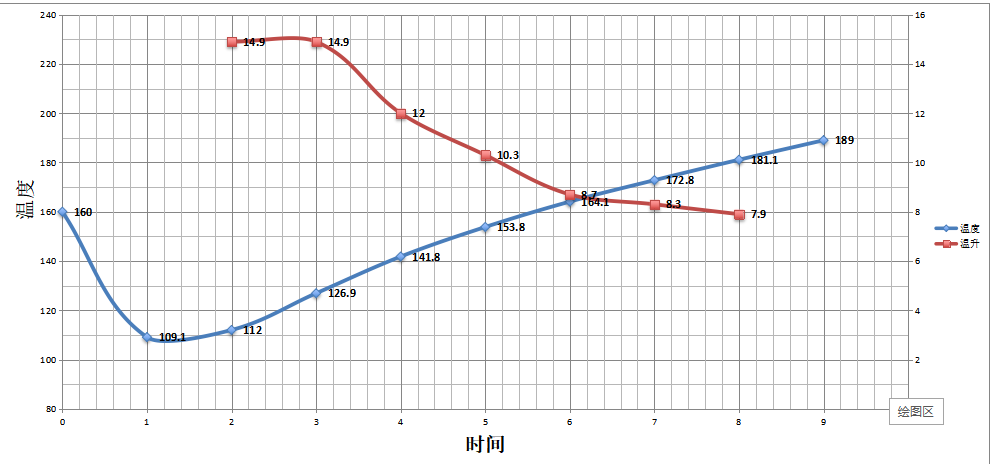
At 7'28", ugly wrinkles and dark spots appear on the bean surface, and the toast smell clearly shifts into coffee aroma - the prelude to first crack. Listen carefully for the sound itself, which begins at 8'13". Adjust the damper to 5 (be cautious with the heat here - it should not drop so low that the cracking stops). Develop for 1'40" after first crack, then finish at 196°C.
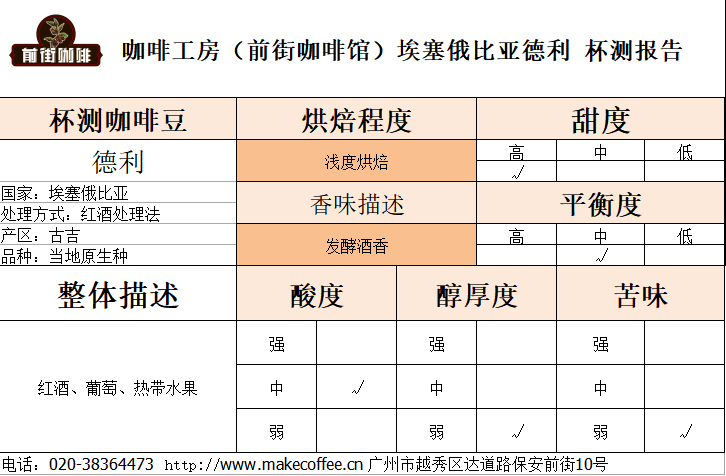
Cupping notes: Fermented wine aroma, red wine, grapes, tropical fruits
FrontStreet Coffee Shared Brewing Parameters
FrontStreet Coffee recommended brewing method: Pour-over
1. Dripper: Hario V60
2. Grind size: Medium-fine (BG 5T: 58% pass rate through China standard #20 sieve)
3. Water temperature: 90°C
4. Coffee-to-water ratio: 1:16
5. Brewing technique: Segmented extraction
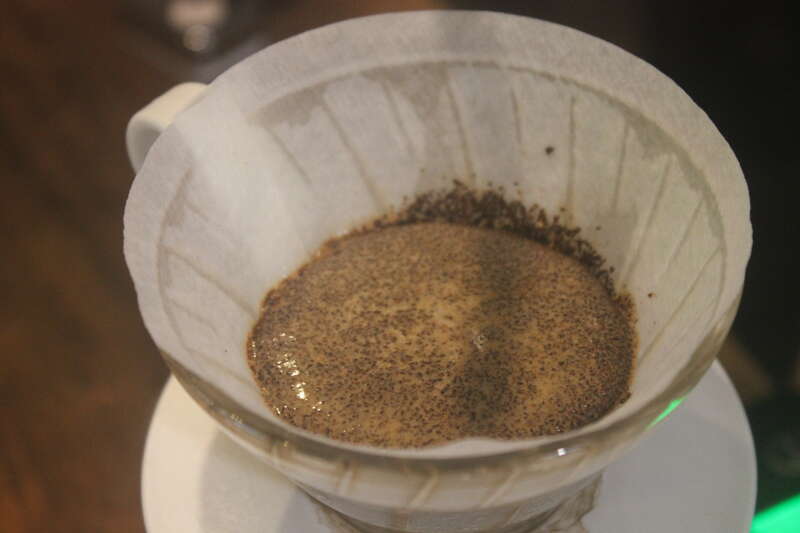
Use 30g of water for the bloom, taking about 30 seconds. Pour 90g of water in small circles around the center, breaking the pour at 120g. Continue to 240g once the water level drops and the coffee bed is about to be exposed. Remove the dripper as the water level falls and the bed is nearly exposed. (Timing starts at the beginning of the bloom.) Total extraction time: 1'50".
Flavor: The wet aroma carries red wine fragrance and rose florals. The cup brings jackfruit, grapes and toffee, with a tea-like note in the finish.
FrontStreet Coffee Recommendation
If fermentation-driven fruit is what draws you to this style of coffee, FrontStreet Ethiopia Yirgacheffe Natural Red Cherry is a strong match. It is made from fully ripe, all-red cherries that are sun-dried on raised beds, turned every two to three hours during the first days so the fruit does not over-ferment. After three to five weeks of drying, the outer fruit is removed mechanically and the beans are rested in storage. Because the fruit stays on the bean throughout drying, you get the classic Yirgacheffe character together with a tropical sweetness from the natural process: a citrus-like acidity, a berry-juice body, honeyed sweetness and a creamy smoothness.
For a cleaner counterpoint, FrontStreet Ethiopia Yirgacheffe Gedingding Cooperative shows what washed processing does with the same origin. Sourced from the Gedingding village in the Worka area, it has no bitter leanings at all, carrying a fresh, bright citrus and lemon acidity alongside jasmine fragrance - an easy way to taste the two processing paths side by side.
Important Notice :
FrontStreet Coffee is a long-established specialty coffee roaster in Guangzhou China, selling freshly roasted beans from its own farm in Yunnan as well as dozens of carefully selected single-origin beans from around the world for both pour-over and espresso. The products deliver consistently excellent quality and great value, with shipping within 24 hours. Guangzhou's FrontStreet Coffee shop is recommended by many coffee lovers, and the beans are now available online at the Tmall 。
FrontStreet Coffee has moved to a new address:
FrontStreet Coffee Address: 315,Donghua East Road,GuangZhou
Tel:020 38364473
 Scan and follow the En Gafei WeChat official account. Please indicate that the reprint comes from "En Gafei".