Nicaragua La Andria Estate Natural Process Maracaturra Coffee Special Report
Welcome to our coffee knowledge exchange. This article is part of an ongoing series on coffee beans, origins, and brewing.
Nicaragua La Andria Estate Maracaturra Natural Process
Grade: SHG
Region: Monzonte, Nueva Segovia
Estate: Finca La Andria
Variety: Maracaturra
Processing Method: Natural Process
Soil: Sandy soil
Flavor: Citrus, brown sugar, banana, floral notes
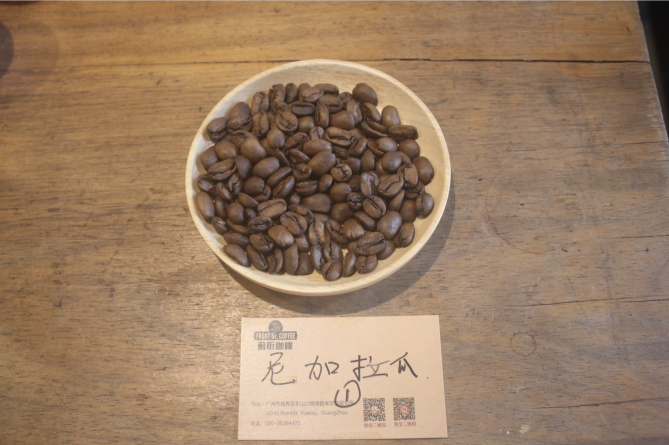
Nicaraguan coffee seems to have been forgotten by the world in recent years, as it is rarely seen. In fact, Nicaragua's growing conditions are no less favorable than those of its Central American neighbors, and the coffee it produces is characterized by a balanced flavor profile.
Nicaraguan Coffee Growing Regions
Nicaragua is located in the central region of Central America, bordering Honduras to the north, Costa Rica to the south, the Caribbean Sea to the east, and the Pacific Ocean to the west. With a total area of 130,400 square kilometers, it is the largest country in Central America. The north-central part of Nicaragua consists of highlands; the eastern part is a coastal plain with dense jungle swamps and low, flat terrain; the western part consists of coastal lowlands with many volcanoes and lakes to the east.
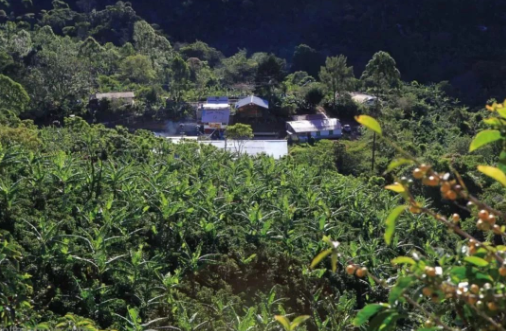
Nicaragua is divided mainly into four major coffee growing regions: Nueva Segovias, Matagalpa/Jinotega, Boaco, and the Pacific Coast region.
The Nueva Segovia region has the highest growing altitude, ranging from 1,450 to 2,100 meters, and produces the highest grade S.H.B. (Strictly Hard Beans) coffee.
Nueva Segovia is located in the northern region of Nicaragua, bordering Honduras, Madriz, and Jinotega.
Nueva Segovia coffee consistently stands out among tens of thousands of competitors in international cupping competitions (Cup of Excellence) and is renowned as the premier coffee growing region in Nicaragua. The Nueva Segovia region has an average altitude exceeding 1,450 meters, with cool and humid conditions all year round, significant temperature differences between morning and evening, and frequent cloud cover, which brings out the unique aroma of high-altitude coffee.
Nicaragua's growing conditions feature fertile volcanic soil, and the local climate is characterized by highland terrain with dense fog covering the entire mountain forest all year round, creating a low-temperature, humid environment. Years of crossbreeding and evolution of tree species, combined with adherence to ancient, time-consuming processing, preserve the natural fruit acidity and rich aroma. The use of shade-grown cultivation ensures even sunlight exposure, allowing coffee cherries to grow slowly while indirectly absorbing moisture from the dense fog. The flavor profile of Nicaraguan coffee beans is therefore lively and diverse. Such excellent growing conditions produce coffee with subtle acidity and smooth characteristics. Savored carefully, it reveals faint notes of fruit and chocolate sweetness releasing in the throat, with a rich body and a multi-layered aftertaste.
Coffee Varieties
Maracaturra
Maracaturra is a hybrid variety resulting from crossing Caturra, known for its productivity and balanced flavor, with Maragogipe (also known as "Elephant Bean"), renowned for its high-quality coffee. It combines the full body of the former with the sweet flavor of the latter. This variety is commonly found in the coffee growing regions of Nicaragua and El Salvador.
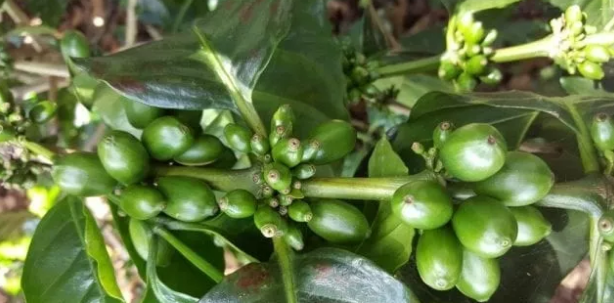
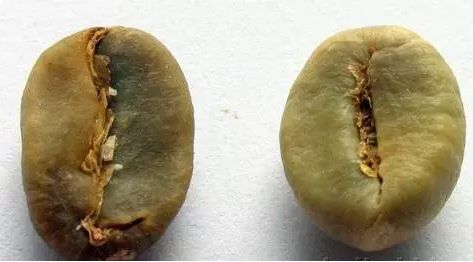
Besides their eye-catching bean shape, Maracaturra coffee beans also possess an unforgettable, complex flavor profile.
However, this coffee variety is not widely cultivated, as few growers choose to plant it, making it relatively rare on the market. The reasons are that the variety is a delicate, fragile plant susceptible to leaf rust disease, so there are considerable risks during cultivation, requiring growers to invest more time and resources to control the occurrence of leaf rust. Compared with other common varieties, its productivity is also lower. This means Maracaturra trees do not produce many coffee cherries each season, which poses an economic challenge for growers as well.
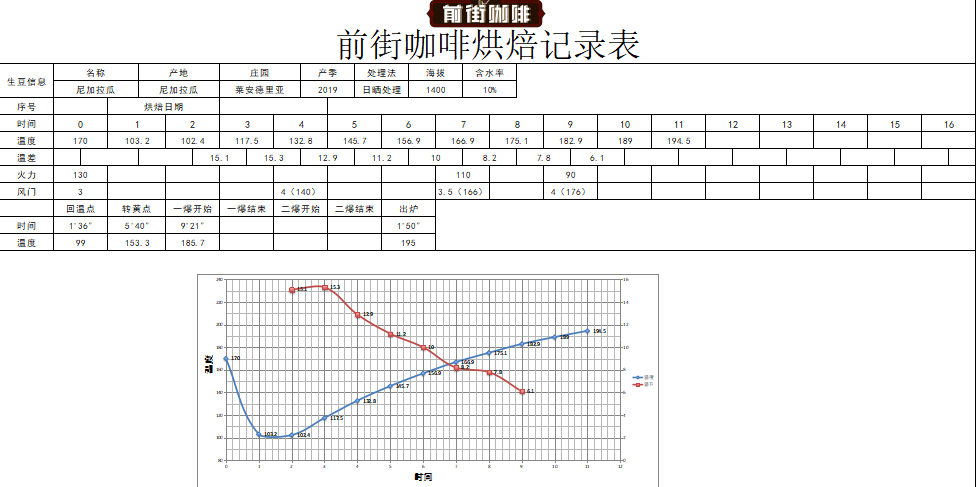
FrontStreet Coffee's Roasting Profile and Cupping Information
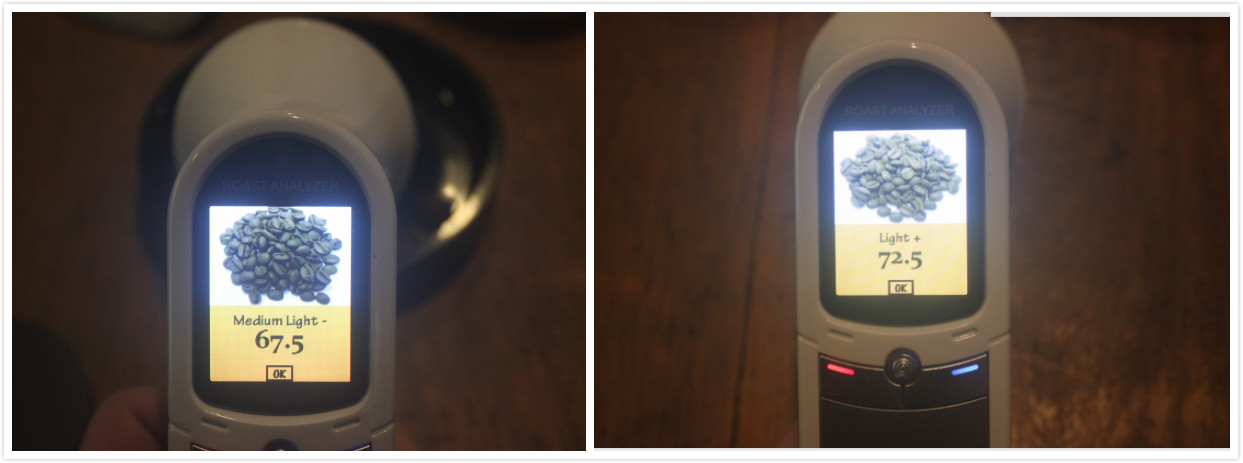
Agtron bean color value: 67.5 (above image), Agtron ground color value: 72.5 (below image), Roast Delta value: 5.
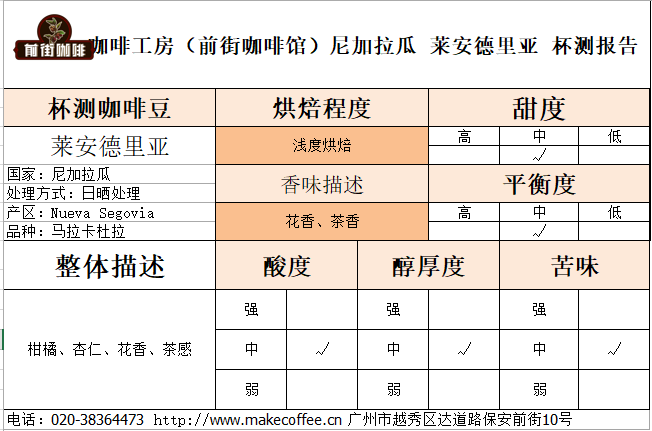
Cupping flavors: Citrus, floral notes, almond, tea-like sensation
Brewing Guide
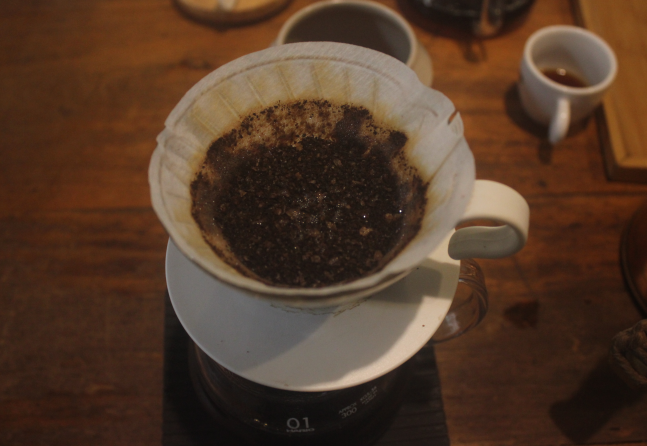
Recommended brewing method: Pour over
1. Dripper: Hario V60
2. Grind size: Medium-fine
3. Water temperature: 90°C
4. Coffee-to-water ratio: 1:15
5. Brewing technique: Segmented extraction
Use 30g of water for a 30-second bloom, then pour with a small stream in circular motions toward the center until reaching 124g, and stop pouring. Wait for the water level to drop until it is about to expose the coffee bed, then continue pouring to 226g. When the water level drops and is about to expose the coffee bed, remove the dripper. (Timing starts from the bloom.) Total extraction time is two minutes.
Flavor: Obvious sweetness on the entry, citrus notes in the middle, rich floral aromas, red fruit in the aftertaste, banana and brown sugar in the finish, with some nutty cream aroma. Overall balanced, with soft acidity, a full aroma, and a substantial aftertaste.
FrontStreet Coffee Recommendation
If the wild, fruit-forward character of this naturally processed Maracaturra appeals to you, FrontStreet Coffee's natural-process selection is a great place to keep exploring. The FrontStreet Sun-dried Red Cherry is a whole-ripe natural from Yirgacheffe, bringing elegant florals, bright acidity, pronounced tropical fruit, and a full, sweet fermented character.
For a bolder, wine-like natural, the FrontStreet Huakui is a traditional sun-dried Sidamo with delicate florals, citrus, and mango, plus honeyed sweetness, a cocoa edge, a hint of spice, and a heavy body with a long finish. And for something more unusual, the FrontStreet Colombia Sidra is a double anaerobic natural showing rich tropical fruit, passion fruit, apricot, dried fruit, and grape notes with an almond-like finish.
Important Notice :
FrontStreet Coffee is a long-established specialty coffee roaster in Guangzhou China, selling freshly roasted beans from its own farm in Yunnan as well as dozens of carefully selected single-origin beans from around the world for both pour-over and espresso. The products deliver consistently excellent quality and great value, with shipping within 24 hours. Guangzhou's FrontStreet Coffee shop is recommended by many coffee lovers, and the beans are now available online at the Tmall 。
FrontStreet Coffee has moved to a new address:
FrontStreet Coffee Address: 315,Donghua East Road,GuangZhou
Tel:020 38364473
 Scan and follow the En Gafei WeChat official account. Please indicate that the reprint comes from "En Gafei".