French Press Recommendations: Which Brands Offer Better Value and Performance?
Kenji Suzuki, a WBC World Barista Championship competitor, once observed that the French press's great advantage is its utterly simple brewing principle — anyone can master it, and no amount of technique fiddling will throw the flavor off. A French press expresses the coffee's inherent flavors directly, unaffected by filter paper. As the simplest brewing device, it requires neither precise pouring skills nor a dozen variables under control, which is why it's often the first choice for "lazy" home brewing. Today, FrontStreet Coffee explains how the French press extracts, and how to pick a good one!
French Press
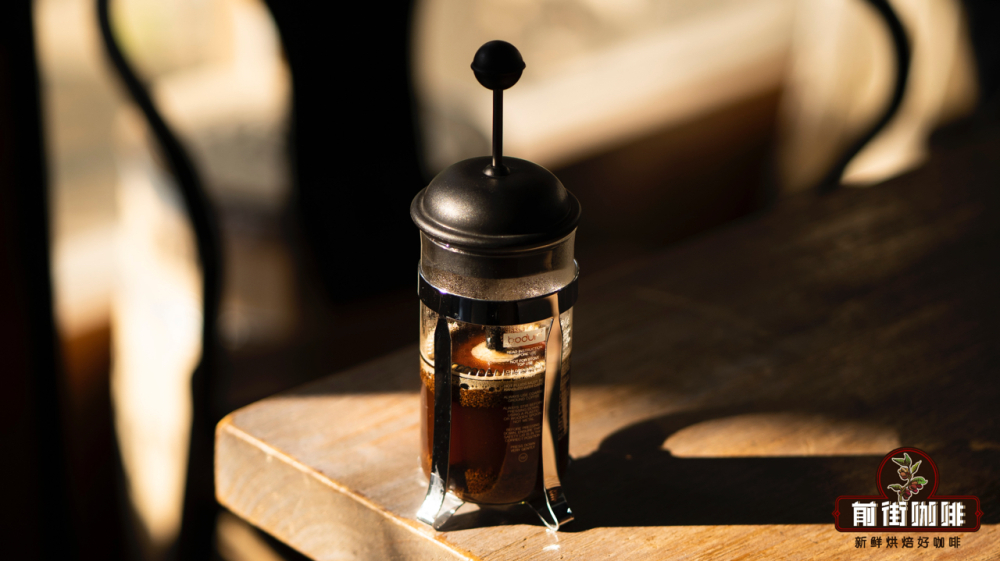
The French press, as the name suggests, originated in France. Its construction is simple: a cylindrical container plus a lid with a metal filter that slides up and down through the center, used to separate grounds from liquid and control extraction. The principle is just like making tea — steep the grounds in hot water for a set time, press the plunger down, and pour your coffee.
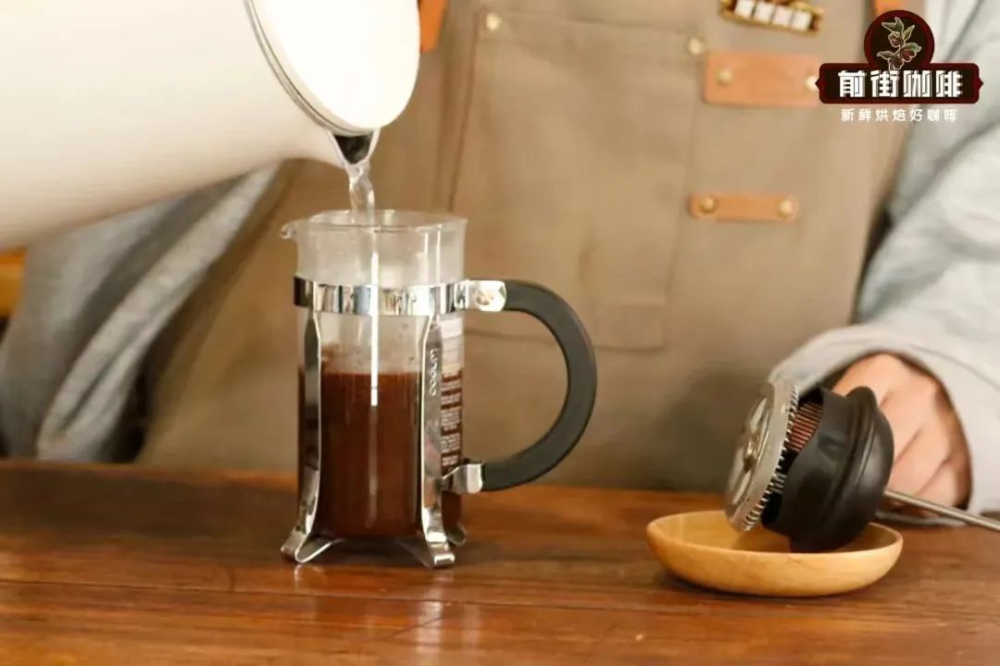
Unlike pour-over with its long list of interacting parameters, the French press's "one-pour" method is far simpler. Only four factors affect the cup: coffee-to-water ratio, grind size, water temperature, and steeping time. Much like cupping, the extraction is stable, and the flavors reflect the bean's original character. Because the entire pour happens at once and the temperature drifts downward throughout the steep, the French press needs slightly hotter water than pour-over. For light to medium-roasted acidic coffee, FrontStreet Coffee suggests 92-94°C; medium to dark-roasted beans steep best at 89-90°C. In autumn and winter, when room temperature is lower, FrontStreet Coffee also preheats the press with boiling water to cut heat loss during extraction.
Time is the parameter you can most freely adjust. With no human stirring involved, steeping time becomes one of the keys to the extraction rate. Longer generally means richer flavor — but also a greater risk of over-extraction and the bitterness, astringency, and woody notes that follow. Paired with a coarse grind, FrontStreet Coffee suggests about 4 minutes of steeping for light to medium roasts. Medium to dark roasts release bitterness more easily, so 3 minutes and 30 seconds is sufficient. Either way, the time is long enough to release the positive flavor compounds while avoiding the harsh, muddled flavors of over-steeping.
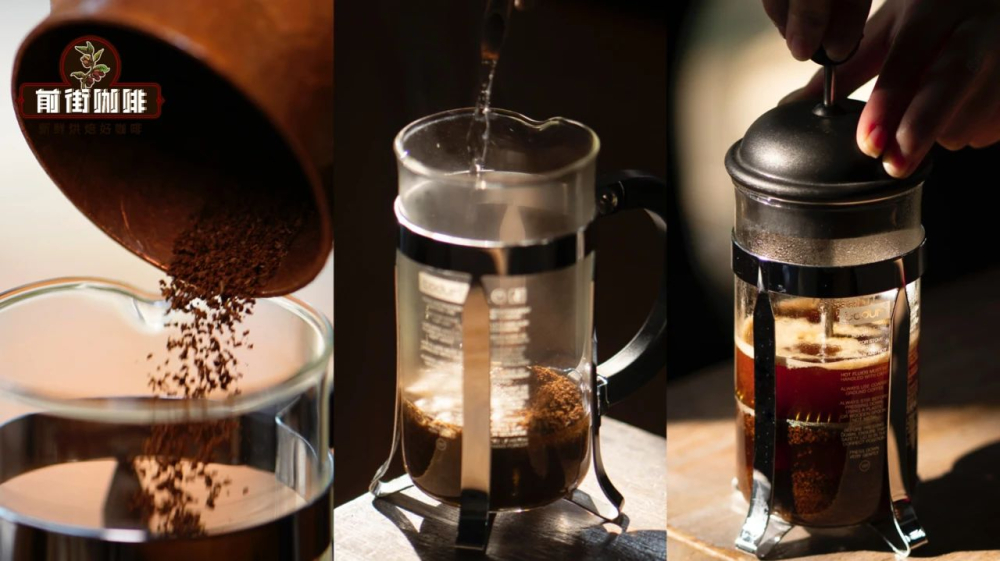
So which is better — pour-over or French press? FrontStreet Coffee's honest answer is that there's no standard answer: whatever suits you is best. If you want to explore coffee's many layers, choose pour-over; if you want simple operation and a rich, aromatic black coffee, choose the French press.
The Historical Origin of the French Press
According to FrontStreet Coffee's research, the prototype came from a brewing vessel designed in 1852 by two Frenchmen, Mayer and Delforge. They added a cloth filter to a metal plate, creating what is considered the earliest French press, and applied for its patent.
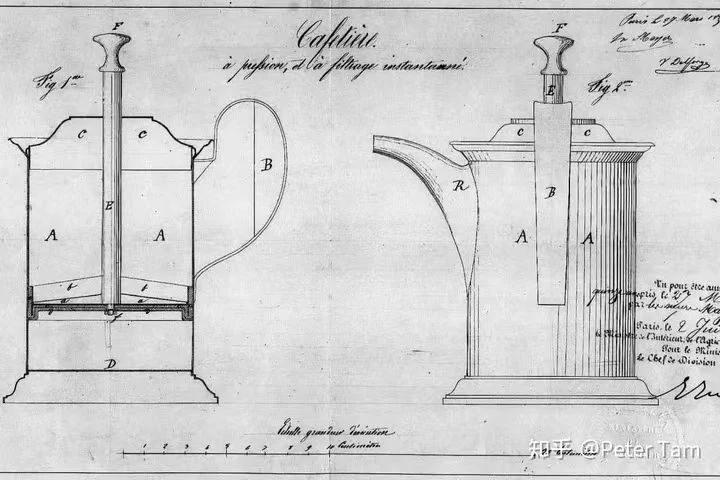
As the device spread, Italians improved it — Bruno Cassol in 1935 and Faliero Bondanin in 1958 — and it grew popular again in France and beyond. By the 1990s, France's Bodum company commercialized the French press at scale, and its convenient operation soon made it the default choice; the brand gradually became almost synonymous with the vessel itself. The French press FrontStreet Coffee uses comes from precisely this classic brand, Bodum — easy to use, inexpensive, and excellent value.
Customers who've settled on a bean often ask FrontStreet Coffee whether it will work in a French press. Theoretically, any bean suitable for pour-over will work, but since the French press performs static immersion extraction, the oils give the coffee more body and the flavors lean rich and balanced. That makes it especially flattering to medium and dark roasts — chocolate, nuts, caramel, fermented wine aroma, cocoa, and similar profiles. From FrontStreet Coffee's bean list, for example, the Brazil Queen Estate Coffee, the Honduras Sherry Barrel Coffee, the Jamaica Blue Mountain No. 1 Coffee, and the Indonesia Golden Mandheling Coffee all make wonderful French press coffee.
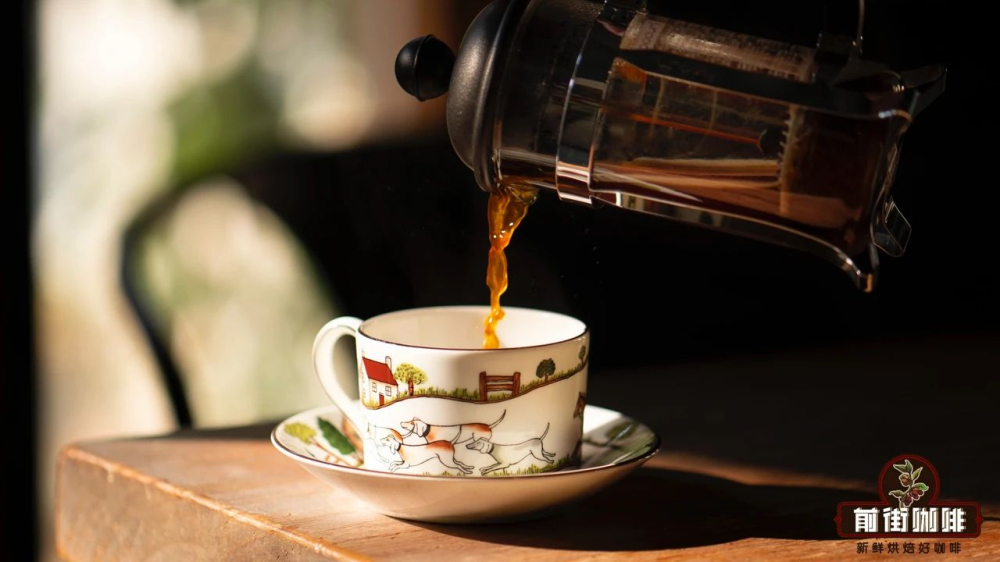
Finally, a word on maintenance. Because a French press has a built-in metal filter, long-term use lets it accumulate the oils released by coffee; residue left on the filter and plunger oxidizes and goes stale, affecting every subsequent brew. So clean your press promptly after use. Disassemble all metal parts, wash both the container and the parts with detergent, and dry them completely before storing.
FrontStreet Coffee Recommendation
Two FrontStreet Coffee beans shine in immersion. FrontStreet PWN Golden Mandheling, triple hand-sorted and medium-dark roasted, brings rich spice, caramel, cedar, and black chocolate aromas to the French press, with a full body and pleasing oils — the pick for a low-acid, deeply aromatic black coffee. If you'd rather have fragrance than weight, FrontStreet Strawberry Candy — a Geisha blend combining Costa Rica honey process with Panama washed Geisha — releases rose, citrus, grape, and dried blueberry notes when steeped, and with milk it smells of strawberry soft candy. For the grind, FrontStreet suggests a coarse-sugar setting — 10.5 on the EK43s or 26 on a hand grinder — with a 1:15 ratio (15g coffee to 225g water), water around 90°C, and a 4-minute steep before you press.
Important Notice :
FrontStreet Coffee is a long-established specialty coffee roaster in Guangzhou China, selling freshly roasted beans from its own farm in Yunnan as well as dozens of carefully selected single-origin beans from around the world for both pour-over and espresso. The products deliver consistently excellent quality and great value, with shipping within 24 hours. Guangzhou's FrontStreet Coffee shop is recommended by many coffee lovers, and the beans are now available online at the Tmall 。
FrontStreet Coffee has moved to a new address:
FrontStreet Coffee Address: 315,Donghua East Road,GuangZhou
Tel:020 38364473
 Scan and follow the En Gafei WeChat official account. Please indicate that the reprint comes from "En Gafei".