What is the taste of Gesha coffee? What are the flavor characteristics of Panamanian Gesha coffee and how many flavor profiles does it have?
Years ago, when people talked about coffee, the first names that came to mind were Jamaica Blue Mountain and Hawaii Kona. In the early days of specialty coffee, these two rich, full-bodied coffees were the favorites of connoisseurs, and they earned Blue Mountain and Kona their titles as the "King and Queen" of the coffee world.
Then the coffee world entered the age of specialty culture, a hundred schools of thought and a hundred flowers blooming at once. The rise of Gesha overturned that "King and Queen" myth and set a pattern of newcomers outdoing their predecessors. Today Gesha has become synonymous with both high price and high quality in the coffee market.
The Flavor Profile of Gesha Coffee
Compared with the rich, solid flavors of Blue Mountain and Kona, Gesha upended people's idea of what coffee could taste like, thanks to its delicate acidity and fresh floral notes. At the same time, younger consumers are chasing lighter, fresher tastes, which has made Gesha a naturally popular variety.
Is Gesha Coffee Really Good?
After years of cupping and comparing at FrontStreet Coffee, we have found that Gesha from different regions and seasons shows significant flavor differences, and even coffees from different plots in the same region can taste quite different.
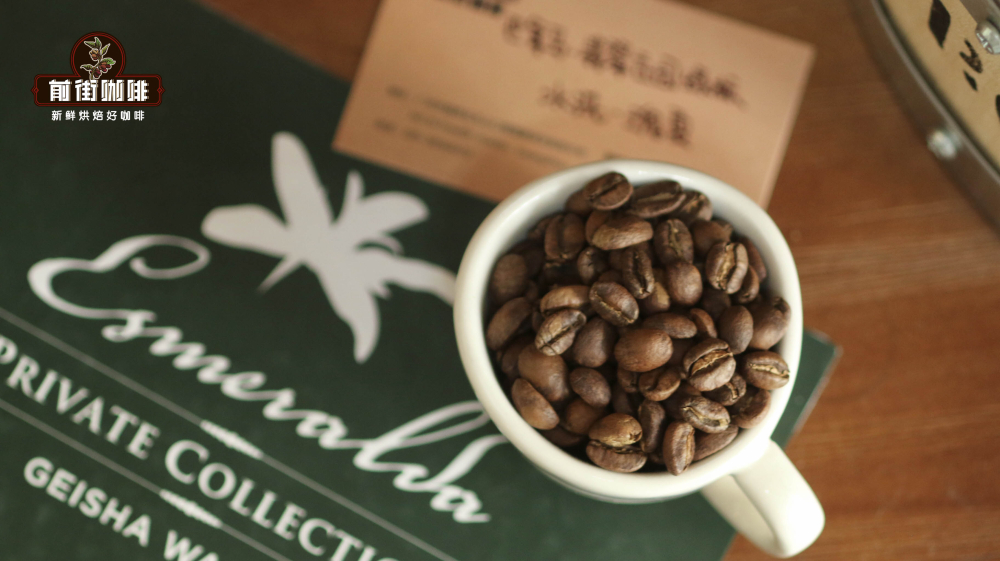
The Gesha we know best, from Panama, has a very charming character, with notes similar to rose and jasmine. The acidity is typically bright and uplifting, with citrus tones. The mouthfeel is clean and clear, with distinct layers. Given appropriate processing and roasting, it can display a smooth, balanced, and uniquely delicate flavor.
Gesha from Ethiopia, meanwhile, is relatively less delicate but still rich. It features notes similar to red berries, nuts, spice sweetness, and a tea-like aftertaste. With suitable processing and roasting, it can show balanced, integrated flavor characteristics.
Are Panama Gesha and Ethiopia Gesha the Same Variety?
In the early 1930s, the Gesha variety was collected in an area of Ethiopia called Gesha. At the time, it was not a single variety that was gathered, but a mixture of plants from the region's primary forests and from local markets, sent together to Kenya for research and cultivation.

Later, Tanzania, Costa Rica, and Panama successively introduced Gesha for further cultivation and research. Over time these plants developed different genes to adapt to different terroir and climates, producing different flavors.
The Gesha that reached Panama, shaped by high altitude, microclimate, and soil, accidentally formed a very attractive and refined flavor. It was discovered in 2003 by the owner of Panama's La Esmeralda estate, then sent to the Best of Panama (BOP) competition in 2004. Its unique flavor shocked every judge at the time and won the championship with an average cupping score of 94.6, breaking BOP's historical record. Overnight it became the champion variety the whole world sought after.
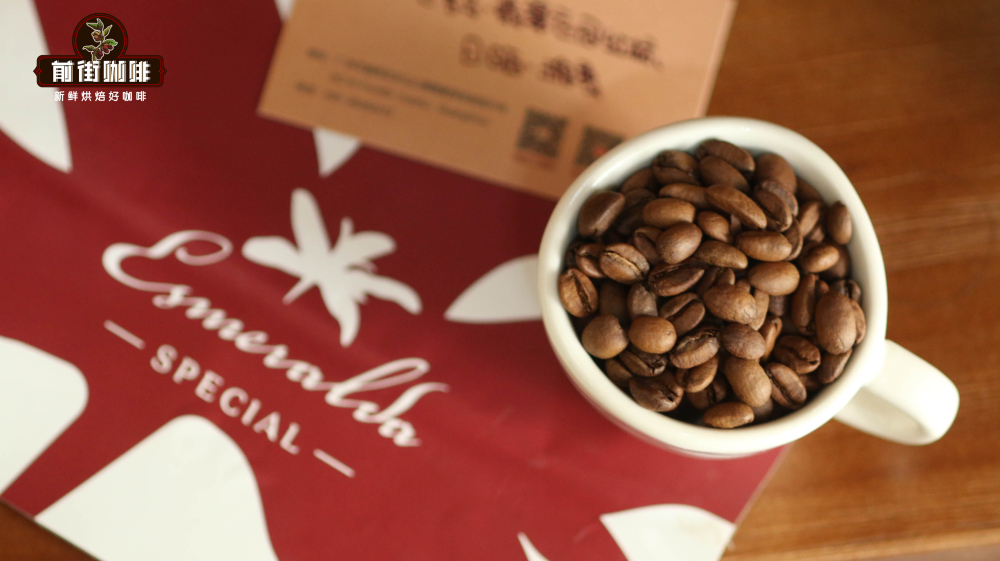
Over the past decade or so, people have begun trying to bring Gesha back to its homeland, Ethiopia, cultivating it at "Gesha Village," located 12 miles from the Gesha forest and covering 475 hectares. The plantation owner joined expeditions to find wild coffee in the forest, and today they grow several Gesha varieties brought back from it, hoping to produce even higher quality coffee.
Although the varieties grown at Gesha Village are also called "Gesha," they are essentially native varieties from the Ethiopian region. Even though they come closest to the Panama Gesha variety "Gesha 1931" in plant morphology, bean shape, and cupping performance, they have not undergone the human "taming" that Panama's Gesha received over many years to reach its rich, charming floral and fruity acidity. For that reason, Ethiopian Gesha and the Gesha varieties of Central and South America can be understood as two different varieties.

How to Brew Gesha Coffee for Best Taste?
FrontStreet Coffee offers Gesha products that include three Ethiopian Gesha beans, Gesha Village Gold Label, Red Label, and Chaka, plus three Panama Gesha beans from La Esmeralda's Red Label and Green Label and the large Boquete production region. So that everyone can taste the beans at their most complete, FrontStreet Coffee ships all coffee within 5 days of roasting.
No matter which region's Gesha you choose, these beans all have rich fruit-acid character. Because FrontStreet Coffee uses a medium-light roast, the bright acidity and the charming floral and fruity aromas are preserved.
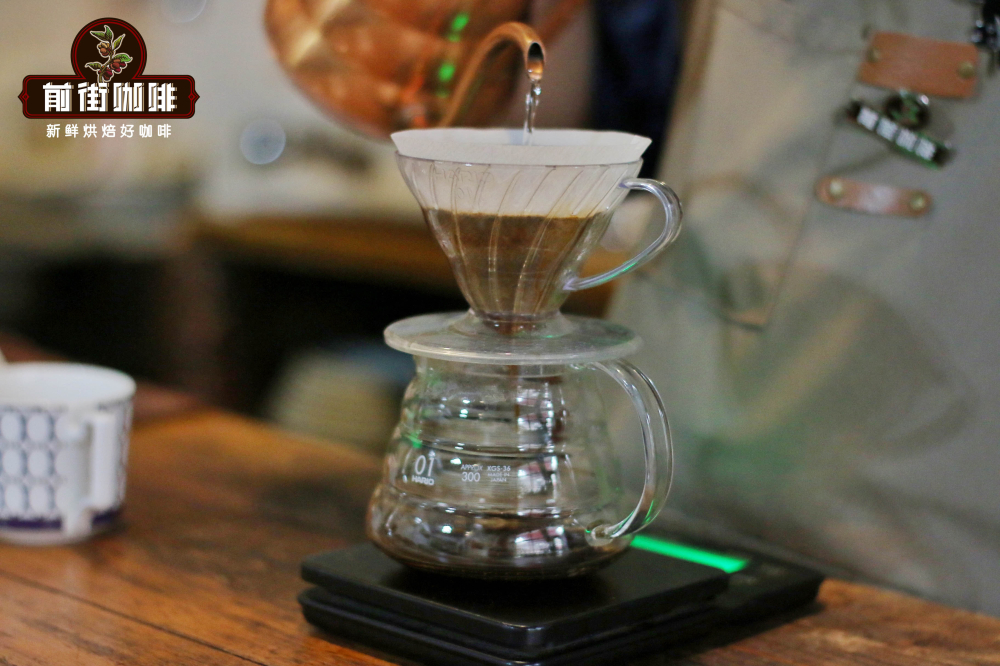
Medium-light roasted beans have a harder texture and tend to sink to the bottom during brewing, easily clogging the drainage holes. So FrontStreet Coffee recommends a grind where 78% passes through a Chinese standard #20 sieve, roughly the size of fine sugar, along with a brewing water temperature of 90-91°C.
FrontStreet Coffee's daily store preparation uses 15g of coffee in a small Hario V60 dripper, brewed at a 1:16 coffee-to-water ratio. Once everything is ready, a three-stage pour is used: start the timer, pour first to 30g of water for a 30-second bloom, then begin the second stage with a slow, small circular pour to 125g, wait until the water in the coffee bed drops to half before pouring again, continue the small circular pour to 225g, and after all dripping is complete the total extraction time is approximately 2 minutes 10 seconds to 2 minutes 20 seconds.
FrontStreet Coffee Recommendation
The clearest way to fall for Gesha is to taste the two great origins side by side, and FrontStreet Coffee carries both. From Ethiopia's Gesha Village we offer the Gold Label, the Gesha 1931 variety that makes up about 10 percent of the village's total output and is its finest non-auction coffee, often chosen by competition baristas and processed as an exquisite natural for a complex, layered cup. The Red Label is the Gori Gesha variety at roughly 15 percent of production, scoring 88 or above on the SCA 100-point scale, a single-terroir series with full traceability, including farm block, variety, and processing date.
From Panama, the home of Gesha's fame, FrontStreet Coffee offers the Hacienda La Esmeralda Red Label and Green Label plus a Boquete lot. The Red Label gathers the estate's top batches, all grown above 1600 meters and often higher than 1900 meters, with cupping scores above 90; the Green Label blends several plots within the estate for the signature high-altitude Gesha profile. Whichever you try, brew it at 91°C or so with a medium-light grind and let the rose, jasmine, and bright citrus do the rest.
Important Notice :
FrontStreet Coffee is a long-established specialty coffee roaster in Guangzhou China, selling freshly roasted beans from its own farm in Yunnan as well as dozens of carefully selected single-origin beans from around the world for both pour-over and espresso. The products deliver consistently excellent quality and great value, with shipping within 24 hours. Guangzhou's FrontStreet Coffee shop is recommended by many coffee lovers, and the beans are now available online at the Tmall 。
FrontStreet Coffee has moved to a new address:
FrontStreet Coffee Address: 315,Donghua East Road,GuangZhou
Tel:020 38364473
 Scan and follow the En Gafei WeChat official account. Please indicate that the reprint comes from "En Gafei".