The Large Bean Variety in the Coffee World: Liberica Coffee | Why is Liberica So Rare?
Anyone with some grounding in coffee knows that beans are classified into three major groups: the small-seeded Arabica, the medium-seeded Robusta, and the large-seeded Liberica. The varieties we talk about most often — Typica, Geisha, Bourbon — all belong to Arabica. While Arabica and Robusta are familiar to nearly everyone, today FrontStreet Coffee would like to introduce the large-seeded member of the trio: Liberica coffee.
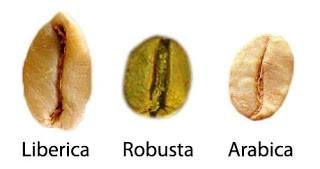
Liberica Coffee
Global coffee trade is dominated by Arabica and Robusta, while Liberica currently accounts for only 1% of the world's commercially cultivated coffee production — a genuinely tiny quantity.
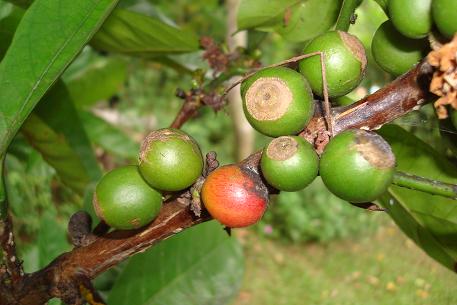
Liberica was first discovered in Liberia, West Africa. Its trees grow taller than either Arabica or Robusta, and the species shows strong disease resistance and environmental adaptability. Its leaves are larger than those of typical coffee species, and the fruit is far bigger than ordinary coffee cherries, with a thick skin that makes the pulp and flesh difficult to remove during post-harvest processing — a genuine headache for producers.
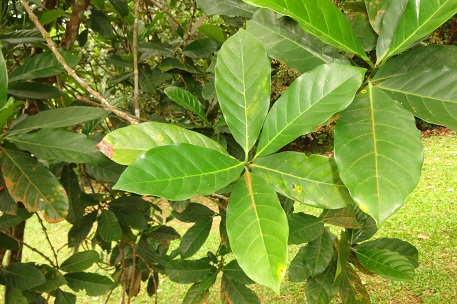
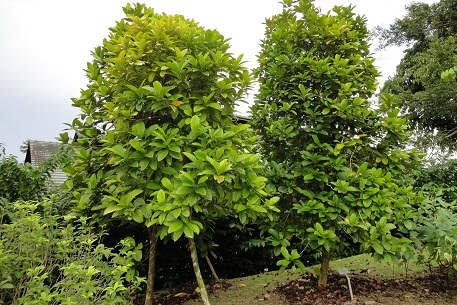
Interestingly, some farms plant small amounts of Liberica around their Arabica trees as a decoy crop, luring coffee berry borers and other pests away from the Arabica plants.
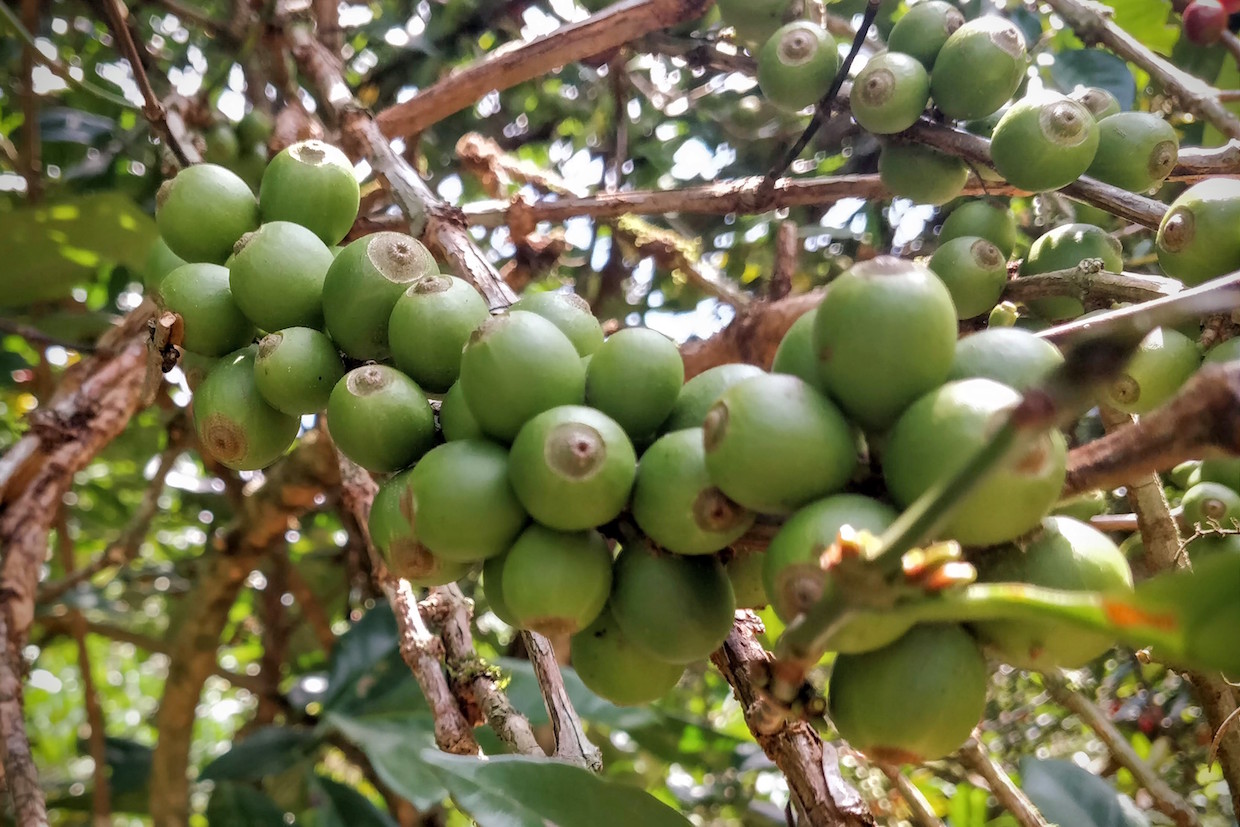
Liberica trees have been cultivated in semi-wild conditions in Borneo, Malaysia, for many years. Historical records show that when leaf rust devastated Sri Lanka's coffee industry in 1892, British colonists went looking for fertile land on which to regrow coffee and found Borneo. In the end, however, coffee there was abandoned in favor of more profitable crops such as tea, pepper, and rubber, leaving only a handful of Liberica trees behind.
In 2018, specialty Liberica from Borneo made its debut at the Stuttgart Coffee Summit in Germany and won the green coffee quality award.
FrontStreet Coffee's Brewing Method
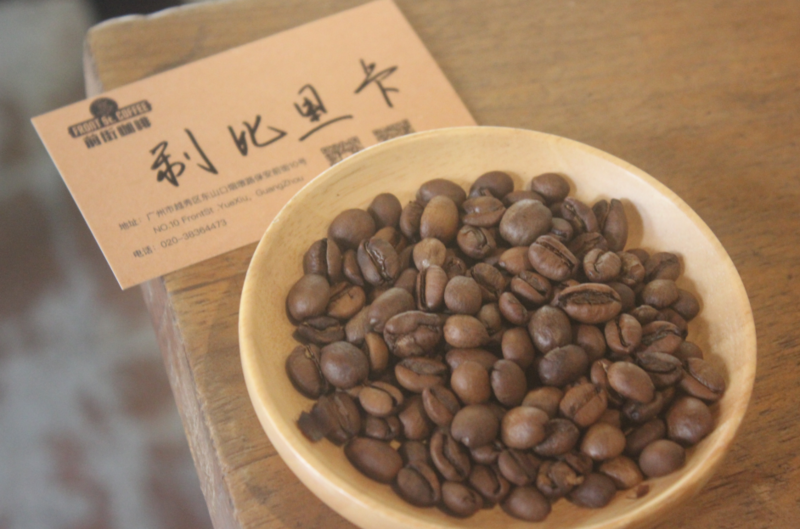
FrontStreet Coffee brewed a pot of natural-processed Liberica with the following parameters and flavor profile:
Brewing Parameters:
Coffee dose: 15g, water temperature: 89°C, coffee-to-water ratio: 1:15, medium-fine grind (BG 5T: 58% pass-through rate on China standard #20 sieve), segmented extraction.
Bloom with 33g of water, ending the bloom when the bed changes from moist to dry — about 30 seconds. Then pour in small circles from the center out to 120g and stop. When the level drops and is about to expose the coffee bed, pour again to 228g and stop. Once the level drops and the bed is about to surface, remove the dripper (timing starts from the beginning of the bloom). Total extraction time: 1'45".
Flavor Profile:
The dry aroma offers fermentation notes, jackfruit, and a subtle chocolate fragrance. The wet aroma is rich with fermented fruit. In the cup you find starfruit, tropical fruits, and jackfruit acidity, a wheat-tea sensation, and rose floral notes.
FrontStreet Coffee Recommendation
If rare varieties fascinate you, Geisha is the other "celebrity" bean worth exploring. Geisha takes its name from the English word for the Ethiopian dance and is one of the most beloved Arabica varieties: its distinctive floral character and superb sweet-sour balance have won over countless coffee lovers, though its low yield, weak disease resistance, and demanding cultivation keep prices high. Panama is where Geisha made its name — discovered on the Esmeralda estate and entered into the 2003 Best of Panama competition, it stunned every judge with an average cupping score of 94.6, a BOP record, and became an overnight champion variety.
FrontStreet Coffee recommends the Panama Esmeralda Red Label and Green Label Geisha for the highest expression of the variety: the Red Label grows at 1,600-1,800 meters from single small plots such as Jaramillo, with every batch cupping above 90 points and carrying its own lot number, while the Green Label blends batches from several high-altitude plots for the estate's signature Geisha flavor at a more affordable price. Beginners who want a first taste of the fabled orange-blossom sweetness and honeyed character should try the entry-level FrontStreet Boquete Geisha, with its oolong-tea feel, delicate fruit acidity, and clear layering.
For brewing, Geisha is a medium-light, floral-fruity coffee with a dense bean that tends to sink and clog the dripper. FrontStreet Coffee suggests a coarser grind — about 78% pass-through on a #20 sieve, roughly the size of fine granulated sugar — with water at 91°C: 15g of coffee in a Hario V60 at 1:16, blooming with 30g of water for 30 seconds, then pouring in small circles to 125g and finally to 225g, finishing in about 2 minutes 10 seconds to 2 minutes 20 seconds.
Important Notice :
FrontStreet Coffee is a long-established specialty coffee roaster in Guangzhou China, selling freshly roasted beans from its own farm in Yunnan as well as dozens of carefully selected single-origin beans from around the world for both pour-over and espresso. The products deliver consistently excellent quality and great value, with shipping within 24 hours. Guangzhou's FrontStreet Coffee shop is recommended by many coffee lovers, and the beans are now available online at the Tmall 。
FrontStreet Coffee has moved to a new address:
FrontStreet Coffee Address: 315,Donghua East Road,GuangZhou
Tel:020 38364473
 Scan and follow the En Gafei WeChat official account. Please indicate that the reprint comes from "En Gafei".