Costa Rica Musician Series Bahia Coffee Bean Flavor Profile How to Brew Raisin Honey Process Coffee Beans

Friends who frequently visit FrontStreet Coffee's physical store or buy beans online know that FrontStreet Coffee offers many coffees from Central America, among which the Musician Series from Costa Rica is particularly favored for its special aromas. One regular customer periodically visits the store to order a cup of Costa Rican Bach pour-over. This Bach coffee bean features the familiar sausage-like fermented sweetness beloved by locals, thanks to the raisin honey processing method. Can sausage-like fermented notes really pair with coffee? FrontStreet Coffee meets many people who ask this question before trying the Bach for the first time, but once they actually taste it, they not only accept it - they fall in love with this bean.
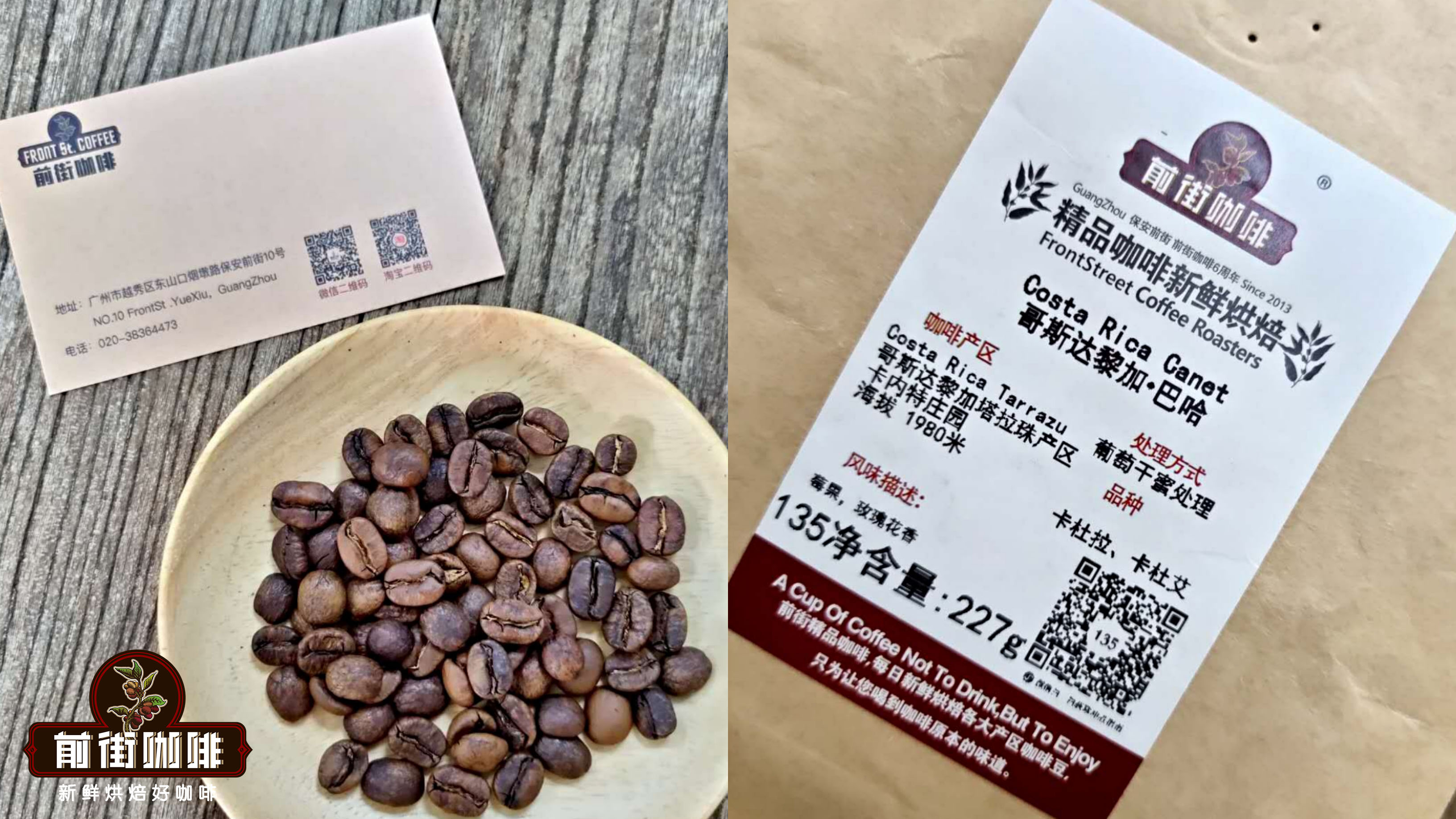
FrontStreet Coffee Costa Rica Bach Coffee Bean
Costa Rica Canet Musician Bach
Country: Costa Rica
Region: Tarrazú
Altitude: 1950 meters
Grade: SHB
Variety: Caturra
Processing: Raisin Honey Process
Located on the Central American isthmus, Costa Rica is simultaneously influenced by Pacific and Atlantic ocean currents and sea winds that regulate its climate. The country features numerous towering volcanoes reaching 2000 meters in altitude, allowing coffee cherries to grow slowly in fertile volcanic ash soil and cool high-altitude environments, cultivating coffee beans with complete and rich flavors.

Costa Rica has two seasons: the dry season from December to April, when coffee is harvested, and the wet (rainy) season from May to November, when coffee is planted and grows. In recent years, many micro-mills have been established. Since their water consumption is only 5% of that required by traditional washed mills, and they need no large water tanks or drying patios, the required investment is relatively much smaller. Honey processed coffee - with low acidity, improved complexity, and rich sweet fragrance - has become a competitive focus in the coffee industry in recent years.
Just like the washed Yirgacheffe that is famous for its processing method, FrontStreet Coffee has also launched a red honey processed Yirgacheffe, adding sweetness and fermentation notes to the classic Yirgacheffe flavor, with a relatively fuller mouthfeel and richer layers.
Costa Rican Coffee Regions
Costa Rica began growing coffee as early as two hundred years ago, first planted on the slopes of the Poas and Barva volcanoes - what we now call the Central Valley.
Currently, Costa Rica has 7 main producing regions: Western Valley (Valle Central Occidental), Central Valley (Valle Central), Tarrazú, Tres Ríos, Orosi, Brunca, and Turrialba.
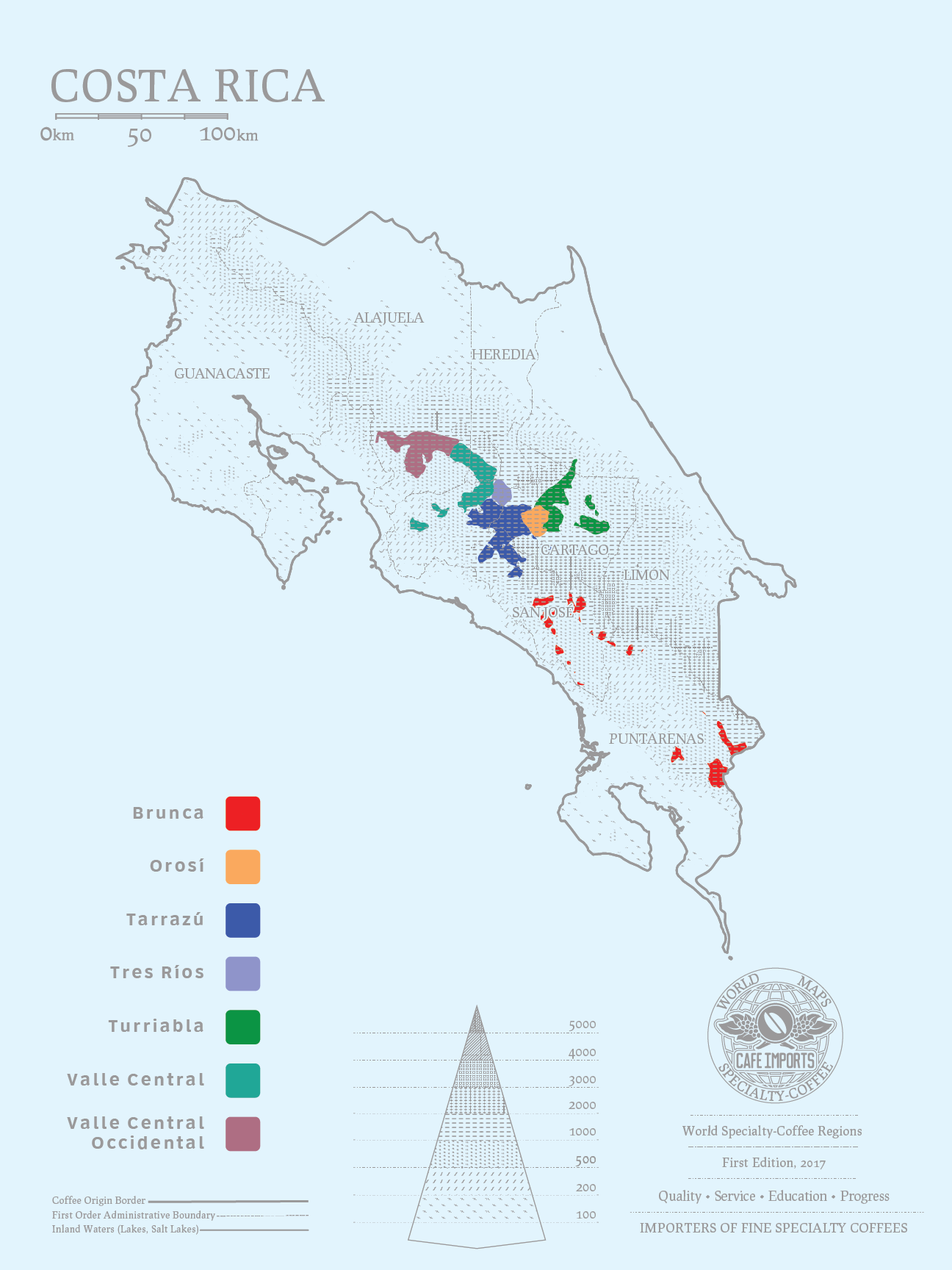
Tarrazú is one of Costa Rica's most important coffee-producing areas. The region has a long history of coffee production, has once received favor and recognition from the British royal family, and was even praised in a Pope's speech.
Among FrontStreet Coffee's daily bean series, there is also a Costa Rican Tarrazú coffee bean. FrontStreet Coffee's daily beans cover the major coffee-producing regions and serve as the "calling card" of each region's coffee, since their basic regional flavors are more recognizable while remaining affordable, high-value beans. When FrontStreet Coffee selects a "daily bean" for listing, it carefully picks the beans that best represent each region's original local flavors. In packaging, FrontStreet Coffee introduces them at a 100g trial size. The significance of the daily bean line is that everyone can identify the basic flavors of the major regions at a low price - such as the lemon acidity of Yirgacheffe, the herbal notes of Mandheling, and the nutty chocolate flavors of Brazil and Colombia.

Canet Estate
Canet Estate is located in the highest-altitude area of the Tarrazú region, which is also the most densely fruit-growing area in Costa Rica. Canet Estate primarily grows passion fruit, with coffee being quite scarce. Only a specific area is planted with coffee, receiving special care. All coffee cherries are hand-picked, harvesting only mature red cherries, and after harvesting and before processing they undergo another round of screening to remove underripe or overripe beans.

The origin of Canet Estate's Musician Series comes from the owner's love of classical music, so all coffee beans produced by this estate are named after musicians.
Canet Estate primarily produces two varieties: Caturra and Catuai, processed with raisin honey and washed methods to produce the world-renowned Musician Series, named after "Beethoven," "Bach," "Chopin," and "Mozart." With altitudes ranging between 1700-1950 meters, they are all SHB grade strictly hard beans, with sweet flavors, rich fruit aromas, wine notes, and strong tea fragrances.
Processing Method
The raisin honey processing method retains 100% of the mucilage and uses zero water. This raises the difficulty of honey processing, requiring strict time control. On the day of harvest, the coffee cherries are poured into large water tanks, where mature, full fruits sink to the bottom; underdeveloped or overripe fruits float to the surface, and these floaters must be removed. The selected fruits are then placed on raised beds to dry for at least three days, during which the surface of the coffee fruit wrinkles, similar to raisins. The cherry skin is then removed, retaining the mucilage before further drying. At this stage, climate is the key factor in the success of honey processing.
During drying, the cherries must be constantly turned to ensure even drying, but the turning frequency must be carefully controlled - slow enough to ensure uniform fermentation, yet not so slow as to risk over-fermentation.

Coffee Bean Varieties
Caturra is a relatively common variety among American beans, especially in Central America. Caturra is a mutation of Bourbon, discovered in Brazil in 1937. It has better yield and disease resistance than Bourbon, with shorter plants that facilitate harvesting, strong adaptability, and no need for shade trees - it thrives even under the scorching sun, hence the nickname "sun coffee." Caturra is suitable for cultivation from low altitudes of 700 meters up to 1700 meters, showing strong altitude adaptability; the higher the altitude, the better the flavor, though yield correspondingly decreases - the eternal trade-off of specialty coffee.

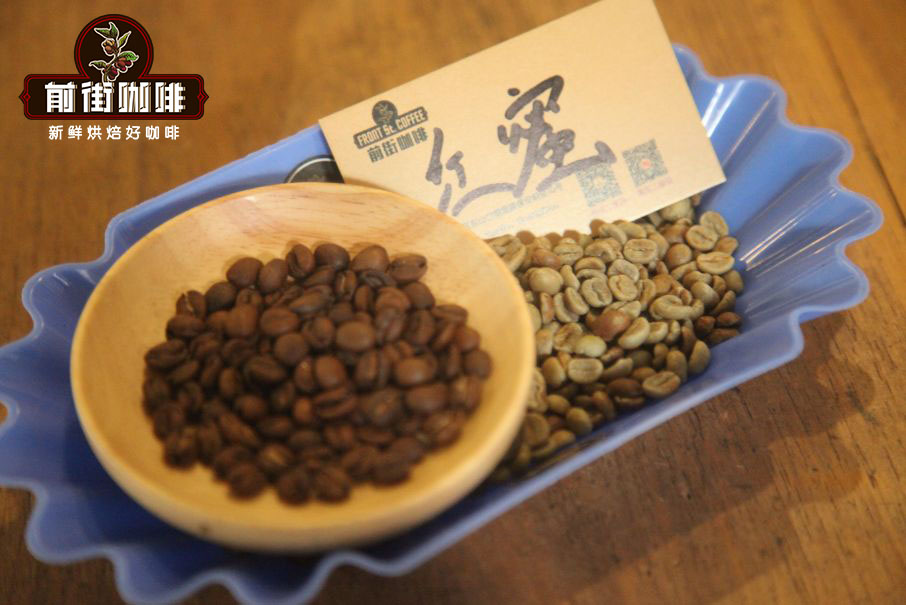
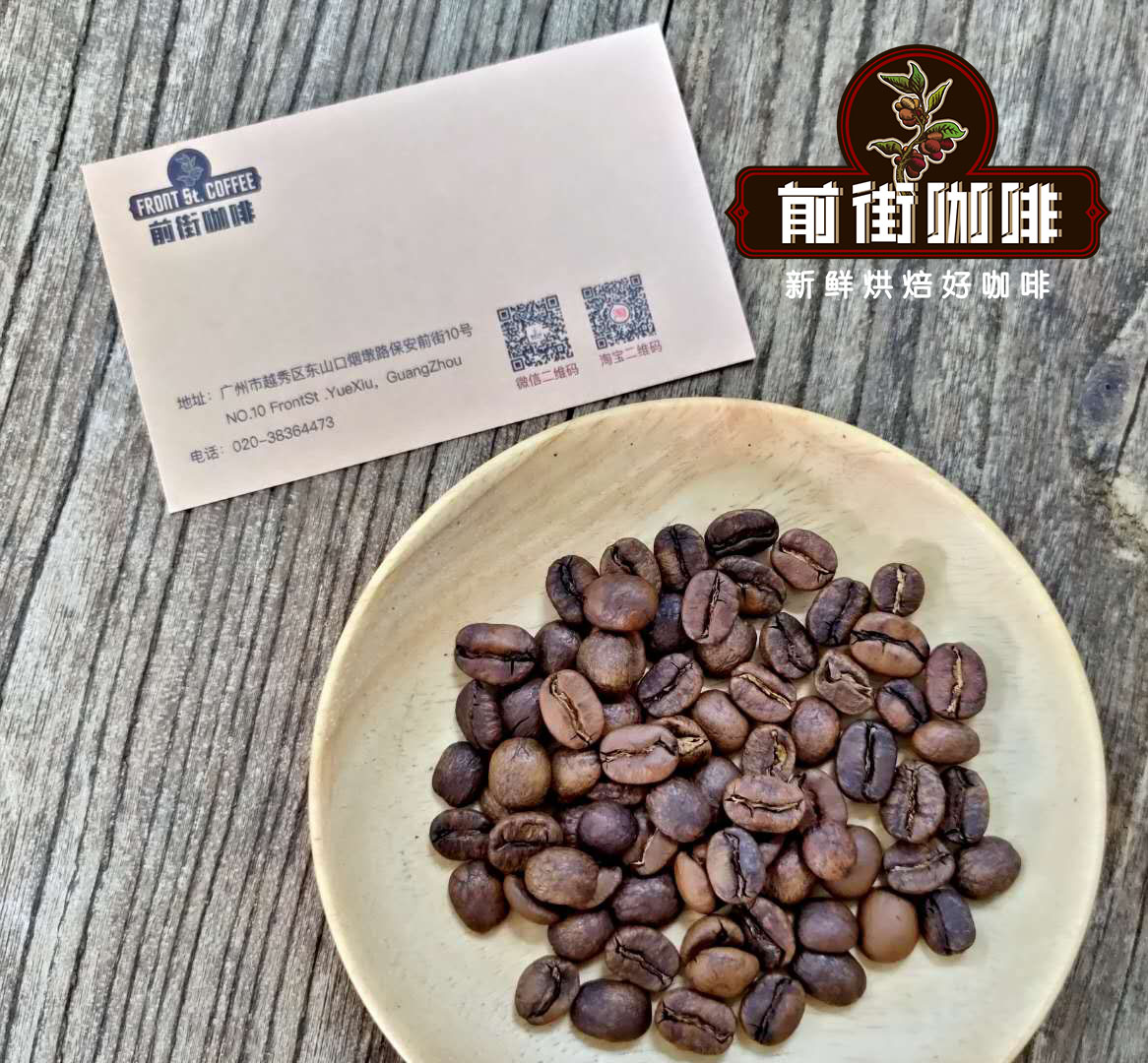
FrontStreet Coffee's Bach green coffee beans appear yellow-green, typical of honey processed beans, with a fresh citrus fruit aroma and a light fermented fruit fragrance.
Roasting Analysis
FrontStreet Coffee uses a Yangjia 800N semi-direct-fire roaster (300g batch size)

FrontStreet Coffee's specific roasting approach: preheat the roaster to 200°C before charging, adjust heat to 160 and damper to 3, with the turning point at 1'36", then maintain heat; at 140°C, keep heat at 160 and open the damper to 4. At 4'50", the beans turn yellow, the grassy smell disappears, entering the drying stage; at 166°C, reduce heat to 135 and keep the damper at 4.
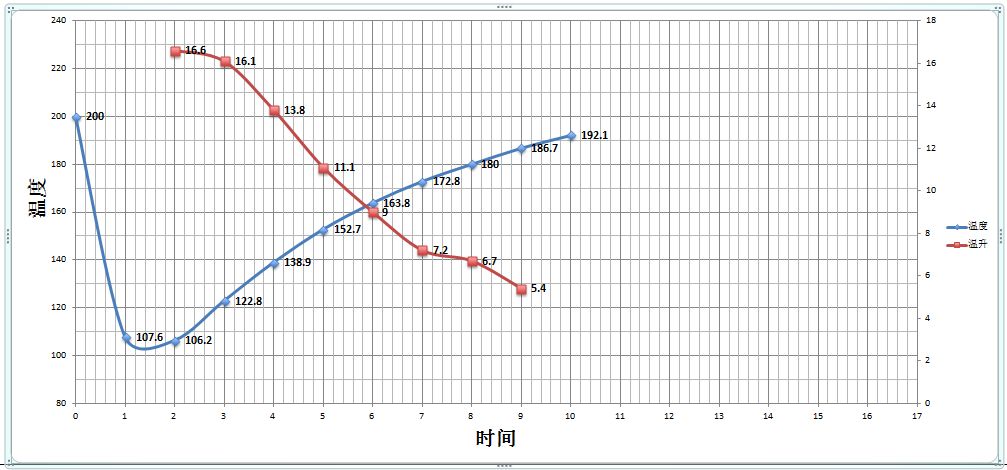
At 8'05", drying is complete, wrinkles and black markings appear on the bean surface, and the toast aroma turns to coffee aroma, heralding first crack. At this point, listen carefully for the sound of first crack. At 8'38", first crack begins; the damper is fully opened to 5, heat unchanged. Development time after first crack: 1'45", dropped at 193.8°C.
Cupping Flavors
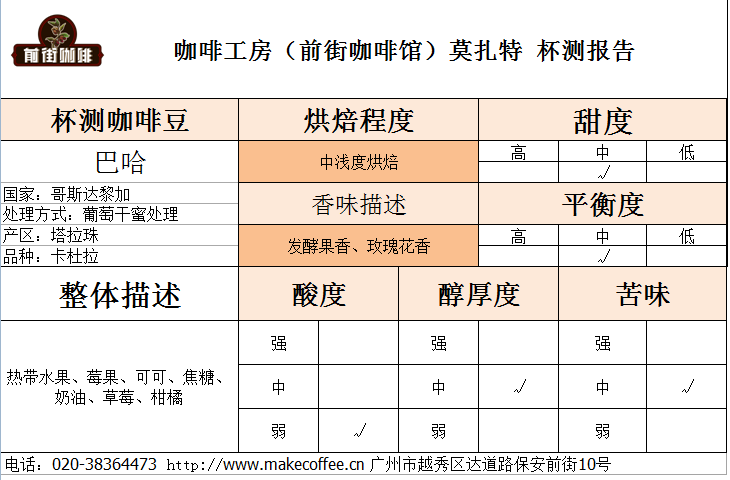
Dry aroma: rose florals, berries
Wet aroma: fermented fruit, cocoa
Palate: berries, strawberry, citrus, cream, cocoa, caramel, tropical fruits

FrontStreet Coffee's Brewing Suggestions for Costa Rica Bach Coffee Bean
FrontStreet Coffee's brewing parameters are: V60 dripper, 1:15 coffee-to-water ratio, 90°C water temperature, 15g dose, grind size at an 80% pass-through rate on the China standard #20 sieve.
One point to note before brewing is bean freshness. Before listing a coffee bean, FrontStreet Coffee goes through a series of steps, including roast profiling, cupping, and brewing, to ensure the bean's flavor represents its regional character while having its own personality. This is also why FrontStreet Coffee stocks so many different coffee beans, yet no two are identical. As for freshness, freshly roasted beans deliver the flavor that best represents their inherent character. Many people think that freshly ground coffee equals freshness, but that is not actually the case.

In reality, to experience coffee's full aroma, freshly ground beans alone are not enough; the roast date must also meet certain requirements. Whether in FrontStreet Coffee's physical stores or online shop, we ship freshly roasted beans, and unless customers specifically request pre-ground shipping, we grind according to the customer's brewing method (espresso or pour-over).
FrontStreet Coffee uses a segmented pouring technique: 30g of water for a 30-second bloom, a slow center pour to 125g for the second segment, and when the water level drops and is about to expose the coffee bed, a slightly larger flow pours up to 225g to end the brew. Total extraction time is 2 minutes (including bloom time).

Costa Rica Bach Coffee Bean Flavor: it smells of rice-wine-like fermentation aroma, and tastes with the sweet-tart notes of mature tropical fruits and berries, plus nut, cocoa, and cream flavors, with caramel in the aftertaste and a light floral finish.
FrontStreet Coffee Recommendation
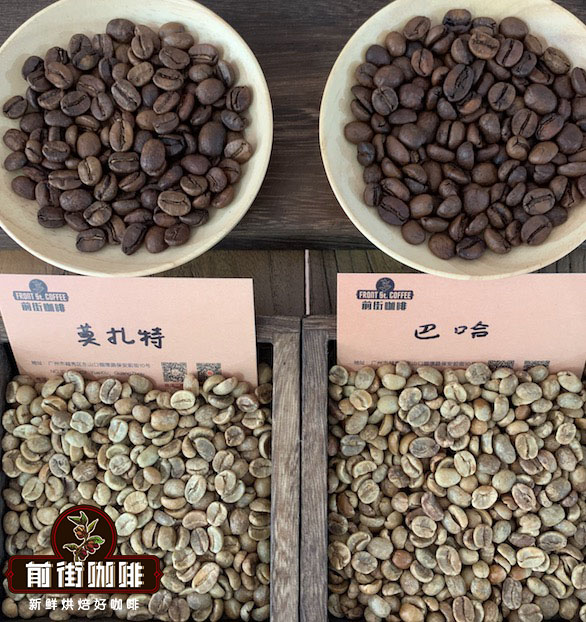
If you love this raisin-honey Bach, its sibling from the same Musician Series - FrontStreet Coffee's Mozart - is a natural next step: celebrated for its distinctive raisin character, the floral-and-fruity Mozart shines when brewed with a Hario V60, whose fast, spiral extraction brings out vivid florals, lively acidity, and clean sweetness. For a tropical-fruit-driven alternative, try FrontStreet Coffee's Ethiopian Hua Kui natural, bursting with strawberry, passion fruit, jackfruit, and lychee aromatics - proof of how expressive naturally processed beans can be through a V60.
Important Notice :
FrontStreet Coffee is a long-established specialty coffee roaster in Guangzhou China, selling freshly roasted beans from its own farm in Yunnan as well as dozens of carefully selected single-origin beans from around the world for both pour-over and espresso. The products deliver consistently excellent quality and great value, with shipping within 24 hours. Guangzhou's FrontStreet Coffee shop is recommended by many coffee lovers, and the beans are now available online at the Tmall 。
FrontStreet Coffee has moved to a new address:
FrontStreet Coffee Address: 315,Donghua East Road,GuangZhou
Tel:020 38364473
 Scan and follow the En Gafei WeChat official account. Please indicate that the reprint comes from "En Gafei".