How to Plant Coffee Beans_Coffee Growing Techniques and Experience Sharing_Can You Make Money Growing Coffee Beans
For professional coffee knowledge exchange and more coffee bean information, please follow Coffee Workshop (WeChat public account cafe_style)
Shade-grown vs Sun-grown Coffee
Coffee enthusiasts often research how to roast and brew their beans, but rarely dig into how coffee is actually grown.
Today FrontStreet Coffee would like to share some knowledge about coffee cultivation.
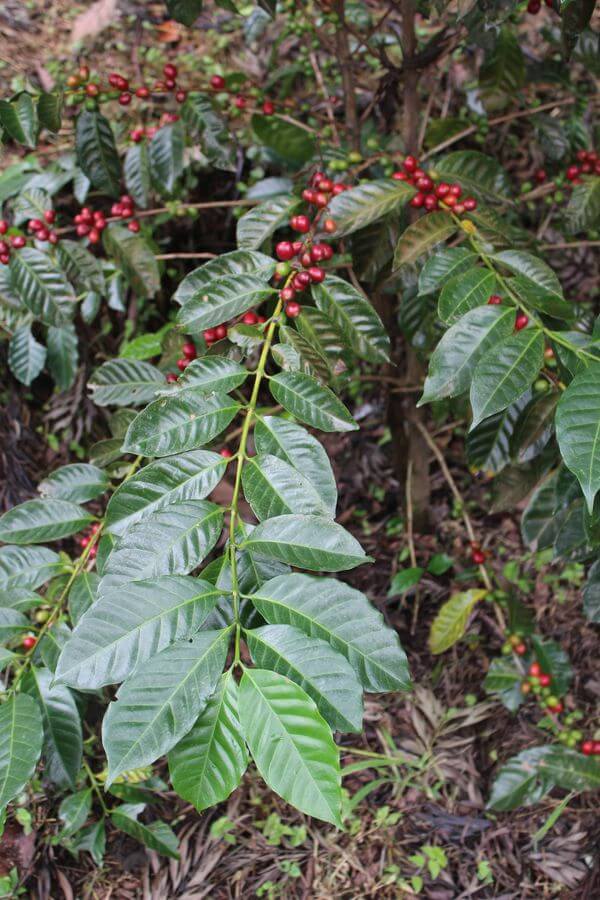
Anyone with some coffee background knows that although coffee trees are tropical plants — both Arabica and Robusta — in their natural habitat they grow beneath the canopy of taller trees.
Botanical research has found that for coffee trees in equatorial regions to photosynthesize efficiently, the optimal share of direct sunlight is only 20%–25%.
Beyond that ratio, the upper leaves stop absorbing light, and the surplus simply passes through to the lower leaves.
That excess sunlight can, however, stimulate flower buds and push the trees to set more fruit.
Coffee trees are not naturally sun-tolerant. Before the 1970s, nearly all coffee was planted in the shade of high-altitude forest, and its products were classed as "shade-grown coffee."
During the Green Revolution of the 1970s, scientists developed sun-grown cultivation techniques that allowed coffee trees to grow without shade trees at all.
Many farmers were encouraged to cut down their shade trees, grow coffee as a single crop, and plant more sun-tolerant varieties.
This expanded the planted area and raised per-tree yields while making management far easier.
The accompanying problems — depleted soil nutrients and heavier pest pressure — were "solved" by spraying large amounts of fertilizer and pesticide.
Today the vast majority of the world's coffee plantations follow this model, and its product is called "sun-grown coffee."
For one hectare of coffee, sun-grown cultivation yields roughly 1,600 kg per year!
Shade-grown coffee, by contrast, yields only 550 kg — about 25% to 40% of the sun-grown figure.
At present, about 80% of the coffee beans on the market are sun-grown; only the remaining 20% is environmentally friendly shade-grown coffee.
But while sun-grown technology raises production, it comes at a real cost: ecosystems suffer, natural resources deplete through overuse, and coffee quality begins to decline.
Worse, farmers are squeezed by the price of chemical inputs and have little power to resist.
These negative consequences became obvious once the energy crisis hit.
So after the 1970s the momentum of the Green Revolution faded.
Many farmers returned to traditional methods: planting coffee under shade trees, replacing some or all chemical fertilizer with organic matter, brewing natural pesticide sprays or setting traps for pests, and encouraging natural predators of coffee diseases and insects.
Why Coffee Trees Need Shade
Coffee trees don't need long hours of direct sun each day — a few hours is enough.
Hilly terrain is ideal because it receives shorter sun exposure and drains well.
Coffee trees like moist roots, so tall, leafy trees are interplanted in the plantation to provide both wind protection and shade.
Shade cultivation brings numerous benefits:
(1) Blocking excess sunlight;
(2) Protecting soil and water sources;
(3) The cool microclimate under the canopy reduces pest damage;
(4) Minerals from deep soil are recycled to the surface through fallen branches and leaves, enriching the topsoil;
(5) It provides habitat for birds and bats, which help control certain pest populations;
(6) It lowers the temperature around the fruit, slowing ripening and allowing more complex flavors to develop.
Common Shade Tree Management Issues
Do shade trees in a coffee plantation need managing?
Undoubtedly — there is no such thing as a free lunch. To get the most from shade trees, they must be properly managed.
Shade cultivation involves many considerations, but broadly speaking coffee trees are partial-sun plants, and beans grown under canopy show better density and size than those raised in open, direct sunlight.
In regions where coffee is not native, growers use "planned shade," often planting fruit trees as the canopy; these provide an alternative harvest that nicely supplements the farm's income.
More commonly, though, shade trees are ordinary local species. In banana-growing Central America, for instance, banana trees frequently double as shade trees.
Some regions achieve shade without planting anything, thanks to a special environment and climate.
Hawaiian Kona is the classic example.
Its climate routinely brings afternoon clouds and showers, creating natural shade.
That island microclimate also produces the coffee's distinctive flavor.
What Shade Trees Do Famous Coffee Plantations Use?
#Geisha/Panama Emerald Estate: native trees for natural shade / Elevation: 1,595-1,737 meters
#Blue Mountain/coffee estate: banana and avocado trees / Elevation: 1,500 meters (Japanese technology introduced)
#St. Helena coffee: ebony and cabbage trees for shade / Elevation: 1,000+ meters above volcanic soil
#Golden Mandheling/Aceh Emerald Lake: jackfruit trees, orange trees, wild vanilla, and other shade species / Elevation: 900-1,600 meters
Common shade tree management questions are addressed below:
1. Tree Species Selection:
Native broadleaf trees (such as paper mulberry and tung trees) are recommended. They grow fast, reaching over 10 meters in about 5 years, and provide excellent shade.
However, their soft wood is prone to pest damage that causes dead branches to fall, or wind damage. The great advantage of native broadleaf trees is biodiversity.
Food chains can be maintained because these species provide food.
Moreover, accumulating leaf litter and dead branches builds humus and steadily improves the soil.
2. Planting Principles:
Shade trees must be spaced so that the coffee still receives partial sunlight.
In other words, the canopy cannot be too dense.
First, consider seasonal sunlight in the growing region: where winters are sunny and frost-free, choose species that hold their leaves in winter.
Conversely, where winter light is scarce and frost occurs, mix deciduous and evergreen species and position them according to the sun's angles.
Second, consider typhoons, mountain winds, and foehn winds. In foehn-wind areas, plant windbreaks in addition to shade trees, and install proper irrigation to limit damage.
Finally, choose and replace shade trees carefully, because some tree species host pests that also attack coffee trees.
Additionally, to preserve biodiversity, native broadleaf species must keep a certain share of the canopy so the food chain is not disrupted.
3. Maintenance Tools:
Basic equipment includes ropes and saws (electric saws, chainsaws, or large saws for felling).
Because native broadleaf trees grow rapidly — sometimes 20 to 30 meters tall — and their soft wood is prone to pest damage and dead branches,
workers may need to climb with ropes to remove dead limbs, or thin dense canopy so the coffee gets partial sun, always taking care to avoid injury.
4. Working With Shade Trees:
Under tall, lush shade trees, if growers keep a certain amount and height of weeds,
the principle being to generate natural dew that keeps the plantation moist, the farm can create its own microclimate.
This keeps the quality of the coffee it produces stable.
Latest Research Findings
No Need to Choose Between Sun-grown and Shade-grown
According to a groundbreaking new study, coffee growers can maximize profits by devoting one-third to two-thirds of their farmland to shade-grown cultivation.
The study set out to test whether extensive sun-grown cultivation really delivers the best economic return.
In a paper published last May in the journal Ecological Economics, researchers from Columbia University and Cornell University explored the economics of the choice between sun-grown and shade-grown systems.
They used a resource-economics technique called dynamic optimization to simulate farmers converting land from conventional sun-grown to shade-grown production.
The model accounts for the expected yields and costs of each system,
including gains from better pest control by birds and price premiums for high-quality, sustainably grown coffee.
It also factors in lower pesticide costs and "appropriate market conditions," among other assumptions.
The study finds that at least 36% of a 5-hectare farm should be under shade to maximize farmer income.
The research confirms what coffee experts have long said: the sun-grown versus shade-grown debate should not be polarized.
Both systems can play their part on a given farm, maximizing profitability and sustainability together.
Coffee Bean Market and Cultivation Prospects
With increasing globalization, coffee — one of the world's staple beverages — has gradually caught on in China. So what do coffee beans cost per jin, and what are the cultivation prospects?
1. How Much Do Coffee Beans Cost Per Jin?
At the moment, fairly ordinary coffee beans generally trade around 18 to 20 yuan per jin, while beans bought at Starbucks run about 100 yuan for half a jin. In the Beijing region prices are slightly below Starbucks, with freshly roasted beans at about 20 yuan for half a jin; in some regions beans cost about 30 yuan for half a jin, and freshly roasted Blue Mountain beans only about 120 yuan per jin. Naturally, prices vary by type, and some specialty beans are considerably more expensive.
2. Changes in Coffee Bean Prices
Coffee bean prices fluctuate a great deal. Coffee was once consumed mainly in Europe and America while China basically drank tea, but with economic development and deepening globalization, trade with the outside world has grown ever more frequent. Coffee has become a favorite — especially among people who work overtime or night shifts. Prices surged for a time, then gradually eased as production expanded.
3. What Factors Affect Coffee Bean Prices?
Five main factors drive price changes: first, shifts in market supply, i.e., changes in production; second, changes in climate and the impact of pests and diseases on cultivation; third, changes in domestic and international coffee policies or measures; fourth, changes in demand; and finally other influences such as regional market differences and bean quality.
4. Coffee Bean Cultivation Prospects
The outlook for coffee cultivation is quite good, because coffee has been embraced by most people. Many households now own grinders, and demand for beans keeps growing. Yet the quality of much of the coffee on the market is not high, and supply of top-grade beans remains relatively small. Quality needs improving, which will require expanding cultivation while upgrading processing and production techniques. Overall, thanks to enormous global demand, the cultivation prospects for coffee beans are promising — provided growers can meet the crop's exacting conditions.
FrontStreet Coffee Recommendation
Coffee varieties boil down to three original species: Arabica, Robusta, and Liberica. Arabica is the most numerous and the most beloved, with complex, pure flavors, while Robusta — strong and full of crema — goes mainly into espresso blends and instant coffee, and Liberica survives mostly as a research crop. Nearly every specialty coffee you drink today is Arabica, and each origin stamps the species with its own character. Several FrontStreet Coffee selections show just how wide that range runs.
FrontStreet Coffee's Huakui (Flower Queen) lot is built on Ethiopia's most common local heirloom varieties; mixed from many unclassified trees, the beans vary in size and carry delicate floral notes with striking fruit. Classic natural processing brings cream strawberry, mango, jackfruit, citrus, and blueberry — the ripe tropical-fruit signature of Sidamo naturals — the same fragrant berry profile that won first place in that year's TOH green bean competition, all at a friendly price. For a washed counterpoint, FrontStreet Coffee's Yirgacheffe Worka (Guodingding) Cooperative lot is Ethiopia's top G1 grade, washed to reveal elegant white florals, citrus, orange, and green tea.
If you want the classic Arabica archetype, FrontStreet Coffee's Jamaica Blue Mountain No. 1 is pure Typica — one of the founding Arabica varieties, first carried from Yemen to India, Indonesia, and the Americas. Typica cups beautifully balanced, gentle, and smooth, though it is disease-prone and low-yielding; after two centuries in Jamaica it has evolved notably better resistance to bean rot, and outside Jamaica's Blue Mountains its clean, sweet fragrance simply cannot be replicated. At the opposite end of the scale sits FrontStreet Coffee's Panama Red-label Geisha from the famous Emerald Estate in Boquete, Chiriqui, where volcanic soil, old forest, year-round mist, and abundant rain coax out layered jasmine and citrus, peach and stone-fruit acidity, a cream-smooth texture, and an oolong-tea sweetness on the finish.
Bourbon lovers should look to FrontStreet Coffee's Brazil Queen Estate (Rainha) lot — one of the earliest-discovered Yellow Bourbons. Bourbon yields about 30% more than Typica and sets round, short beans; the Yellow Bourbon mutation ripens orange-gold and shows aromas of cream, peanut, toasted bread, and sugarcane — mellow and cleanly sweet, and equally at home in pour-over, moka pot, or espresso. For something more contemporary, FrontStreet Coffee's Colombian Sidra, medium-light roasted, delivers florals, tropical fruit, grape, dried fruit, and passion fruit with a juice-like mouthfeel. Whichever direction you choose, every one of these beans is Arabica at its best.
Important Notice :
FrontStreet Coffee is a long-established specialty coffee roaster in Guangzhou China, selling freshly roasted beans from its own farm in Yunnan as well as dozens of carefully selected single-origin beans from around the world for both pour-over and espresso. The products deliver consistently excellent quality and great value, with shipping within 24 hours. Guangzhou's FrontStreet Coffee shop is recommended by many coffee lovers, and the beans are now available online at the Tmall 。
FrontStreet Coffee has moved to a new address:
FrontStreet Coffee Address: 315,Donghua East Road,GuangZhou
Tel:020 38364473
 Scan and follow the En Gafei WeChat official account. Please indicate that the reprint comes from "En Gafei".