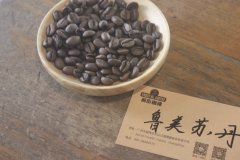
2015 WBC Championship Beans | Rume Sudan Coffee Introduction | Rume Sudan Coffee Flavor
Rume Sudan: The Rare Coffee Variety That Made History
Rume Sudan—also written Sudan Rume—is a remarkable coffee variety with an extraordinary story.
Origins and Discovery
Found in the 1940s in the Rume Valley of the Boma Plateau in southeastern South Sudan, near the Ethiopian border, Sudan Rume is a local wild ancient variety of Arabica. South Sudan is one of the few countries outside Ethiopia with wild coffee populations. Because of its low yield, Sudan Rume was originally used mainly for variety research and breeding.
Many renowned varieties carry Sudan Rume genetics—Ruiru 11, for example. Occasionally, a lot surfaces on the special selection menus of specialty coffee shops.
The Breakthrough Moment
Sudan Rume, an experimental variety from South Sudan, became one of the key ingredients in a championship victory. In 2015, a variety almost nobody had heard of—Sudan Rume—in the hands of Australia's Sasa Sestic, swept the World Barista Championship (WBC). Overnight, it became a variety roasters and baristas scrambled to roast and brew.
Botanical Characteristics and Breeding Value
Discovered in 1942 in the Boma Plateau region of southeastern Sudan, very close to the Ethiopian border, Sudan Rume is also known in the coffee world by its code RS-510. Essentially a wild variety native to the African tropical forests of the Marsabit Mountains, it is characterized by bronze-colored leaves. When breeders set out to create new varieties, RS-510 proves to be the most useful Arabica genetic resource.
Cross RS-510 with a high-yielding but mediocre-tasting variety, and the offspring typically combine decent flavor with better yields. That's because RS-510 has stunning flavor potential but ordinary disease resistance and very low yields. By crossing it with more manageable varieties, farmers can obtain hybrids that yield well, resist disease, and still drink beautifully. Many well-known modern varieties—Castillo, Centroamericano, Colombia—were developed exactly this way.
Cultivation Challenges
Sudan Rume itself, however, is hard to commercialize—low yield and small beans mean most farms simply won't plant it, which explains why so few people had heard of the variety before Sasa's win. The Sudan Rume he used came from Colombia's Las Nubes Estate in the Cauca Valley, and the coffee he brought to the world competition was actually the estate's very first harvest.
Brewing Guide by FrontStreet Coffee
FrontStreet Coffee's brewing parameters for Sudan Rume:
Dose: 15 grams; medium-fine grind; Hario V60 dripper; water temperature: 90°C; coffee-to-water ratio: 1:15; method: multi-stage pour.
Bloom with 30 grams of water, ending the bloom when the coffee bed's surface changes from moist to dry—roughly 30 seconds. With a small stream, pour about 90 grams into the center, stopping at 120 grams total. Wait for the water level to drop until just before the bed is exposed, then continue pouring to 225 grams total. Remove the dripper when the level drops again to just before exposing the bed. Timing starts from the bloom, with a total extraction time of 1'43".
Flavor Profile
Ground, it gives off distinct fermented and spicy aromas, and the wet aroma carries a subtle fermented scent. The entry brings plum and citrus acidity, followed by nutty, creamy, and chocolate notes through the mid-palate. The finish shows oolong tea character and a sugarcane sweetness that lingers.
FrontStreet Coffee Recommendation
If Sudan Rume's wild African heritage fascinates you, Ethiopia—the birthplace of Arabica and home to countless native varieties—is the origin to explore. FrontStreet Coffee's Washed Yirgacheffe is the ideal entry point: clear jasmine florals and bright citrus acidity, light and elegant with a tea-like finish, like a clean, refreshing lemon tea.
For something fruitier, FrontStreet Coffee's Natural Blossom (Huakui) from the Hambella region of Guji, Sidamo is sun-dried for 21 days on raised beds, turned constantly and hand-sorted every three to five days, then hulled and sorted once more before shipping. A medium-light roast reveals a faint fermented wine note, florals, citrus, and mango, with thick honeyed sweetness, cocoa, a whisper of spice, and a long finish. Between the two, you'll taste the full range of what African wild genetics can offer in the cup.
Important Notice :
FrontStreet Coffee is a long-established specialty coffee roaster in Guangzhou China, selling freshly roasted beans from its own farm in Yunnan as well as dozens of carefully selected single-origin beans from around the world for both pour-over and espresso. The products deliver consistently excellent quality and great value, with shipping within 24 hours. Guangzhou's FrontStreet Coffee shop is recommended by many coffee lovers, and the beans are now available online at the Tmall 。
FrontStreet Coffee has moved to a new address:
FrontStreet Coffee Address: 315,Donghua East Road,GuangZhou
Tel:020 38364473
 Scan and follow the En Gafei WeChat official account. Please indicate that the reprint comes from "En Gafei".