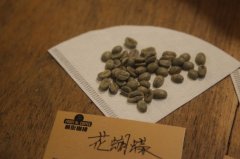
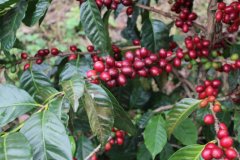
Yunnan Specialty Coffee Bean Grading System and Flavor Profiles: A Guide to Yunnan Arabica Coffee Brands

As an agricultural product, coffee can never match the uniform standards of an industrial one. Differences in bean size and quality are entirely normal. That is why every coffee-growing country sets its own grading standards — to regulate bean quality and to give green bean traders and buyers a reference for value. In this article, FrontStreet Coffee would like to walk you through the grading system for Yunnan coffee beans.
So does Yunnan coffee bean grading actually follow a standard? Are there guidelines? Yes. At present, the grading of Yunnan green coffee beans refers to the "Green Coffee Grade Inspection Standards" released by the Yunnan International Coffee Exchange Center in 2019.
These standards have not been promoted especially well, however. Many businesses mostly use their own "self-assessment standards," grading beans by size or altitude and defining their grades according to the "advantages and characteristics" of their production area. Some simply borrow foreign systems, such as Kenya's AA and AB. More recently, some estates have even introduced "AAA" grade beans, and a "4A grade" may not be far behind. This market chaos produces grades that bear little relation to how the coffee actually tastes and smells. As it stands, the international specialty coffee market has not yet recognized Yunnan coffee.
Today, Yunnan coffee is generally graded by particle size plus defect rate. Particle size follows international standard mesh numbers, and the grading also takes in the international defect-bean point standards, bean appearance and color, cleanliness, aroma, moisture content, and other factors.

International Coffee Grading Standards
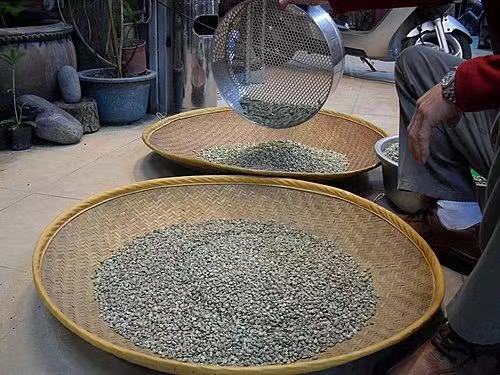
Coffee beans are graded by size using round-hole sorting screens. Under the international standard for small-bean coffee there are grades 10-20, where the number represents the screen hole diameter as a fraction in inches, with the number as the numerator and 64 as the denominator. For example: Grade 14 means green coffee beans that can pass through screens with 14/64 inch hole diameters, while Grade 19 refers to green coffee beans that can pass through screens with 19/64 inch hole diameters. (1 inch ≈ 2.54 centimeters)
Domestic Coffee Grading Standards
Five grades are defined by screen hole diameters of 6.5, 6.0, 5.5, and 5.0 millimeters.
Grade 1: Above 6.5mm, plump and complete particles.
Grade 2: 6.0-6.4mm, plump and relatively uniform.
Grade 3: 5.3-5.9mm, relatively plump and slightly less uniform.
Grade 4: 5.0-5.4mm, with incomplete grains, where complete grains account for over 75%.
Grade 5: Below 5.0mm, with incomplete grains, where complete grains account for over 30%.
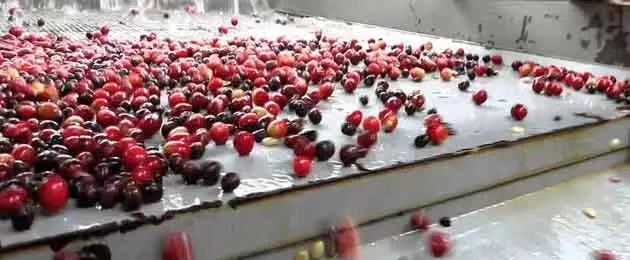
International Standards for Defect Inspection of Small-Bean Coffee (Arabica)
This grading is based on the number of defects, usually determined by counting how many defects appear in a given amount of beans. Following the inspection methods for impurities and defective beans set out by the International Organization for Standardization, a 300-gram sample of coffee beans is randomly selected, and the impurities and defective beans are counted for grading.
Yunnan Small-Bean Coffee Varieties
Careful readers may have noticed that FrontStreet Coffee just said small-bean coffee really means Arabica beans. Within the Coffea genus of the Rubiaceae family, coffee varieties are divided into three main species: Arabica, Robusta, and Liberica. Arabica beans are smaller than those of the other species, which is why people historically called Arabica coffee "small-bean coffee" or "small-fruit coffee."

Yunnan small-bean coffee was originally named for Typica, because Typica is an Arabica small-bean variety — and it is the oldest coffee variety in Yunnan. Later, when Nestlé entered Yunnan, Typica's poor disease resistance and the need for higher yields led the company to ask farmers to cut down their flavorful Typica trees and plant varieties with inferior flavor but better disease resistance and higher yields. At first the leaf-rust-resistant S288 was introduced, and later the higher-yielding Catimor. That is why the coffee trees planted in Yunnan today are mainly Catimor.
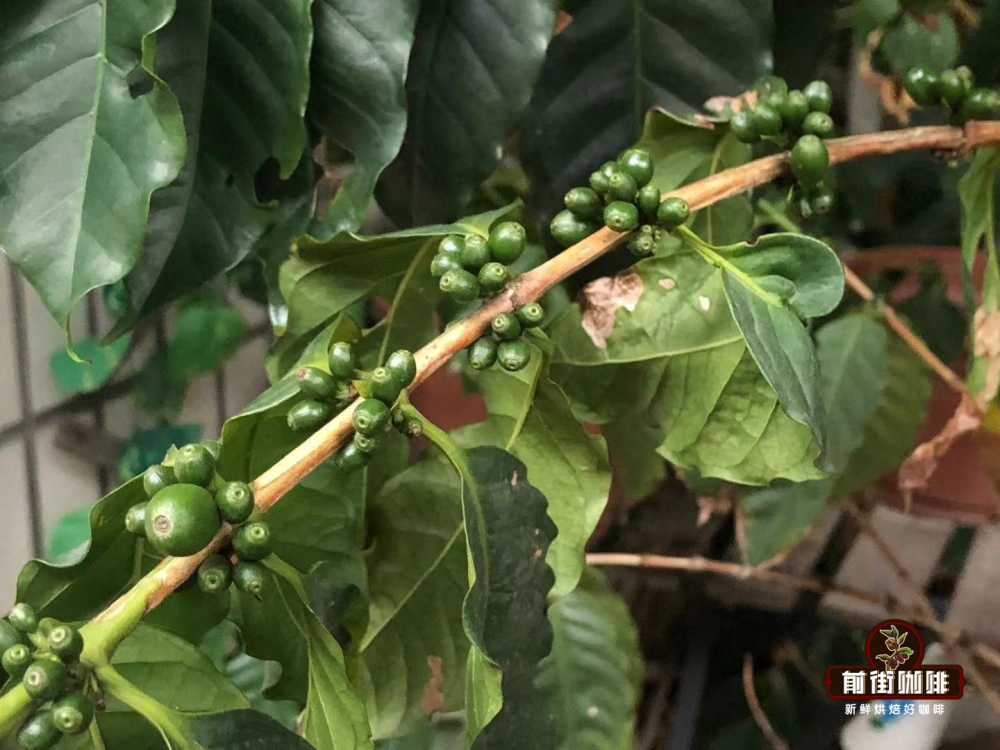
Compared with Typica, Catimor coffee may be somewhat lacking in flavor. But as specialty coffee culture has spread, Yunnan's Catimor has received more scientific cultivation and planting, and its flavor and quality have improved greatly.
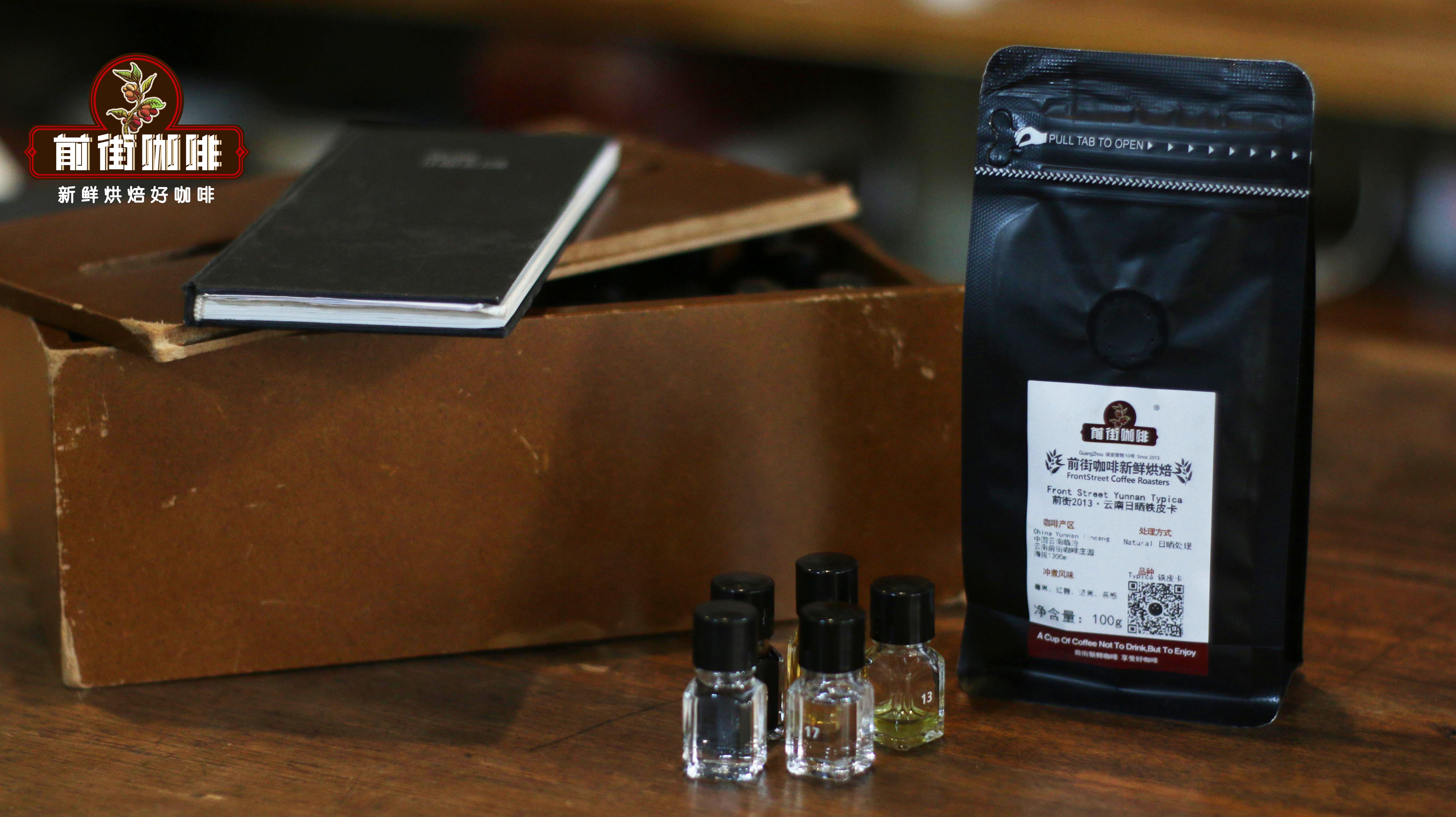
To let everyone experience the charm of Yunnan Typica, in 2013 FrontStreet Coffee began planting Typica varieties and a small amount of Bourbon in Lincang, Yunnan, for research and experimental planting. After harvest, these are sold online and in FrontStreet Coffee's physical stores under the name "FrontStreet 2013 Natural Typica Coffee Beans." The flavor is cleaner, with balanced sweet, sour, and bitter notes and a pronounced aftertaste.
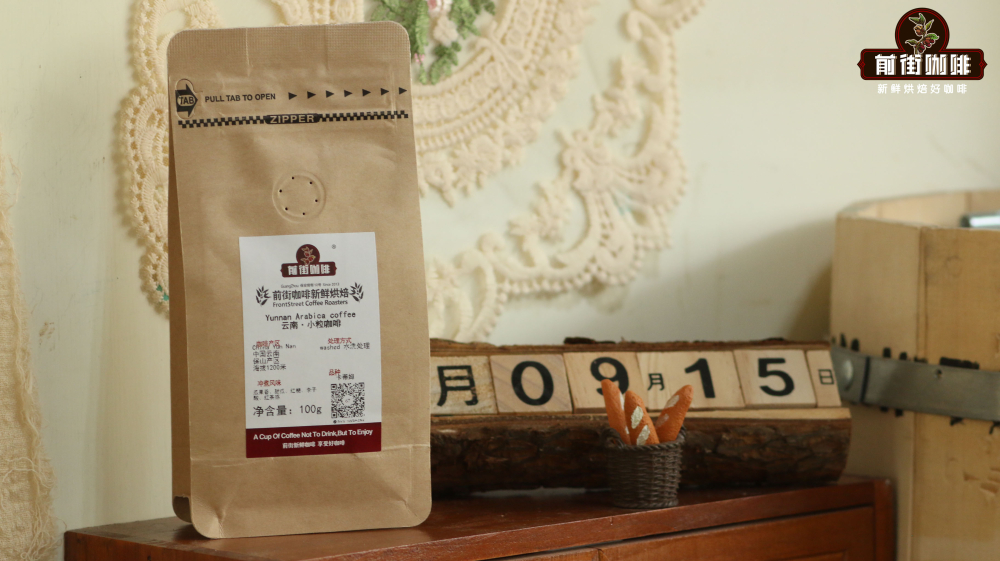
In addition, two Catimor coffees from the Baoshan region of Yunnan have been selected. "FrontStreet Coffee — Baoshan Washed Catimor Coffee Beans" serve as a selected daily coffee from the region, letting consumers taste Yunnan's nut, caramel, and plum-like flavor characteristics at outstanding value.
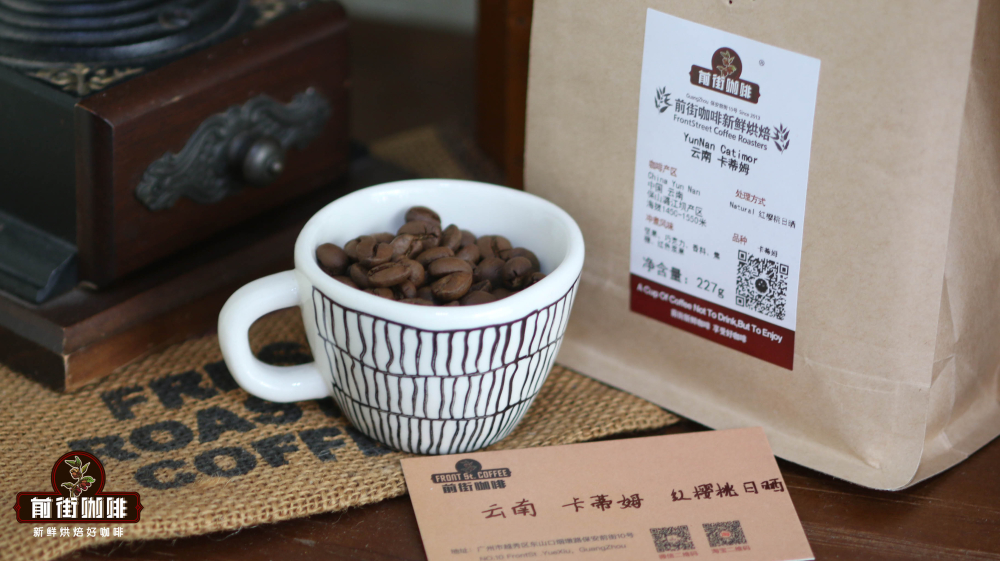
"FrontStreet Coffee — Baoshan Full Red Cherry Natural Catimor Coffee Beans" are made from 100% full red cherries using natural processing. They have higher sweetness than the washed Catimor, with soft red berry acidity.
How to Brew Yunnan Small-Bean Coffee
Dripper: Hario V60
Water Temperature: 90 degrees Celsius
Coffee Amount: 15 grams
Coffee-to-Water Ratio: 1:15
Grind Size: 75% pass-through rate on a China standard #20 sieve

First, pour 30 grams of hot water and let it bloom for 30 seconds. Starting from the center, pour in a fine stream and slowly circle to 125 grams for a staged pour. Wait until the water level in the dripper drops to just above the coffee bed, then continue circling and pouring to 225 grams. Total extraction time is approximately 2 minutes.

When shipping, FrontStreet Coffee makes sure the beans delivered to you are freshly roasted within 5 days. By the time they reach you, they have already gone through a 4 to 7-day degassing period and their flavor is at its best. FrontStreet Coffee has also noticed that some friends choose to have us grind the coffee for them, because their home grinding equipment produces too many fines. It is worth remembering that once coffee is ground, its flavor compounds volatilize much faster.
FrontStreet Coffee Recommendation
Anyone curious about Chinese coffee should begin with Yunnan's story. Coffee first reached the province in 1904, when the French missionary Tian Deneng brought seeds from Vietnam — Typica — and planted the first coffee tree in Zhugula village, Binchuan county, Yunnan. The geography and climate suited it so well that small-bean coffee took off. Yunnan small-bean coffee is grown mainly across the southwest of the province, in the four main areas of Baoshan, Dehong, Pu'er, and Lincang, and most of Yunnan sits at an altitude of about 1,000 meters: fertile sloping soil, plenty of sun, ample rain, and a wide day-night temperature swing all help the trees.
For an easy introduction, FrontStreet Coffee suggests the FrontStreet Yunnan Small-Bean Coffee from the Baoshan area. Washed and medium-roasted, it shows soft nut and chocolate sweetness with a light plum acidity, preserving some brightness while emphasizing a gentle caramel note — a true taste of Yunnan's terroir at a friendly price. If you want a clearer, more layered expression of the region, move up to the FrontStreet 2013 Natural Typica. Our own estate grows this Typica, one of the oldest and purest Arabica varieties, and processes it naturally. The result is a fuller body with brighter sweet-and-sour balance, dark berry character, caramel sweetness, chocolate and a hint of dried apricot, and a black tea finish.
And for a Yunnan-flavored espresso, try the FrontStreet Black Cocoa Blend, a combination of Yunnan small-bean coffee and Brazil Cerrado that many baristas recommend. The Brazilian component supplies mixed-nut aroma and a balanced body, while the Yunnan small-bean brings chocolate and citrus. Pulled as an americano it lands balanced across sweet, sour, and bitter with nutty, brown-sugar warmth, and as a latte it turns silky with almond and cream — a very forgiving blend for beginners.
Important Notice :
FrontStreet Coffee is a long-established specialty coffee roaster in Guangzhou China, selling freshly roasted beans from its own farm in Yunnan as well as dozens of carefully selected single-origin beans from around the world for both pour-over and espresso. The products deliver consistently excellent quality and great value, with shipping within 24 hours. Guangzhou's FrontStreet Coffee shop is recommended by many coffee lovers, and the beans are now available online at the Tmall 。
FrontStreet Coffee has moved to a new address:
FrontStreet Coffee Address: 315,Donghua East Road,GuangZhou
Tel:020 38364473
 Scan and follow the En Gafei WeChat official account. Please indicate that the reprint comes from "En Gafei".