An Introduction to Small Bean Coffee Processing, Roast Levels, and Flavor Profiles from China's Yunnan Pu'er Region

According to FrontStreet Coffee's research, Pu'er's coffee cultivation history can be traced back to 1892, spanning more than a hundred years to date. Compared with other regions in Yunnan, Pu'er's coffee cultivation area reaches 679,000 mu, accounting for 48.7% of the entire province. As of September 2023, Pu'er's annual coffee bean production exceeded 51,200 tons, with 256,700 farmers dependent on coffee cultivation.
Geographically, Pu'er sits in the southwestern part of Yunnan Province, bordering Vietnam and Laos to the southeast and Myanmar to the southwest. It is the source of the "Ancient Tea Horse Road" and is renowned not only as the "World's Tea Source" but has also earned the title "Coffee Capital of China" in recent years with the growth of the coffee industry. So when exactly did coffee enter China? This article by FrontStreet Coffee will take you to Yunnan Province, China's most suitable place for coffee cultivation.

The History of Yunnan Coffee
The beginning of Yunnan's coffee story traces back to the last century, when a French missionary brought coffee seeds from abroad into Yunnan. When he successfully planted the first coffee tree in a place called Zhukula, he probably never imagined that a hundred years later coffee would become a highlight of Yunnan's plateau specialty agriculture.
The 1960s marked a period of further expansion in Yunnan's coffee cultivation scale. After 1952, under the leadership of expert Ma Guojin from the Academy of Agricultural Sciences, large-scale coffee cultivation was formally developed, with the coffee produced supplied to the Soviet Union. It was in 1937 that the patriotic overseas Chinese Mr. Liang Jinshan brought back a batch of seeds from Myanmar to Baoshan, opening up coffee cultivation land in Baoshan's Lujiangba area. At this time, Yunnan's varieties all belonged to Typica and Bourbon variants, with a cultivation area reaching as much as 50,000 mu.
Later, Yunnan coffee suffered from global leaf rust disease, causing large-scale death of coffee trees and a significant reduction in cultivation area. By the 1980s during the Reform and Opening Up period, Yunnan coffee gradually entered the international market. In 1988, foreign companies such as Nestlé established branches in China, supporting Yunnan's coffee industry development in multiple ways. They not only introduced high-yield, disease-resistant varieties like Catimor but also promised to purchase Yunnan coffee beans as raw materials at the then-current US futures prices. These measures further expanded Yunnan's coffee cultivation area and increased the enthusiasm of coffee farmers. At the same time, this established the Catimor variety's position in replacing the ancient Typica variety, making it the main variety of Yunnan coffee.

After the millennium, with the vigorous development of various industries in China and the continuous promotion of specialty coffee concepts domestically, Yunnan coffee began to engage in more scientific selection, cultivation, harvesting and processing. Compared with the past, people are now more willing to actively learn about Yunnan as this "new producing region." Many customers who visit FrontStreet Coffee's stores for pour-over coffee ask if we have Yunnan beans, which shows that Yunnan coffee's development is continuously progressing.
Characteristics of Yunnan Small Bean Varieties
Before the 1980s, the widely cultivated varieties in Yunnan were two ancient small bean varieties: Typica and Bourbon. The so-called small bean varieties refer to smaller-sized Arabica varieties, in contrast to Hainan's medium-grain Robusta coffee beans.

Typica offers rich and diverse flavors, presenting various fruit acidity and delicate textures. It is recognized as a high-quality variety, and the renowned Blue Mountain coffee and Hawaiian Kona coffee both belong to Typica. In appearance, Typica trees are tall and have good cold resistance, but low individual plant yield and poor resistance, making them extremely susceptible to leaf rust, coffee berry disease and nematode disease. They therefore require more human management input. In addition, because there is not much price advantage in the market for this variety, many Yunnan coffee farmers choose to switch to higher-yield varieties to replace Typica.
In 1995, the Yunnan provincial government formally included Yunnan coffee cultivation in the biological resources "18 Project," which greatly encouraged farmers' cultivation enthusiasm, and village cultivation areas rapidly expanded. In the same year, the Institute of Tropical Crops of the Yunnan Academy of Agricultural Sciences introduced a new disease-resistant and high-yield coffee variety, Catimor, and began planting it in Xinzhai Village in Yunnan's Nujiang Gorge. Catimor 7963 is a hybrid variety developed by the Portuguese Tropical Research Institute (HCT) specifically for coffee rust resistance, with stable characteristics. In appearance, this variety has a compact tree shape, is dwarf in habit, produces many branches and short fruit nodes. It grows vigorously with extremely strong vitality, and its greatest characteristics are amazing rust resistance and high-yield capability. It is therefore deeply loved by Yunnan coffee farmers, and currently over 90% of coffee trees in Yunnan are still Catimor.

FrontStreet Coffee believes that to understand Yunnan coffee, one should first recognize the flavor characteristics of its producing regions. Therefore, the representative Yunnan coffee offered by FrontStreet Coffee is selected from the Catimor variety in the Baoshan region, processed using the washed method, and launched in 100-gram small packages, allowing everyone to taste the "Flavor of Yunnan." FrontStreet Coffee believes that Catimor coffee grown in Yunnan has a balanced flavor profile with nuts, brown sugar and plum-like notes.
Washed vs. Natural Yunnan Coffee: Which Tastes Better?
From fruit on a tree to delicious coffee in our cups, coffee undergoes multiple steps including harvesting, post-processing, grading classification, purchasing, roasting and brewing. Besides variety, the post-processing method largely influences the flavor direction of coffee.

Currently, there are novel flavor-enhancing processing methods on the market that cover up the defective flavors of Yunnan beans themselves and add large amounts of aroma to increase prices. FrontStreet Coffee feels this approach neither truly preserves the flavor of Yunnan coffee nor serves consumers well. Some friends, after tasting Yunnan coffee beans processed with special methods, find the aroma particularly prominent and think this is the mainstream processing method for Yunnan coffee. In reality, most Yunnan coffee farmers face harsh conditions and do not possess expensive processing equipment. Therefore, the vast majority of Yunnan coffee beans can only adopt the standard processing methods, namely washed and natural processing.
Washed Processing Steps:
Use machines to remove the skin and pulp from harvested coffee cherries, then put the depulped coffee beans into fermentation tanks. Fermentation decomposes the mucilage layer, and the fermented coffee beans are washed repeatedly with clean water to remove the decomposed mucilage. Finally the coffee beans are dried in the sun for 1-2 weeks. Washed Yunnan coffee not only reduces the defect rate and produces more consistent quality, but also achieves higher cleanliness, allowing the original flavors of Yunnan coffee to be better perceived in the cup. This is why FrontStreet Coffee prioritized washed processing batches when launching the "Yunnan Representative" daily drinking beans.

How Does Yunnan Coffee Taste?
When FrontStreet Coffee talks about the flavor characteristics of Yunnan coffee, some describe it as chocolate, some say it is like sweet potatoes, and others feel it resembles Sanhua plums. FrontStreet Coffee believes that the flavor of Yunnan small beans belongs to a balanced flavor profile, meaning it has acidity, sweetness and bitterness. Therefore, FrontStreet Coffee's Yunnan coffee all uses medium roasting to highlight the roasted aromas of chocolate and nuts while retaining some acidity. From cupping, FrontStreet Coffee tastes herbal, nutty, caramel, chocolate and brown sugar aromas in washed Yunnan small bean daily coffee, along with melon and fruit sweetness and plum acidity, with a balanced mouthfeel.

Many customers who purchase Yunnan coffee beans ask FrontStreet Coffee: What brewing method should be used? What are the recommended brewing parameters? If you want to experience the flavor spectrum of Yunnan coffee, FrontStreet Coffee suggests that hand-poured black coffee is the best way to taste it.
FrontStreet Coffee's Pour-over Parameters:
- Filter: Hario V60
- Dose: 15g
- Water temperature: 90°C
- Grind size: 75% pass-through rate on #20 sieve
- Water-to-coffee ratio: 1:15

Grind Size and Water Temperature:
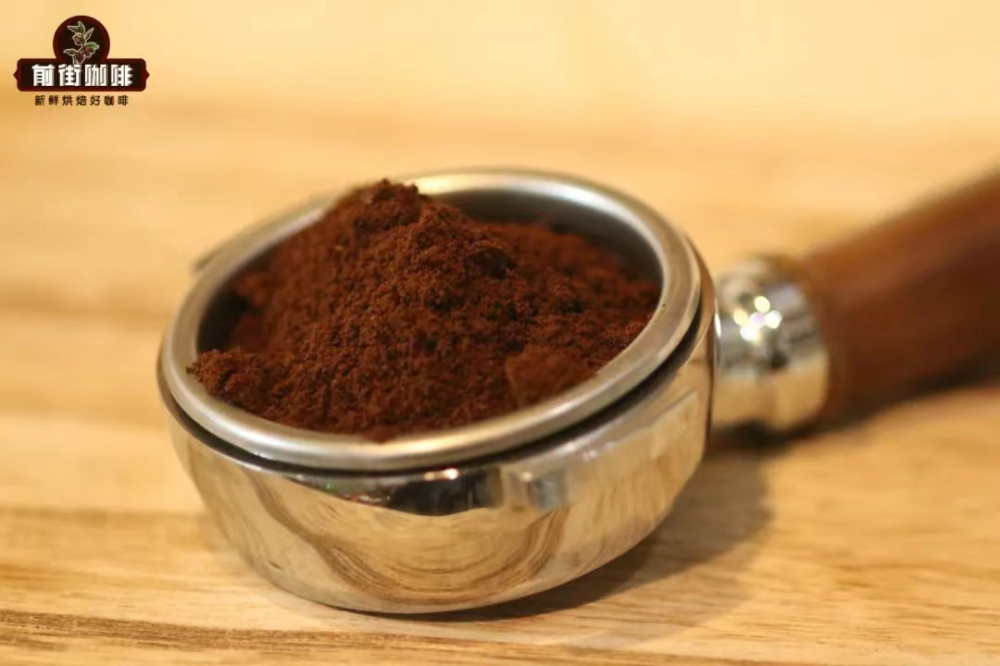
Because Yunnan coffee's flavor attributes are balanced, excessively high water temperature and too fine a grind size can easily lead to over-extraction, releasing too many bitter, large-molecule flavor compounds. Conversely, too low a water temperature and too coarse a grind size can lead to under-extraction, making the coffee taste weak. FrontStreet Coffee therefore chooses a medium water temperature and grind size: 90°C hot water for extraction, with the coffee grind size having a 75% pass-through rate on the Chinese standard #20 sieve, store EK43s setting 10.5.
Three-Stage Pouring:
Use twice the amount of water as the coffee dose to wet the coffee bed, forming a dome, and let it bloom for 30s. Then use a small water stream to pour in circles from inside to outside up to 125g. Wait until the coffee bed drops to half the height of the filter cup, then continue with the same fine water stream to inject the third stage up to 225g. Once all the coffee liquid has filtered through, remove the filter cup. The total time is about 2 minutes.
FrontStreet Coffee Recommendation
Pu'er and its neighbors are where Yunnan coffee began, and washed processing is the clearest window into that terroir. FrontStreet Coffee Yunnan Small Bean is the bean FrontStreet selects to represent the region: Catimor from the Baoshan growing area, washed and medium roasted, and sold in 100-gram small packages so the "Flavor of Yunnan" is easy to try. In the cup it is balanced, with nuts, brown sugar and plum-like notes and a comfortable malic acidity. This is the same coffee FrontStreet describes cupping with herbal, nutty, caramel, chocolate and brown sugar aromas, melon and fruit sweetness and plum acidity.
For a more layered expression, FrontStreet Coffee 2013 Natural Typica comes from FrontStreet's own estate, planted from Typica, the oldest and purest Arabica variety and the one the first French missionary brought to Yunnan. FrontStreet picks fully ripe red cherries only and dries them naturally, then roasts to medium so the cup is more balanced with brighter sweet-tart fruit: dark berries, caramel sweetness, chocolate and a hint of apricot, finishing with black tea.
Brew either one by the parameters above: a Hario V60, 15g dose, 90°C water, a grind at 75% pass-through on the #20 sieve, and a 1:15 coffee-to-water ratio, poured in three stages with a 30-second bloom to 125g and then to 225g, for a total of about 2 minutes.
Important Notice :
FrontStreet Coffee is a long-established specialty coffee roaster in Guangzhou China, selling freshly roasted beans from its own farm in Yunnan as well as dozens of carefully selected single-origin beans from around the world for both pour-over and espresso. The products deliver consistently excellent quality and great value, with shipping within 24 hours. Guangzhou's FrontStreet Coffee shop is recommended by many coffee lovers, and the beans are now available online at the Tmall 。
FrontStreet Coffee has moved to a new address:
FrontStreet Coffee Address: 315,Donghua East Road,GuangZhou
Tel:020 38364473
 Scan and follow the En Gafei WeChat official account. Please indicate that the reprint comes from "En Gafei".