Recommended Pour-over Coffee from Rwanda: Flavor and Taste Characteristics of Rwanda Bourbon Washed Coffee Beans
Introduction to Rwandan Coffee
Among African coffees, the most famous are undoubtedly Ethiopian Yirgacheffe and Kenyan beans. In recent years, however, a single origin from Rwanda has become increasingly active on the specialty market. FrontStreet Coffee procured this bean to taste as well and found its flavor excellent, without being overly similar to other single origins. In this article, FrontStreet Coffee introduces some background on Rwandan coffee.
History of Rwandan Coffee
As FrontStreet Coffee understands it, Rwanda lies in central Africa and is a classic landlocked country, with every neighboring country a major coffee producer. In the early 20th century, Rwanda was successively a colony of Germany and Belgium, and coffee was first introduced by German missionaries. During the colonial period, production rose sharply, but exploited labor, suppressed prices for the crop and high export taxes left bean quality far from ideal, a common pattern in the commercial development of coffee at the time.
It was not until Rwanda gained independence and established its first official coffee organization, OCIR, that attention gradually turned to bean production. Rwanda's coffee output kept growing from the 1960s to the 1980s, reaching an unprecedented peak in 1986, until the political situation became unstable in the early 1990s, the period of the Rwandan Genocide, and the industry stalled.
Today Rwanda has gradually recovered its vitality. In urban construction, security, the friendliness of its people and cleanliness, it can be called an "atypical" African country. Rwanda is currently recognized as the safest country in Africa. In the "2017 World's Safest Countries and Destinations" ranking, Rwanda placed ninth among all cities worldwide, the only African country in the top ten.
This year, because of the COVID-19 pandemic, Rwanda's coffee sales have been significantly affected. To help Rwandan coffee farmers through the difficulty, on May 14th Alibaba's livestream star Weiya recommended Rwandan Gorilla's coffee beans, selling a year's worth of sales in a single second. That also shows the potential of Rwandan coffee.
Rwanda's Coffee Growing Environment
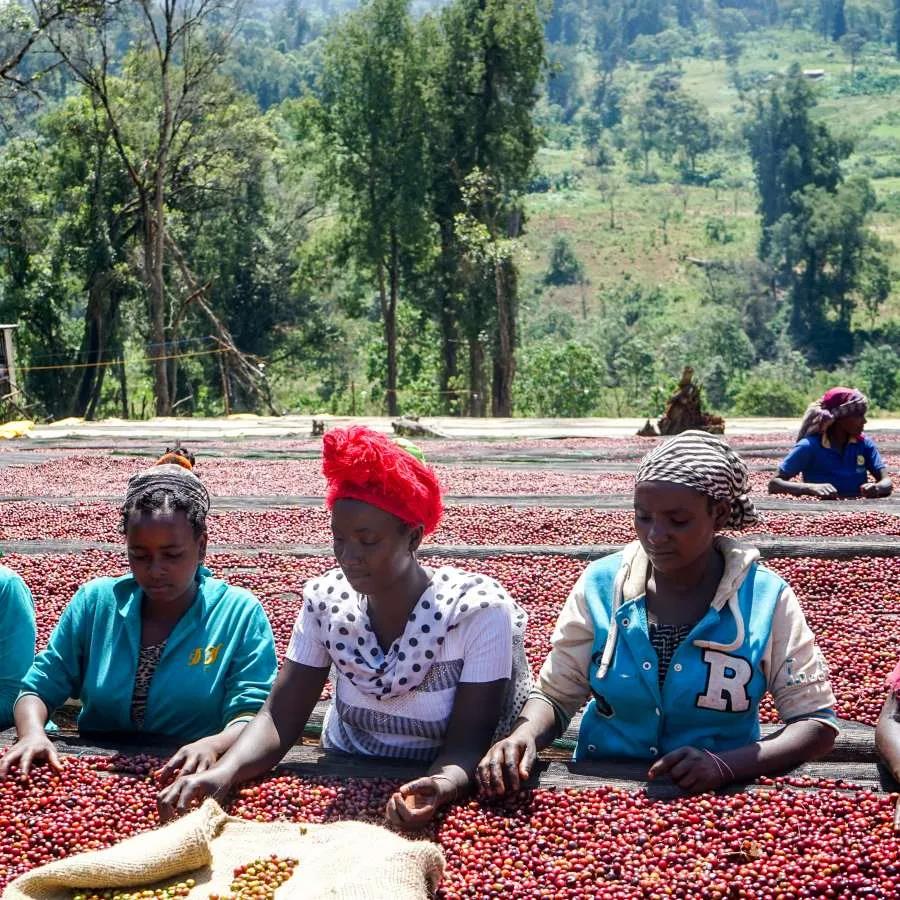
Rwanda, known as the "Land of a Thousand Hills," has terrain of mountains and plateaus throughout the country, with most coffee trees planted on mountains at elevations between 1,700 and 2,000 meters. Most of Rwanda has a tropical highland climate and a tropical savanna climate, mild and cool. There are roughly 33,000 hectares of coffee plantations, with 500,000 people engaged in coffee cultivation. Rwanda is one of the few countries in the world that can fully enjoy a harmony of soil, altitude and climate.
FrontStreet Coffee believes it is precisely these growing conditions that make Rwandan beans taste so distinctive, with the freshness and sweetness of fruit, the fragrance of flowers and a black tea-like aftertaste. Rwanda's coffee model is also based on small-scale farming rather than large enterprises. It cannot match the assembly lines of big companies, but small farming allows more focused attention on the beans.
As FrontStreet Coffee has often noted in previous articles, a bean's flavor is shaped not only by where it grows but also by variety and processing method. Next, FrontStreet Coffee explains these three factors behind the flavor of Rwandan coffee.
Rwandan Coffee Growing Regions
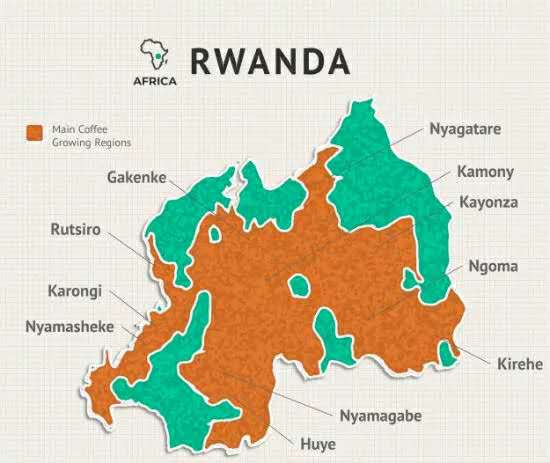
According to FrontStreet Coffee's understanding, Rwanda's specialty coffee regions are mainly distributed across the south and west. In the southern Huye mountain area and the Nyamagabe region, higher altitudes give the beans floral and citrus notes, while the Nyamasheke region on the shores of Lake Kivu in the west produces high-quality coffee with a rich, aromatic, juicy taste. The regional differences are not dramatic, but they are there when you taste carefully. People often ask FrontStreet Coffee how to tell them apart, feeling that flavor is rather mystical. In fact, FrontStreet Coffee has gone through extensive flavor recognition training to distinguish the coffees of different regions, and it takes time, effort and persistence.
Rwandan Coffee Varieties
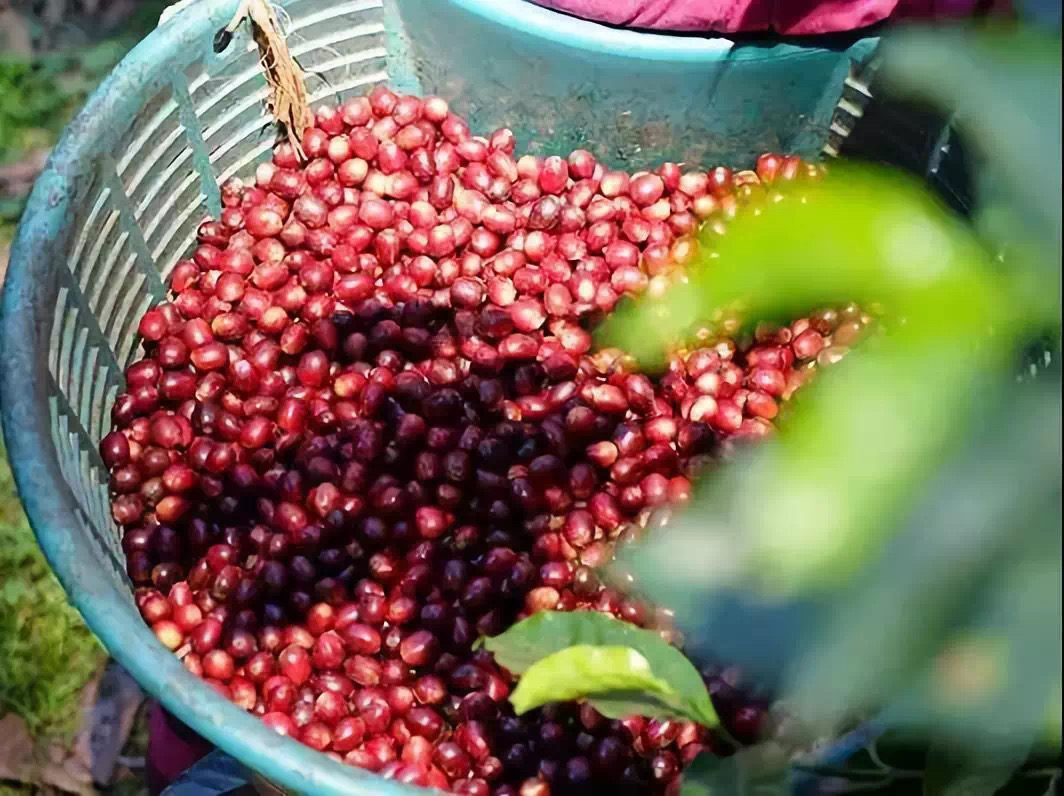
Over 90% of Rwanda's coffee varieties are Bourbon, introduced earlier, along with mixed varieties from the Bourbon family that can withstand natural disasters. Bourbon was originally cultivated on Reunion Island and introduced to Brazil in 1860, quickly spreading northward through Latin America. Generally, after a Bourbon tree flowers and sets fruit, the cherries change color in the sequence green, then light yellow, then light orange, then ripe red, then darker red, so some people call it "Red Bourbon." In fact, Red Bourbon is what we generally call Bourbon. Bourbon grown at high altitude typically has a better aroma and brighter acidity.
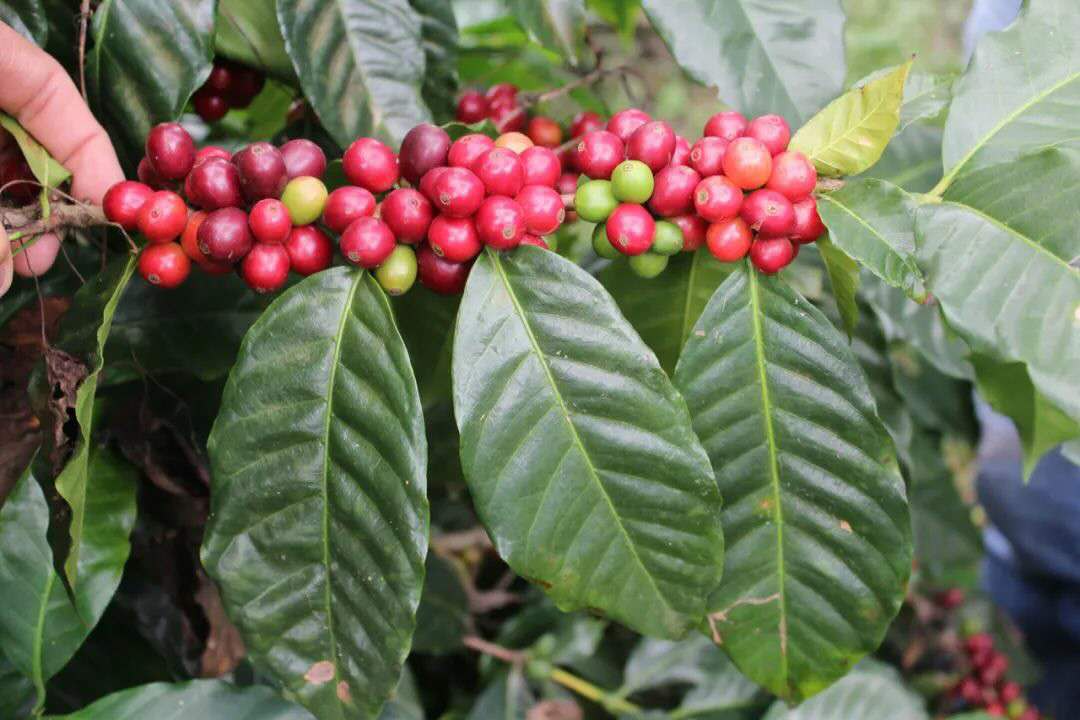
For example, several Latin American Bourbons FrontStreet Coffee currently procures include Brazilian Red Bourbon, Brazilian Yellow Bourbon and Colombian Pink Bourbon. In Latin America, however, the advantage of Bourbon is gone because of poor disease resistance. Rwandan Bourbon, by contrast, still holds its advantage, which is one reason FrontStreet Coffee procures Rwandan coffee.
Rwandan Coffee Bean Processing Methods
Rwandan coffee is currently processed mainly by the washed method. Each harvest season, farmers gather ripe cherries at washing stations for processing, with manual selection to make sure no unripe or damaged fruit is mixed in. As FrontStreet Coffee has often noted in previous articles, washing best reflects a bean's original flavor, with a cleaner and brighter performance. This is another reason FrontStreet Coffee brings in Rwandan coffee.
Washed Processing Method Steps:
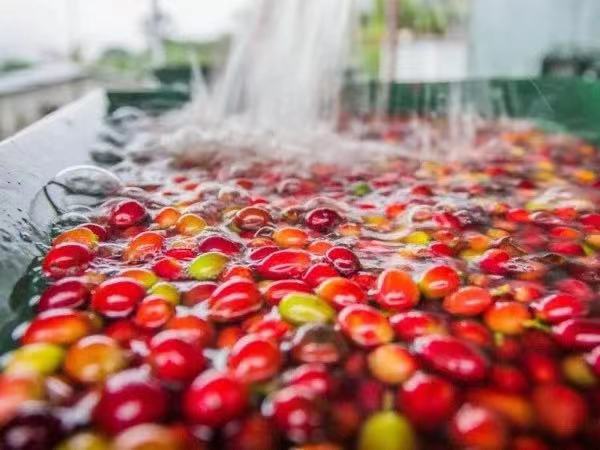
1. Pour the coffee cherries into water and remove defective beans by flotation, such as unripe, overripe or otherwise damaged fruit and other impurities.
2. Use a pulping machine to remove the outer skin and pulp from the selected cherries. After depulping, a layer of mucilage still clings to the surface, so large amounts of clean water are needed to remove it.
3. Removing the mucilage through fermentation takes about 18 hours. Because fermentation bacteria still adhere to the surface afterward, another thorough wash with large amounts of clean water is needed. To obtain 1 kilogram of coffee beans, this step consumes 40 to 50 kilograms of clean water. FrontStreet Coffee considers that a very large number, and it limits which regions can adopt the washed method.
4. The washed beans can then be dried. Some regions dry them outdoors directly; where equipment is available, some plants use machines, bringing the moisture content down to around 11%. At that point a huller removes the inner parchment and silver skin.
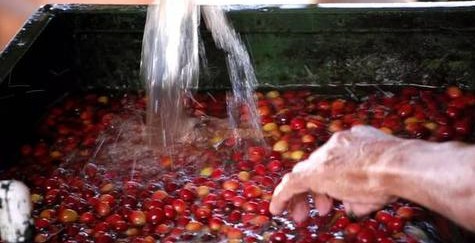
According to FrontStreet Coffee's understanding, in the short twenty years since Rwanda's coffee development began, washing stations have risen from 2 to 220. They are now all privately owned, that is, by exporters or farmer cooperatives. Because the average farm is small, fewer than 200 coffee trees each, every station serves approximately 50 to 100 farms. NAEB employs 200 botanists and cuppers who regularly visit washing stations to inspect quality and educate farmers on soil management, organic farming, pruning, pest control and harvesting.
Next, FrontStreet Coffee introduces this Rwandan single origin, which comes from Rwanda's most famous Gashaka washing station.
FrontStreet Coffee's Gashaka Coffee Beans
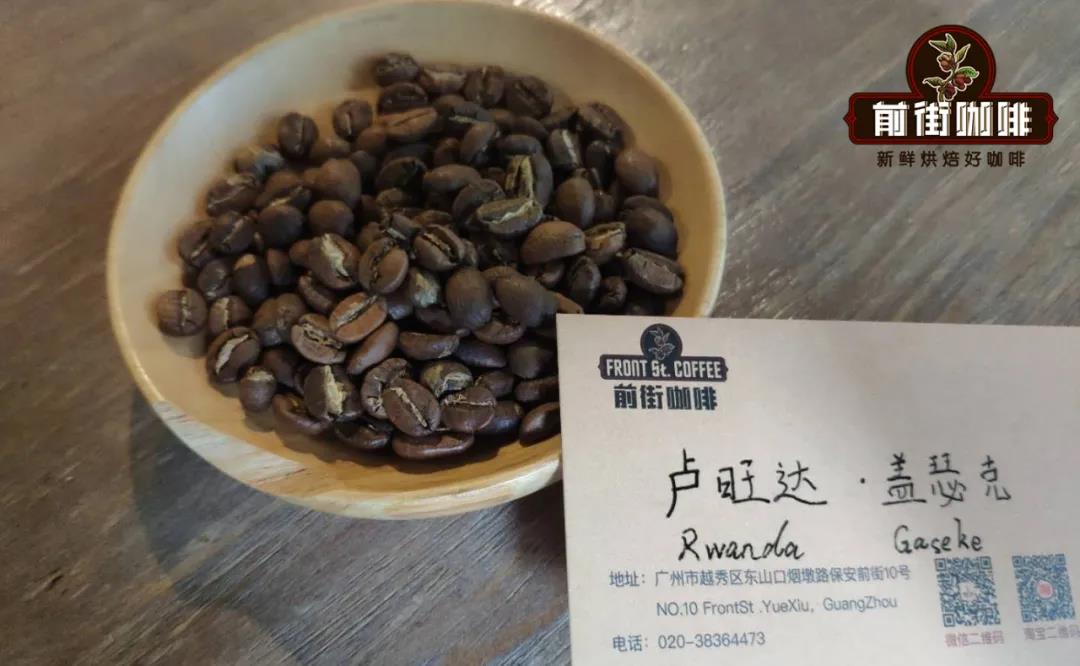
Country: Rwanda
Region: Nyamasheke District, Western Rwanda
Altitude: 1,700-2,000 meters
Varieties: Bourbon, Caturra, Catuai
Processing: Washed
Flavor: Plum, citrus, berries, nuts, bright acidity, honey-sweet aftertaste
Gashaka Washing Station
According to FrontStreet Coffee's understanding, Fidele Ndagijmana, the owner of the Gashaka washing station, is a young trader in the Nyamasheke region. Seeing the potential of Rwandan specialty washed coffee, he applied to the government to build this processing plant and successfully processed 170 tons of coffee cherries in its first year. He then used the off-season to improve and expand the production equipment, providing better machinery and superior storage for the next harvest. This capable trader also secured more land near the plant for coffee cultivation, laying a solid quality foundation for these Gashaka beans.
Before launching any new bean, FrontStreet Coffee runs extensive roasting and brewing tests, and this Rwandan Gashaka is no exception. Next, FrontStreet Coffee shares the roasting and brewing data for this bean.
FrontStreet Coffee's Roasting Recommendations
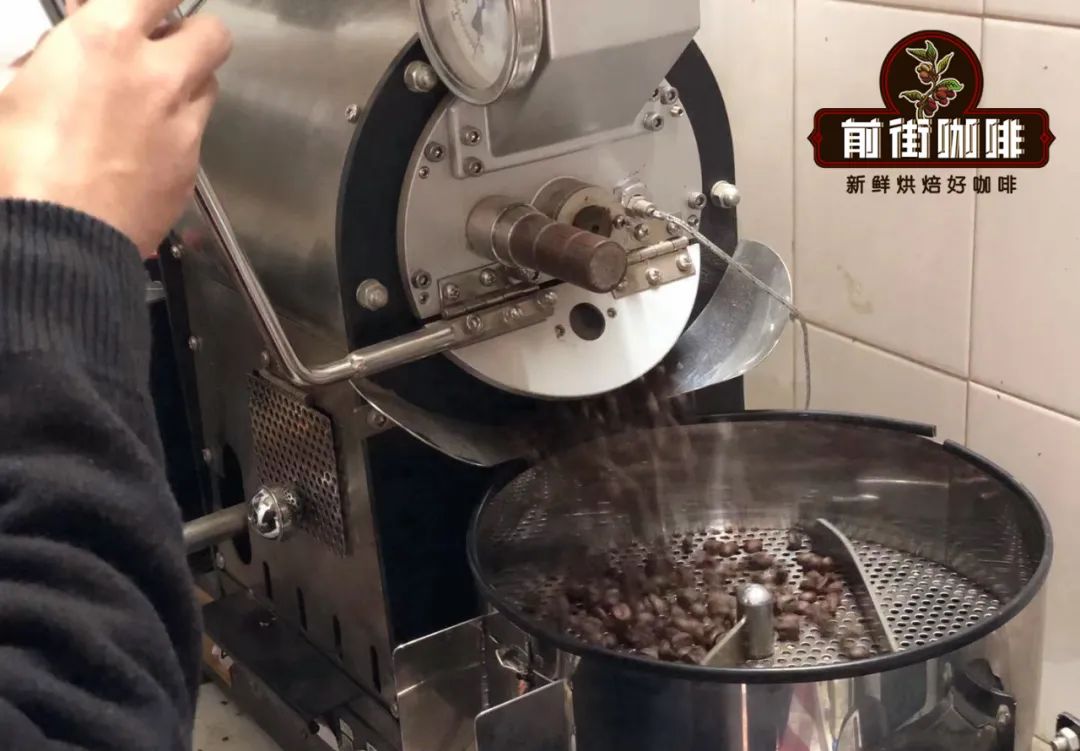
Because Rwandan beans have fresh acidity, FrontStreet Coffee recommends a light-to-medium roast to highlight that character; the deeper the roast, the more the fruity acidity is lost. On a Yangjia 800N with a 550 g bean charge: preheat the oven to 175C, heat power 120, damper at setting 3; the return temperature point comes at 1'36", and when the oven reaches 112C open the damper to 4 and raise heat power to 140; at 151C the bean surface turns yellow and the grassy smell disappears completely, marking the start of the dehydration stage; at 8'30" the surface shows uneven wrinkles and dark spots and the toast smell clearly turns to coffee aroma, which can be read as the prelude to first crack. Listen carefully for the sound of first crack. First crack begins at 9'45", the damper opens to 5, develop for 1'30" after first crack, and discharge at 190.6C.
FrontStreet Coffee's Pour-over Parameters:
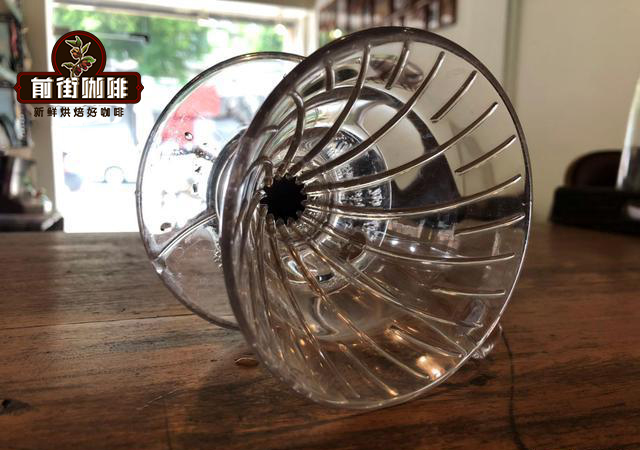
Filter: V60
Water Temperature: 90C
Dose: 15 grams
Ratio: 1:15
Grind Size: BG#6m (China standard 20-mesh sieve pass rate 80%)
First segment: use 30 g of water for a 30-second bloom. Second segment: a small circular pour until reaching 125 g, then pause. When the water level drops and is about to expose the coffee bed, continue pouring the third segment to 225 g, then stop. When the level drops and is about to expose the bed again, remove the filter cup. Timing starts from the bloom. Total extraction time is 2 minutes. The conical V60 filter cup enhances layering, the 1:15 ratio builds body and aftertaste, and segmented pouring keeps the extraction time from running too short while allowing adjustments across the front, middle and back stages.
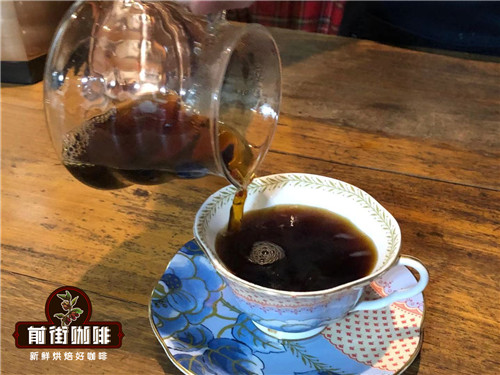
Rwanda's brewing flavor: obvious fruit acidity, nuts, overall balanced and smooth.
Conclusion
That is some of the relevant background on Rwandan coffee compiled by FrontStreet Coffee. We hope it helps you better understand this producing region, so you can choose beans that suit your taste in the future.
FrontStreet Coffee Recommendation
If the clean, bright, fruit-forward character of Rwandan washed coffee appeals to you, FrontStreet Coffee's washed Yirgacheffe is an excellent next step. It is the classic entry point into the Ethiopian producing region, known for white jasmine, bright citrus and lemon acidity and a tea-like finish, all at a friendly price that makes it many drinkers' first specialty bean.
For a little more structure and depth, FrontStreet Coffee's washed Gedingin cooperative coffee comes from the Worka area at the southeastern edge of Yirgacheffe, once part of the Worka cooperative under the YCFCU. It keeps the traditional washed method, so instead of bitterness you get clean, bright citrus and lemon acidity lifted by jasmine fragrance.
Either bean brews well as a pour-over. FrontStreet Coffee suggests a V60 at 90-91C, 15 g of coffee to 225 g of water for a 1:15 ratio, and a grind around fine granulated sugar, roughly 80% passing a No. 20 sieve or setting 10 on an EK43s.
Important Notice :
FrontStreet Coffee is a long-established specialty coffee roaster in Guangzhou China, selling freshly roasted beans from its own farm in Yunnan as well as dozens of carefully selected single-origin beans from around the world for both pour-over and espresso. The products deliver consistently excellent quality and great value, with shipping within 24 hours. Guangzhou's FrontStreet Coffee shop is recommended by many coffee lovers, and the beans are now available online at the Tmall 。
FrontStreet Coffee has moved to a new address:
FrontStreet Coffee Address: 315,Donghua East Road,GuangZhou
Tel:020 38364473
 Scan and follow the En Gafei WeChat official account. Please indicate that the reprint comes from "En Gafei".