Is Freshly Ground Hand-Drip Blue Mountain Flavor Coffee Black Coffee? What Machine is Suitable for Brewing Authentic Blue Mountain Coffee Beans?

Understanding Coffee: Black Coffee and Blue Mountain
Coffee comes in countless varieties, and for many enthusiasts it can be confusing to tell black coffee apart from espresso-based drinks. In most people's minds, Blue Mountain coffee stands at the summit of premium coffee, with international renown. But does this kind of coffee also count as black coffee?
FrontStreet Coffee is here to clarify: when we drink coffee with sugar, cream, or other additions, that is not black coffee but an espresso-based drink. Black coffee is simply coffee brewed from ground beans with nothing added. It is coffee in its unadorned form, delivering the original experience of tasting coffee and expressing its origin character most faithfully. Black coffee combines the five attributes of coffee—fragrance, sweetness, mellowness, acidity, and bitterness: primitive yet robust, profound yet intriguing. Blue Mountain, meanwhile, is one of the coffee bean varieties and a world-class premium bean. Coffee brewed from Blue Mountain beans is Blue Mountain coffee, and served without sugar or milk, it becomes Blue Mountain black coffee.

What Makes Blue Mountain Coffee Special?
Blue Mountain coffee is renowned as a world-class coffee, known as the "King of Coffee." FrontStreet Coffee explains: authentic Jamaican Blue Mountain coffee comes from beans grown at altitudes above 1000 meters in Jamaica's Blue Mountain range. True Blue Mountain features rich aroma, balanced and mellow body, and a perfect equilibrium of sweet, sour, and bitter notes that makes it exceptionally pleasant to drink. It carries an elegant, almost regal quality that makes it truly exceptional among coffees.
Where Does Blue Mountain Coffee Come From?
Blue Mountain coffee originates from Jamaica, where coffee cultivation dates back to the 18th century. Beginning in 1717, when French King Louis XV ordered coffee cultivation in Jamaica, followed by the Jamaican governor introducing Arabica varieties from Martinique for widespread planting, coffee took root in Jamaican soil. These coffees became known as Jamaican coffee.

Growing Altitude and Environment
The Blue Mountain range lies in eastern Jamaica. The mountain takes its name because on clear days, when sunlight strikes the azure Caribbean Sea, the peaks reflect the sea's brilliant blue glow. Its highest peak reaches 2,256 meters—the highest point in the Caribbean region and a famous tourist destination.
Located in the coffee belt, the area boasts fertile volcanic soil, fresh unpolluted air, and a humid climate with year-round fog and rainfall (average precipitation of 1,980mm and temperature around 27°C). These conditions created the world-renowned Jamaican Blue Mountain coffee—once the highest-priced coffee in the world. True Blue Mountain grows under some of the most favorable conditions anywhere. Jamaica's weather, geology, and topography together form an ideally advantaged location. Certified Jamaican Blue Mountain coffee can only be grown in the Blue Mountain region east-north of Kingston. The mountain ridge stretching across Jamaica extends to the island's eastern end, with peaks over 2,100 meters. The cool, foggy, frequently rainy weather keeps this fertile land well balanced with moisture. Farmers here practice mixed cultivation, growing coffee trees alongside banana and avocado trees on terraced slopes.
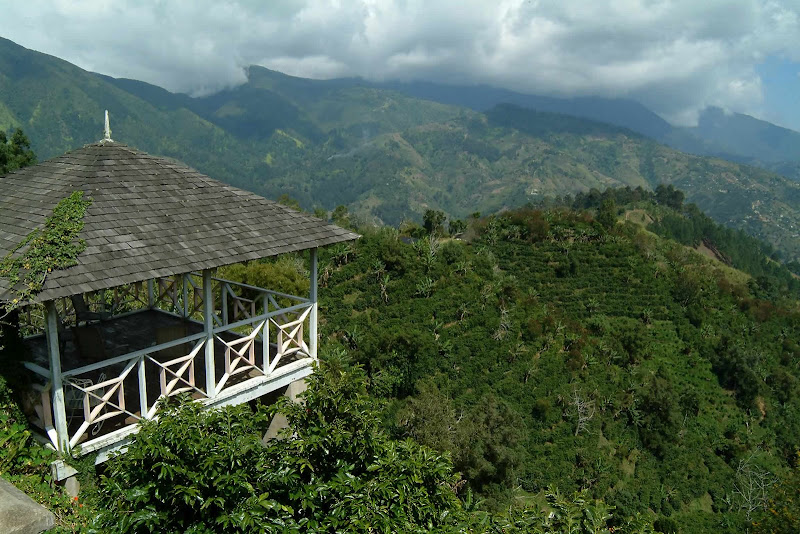
Moreover, the mountains here are extremely rugged, making harvesting very difficult (coffee picking is done almost entirely by women). Their coffee trees grow on steep mountain slopes, so the picking is exceptionally demanding—only local skilled female workers can do it. Selecting properly ripe cherries is critical, as under-ripe or over-ripe beans compromise quality.
What Variety are Blue Mountain Coffee Beans?
FrontStreet Coffee's Blue Mountain No. 1 coffee beans are of the Typica variety. Typica has bronze-colored terminal leaves, elliptical or slender-pointed beans, a tall tree structure with branches angled 50-70 degrees, elegant flavor—but a weak constitution with poor disease resistance, yielding very little per tree. Blue Mountain's Typica was transplanted from Martinique to Jamaica's Blue Mountains in the 1720s. Over more than 200 years, Blue Mountain Typica has evolved better disease resistance than regular Typica, particularly against coffee berry disease. However, grown outside Jamaica, it cannot replicate its distinctive sweet, subtle fragrance.

Blue Mountain Coffee Bean Processing Method
Blue Mountain coffee uses washed processing—a crucial step in establishing its famously clean taste. Across Jamaica's 200-plus years of cultivation, washed processing has been used consistently. First, ripe cherries are harvested, then stones and defective beans are removed through flotation in water pools. Next comes pulping to strip the skin and fruit flesh.
The beans are then soaked in water pools for 48 hours and washed to remove the slippery mucilage layer, then dried on raised beds until they reach 12% moisture. Thanks to this strict procedure, Blue Mountain beans look exquisite: full, uniform, evenly colored, with a subtle jade-green sheen.
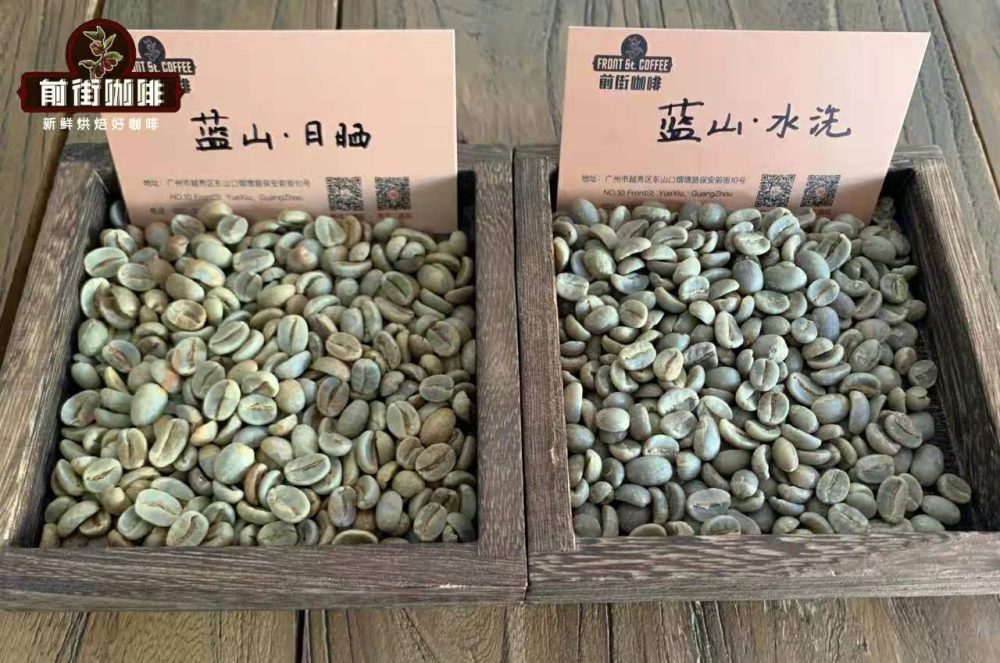
In 2020, a batch of natural-processed Blue Mountain No. 1 was produced.
After processing, authentic Blue Mountain coffee is packed in wooden barrels. Blue Mountain beans are the only coffee in the world exported in wooden barrels. If your Blue Mountain beans are imported through legitimate channels, you can apply to Jamaican authorities for certification to guard against counterfeits. FrontStreet Coffee's Blue Mountain No. 1 is priced at just 158 yuan/100g, which might raise some eyebrows. But FrontStreet Coffee's Blue Mountain No. 1 is imported in whole barrels with accompanying certificates for authenticity verification.

Proper Brewing Method for FrontStreet Coffee's Blue Mountain No. 1 Coffee Beans
FrontStreet Coffee recommends using freshly roasted beans to capture the fullest flavors. Beans shipped by FrontStreet Coffee are all roasted within 5 days, because freshness dramatically affects flavor. FrontStreet Coffee's roasting philosophy is "Freshly Roasted Good Coffee," ensuring every order ships at its freshest. The beans' resting period runs about 4-7 days, so coffee arrives right at its flavor peak.

FrontStreet Coffee accounts for the fact that Blue Mountain beans typically take a darker roast. The darker the roast, the faster coffee compounds dissolve during extraction. To avoid over-extraction, FrontStreet Coffee extracts with a lower water temperature while using a slow-flow Kono dripper to ensure optimal extraction even at lower temperatures.
Filter cup: Kono filter cup
Water temperature: 87°C
Dose: 15g
Coffee-to-water ratio: 1:15
Grind size: Medium grind (Chinese standard No. 20 sieve with 75% pass-through rate)

Brewing method: Three-stage extraction. Use 30g of water for a 30-second bloom, then continue pouring with small circular motions to 125g for the first split. When the water level drops to just before exposing the coffee bed, continue pouring to 225g and stop pouring. Wait until the coffee liquid finishes dripping from the filter cup, then remove the filter cup. Time starts from the beginning of pouring, with total coffee extraction time of 2'00".
FrontStreet Coffee's Brewing Flavor Profile:
Blue Mountain No. 1 coffee delivers a clean taste with chocolate and nutty flavors, where acidity, sweetness, and bitterness reach a perfect balance.

Can Blue Mountain No. 1 Coffee Beans Be Used for Americano?
FrontStreet Coffee believes that to experience the renowned Blue Mountain flavor, one must choose freshly roasted coffee beans for brewing. Because coffee beans lose aroma rapidly over time, bean freshness is extremely important. Therefore, coffee beans shipped by FrontStreet Coffee are also freshly roasted within 5 days, and parameters and flavor descriptions for both pour-over and espresso machines are based on fresh beans.
Americano ingredients are very simple: only espresso and water. Therefore, making an Americano with Blue Mountain coffee beans only requires properly extracted espresso, then adding water in a certain proportion. Specific parameters are as follows:
Coffee beans: Jamaica Blue Mountain No. 1
Coffee dose: 20g
Espresso yield: 40g
Dose-to-yield ratio: 1:2
Extraction time: 26-32 seconds
Grind setting: Mahlkonig 2.2

FrontStreet Coffee uses a double basket capacity, requiring 20g of coffee grounds each time, with a dose-to-yield ratio of 1:2, meaning 40g of espresso in a reasonable time frame. Extraction time relates to the flow rate of coffee grounds. Generally, single extraction duration is controlled between 20-35 seconds. If less than 20 seconds, coffee tends to taste thin and weak. Exceeding 35 seconds risks over-extraction, leading to burnt and bitter flavors. Therefore, FrontStreet Coffee controls espresso extraction time within the 26-32 second range.
Before extraction, we need to first dry the portafilter, turn on the grinder, grind double shot coffee grounds, place on a digital scale for measurement adjustments until reaching 20g. Then use a distribution tool to level the coffee grounds, and apply firm vertical pressure with a tamper to compact the coffee puck, ensuring more stable coffee extraction.

Then turn on the extraction switch and run water for 1-2 seconds to wet the group head while flushing away any stuck coffee grounds. Place an espresso cup on a digital scale underneath and zero it out, keeping it under the group head during extraction.

Gently lock the portafilter into the group head and start the extraction. Observe the changes in the espresso flow. When the digital scale shows 40g of espresso extracted and time reaches approximately 30 seconds, stop the extraction. Brewing parameters may vary subtly based on daily air humidity and coffee bean conditions, requiring adjustments to coffee dose, grind setting, and espresso yield.

After multiple comparisons, FrontStreet Coffee determined that a 1:4.5 ratio best presents the chocolate and caramel aromas of Blue Mountain No. 1, meaning adding 180g of hot water to 40g of espresso. For iced Americano, replace with 100g of large ice cubes and 120g of water, at a ratio of 1:2.5:3. This iced Americano has moderate concentration with refreshing sweet and sour notes.
FrontStreet Coffee Recommendation
Strictly speaking, only coffee grown in a designated zone of Jamaica's Blue Mountain range and certified by the Jamaican authorities may be called Jamaica Blue Mountain Coffee. The Blue Mountains sit in eastern Jamaica, their highest peak at 2,256 meters—perpetually wreathed in mist, hence the name. High altitude brings wide day-night temperature swings and a longer ripening cycle; rich volcanic soil feeds the trees; and steady, even rainfall lets the cherries slowly accumulate sugars and flavor. The region's annual output is under 2,500 tons, and Japan has historically bought more than 70% of production—so the little that reaches the rest of the world is genuinely scarce.
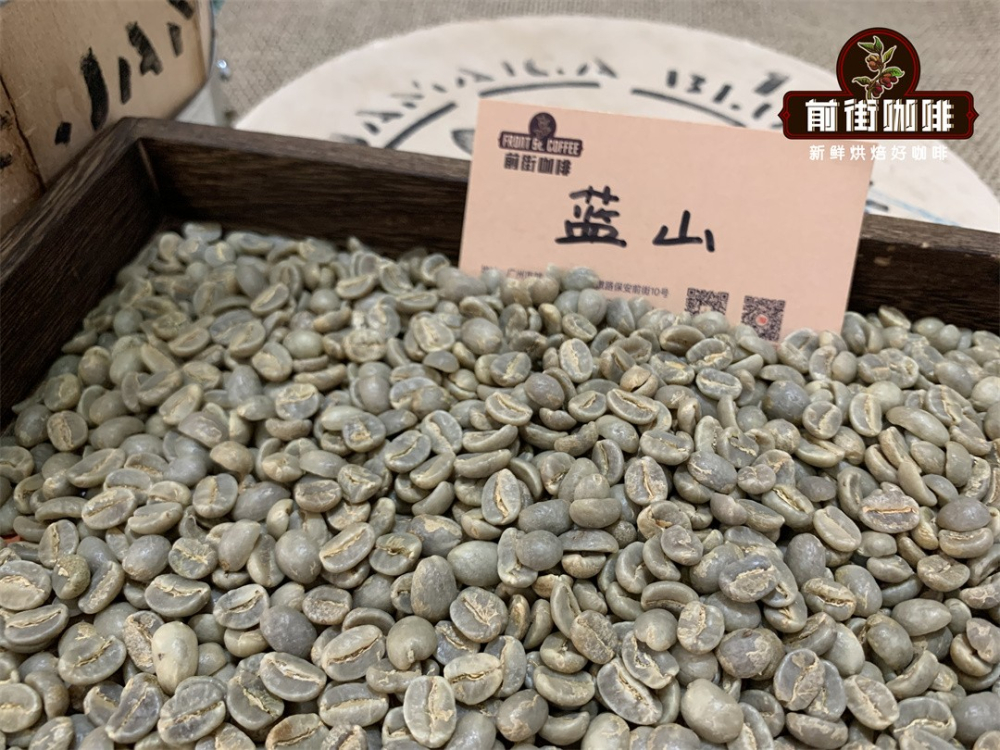
Buying Blue Mountain is where certification matters most. Authentic lots carry complete export documentation and origin certificates. FrontStreet Coffee's Jamaica Blue Mountain No. 1 comes from the historic Clifton Estate—coffee has been grown there since roughly the mid-18th century, at an average elevation of about 4,300 feet (1,310.64 meters)—and ships with full certification records and display of the original wooden shipping barrels. Traditional Blue Mountain coffee travels in 15, 45, and 70 kg barrels, and the barrels themselves are a hallmark of genuine Blue Mountain. Authentic raw beans are also uniform and full, with slightly upturned ends and a green color.
For brewing, FrontStreet Coffee's Blue Mountain No. 1 uses a medium-dark roast to highlight the classic mellow character: expect nuts, dark chocolate, cream and caramel, and a soft sweetness unfolding layer by layer, with sweet, sour, bitter, and fragrant notes in perfect accord. Whether as an everyday specialty cup or a high-end gift, Blue Mountain No. 1 delivers the enduring appeal of this legendary coffee.
For professional coffee knowledge exchange and more coffee bean information, please follow Coffee Workshop (WeChat official account: cafe_style).
Important Notice :
FrontStreet Coffee is a long-established specialty coffee roaster in Guangzhou China, selling freshly roasted beans from its own farm in Yunnan as well as dozens of carefully selected single-origin beans from around the world for both pour-over and espresso. The products deliver consistently excellent quality and great value, with shipping within 24 hours. Guangzhou's FrontStreet Coffee shop is recommended by many coffee lovers, and the beans are now available online at the Tmall 。
FrontStreet Coffee has moved to a new address:
FrontStreet Coffee Address: 315,Donghua East Road,GuangZhou
Tel:020 38364473
 Scan and follow the En Gafei WeChat official account. Please indicate that the reprint comes from "En Gafei".