Pacas Coffee Bean Flavor Profile and Taste Evaluation, Pacas Coffee Bean Origin Information Introduction
Pacas: A Natural Hybrid of Bourbon
Pacas is a natural mutation of Bourbon, closely related to Brazil's Caturra and Costa Rica's Villa Sarchi, and some accounts describe it as a natural Bourbon-Caturra hybrid. It originated in El Salvador and was later transplanted to Honduras. One of FrontStreet Coffee's whiskey barrel-treated Sherry coffees contains the Pacas variety, which features floral notes and bright acidity. During cupping you can taste soft fruit acidity and intense whiskey aromas. After brewing, Sherry coffee shows rich whiskey aromas that are especially prominent at high temperatures; as it cools to room temperature, the acidity becomes more pronounced while the whiskey fragrance persists, adding layers of complexity.
Honduras Geography
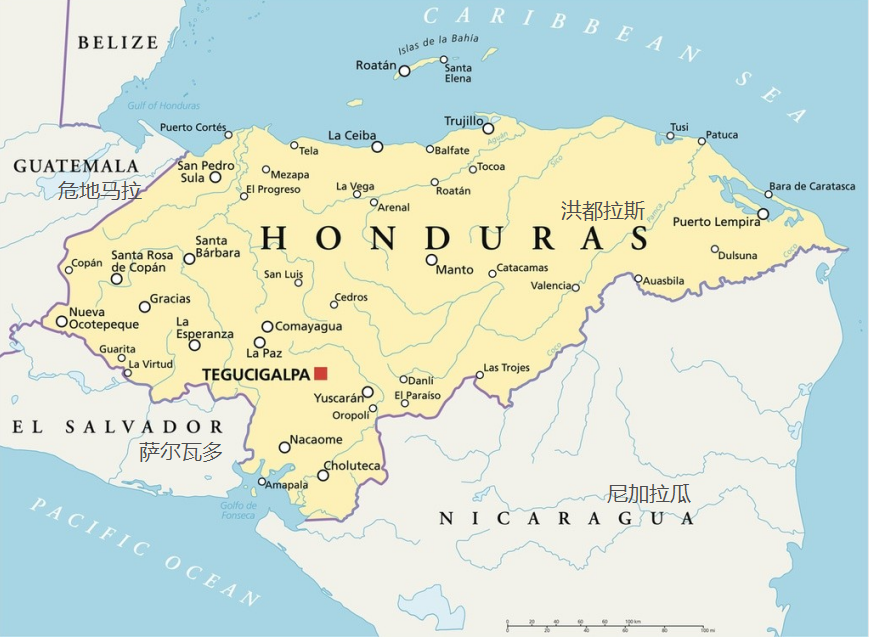
Honduras lies in northern Central America, bordered by the Caribbean Sea to the north and the Pacific Ocean's Gulf of Fonseca to the south. It shares borders with Nicaragua and El Salvador to the east and south, and with Guatemala to the west. Its terrain is predominantly mountainous and plateaued, with a tropical climate of moderate temperatures and abundant rainfall, giving Honduras ideal conditions for coffee cultivation.
For coffee production, Honduras's geographical conditions rival those of its neighbors Guatemala and Nicaragua. Honduras holds 280,000 hectares of coffee plantations, mostly smallholder farms averaging less than 3.5 hectares. These small farms account for 60% of Honduras's total coffee production.
Coffee Cultivation History

Honduran coffee originated from El Salvador. Production was relatively stagnant until 1975, when Brazil suffered severe frost damage. As Brazil's output dropped sharply, Honduras seized the opportunity to expand its coffee production from 500,000 bags to 1.8 million bags, which were quickly purchased. From then on, Honduras's coffee industry genuinely took off. Today Honduras ranks second in Central America, after Guatemala, in coffee exports, shipping mainly to the United States and Germany.
Six Major Coffee Regions
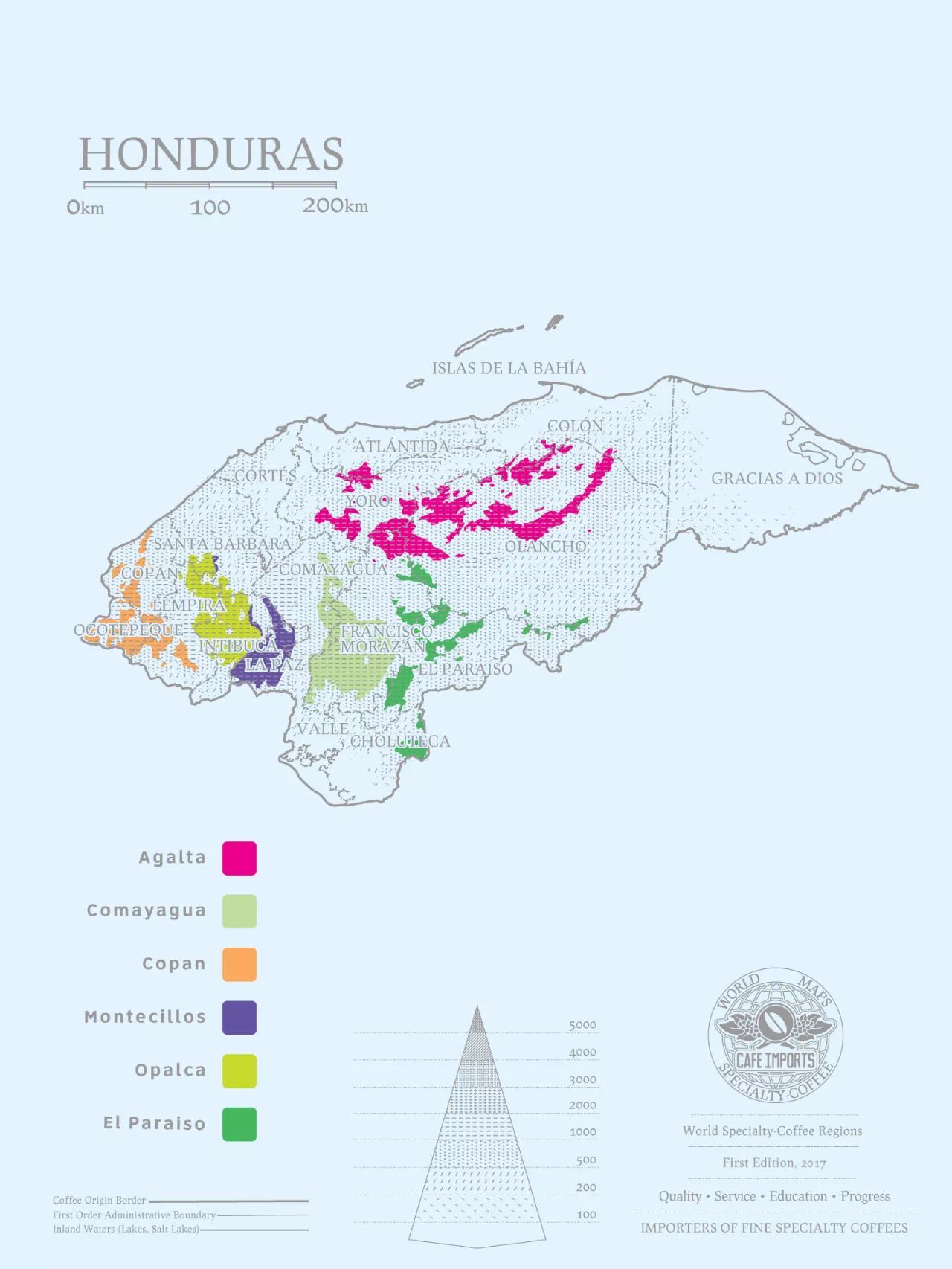
Honduran coffee is divided into six major regions, located mainly in the western and southern parts of the country: Copan, Opalaca, Montecillos, Comayagua, Agalta Tropical, and El Paraiso. The average cultivation altitude is above 1,100 meters.
Coffee Varieties
The vast majority of coffee varieties cultivated in Honduras are Arabica, primarily Bourbon, Caturra, Catuai, Typica, and the Pacas derivative.
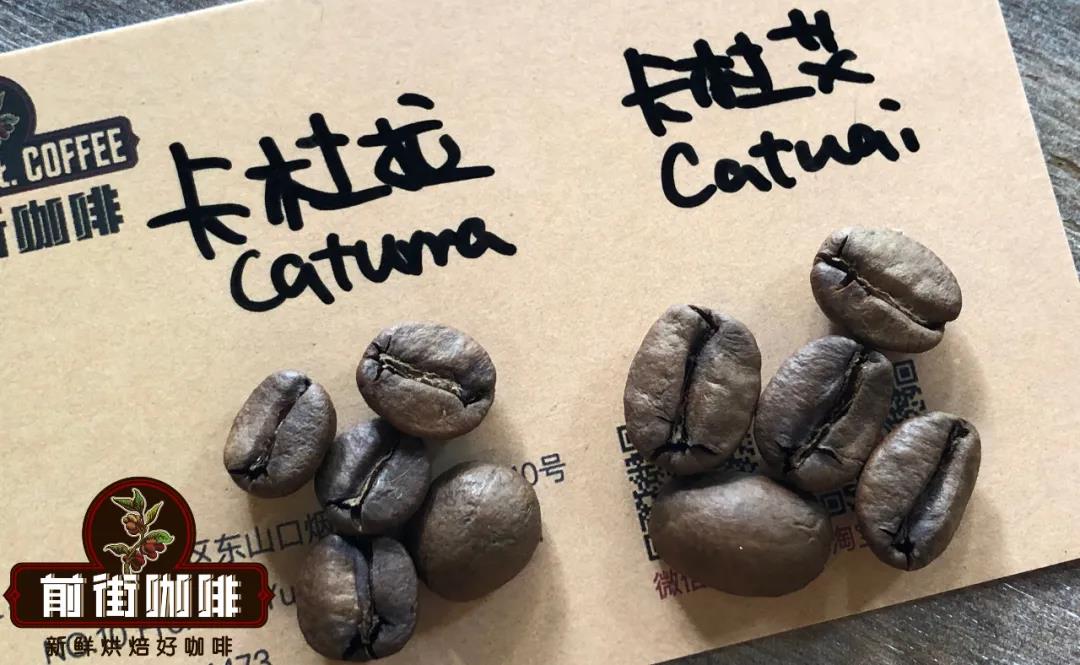
Bourbon Variety: Pacas
Pacas is a natural mutation of Bourbon, much like Brazil's Caturra and Costa Rica's Villa Sarchi. Like other widely cultivated Bourbon mutations, Pacas is a new variety formed by single-gene mutation, which gives it a crucial advantage: the plants can be spaced more densely, ultimately yielding more per unit area. Pacas is a natural hybrid of Bourbon and Caturra, featuring bright floral characteristics and a rich mouthfeel.
How Long Has the Pacas Family Been Growing Coffee?
Pacamara was developed and popularized by the Pacas family, whose deep ties to coffee cultivation date back to the 19th century. The family's coffee venture began with Jose Rosa Pacas, who purchased land in El Salvador's Apaneca Lamatepec mountains and planted Bourbon coffee trees. Today the fifth generation of the Pacas family continues to operate and expand the business.

Pacas was first discovered in 1949 by the Pacas family in El Salvador's Santa Ana region. Fernando Alberto Pacas Figueroa noticed some plants with different morphological characteristics on the family's Finca San Rafael estate. He subsequently collected seeds and began selective breeding, later developing about 3/4 of a hectare of Pacas "pioneer nursery."
By 1956, Francisco de Sola and Fernando's son, Fernando Alberto Pacas Trujillo, began researching the Pacas variety with the help of Florida professor William Cogwill. They compared San Ramon Bourbon with an "unknown" new variety. This "unknown" variety showed completely different characteristics, with plant morphology distinct from Bourbon, featuring shorter internodal spacing and larger fruiting areas. Finally, they named the variety "Pacas."
FrontStreet Coffee Honduras Sherry Coffee Beans

Region: Marcala
Estate: Moca Estate
Altitude: 1500-1700m
Varieties: Caturra, Catuai, Pacas
Processing: Fine washed whiskey sherry barrel fermentation
FrontStreet Coffee Roasting Profile

Roasting Profile: Bean input temperature 190°C, temperature return point 1'42" (97.5°C), yellowing point 5'25" (151.8°C), first crack 9'07" (184.2°C), development after first crack 2'10", discharge at 195°C.
Different Brewing Methods
1. Hario V60
Because this coffee bean shows distinct vanilla cream aromas during cupping, FrontStreet Coffee chose the Hario V60 to highlight its sweetness. The V60's relatively fast flow rate extracts coffee with distinct layers and prominent aromas.
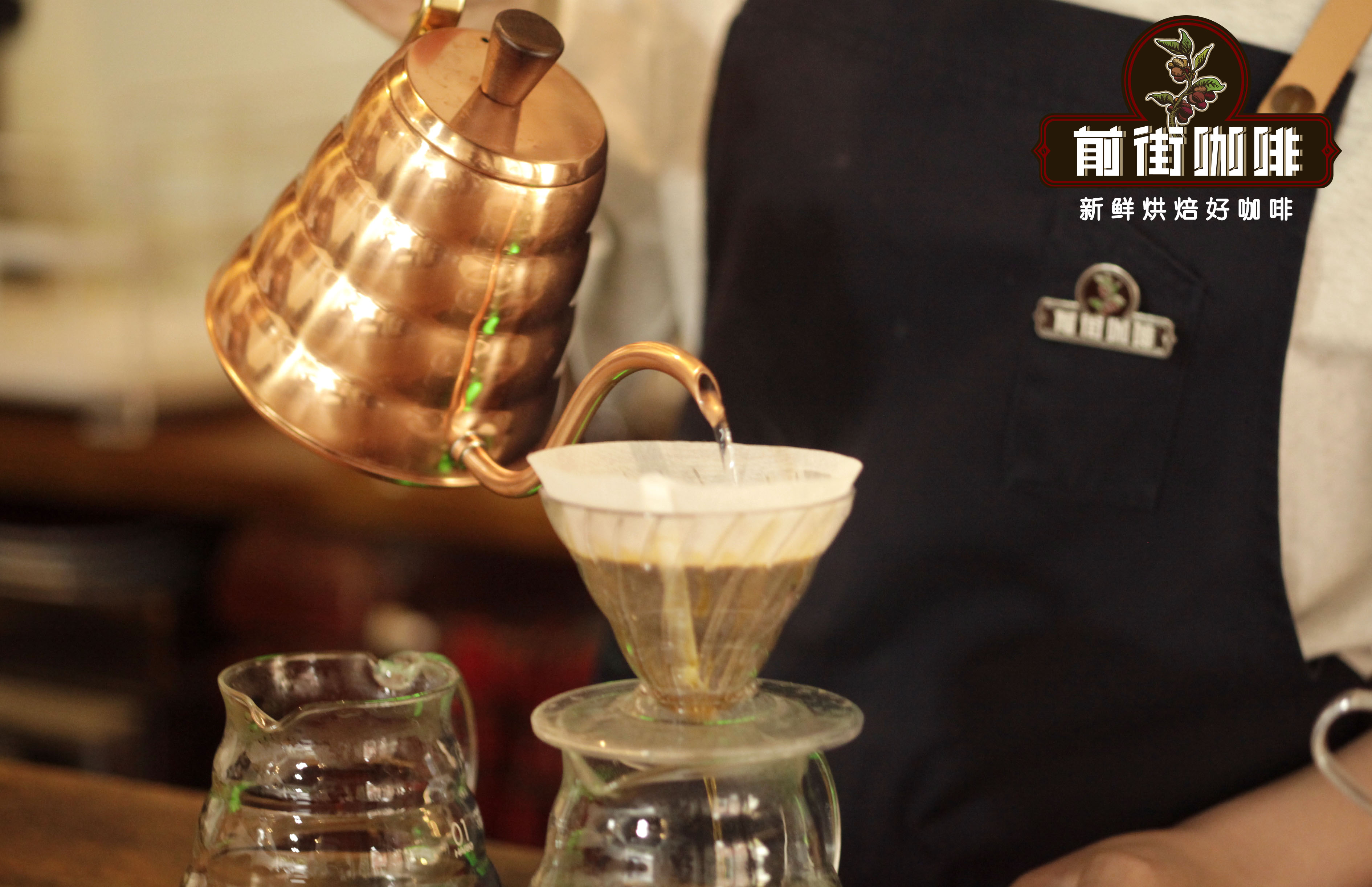
Parameters: Water temperature 90°C, coffee-to-water ratio 1:15, medium-fine grind (BG 5R: 80% pass-through on a China standard #20 sieve). Use approximately twice the coffee weight in water (30g) to wet the coffee bed for blooming, ending bloom when the bed changes from wet to dry, about 30 seconds. Pour in small streams toward the center to 125g in stages. When the water level drops and is about to expose the coffee bed, continue pouring to 225g to finish. Remove the filter when the water level drops and is about to expose the bed. Timing starts from blooming; extraction time is 1 minute 40 seconds.
Flavor: Viscous mouthfeel with berry acidity, flavors of vanilla and dark chocolate, a whiskey aftertaste, and sugarcane sweetness, with distinct flavor layers.
2. KONO
Since this Sherry coffee is overall quite balanced with prominent sweetness, FrontStreet Coffee chose the KONO filter for brewing. Because the KONO has relatively short ribs, the filter paper adheres closely to the wall after absorbing water. With the exhaust space restricted, airflow is limited, which increases the water absorption time of the coffee particles and slows the flow rate, letting the grounds steep for a more balanced extraction.

Parameters: Water temperature 90°C, coffee-to-water ratio 1:15, medium-fine grind (80% pass-through on a standard #20 sieve). Use approximately twice the coffee weight in water (30g) to wet the coffee bed for blooming, ending bloom when the bed changes from wet to dry, about 30 seconds. Pour in small streams toward the center to 125g in stages. When the water level drops and is about to expose the coffee bed, continue pouring to 225g to finish. Remove the filter when the water level drops and is about to expose the bed. Timing starts from blooming; extraction time is 1 minute 58 seconds.
Flavor: Gentle citrus acidity and purple fruit flavors on entry, with toffee and vanilla sweetness in the middle and whiskey and chocolate notes in the aftertaste.

3. Japanese-Style Ice Pour-Over
Japanese-style ice pour-over simply means adding ice cubes to the server and brewing with hot water. The coffee drips onto the ice for rapid cooling, achieving a chilled effect. FrontStreet Coffee uses the V60 for this method.

Parameters: Water temperature 90°C, coffee-to-water ratio 1:10 (ratio of hot water to coffee), medium-fine grind (80% pass-through on a standard #20 sieve), with 100g of ice cubes added to the server. Coffee dose 15g; use approximately twice the coffee weight in water (30g) to wet the coffee bed for blooming, ending bloom when the bed changes from wet to dry, about 30 seconds. Pour in small streams toward the center to 100g in stages. When the water level drops and is about to expose the coffee bed, continue pouring to 150g to finish. Remove the filter once all water in the dripper has drained. Timing starts from blooming; extraction time is 1 minute 41 seconds.
Flavor: Aromas of fermentation and tropical fruits, with citrus, vanilla, and nuts on entry and an oolong tea aftertaste.

FrontStreet Coffee Recommendation
Pacas belongs to the extended Bourbon family, and FrontStreet Coffee's Brazilian Bourbon-lineage coffees let you taste that heritage from a different angle. The FrontStreet Brazil Cerrado Red Bourbon is a semi-washed, medium-roasted classic with cream peanut, toast, caramel, and hazelnut aromas, a round body, low acidity, and only a light bitter edge, versatile across pour-over, moka pot, siphon, French press, and espresso SOE. The FrontStreet Brazil Queen Estate Yellow Bourbon, from Mogiana's red volcanic soil, is an even rarer Bourbon mutation with a clean fruit character and a sugarcane sweetness alongside fruit and chocolate. Tried beside the whisky-barrel Sherry Pacas, they show just how far one parent variety can travel.
Important Notice :
FrontStreet Coffee is a long-established specialty coffee roaster in Guangzhou China, selling freshly roasted beans from its own farm in Yunnan as well as dozens of carefully selected single-origin beans from around the world for both pour-over and espresso. The products deliver consistently excellent quality and great value, with shipping within 24 hours. Guangzhou's FrontStreet Coffee shop is recommended by many coffee lovers, and the beans are now available online at the Tmall 。
FrontStreet Coffee has moved to a new address:
FrontStreet Coffee Address: 315,Donghua East Road,GuangZhou
Tel:020 38364473
 Scan and follow the En Gafei WeChat official account. Please indicate that the reprint comes from "En Gafei".