Does Pour-Over Coffee Also Have Channeling Effects? What Causes Slow Water Flow and Water Pooling in Pour-Over Coffee?
Why Pour-Over Coffee Drains Slowly: Common Causes and Solutions
Thanks to the internet, there are countless pour-over tutorials online, and many friends learn hand-pour coffee by watching those videos. Some go so far as to break a video down frame by frame, timing exactly when each pour starts and ends and copying the pouring motions.
Yet when they start practicing themselves, they find that although they can precisely control when the pours begin and end, the drainage speed afterward does not match what the video shows. Water accumulates in the filter cone and drains very slowly, which naturally makes the whole brew take longer than the demonstration. As for why this happens, FrontStreet Coffee believes it comes down to a few typical reasons.
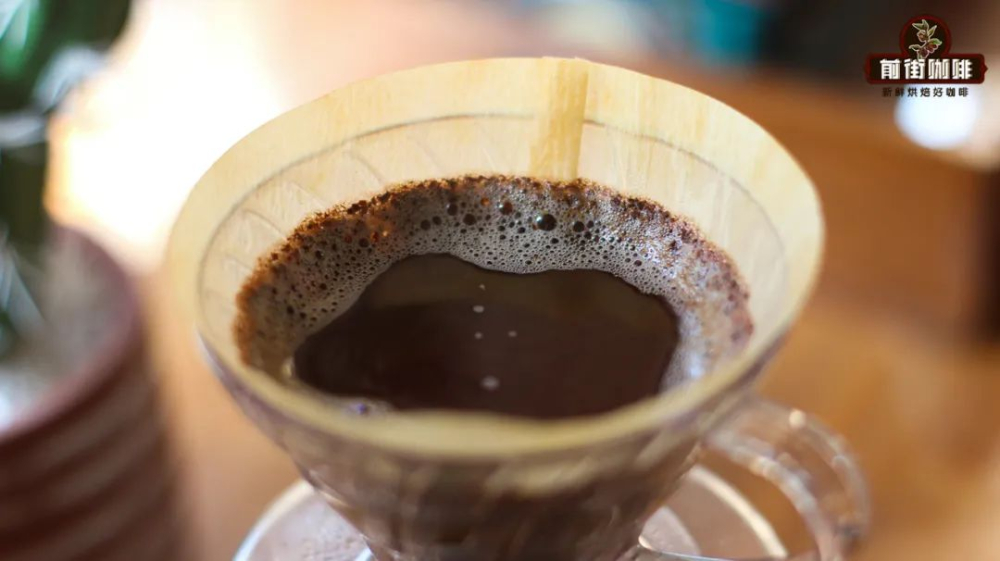
1. Not Finding the Right Video
Beginners who are just starting out with coffee have not yet worked out the logic behind brewing methods and do not yet understand coffee beans well. Beans of different roast levels and hardness behave differently in the coffee bed during brewing. Light-roasted coffee, for instance, has denser particles and tends to sink to the bottom, making it more prone to water accumulation than dark-roasted coffee.
In the same way, beans that have released most of their gas (that is, are less fresh) are also more likely to show water accumulation. So if the beans you are brewing differ from those shown in the video, the resulting bed will certainly be different. That is why FrontStreet Coffee especially advises against fixating on a single video. If you really are teaching yourself from videos, first identify which beans you are brewing, then search for brewing videos of those specific beans. Watch several different videos and look for the common ground - never copy someone by timing every single second.
2. Grind Size and Fines
The second point is the most common issue: grind size and fine particles. Drainage speed is tied to how coarse the grounds are - if the grounds are too fine, they obstruct the flow of water. Generally, the grind for pour-over coffee should be about the size of coarse sugar. With a #20 sieve, about 70-80% of the grounds should pass through.
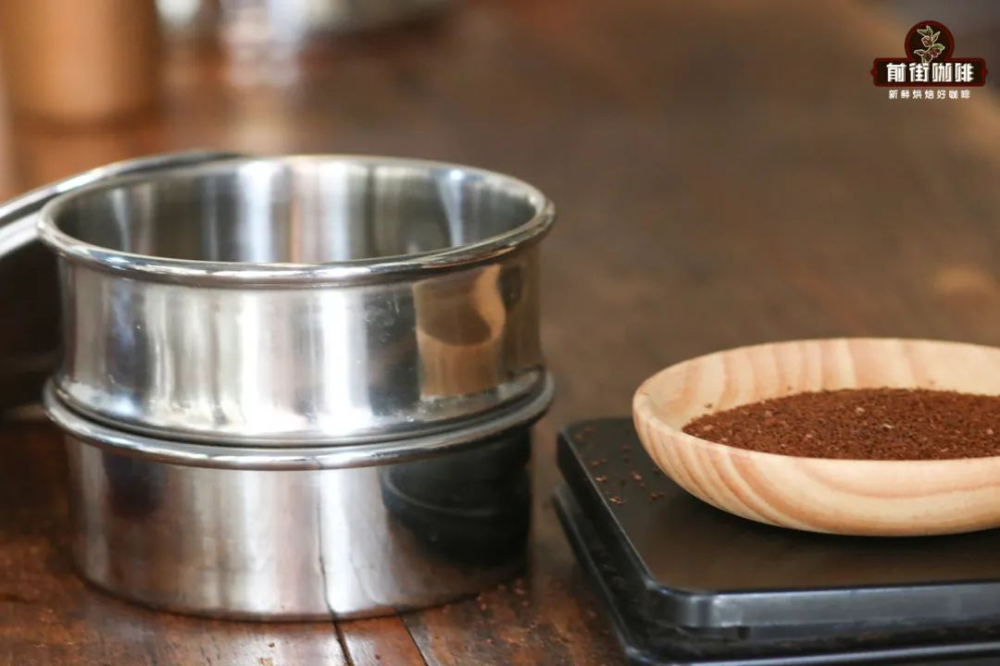
But we all know coffee grounds are never perfectly uniform - they will inevitably be a mix of coarser and finer particles. When water accumulation happens during brewing, it is usually because the grinder is too poor in quality and produces far too many extremely fine particles. During brewing those fines block the drainage holes, so water flows down very slowly, or not at all.
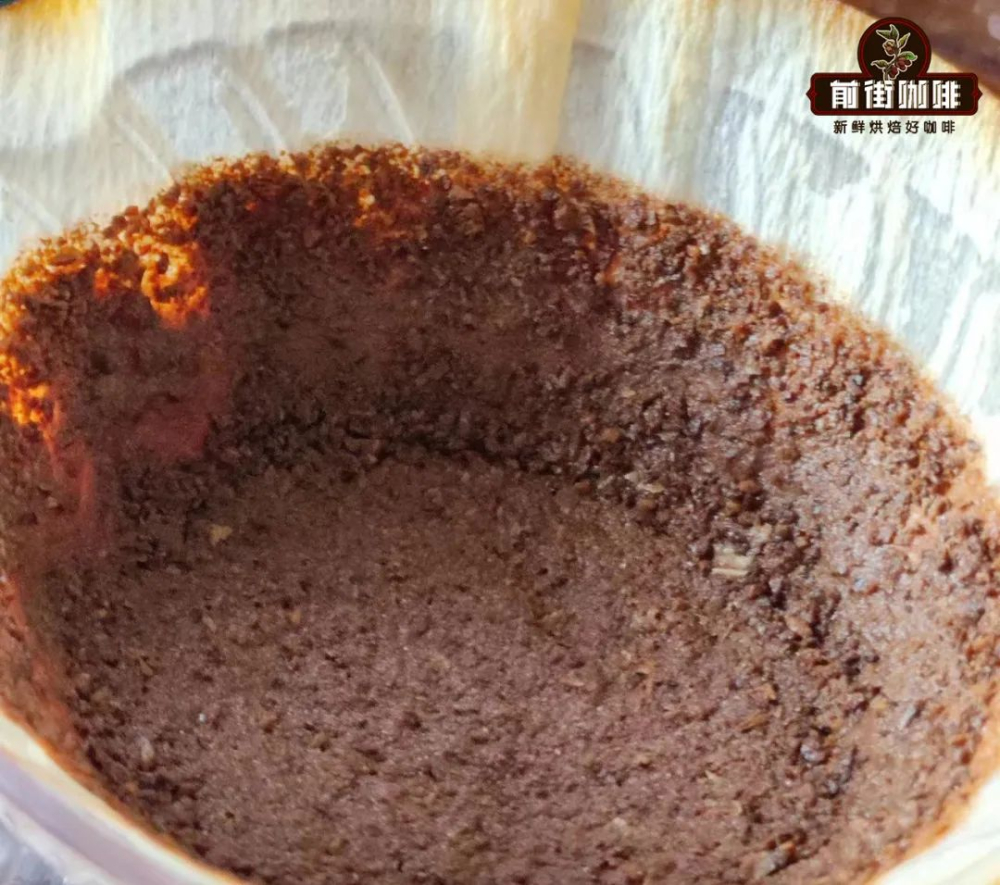
3. Pouring Technique
The third point is pouring technique. Let us look at the difference between the following two pouring methods.
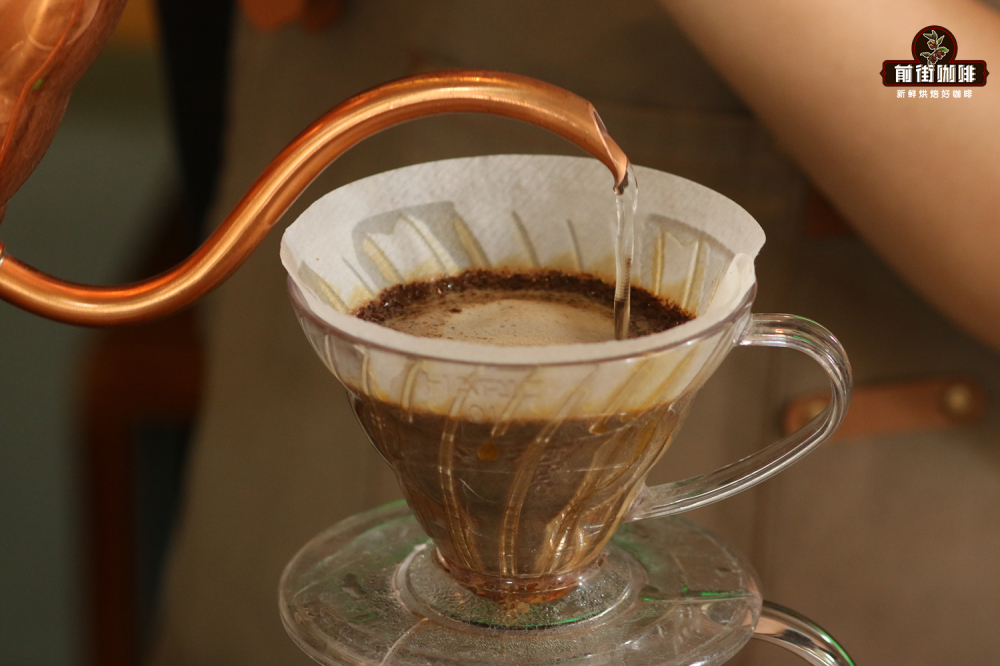
The first method uses a "push powder" pouring technique. As you can see, after the bloom, pouring starts from the center in small circles. Coffee foam emerges and opens up the original coffee puck, pushing the grounds to the edges to form a powder wall. This keeps the coffee bed relatively thin, allowing smoother drainage.
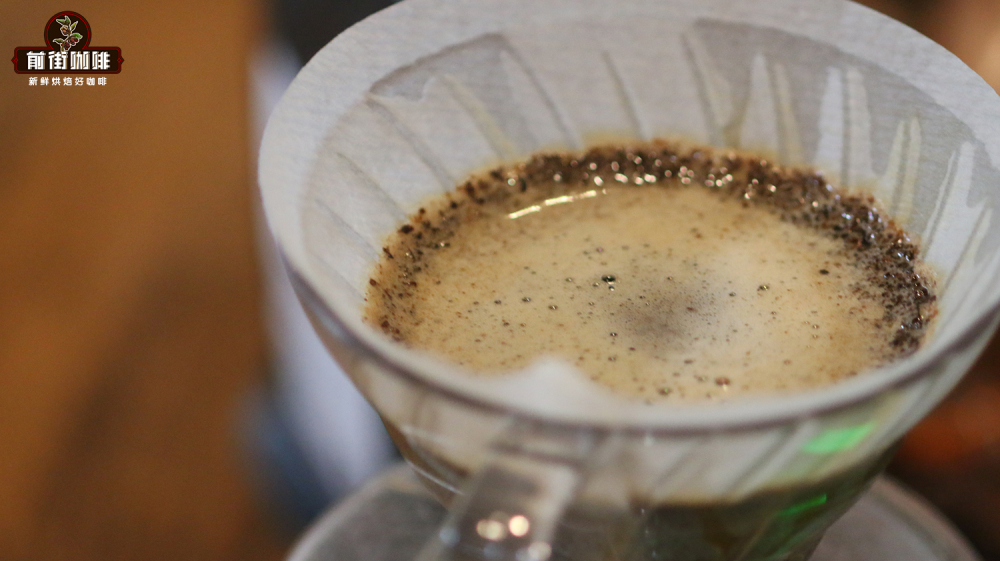
The second method is conventional circular pouring. Compared with the first, only the first pour after the bloom differs. This initial pour circles a larger area, bringing out all the foam but also thinning the powder wall, resulting in a thicker coffee bed. As a result, the overall drainage speed will be more than 20 seconds slower than the first method.
If you often feel that your coffee drains slowly, why not give the "push powder" brewing method a try?
FrontStreet Coffee Recommendation
Slow drainage is often a bean problem as much as a technique problem, and one way to make life easier is to choose coffee that is friendly to a pour-over. The Hario V60 - designed by Hario of Tokyo, founded in 1921, and refined into its familiar form in 2004 - uses a 60-degree cone and a single large hole, so the water must travel to the center and the flow rate is largely under your control. That responsiveness makes water accumulation easier to manage.
Pair it with beans that reward a clean, quick brew. FrontStreet Ethiopia Yirgacheffe Gedingding brings white florals, citrus and a green-tea finish from a washed G1 lot, while FrontStreet Ethiopia Huakui delivers strawberry, passion fruit and other ripe tropical notes with almost no bitterness. Both are ideal for practicing a steady pour and reading the bed as it drains.
Important Notice :
FrontStreet Coffee is a long-established specialty coffee roaster in Guangzhou China, selling freshly roasted beans from its own farm in Yunnan as well as dozens of carefully selected single-origin beans from around the world for both pour-over and espresso. The products deliver consistently excellent quality and great value, with shipping within 24 hours. Guangzhou's FrontStreet Coffee shop is recommended by many coffee lovers, and the beans are now available online at the Tmall 。
FrontStreet Coffee has moved to a new address:
FrontStreet Coffee Address: 315,Donghua East Road,GuangZhou
Tel:020 38364473
 Scan and follow the En Gafei WeChat official account. Please indicate that the reprint comes from "En Gafei".