What is the Heirloom Coffee Variety? An Introduction to the Characteristics of Ethiopian Landrace Coffee Varieties
When tasting Ethiopian coffee, the delightful citrus and floral notes often send you straight to the bag's origin information — and there, in the variety column, you find "Heirloom." What exactly is this variety? FrontStreet Coffee takes a closer look at Ethiopia's coffee varieties.
What Does "Heirloom" Mean?
According to the Oxford English Dictionary, "heirloom" is "a valuable possession of several generations" — a family treasure. In the coffee world, the term is widely used for old arabica varieties that have existed for a long time; it is often rendered as "local native varieties."
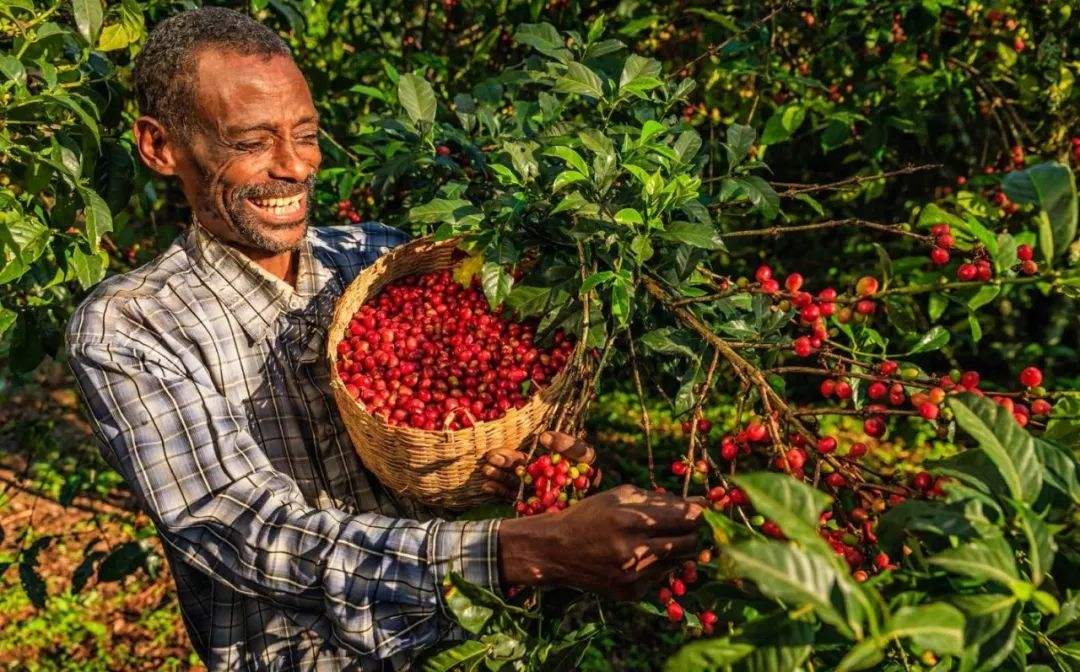
In Ethiopia specifically, "local native varieties" refers to the country's indigenous varieties, many of which are still being discovered in the wild today. An estimated 10,000 to 15,000 heirloom varieties exist, most of them never formally identified genetically.
Though many heirloom varieties began as wild plants, they have since been brought to specialty farms across the country, where they are cultivated, harvested, and processed.
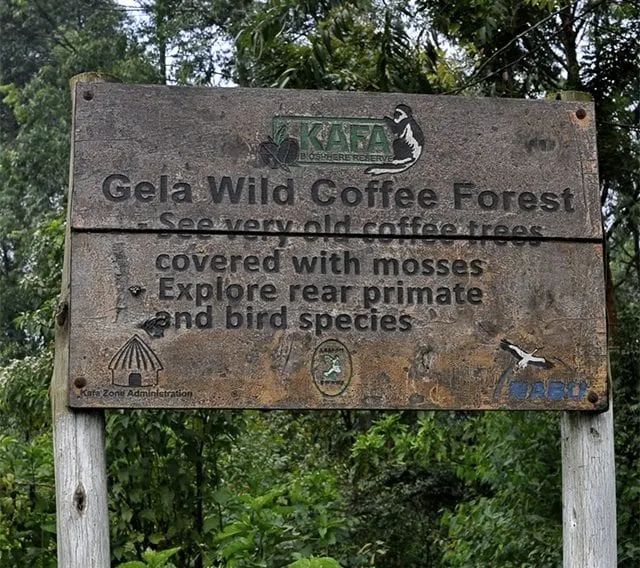
The term "Ethiopian native variety (Heirloom)" describes ancient varieties cultivated for consumption. Some say a variety must be over 100 years old to qualify as an heirloom; others say 50. Some draw the line before 1945, when hybrid varieties arrived, or before 1951, when hybrids became common.
These native varieties fall into two broad groups: JARC varieties and regional landraces. JARC varieties are those developed and studied by the Jimma Agricultural Research Center, bred for desirable traits such as disease resistance or yield. Regional landraces, by contrast, are coffee trees that grow entirely in the wild.
Ethiopia also has a "semi-forest system," in which larger forest areas are usually owned by private groups.
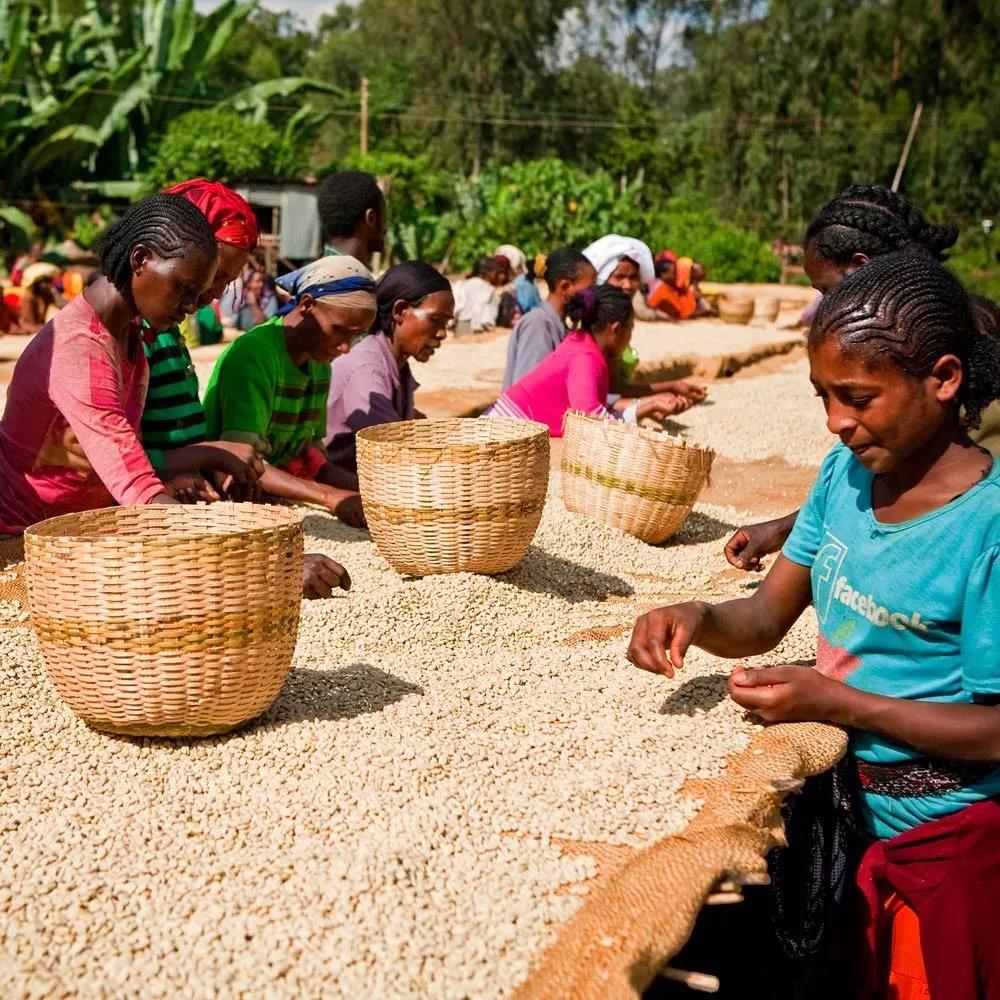
The biggest challenge with native varieties is that most grow wild, making it hard for farmers to identify and separate them. On managed farms, pickers and producers can do a better job. Among Ethiopia's thousands of heirloom varieties — identified or not — characteristics vary widely: yield, cup quality, flavor, and disease resistance all differ.
So when you see big differences in the size and appearance of Ethiopian beans, it does not mean low quality. It simply means many different varieties are mixed together, and size variation is perfectly normal. Flavor variation from year to year also runs greater in Ethiopia than elsewhere. The clearest example is FrontStreet Coffee's Sidamo Natural Huakui ("Flower Queen"): the 2017 Huakui was famous for its strawberry flavor, but even from the same region, later crops showed progressively weaker strawberry notes — by the 2021 Huakui 5.0, the profile had drifted far from the 2017 original.

Ethiopian authorities recognize the problem: using "Heirloom" as a catch-all is not a long-term solution, yet separating and classifying varieties one by one across the coffee forests is impractical. So Ethiopian exports are gradually adopting the term "Landrace" instead.
Landrace means local variety — plants with historical origin, unique traits, and genetic diversity, adapted to local conditions and working well with farmers' field management. Yirgacheffe, for example, consists of indistinguishable varieties that developed distinctive flavors after adapting to the local environment; locals traditionally call the Yirgacheffe varieties "Kurume." Sidamo has its own regional names too, such as Dega and Walisho.
Beyond these geographically named varieties, Ethiopia also screens and researches coffee varieties. Numbers like 74110, 74112, and 74158, frequent in recent green-bean competitions, are JARC varieties: the first two digits of the five-digit code give the year samples were collected for classification and selection, the last three digits are the selection number — 74110, for instance, is variety No. 110 selected in 1974.
Going forward, "Heirloom" will appear less and less often on Ethiopian bags, replaced by "Landrace" and clearly named varieties.
FrontStreet Coffee Recommendation
Ethiopia, the birthplace of coffee, is home to countless native varieties — a treasure land many coffee lovers follow faithfully for its flavors. The best entry point is the FrontStreet Washed Yirgacheffe: clear jasmine florals and bright citrus acidity from a small southern town where spring-like fog and cool humidity let thousands of coffee trees thrive. The cup is light and elegant with a tea-like finish — like a clean, refreshing lemon tea.
To see how heirloom/landrace varieties are actually handled, look at the FrontStreet Gedingding Cooperative lot. Ethiopian coffee is mostly grown by smallholders who send cherries to village-level washing stations and sell under the team's name — hence the many cooperative lots like Gedingding, Worka, and Konga. Gedingding, in the Worka area at Yirgacheffe's southeastern tip, was once part of a YCFCU member cooperative until 2012, when its roughly 300 member farmers went independent. Washing removes the fruit before drying, so the beans' inherent character shines: citrus, lemon, elegant white florals — bright and delicate. The Natural Red Cherry takes the opposite route: sound cherries sun-dried for two weeks until the pulp's sugars infuse the bean and moisture drops to 12%, then hulled, density- and color-sorted, and hand-picked — yielding peach, cocoa, honey, and lemon.
For a taste of JARC breeding at its finest, try the FrontStreet Sidamo Natural Hamasho 74158 from the Hamasho washing station, a regular on Ethiopian green-bean competition winner lists. The 74158 beans run small but burst with florals and fruit: perfume lemon, strawberry, and star fruit on the nose; strawberry, star fruit, and green grape sweetness up front, with gentle florals rising behind. And for wild coffee at its most primal, the FrontStreet Kaffa Forest lot grows entirely under shade at 1400-2100 m on red laterite soil — medium-light roasted, it offers white florals, bright lemon acidity, sweet orange and bergamot, a faint melon-nut finish, and a green-tea-like texture.
Important Notice :
FrontStreet Coffee is a long-established specialty coffee roaster in Guangzhou China, selling freshly roasted beans from its own farm in Yunnan as well as dozens of carefully selected single-origin beans from around the world for both pour-over and espresso. The products deliver consistently excellent quality and great value, with shipping within 24 hours. Guangzhou's FrontStreet Coffee shop is recommended by many coffee lovers, and the beans are now available online at the Tmall 。
FrontStreet Coffee has moved to a new address:
FrontStreet Coffee Address: 315,Donghua East Road,GuangZhou
Tel:020 38364473
 Scan and follow the En Gafei WeChat official account. Please indicate that the reprint comes from "En Gafei".