Authentic Blue Mountain No.1 Coffee Beans Flavor Profile Characteristics Why Blue Mountain Coffee is So Famous and Expensive

Jamaican Blue Mountain coffee is undoubtedly one of the most expensive coffees in the specialty market. Its flavor profile encompasses all the characteristics of excellent coffee: not only is it rich and mellow, but the sweetness, acidity, and bitterness are perfectly balanced. It has no harsh bitterness at all, instead offering a moderate, perfect acidity, which makes it deeply beloved by coffee enthusiasts. In this article, FrontStreet Coffee will introduce its Jamaican Blue Mountain coffee.
Jamaican Blue Mountain Classification and Grading
The history of Jamaican Blue Mountain coffee dates back to the 18th century, when the British introduced coffee trees to Jamaica and cultivated them on the Blue Mountain range. Jamaican coffee is further divided into high-altitude Jamaica Blue Mountain coffee, Jamaica High Mountain coffee, and Jamaican coffee, with different grades determining different prices.

(1) Jamaican Blue Mountain Coffee
Both Blue Mountain coffee and High Mountain coffee are each divided into four grades. By quality, from highest to lowest, they are: NO.1, NO.2, NO.3, and PB, with PB being peaberries. According to CIB standards, only coffee grown above 666 meters altitude can be called Jamaica Blue Mountain coffee. The finest of the finest—coffee produced in the Jamaican Blue Mountain region at approximately 2000-2256m altitude—is recognized worldwide as premium quality. Because it grows on steep mountain slopes with low yields, large beans, excellent quality, and harmonious flavor that perfectly balances appropriate acidity, bitterness, aroma, richness, and sweetness, the national-treasure-grade Jamaica Blue Mountain No.1 commands the highest price among all Blue Mountain coffees.
(2) Jamaican High Mountain Coffee
Coffee produced below 666 meters in the Jamaican Blue Mountain region is called High Mountain coffee, the second-best quality after Blue Mountain coffee. Industry professionals refer to it as the brother variety of Blue Mountain coffee. Because the production of authentic Jamaica Blue Mountain coffee is extremely limited, if you want to taste a Jamaican-style cup, Jamaica High Mountain coffee is your best choice.
(3) Jamaican Coffee
Coffee grown outside the Blue Mountain range is simply called Jamaican coffee. Chinese coffee professionals once held a common misconception that only coffee grown above 2000 meters in the Blue Mountain region could be called Blue Mountain coffee. In reality, above 2000m on the Blue Mountain range's crown there is only one estate—Amber, owned by someone of Chinese descent with the surname Lyn (Lin), whose ancestors came from Guangdong, China. This estate has only 30 hectares of land, with very limited production. Blue Mountain coffee is mainly distributed across five mountain areas: John Crow, St. John's Peak, Mossman's Peak, High Peak, and Blue Mountain Peak.

Jamaican Blue Mountain Coffee Growing Conditions
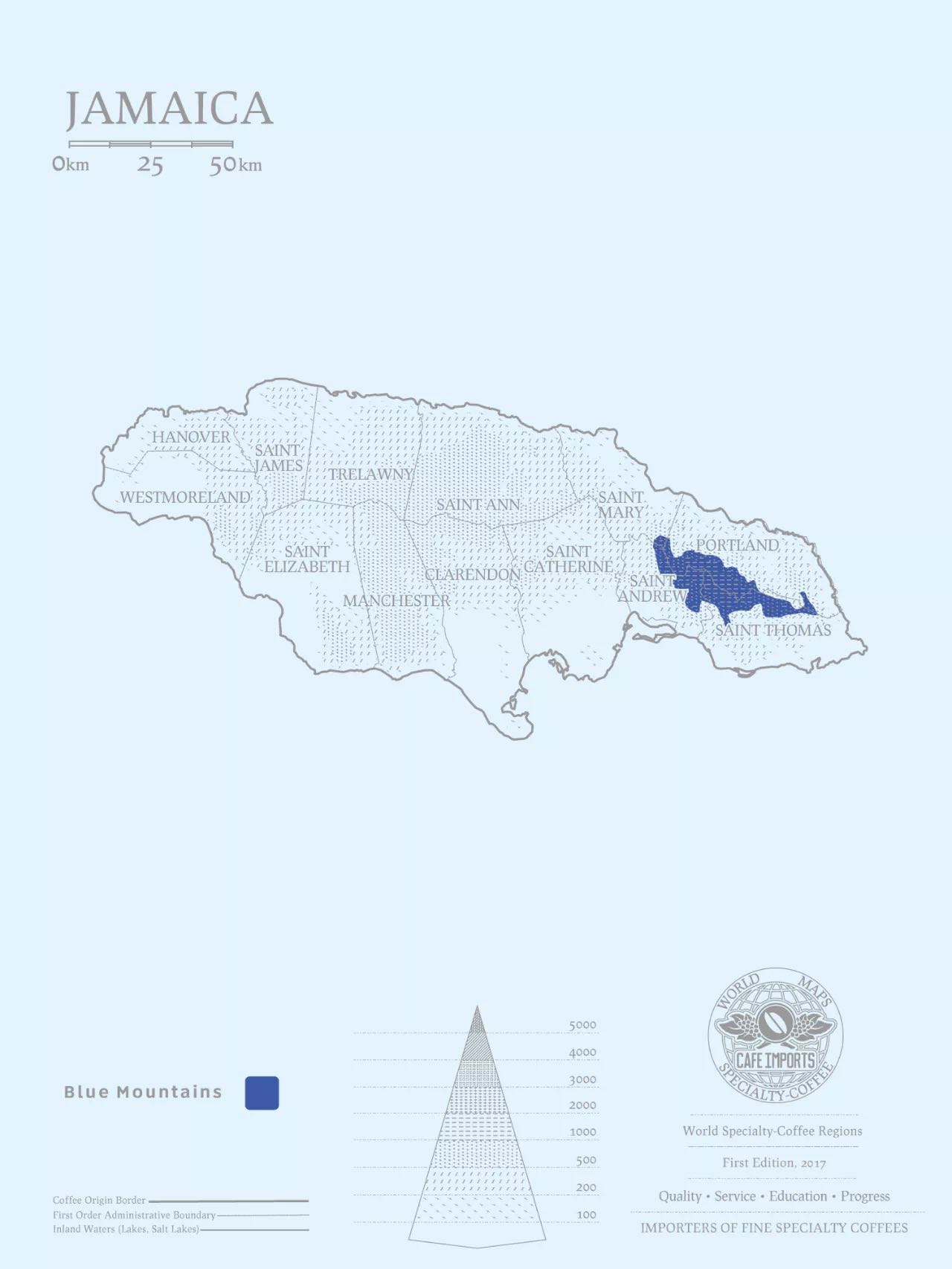
FrontStreet Coffee often says that the factors determining a coffee's flavor include origin, variety, and processing method. Let's introduce the Jamaican Blue Mountain coffee through these three factors. The Blue Mountain range is located in eastern Jamaica. Because the mountains are surrounded by the Caribbean Sea, on clear days when sunlight hits the azure sea surface, the peaks reflect the brilliant blue light of the water—hence the name Blue Mountain.
According to FrontStreet Coffee's understanding, Blue Mountain's highest peak reaches 2256 meters, making it the highest peak in the Caribbean region and a famous tourist destination. The area lies within the coffee belt, with fertile volcanic soil, fresh unpolluted air, a humid climate with year-round fog and rain, average precipitation of 1980mm, and temperatures around 27°C—conditions extremely suitable for growing high-quality Arabica beans. This is one of the determining factors behind premium Blue Mountain coffee.

Three Major Production Areas of Jamaican Blue Mountain Coffee
The reason Jamaican Blue Mountain coffee is expensive is not only its excellent flavor but also its extremely limited production—rarity makes it precious. The Blue Mountain region is small, with only 6000 hectares under cultivation, so it is impossible for all coffee labeled "Blue Mountain" to be grown there. Another 12000 hectares are used for the two other types of coffee (non-Blue Mountain): High Mountain Premium coffee and Jamaican coffee.
The Saint Andrew, Portland, and Saint Thomas production areas are the three famous major Blue Mountain producing areas. Additionally, some small estates also grow Blue Mountain coffee, such as Wallenford Estate, Silver Hill Estate, and Atlanta Estate of Martinez. Even the largest estate owners in the region are considered small-scale by international standards; many are small landholders whose families have worked this land for two centuries.
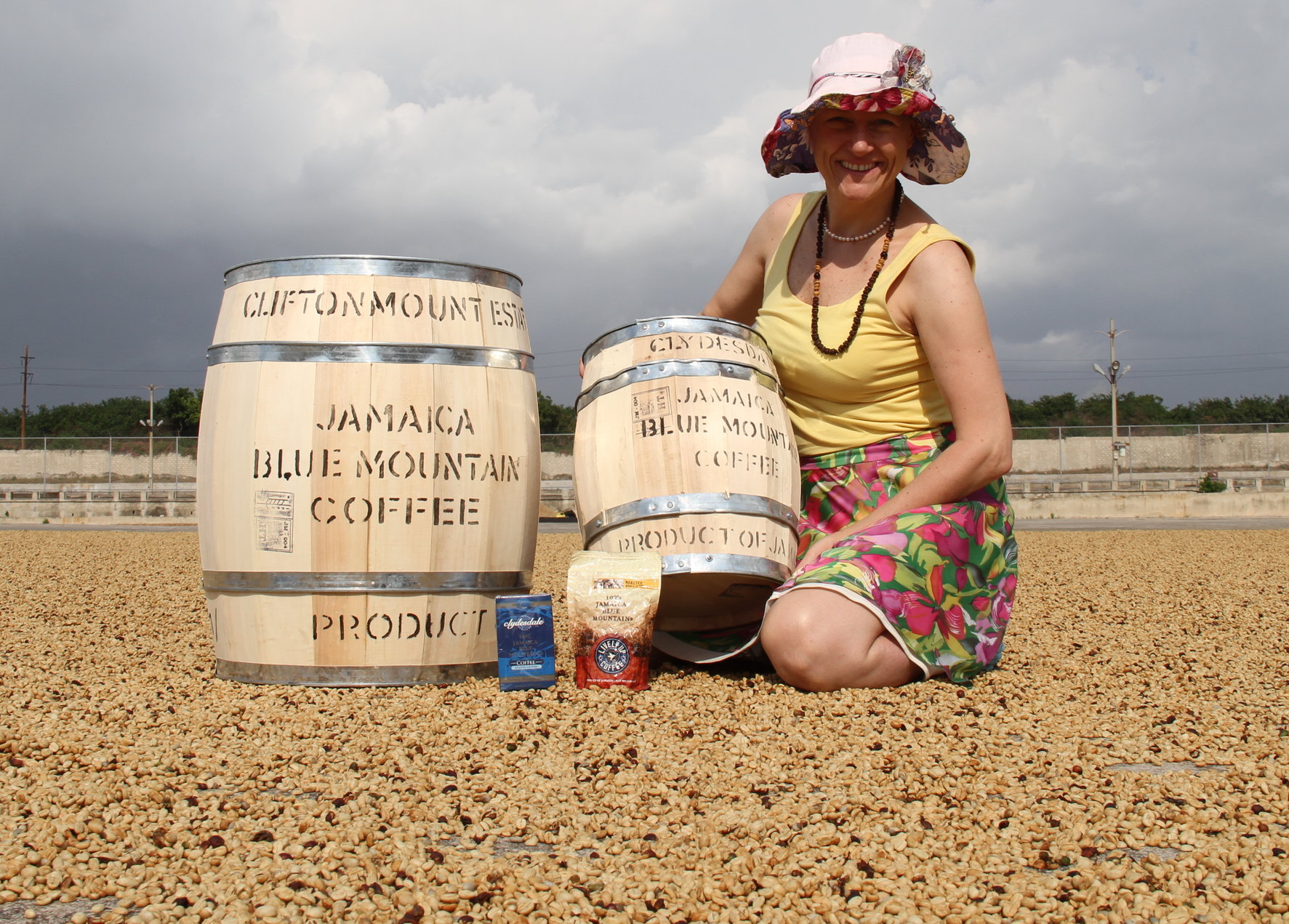
According to FrontStreet Coffee's understanding, there are currently six certification marks that can represent Blue Mountain coffee origin: Mavis Bank Central Factory (M.B.C.E), M.H.C.C.T., Portland Blue Mountain Coffee Cooperative (P.X.X.S.H.), Coffee Industry Board (Wallenford), Coffee Industry Board (St. John's Peak), and J.A.S, among others. Some estate-level coffees are also indicated on the wooden barrels.

Jamaican Blue Mountain Coffee Variety - Typica
The FrontStreet Jamaican Blue Mountain coffee is of the Typica variety. Typica is the oldest Arabica subspecies, with reddish-copper-colored leaf tips that earned it the name "red-topped coffee." The tree's opposite leaves are long and oval with smooth surfaces; it has long terminal branches with few side branches, and white flowers bloom at the base where the leaf stems meet the branches. The mature coffee fruit looks like a cherry, appearing bright red.
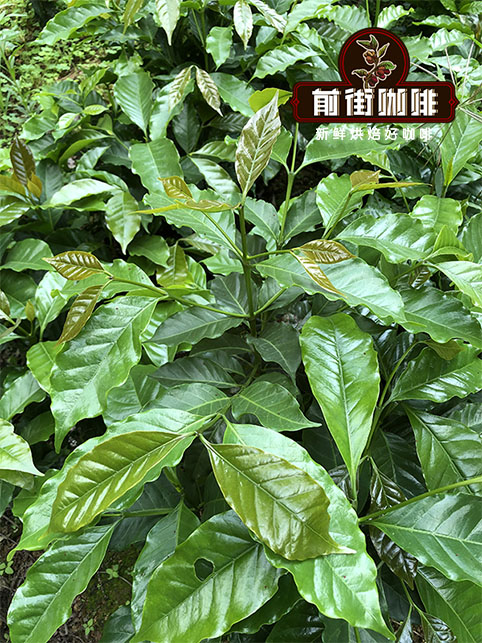
Meanwhile, Typica has an elegant flavor but a relatively weak constitution and low disease resistance, making it susceptible to leaf rust. Production is therefore low and cannot meet economic demands. In recent years, Typica in Central and South America has gradually been replaced by Caturra and Catuai, making Typica increasingly rare.
Jamaican Blue Mountain Coffee Processing Method
Before 2020, the FrontStreet Jamaican Blue Mountain coffee beans were available only in washed processing. This is because washed processing best reflects the original flavor of the beans, making the cup cleaner and brighter while reducing off-tastes. According to FrontStreet Coffee's understanding, the washed processing of the Blue Mountain No.1 beans uses washing and fermentation to remove the pulp, fruit flesh, and mucilage.

Farms using the washed method must build washing pools supplied with continuous fresh water. During processing, the pulp and fruit flesh are removed first, and the beans ferment for 12-18 hours. The fermented beans are then placed in the pools and moved back and forth, using the friction between beans and the power of flowing water to wash them until smooth and clean. After washing, the beans are still encased in parchment with 50% moisture content and must be sun-dried down to 12-14%, otherwise they will continue to ferment, mold, and spoil. Afterward, the beans are screened and stored in special warehouses. These procedures must be strictly controlled; otherwise quality suffers.
However, in 2020, Jamaica began introducing natural processed Blue Mountain beans. This move was made for innovation and to adapt to changing times, but changing the processing method inevitably alters the flavor structure. This is why FrontStreet Coffee always recommends washed beans when introducing coffee from a specific region, because washing best represents that region's flavor characteristics.

Those are the three characteristic factors that determine the flavor of Jamaican Blue Mountain coffee. Next, FrontStreet Coffee will share details on its two Blue Mountain No.1 offerings.

FrontStreet Coffee · Jamaican Washed Blue Mountain No.1 Coffee Beans
Country: Jamaica
Region: Blue Mountain (Clifton Estate)
Altitude: 1310m
Variety: Typica
Processing: Washed
Flavor: Dark chocolate and nut flavors on entry, high cleanliness, very bright with good body, balanced sweet, sour, and bitter notes.
FrontStreet Coffee · Jamaican Natural Blue Mountain No.1 Coffee Beans
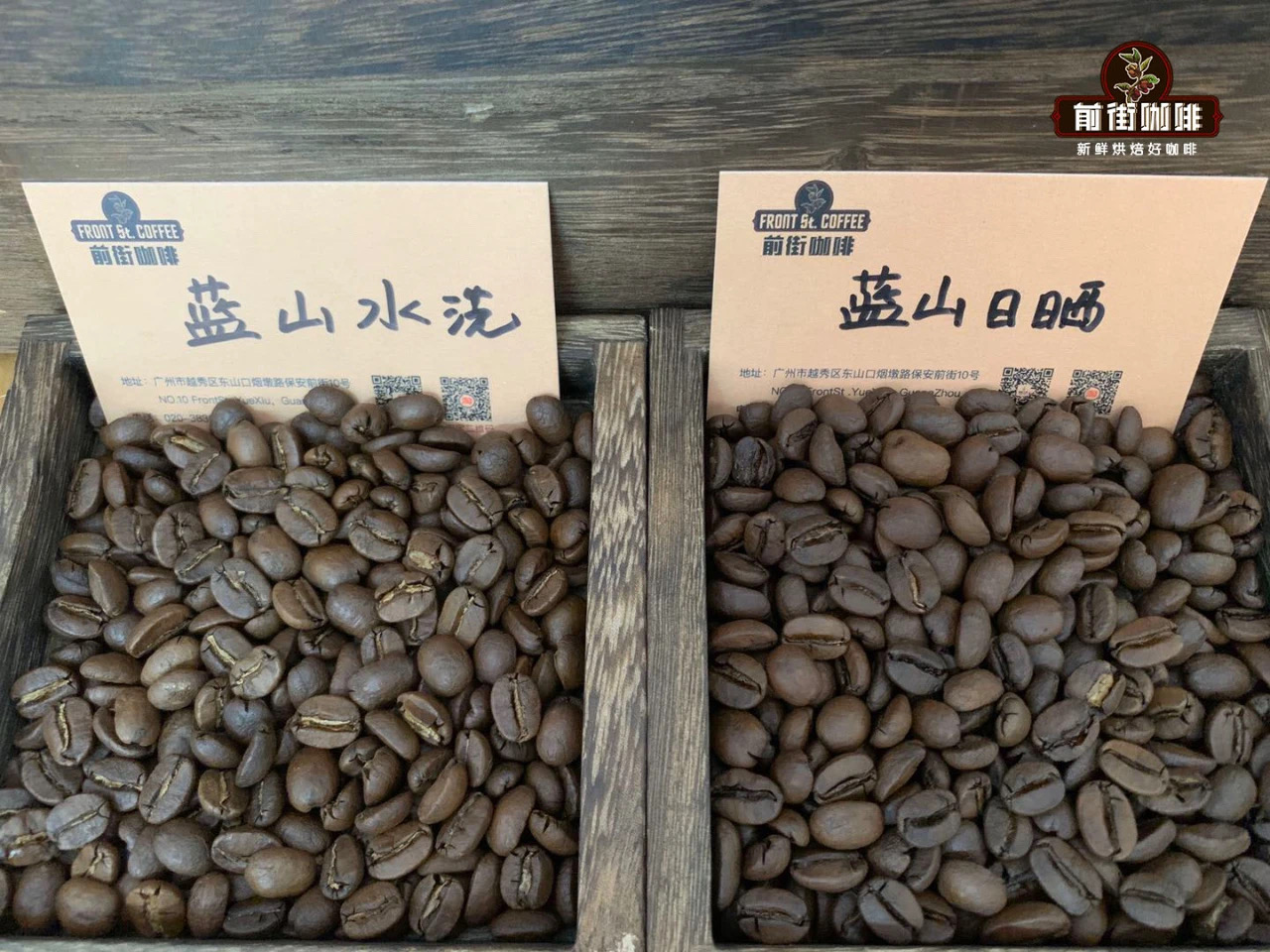
Country: Jamaica
Region: Blue Mountain (Clifton Estate)
Altitude: 1310m
Variety: Typica
Processing: Natural
Flavor: Brown sugar sweetness and berry acidity on entry, nut and cocoa flavors in the middle to later stages, creamy mouthfeel with rich and distinct layers, and a walnut aroma in the aftertaste.
Clifton Estate
Both FrontStreet Jamaican Blue Mountain coffees are produced at Clifton Estate, the oldest estate in the Blue Mountains and the only one in Jamaica with "Rainforest Alliance" certification. Obtaining this certification is not simple: farms that meet the Rainforest Alliance's standards receive protection for the farm and surrounding ecosystems, restrictions on pesticide use, and evaluation of waste-management benchmarks. Only coffee that passes evaluation and certification can be called "Rainforest Alliance Certified Coffee," which demonstrates the exceptional strength of this estate.

The symbol of the Rainforest Alliance is a green frog, so Blue Mountain coffee in wooden barrels bearing this green frog must come from Clifton Estate—one more way to identify authentic Blue Mountain coffee.

How to Distinguish Authentic Jamaican Blue Mountain Coffee?
As mentioned above, Jamaican Blue Mountain coffee is expensive because of its scarce production, which has attracted unscrupulous profit-seeking merchants, and many fake "Blue Mountain flavor" coffees have appeared on the specialty market. So how exactly can you identify genuine Jamaican Blue Mountain beans? FrontStreet Coffee has compiled three standards to teach coffee enthusiasts how to do just that.
(1) Quality Certificate issued by the Jamaica Coffee Industry Board
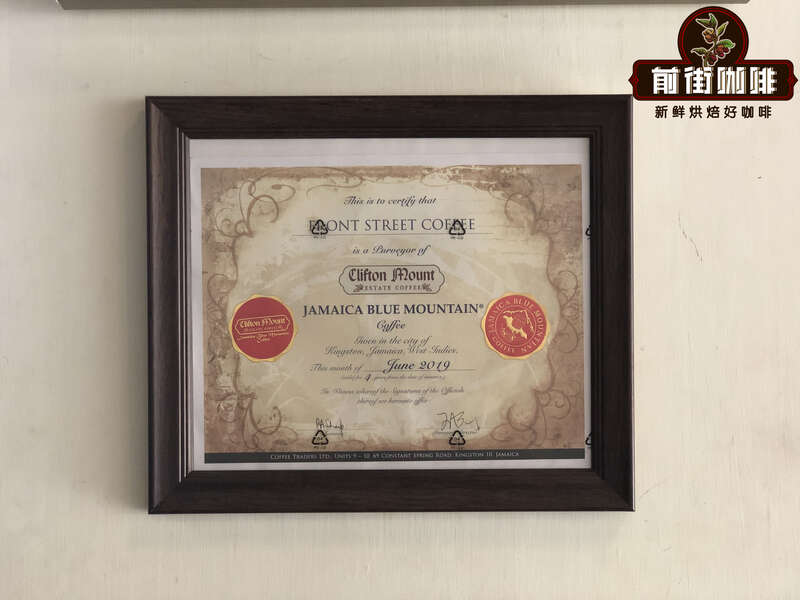
(2) Authorized Sales Certificate issued by Blue Mountain coffee manufacturers (Blue Mountain coffee is distributed by 4 Jamaican government-licensed processing producers and exported by 16 licensed exporters)
(3) Certificate of Origin for Jamaican Blue Mountain Coffee
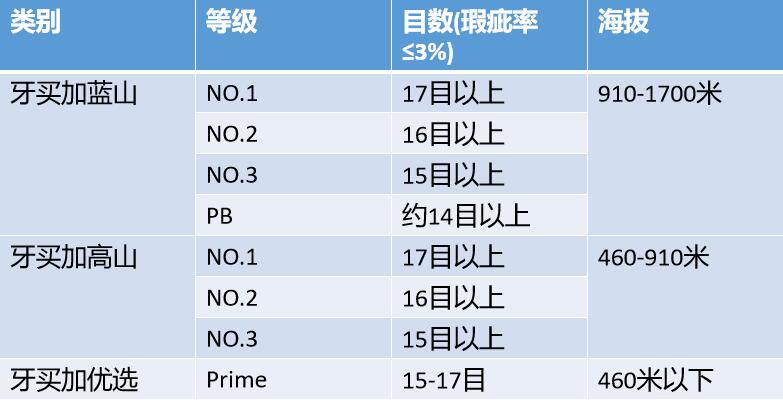
Additionally, as noted above, only coffee grown above 666m in Jamaica can be called Blue Mountain coffee, and Blue Mountain grading is based on bean size and quality. Different grades also determine different prices. Next, FrontStreet will introduce the Jamaican Blue Mountain grading standards.

Jamaican Blue Mountain Coffee Grading
Blue Mountain coffee is divided into four grades by quality; from highest to lowest they are: NO.1, NO.2, NO.3, and PB, with PB being peaberries. FrontStreet Coffee's Blue Mountain beans are specifically Blue Mountain No.1—the finest among Blue Mountain coffees and therefore the most expensive. The Blue Mountain coffee introduced by FrontStreet Coffee is indeed the highest-grade No.1.
Blue Mountain No.1 is grown in the Jamaican Blue Mountain region at altitudes up to 2000-2256m. Because the coffee trees stand on steep mountain slopes with low yields, large beans, excellent quality, and harmonious flavor, they simultaneously possess appropriate acidity, bitterness, aroma, richness, and sweetness. This is why coffee lovers worldwide recognize it as premium quality, and why Blue Mountain No.1 is naturally the most expensive of all Blue Mountain coffees.
In addition to altitude, Blue Mountain grading also screens for defect rates according to the following standards:
The above is the information FrontStreet Coffee has compiled about Jamaican Blue Mountain coffee. Before introducing any new beans, FrontStreet conducts extensive roasting, cupping, and brewing tests to determine the most delicious roasting and brewing parameters, so coffee lovers can experience the beans' best flavors. Next, FrontStreet will share the brewing parameters for the Washed Blue Mountain and the Natural Blue Mountain.
FrontStreet Jamaican Blue Mountain Coffee Bean Brewing Data Sharing
FrontStreet uses a KONO dripper when brewing its Blue Mountain coffee because it produces a rounder, richer mouthfeel. However, the KONO dripper has relatively poor exhaust performance.

Brewing Parameters:
15g coffee grounds
Dripper: KONO
Coffee-to-water ratio: 1:15
Grind size: sugar-granule coarseness
Water temperature: 86°C

Brewing Method:
Segmented extraction. Bloom with 30g of water for 30 seconds, then continue center pouring with a small water flow to 125g in segments. When the water level drops and is about to expose the coffee bed, continue pouring to 225g and stop. When the level drops again and is about to expose the bed, remove the dripper. Extraction time is 2:00.
FrontStreet Blue Mountain Coffee Bean Brewing Flavor Comparison:

[FrontStreet Natural Jamaican Blue Mountain] Brown sugar sweetness with berry acidity on entry, nut and cocoa flavors in the middle to later stages, creamy mouthfeel with rich and distinct layers, bringing out a walnut aroma in the aftertaste.
[FrontStreet Washed Jamaican Blue Mountain] Dark chocolate and nut flavors on entry, high cleanliness, very bright with good body, balanced sweet, sour, and bitter notes.
For professional coffee knowledge exchange and more coffee bean information, please follow Coffee Workshop (WeChat official account: cafe_style)
For more specialty coffee beans, please add FrontStreet Coffee on WeChat: kaixinguoguo0925
FrontStreet Coffee Recommendation: Certified Blue Mountain No.1 from Clifton Estate
If this guide has you craving the real thing, FrontStreet Coffee's Jamaica Blue Mountain No.1 comes straight from Clifton Estate—planted since around 1750 at an average of 4300 feet (1310.64m)—with government certificates, origin documents, and the traditional 15, 45, and 70kg wooden barrels that mark genuine Blue Mountain green beans. Choose the washed lot for dark chocolate, nuts, and crystalline brightness, or the natural lot for brown sugar sweetness, berry acidity, and a walnut-laced finish. The beans are roasted medium-dark within 5 days of shipping; rest them 4-7 days from the roast date, then brew on a Kono dripper: 15g of coffee at a 1:15 ratio, water at 87-88°C, a white-sugar grind, and three pours of 30g, 120g, and 225g for perfectly balanced sweetness.
Important Notice :
FrontStreet Coffee is a long-established specialty coffee roaster in Guangzhou China, selling freshly roasted beans from its own farm in Yunnan as well as dozens of carefully selected single-origin beans from around the world for both pour-over and espresso. The products deliver consistently excellent quality and great value, with shipping within 24 hours. Guangzhou's FrontStreet Coffee shop is recommended by many coffee lovers, and the beans are now available online at the Tmall 。
FrontStreet Coffee has moved to a new address:
FrontStreet Coffee Address: 315,Donghua East Road,GuangZhou
Tel:020 38364473
 Scan and follow the En Gafei WeChat official account. Please indicate that the reprint comes from "En Gafei".