Palm Tree and Toucan Estate Panama CCD Project Alti Estate Slow Dried Catuai Characteristics
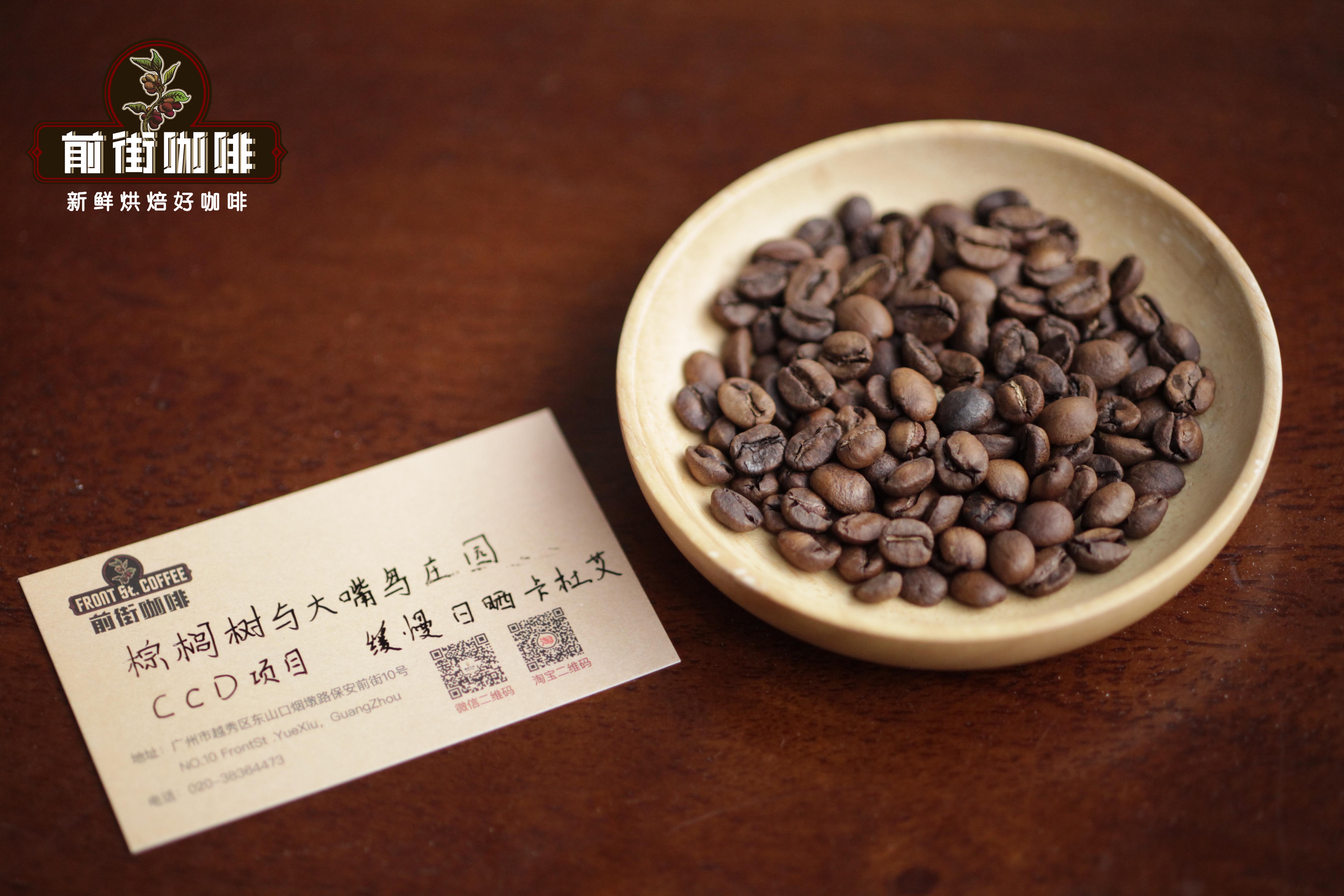
Palm Tree & Toucan Estate CCD Project
Region: Boquete, Panama
Estate: Altieri Estate
Altitude: 1650m
Variety: Catuai
Processing Method: Slow Natural (Palm Tree & Toucan Estate Processing)
About the CCD Project
CCD stands for "Creativa Coffee District," a forward-thinking specialty coffee producer initiative in Panama's Chiriqui Province, Boquete region. The project actively advocates for the modernization of traditional processing methods, introducing advanced coffee processing experience and cutting-edge equipment, and enthusiastically attracting innovative coffee processing estate owners and managers from around the world to collaborate in Panama. It establishes new coffee production standards to ensure growers receive higher income and to guarantee sustainable ecological practices at coffee processing stations worldwide.
A Dream Collaboration
It is precisely the CCD project that enabled the famous innovative Palm Tree & Toucan Estate to create a dream collaboration with Panama's Altieri Estate.
Palm Tree & Toucan Estate -- Technology Export
Palm Tree & Toucan Estate was founded in 2011 by a collective of mad scientists, passionate founders, persistent farmers, and gifted artists.

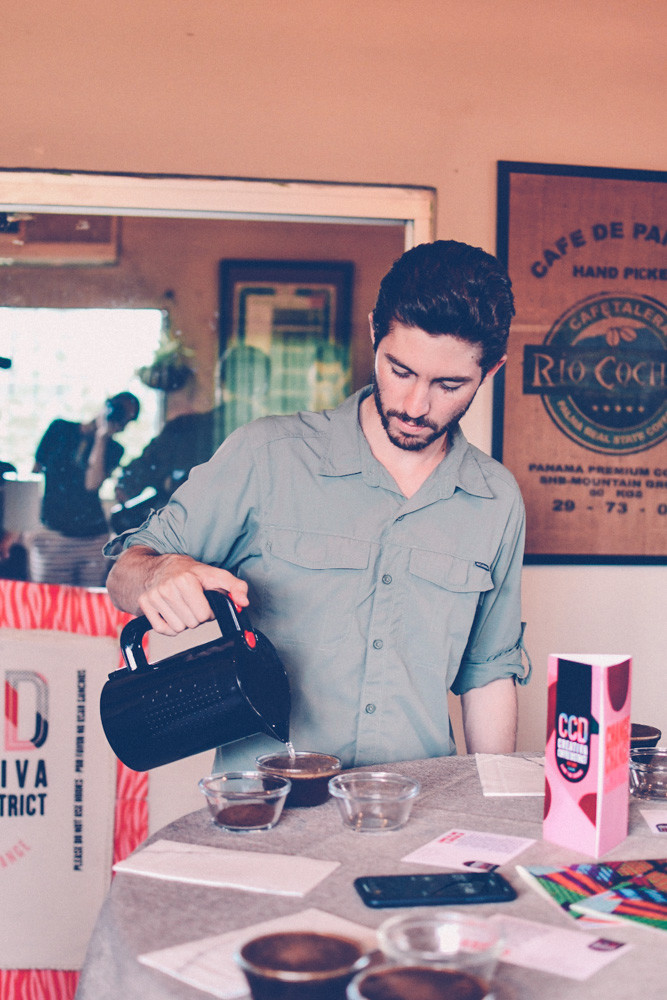
One of the estate's founders, Felipe, has been in the specialty coffee industry for over a decade. He previously operated green bean trading in the United States and decided around 2010 to return to Colombia to dedicate himself to the specialty coffee revolution in his homeland. Estate manager Sebastian won the 2018 Colombia Brewers Cup Championship and is enthusiastic about promoting Colombian coffee worldwide.
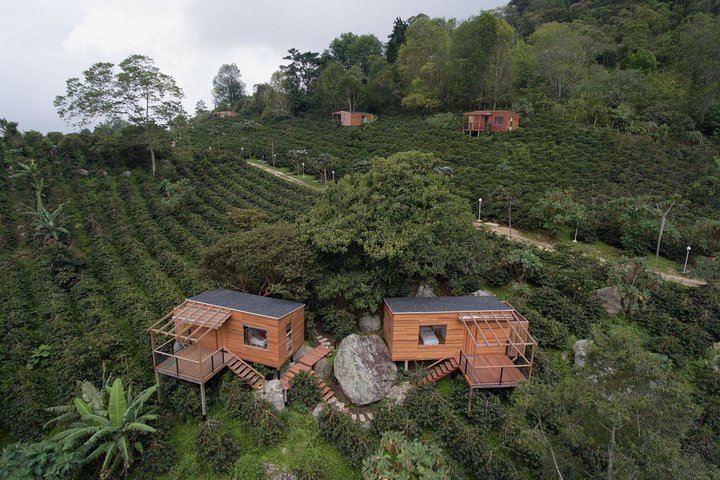
Unlike traditional coffee producers, they did not inherit any coffee estates from previous generations, but instead sought from scratch what they considered the ideal coffee growing environment (Ecotopo): ideal altitude, perfect weather, appropriate sunlight and natural shade, good water sources, suitable temperatures, and dedicated coffee growers in the region.
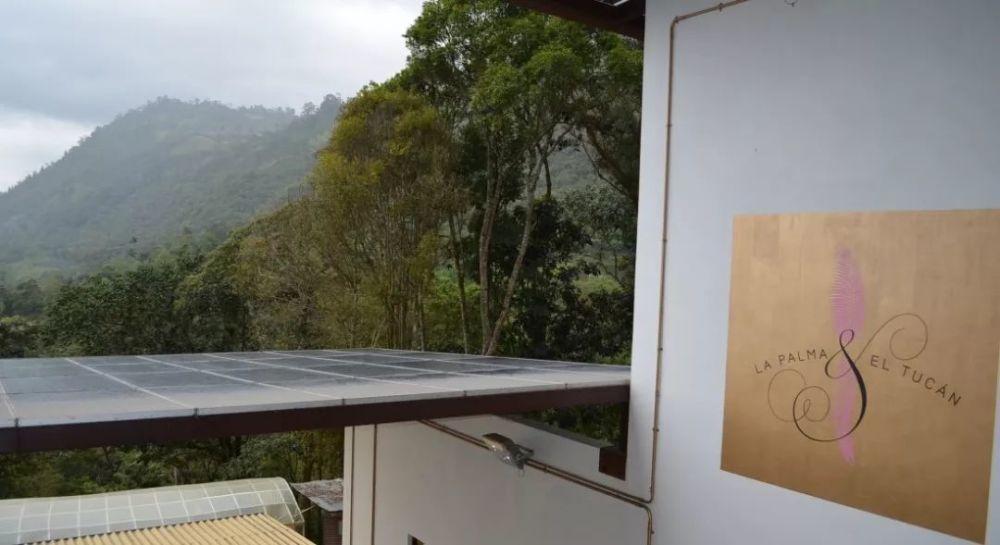
In addition to actively helping surrounding small farmers improve their cultivation and processing levels (the Neighbors & Crops project), the estate owners have dedicated themselves over the past five years to cultivating unique terroir flavors at their Finca Libre estate, investing significant resources and time in cultivation and processing. They have also developed different product lines to satisfy the preferences of different flavor audiences -- this is the estate's highest quality representative, the Estate & Varietals project. Now they are expanding internationally, exporting cultivation and processing management techniques. The CCD project serves as an excellent platform that allows Palm Tree & Toucan Estate founders Felipe and manager Sebastian to showcase their expertise on a broader stage, launching the project in 2018.
Altieri Estate -- Understated and Refined
Altieri Estate is situated on the eastern slopes of Baru Volcano in Panama and was founded by Eugene P. Altieri, an American-born New Yorker who has lived in Panama for over 40 years. He owns two estates -- one at a lower average altitude of approximately 1,350 meters and another at 2,000 meters, both located in the Boquete region. This particular Catuai is cultivated in the high-altitude area at 1,650 meters. Catuai is a man-made hybrid cross between Mundo Novo and Caturra, originally developed by the Agronomic Institute of Sao Paulo State in Brazil, and later favored by Central American countries for its high yield, disease resistance, and excellent flavor characteristics.
Processing Method -- Slow Natural
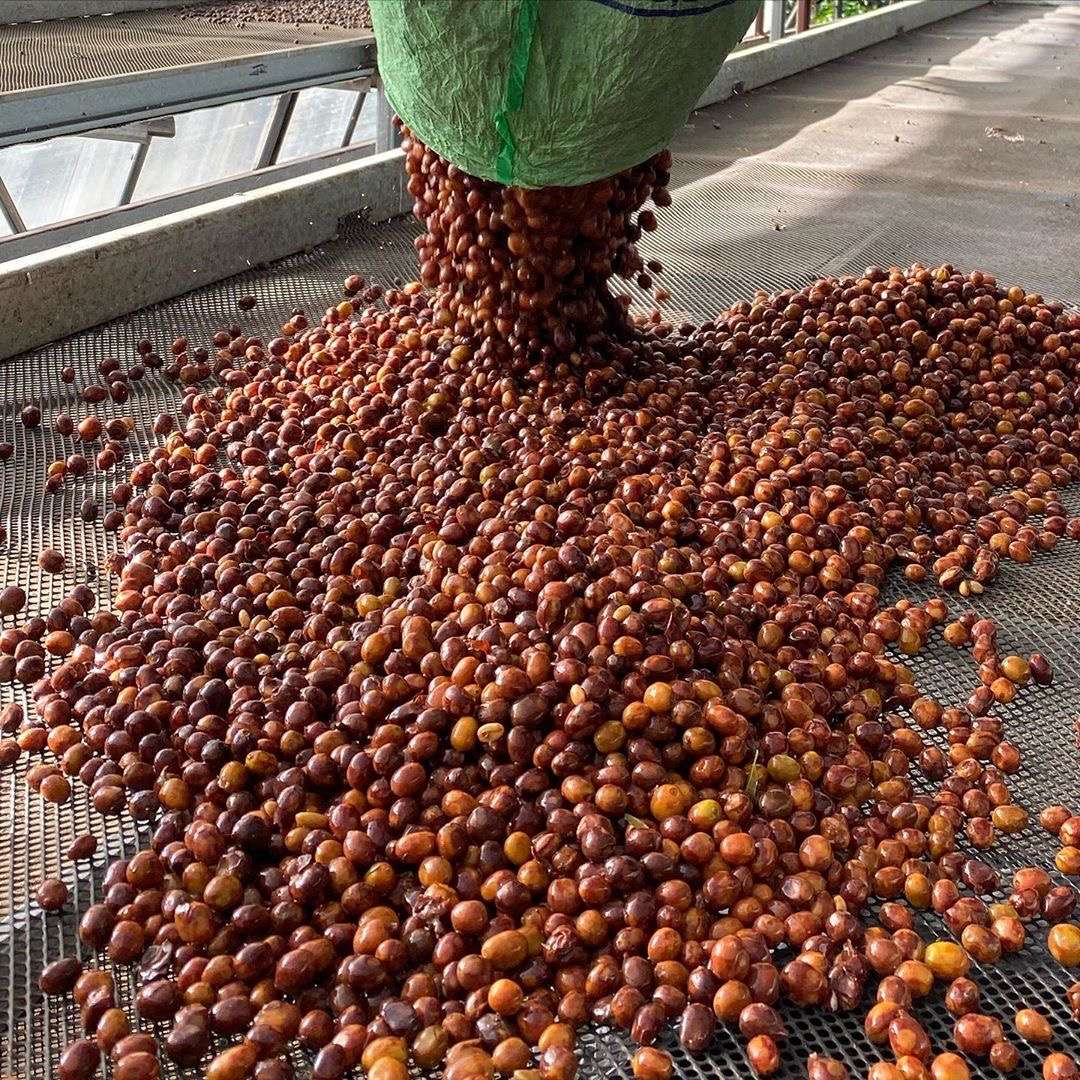
Palm Tree & Toucan Estate established a coffee processing plant in Panama and reached cooperation agreements with surrounding cultivation estates -- the estates provide coffee cherries, and the processing plant applies advanced processing techniques. This particular Catuai from Altieri Estate employs the slow natural processing method.
First, fresh coffee cherries are collected, and qualified red cherries undergo natural processing. The cherries are spread thinly on raised beds, creating excellent convection and drying conditions. This natural process typically lasts 18 days, employing the strictest management methods with precise control over daily drying progress. Then hulling is performed. The slow natural process allows the cherries to develop optimal activity during drying, not only creating more layered flavors in the beans but also enabling the green beans to store longer through the seasonal cycle.
FrontStreet Coffee Roasting Analysis
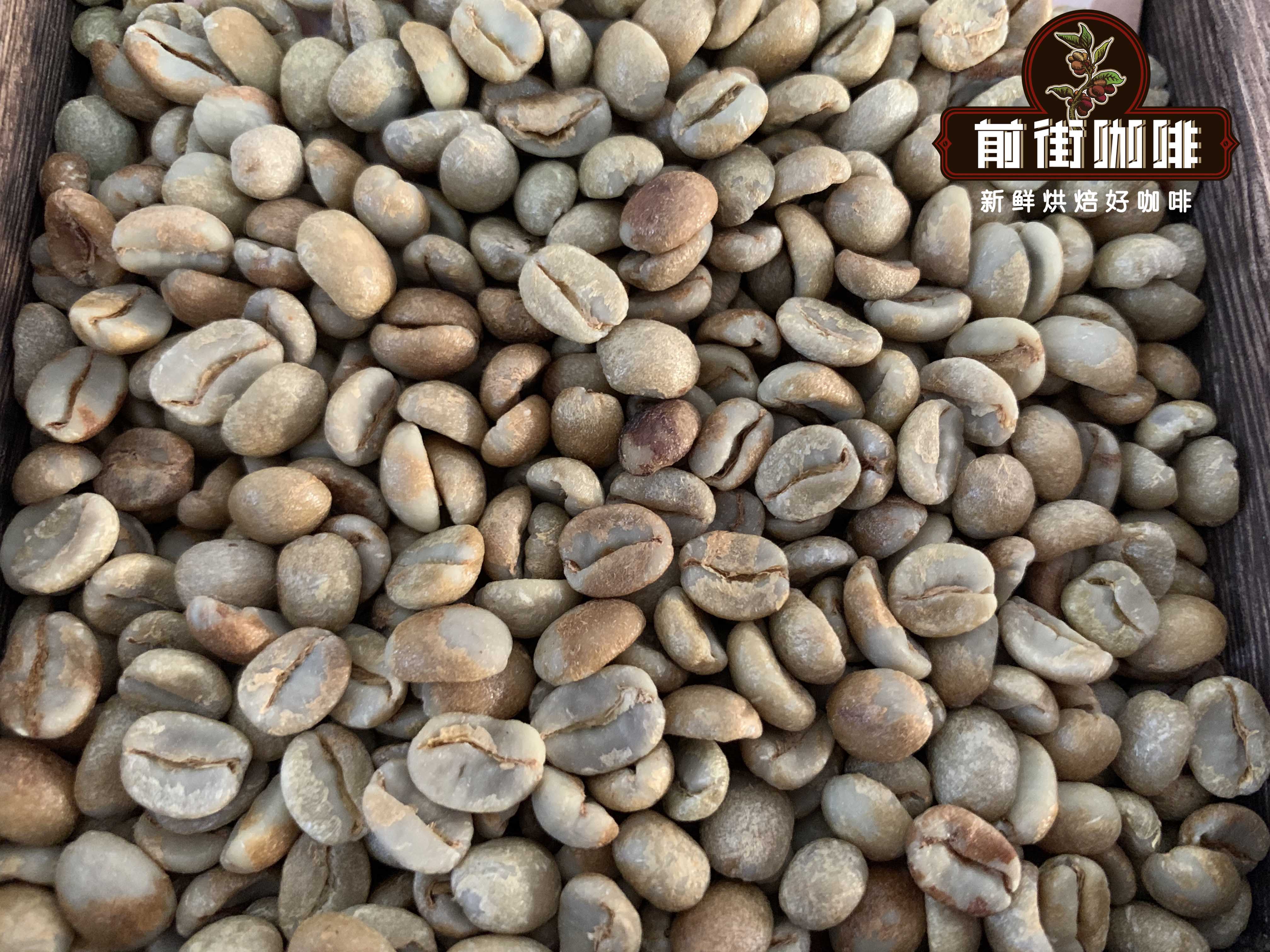
FrontStreet Coffee introduced this coffee bean as a joint production between Palm Tree & Toucan Estate and Altieri Estate, utilizing Palm Tree & Toucan Estate's slow natural processing technique. FrontStreet Coffee employs a medium-light roast to highlight its abundant sweetness and rich layered complexity.
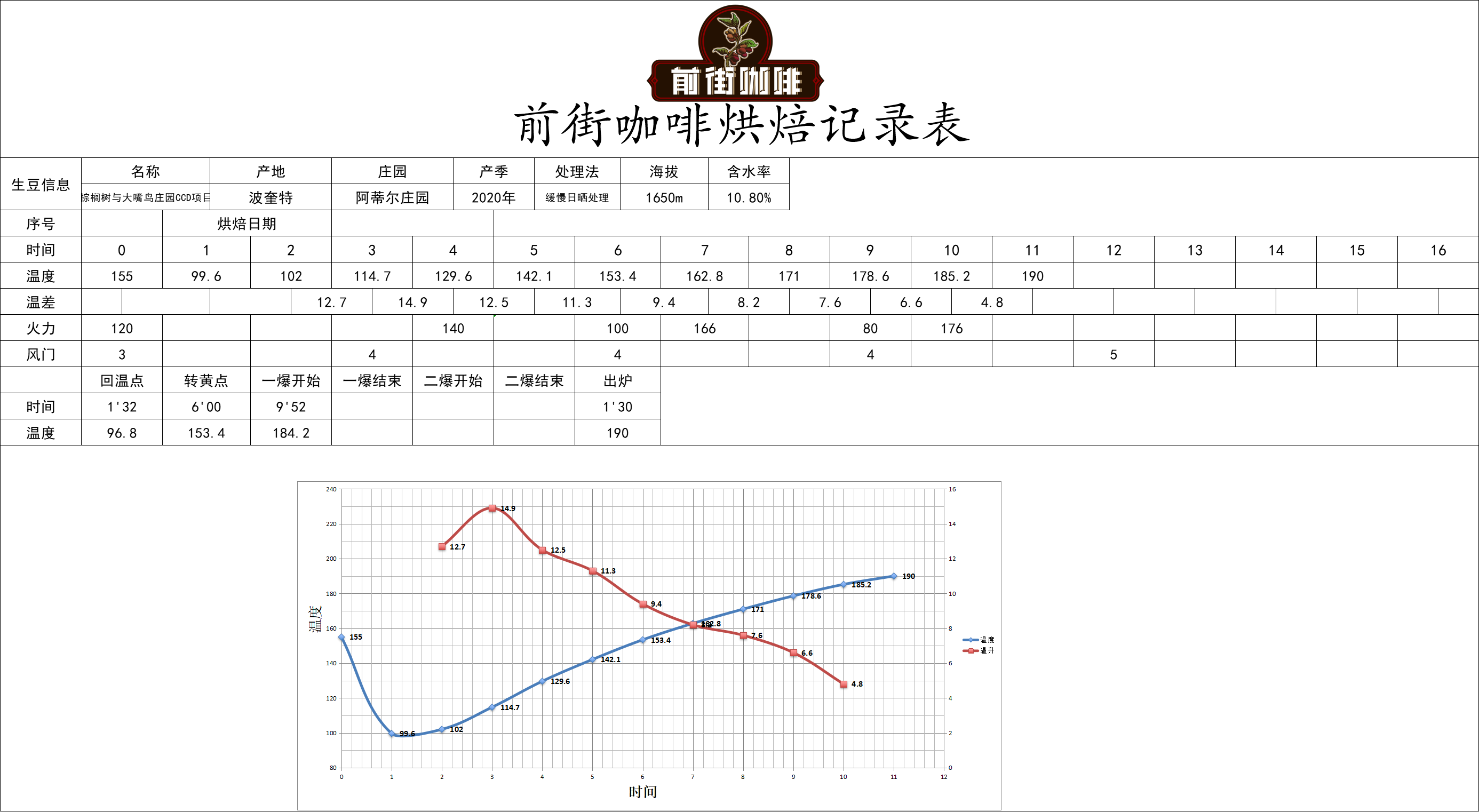
Charge at 155C, heat at 120, damper opened to 3; return temperature at 96.8C (1'32"). When drum temperature reaches 140C, open damper to 4, heat unchanged. When drum temperature reaches 154C, the bean surface turns yellow, the grassy aroma disappears completely, and the batch enters the dehydration stage. At 8'30", the bean surface shows ugly wrinkles and black spots, and the toast aroma clearly transforms into coffee aroma, which can be defined as the prelude to first crack.
When drum temperature reaches 184C, reduce heat to 70, and listen carefully for the sound of first crack. First crack begins at 9'52", damper adjusted to 5. When drum temperature reaches 188C, reduce heat to 50, develop for 1'30" after first crack, drop at 190C.
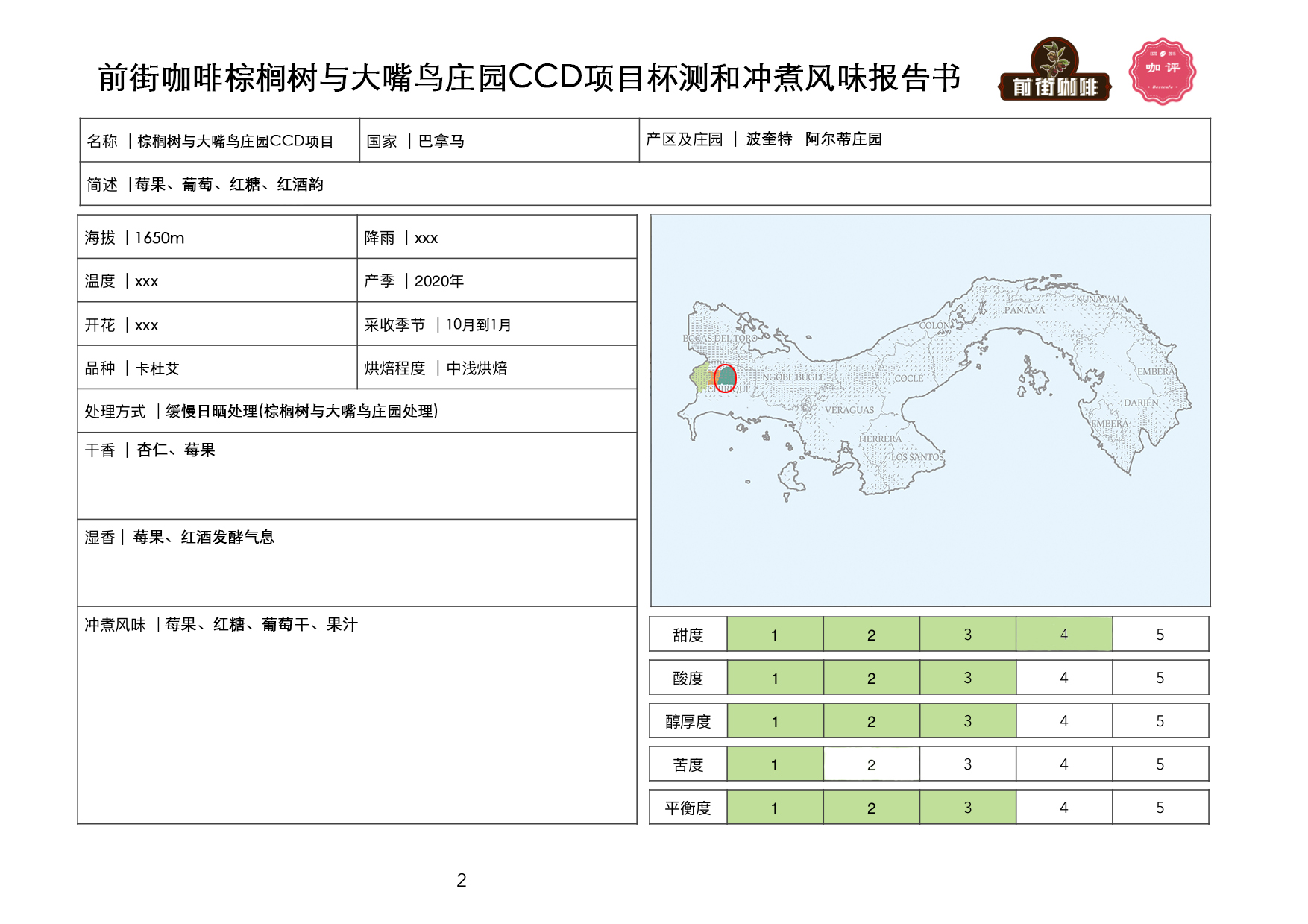
FrontStreet Coffee Cupping Results
FrontStreet Coffee Brewing Recommendations
Dripper: V60#01
Water Temperature: 90-91C
Coffee Dose: 15g
Coffee-to-Water Ratio: 1:15
Grind Size: Medium-fine grind (Chinese standard #20 sieve, 80% pass-through)
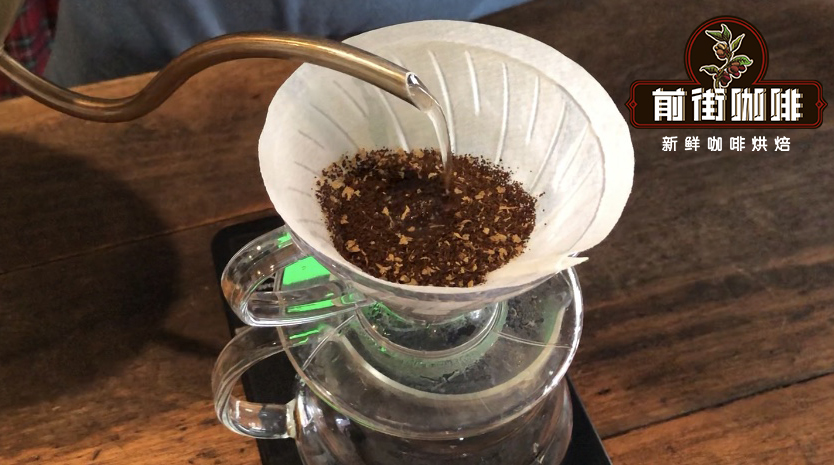
Brewing Method: Three-stage extraction. Use 30 g of water for a 30-second bloom, then continue pouring with small circular motions to 125 g for stage separation. When the water level drops to just expose the coffee bed, continue pouring to 225 g and stop. When the water level drops to just expose the coffee bed again, remove the dripper. Extraction time is 1'55" (timing starts from the bloom).
FrontStreet Coffee Recommendation
This lot comes through Panama's CCD project, and FrontStreet Coffee's Colombian coffees show what the country at the other end of the collaboration does well. The washed Colombia Huila comes from the southern end of the central mountain range -- the country's best-known specialty region, planted above 1,500 meters -- and at a medium-dark roast it gives dark chocolate, nutty sweetness, moderate oils, and a mellow body, working as pour-over, French press, moka pot, or espresso, and in Americano or latte.
For the more experimental side, FrontStreet Coffee's Colombia Xizhua from the Diviso estate is an anaerobic natural. After oxygen-free fermentation the beans turn toward tropical fruit, and at a medium-light roast they show passion fruit, grape, apricot, and dried fruit whether brewed as pour-over, cold brew, drip bag, or moka pot.
And for espresso, FrontStreet Coffee's Specialty Blend brings Brazil's creamy nut character together with Colombia's dark-chocolate bittersweetness, pulling with a fine golden crema that suits latte, Americano, cappuccino, and mocha.
Important Notice :
FrontStreet Coffee is a long-established specialty coffee roaster in Guangzhou China, selling freshly roasted beans from its own farm in Yunnan as well as dozens of carefully selected single-origin beans from around the world for both pour-over and espresso. The products deliver consistently excellent quality and great value, with shipping within 24 hours. Guangzhou's FrontStreet Coffee shop is recommended by many coffee lovers, and the beans are now available online at the Tmall 。
FrontStreet Coffee has moved to a new address:
FrontStreet Coffee Address: 315,Donghua East Road,GuangZhou
Tel:020 38364473
 Scan and follow the En Gafei WeChat official account. Please indicate that the reprint comes from "En Gafei".