How to Brew Indonesian Lintong Mandheling Coffee Beans - Techniques, Methods, and Parameters
There are countless coffee bean varieties to choose from, with flavors and textures from different growing regions available—the choice is simply overwhelming. Take Indonesia's Mandheling from Asia, for example. Many people find Mandheling delicious because its unique wet-hulling process creates a low-acidity, full-bodied flavor that has won many hearts, with a long-lasting sweet finish.
Coffee Cultivation History in Indonesia
According to FrontStreet Coffee, Indonesia first cultivated coffee in 1696, when the governor of Malabar gifted Arabica coffee to the Dutch governor in Batavia (now Jakarta, in Java). The first batch of seedlings was washed away by floods. In 1699 the governor of Malabar in India sent a second batch, which yielded the first coffee harvest in 1701, ushering in a new era of Indonesian coffee.

Origin of Indonesian Mandheling Coffee Bean Name
Seasoned coffee enthusiasts know that most beans are named after their growing region or estate—for example, the Costa Rica Monster Estate beans FrontStreet Coffee recently stocked, or Ethiopia's Yirgacheffe. The origin of the name Mandheling, however, involves a fun little story.
According to FrontStreet Coffee's research, the story began when Japanese soldiers returned home after the colonial period in Indonesia, unable to forget the delicious local coffee. Through their trading connections they asked locals to collect high-quality beans, including this particular Mandheling variety. The Japanese loved it and asked its name. The locals, misunderstanding that they were being asked about their ethnicity, answered "Mandailing," which the Japanese heard as "Mandehling." Through this double misunderstanding, Mandheling became the name of the coffee bean by chance.
Indonesian Coffee Growing Regions
Mandheling is primarily produced on Sumatra, Indonesia's largest island. Near the equator, it has a typical tropical rainforest climate—high temperatures, humidity, and abundant rainfall—making it ideal for growing high-quality Arabica.
The limited altitude in Indonesian growing regions, however, restricts the space available for premium Arabica. Only 25% of the coffee produced in Indonesia is Arabica, because Arabica develops its best flavor only at high altitude. The remaining 75% consists of Robusta trees, which can be cultivated at lower elevations. Sumatra has the highest altitude in Indonesia.

Among the traditional Arabica coffees of northern Sumatra, the finest are marketed under the name Lintong Mandheling. More specifically, Lintong Mandheling beans refer to coffee grown in a small area southwest of Lake Toba, in the Lintong administrative region.
Famous coffee-growing regions in Sumatra include the GAYO mountain region (also known as Aceh), Lintong, and Sidikalang.
The Lintong region lies near Lake Toba, Sumatra's famous tourist area, with elevations of 1,400-1,800 meters and coffee varieties that include Jember, Garundang Typica, and Ateng.

According to FrontStreet Coffee's understanding, however, Mandheling from the Lintong region has been further subdivided in recent years. The market has begun to see Mandheling varieties named after specific areas (such as Sidikalang, abbreviated SDK Mandheling), and the meaning of "Lintong region" has gradually narrowed to the area near Lintongnihuta.
Indonesia's Unique Processing Method: Wet-Hulling
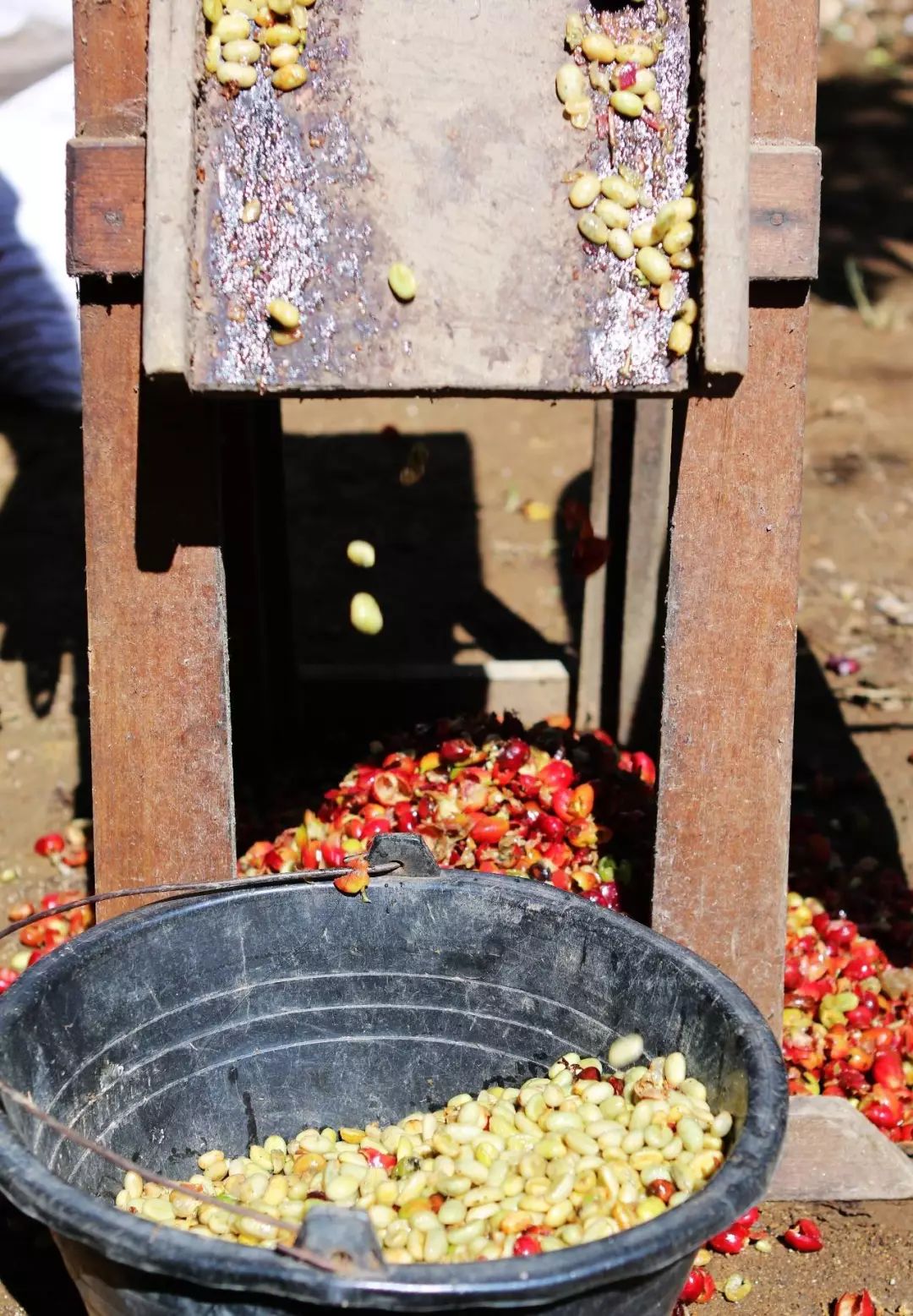
According to FrontStreet Coffee, Indonesia uses the wet-hulling method because the local weather is predominantly rainy with constant typhoons, making the conditions for sun-drying impossible to achieve. Local farms also could not afford the more expensive washed process. This led to the development of the uniquely local wet-hulling method.
Indonesian coffee has of course moved well beyond its former impoverished state. Many estates and companies can now use washed processing, yet they have not abandoned wet-hulling. FrontStreet Coffee believes wet-hulling is the key factor that brought Mandheling coffee to global prominence. Mention Mandheling, and wet-hulling comes to mind—the two have clearly become inseparable.
The specific steps of wet-hulling fall into two stages:
First stage: The outer skin and pulp are removed with a wooden peeler, followed by 3 hours of fermentation, then drying until the moisture content reaches 30-50% (semi-dry).
Second stage: The mucilage and parchment layer are removed, followed by continued drying. Drying takes 2-4 days, until the moisture content reaches 12-13%.
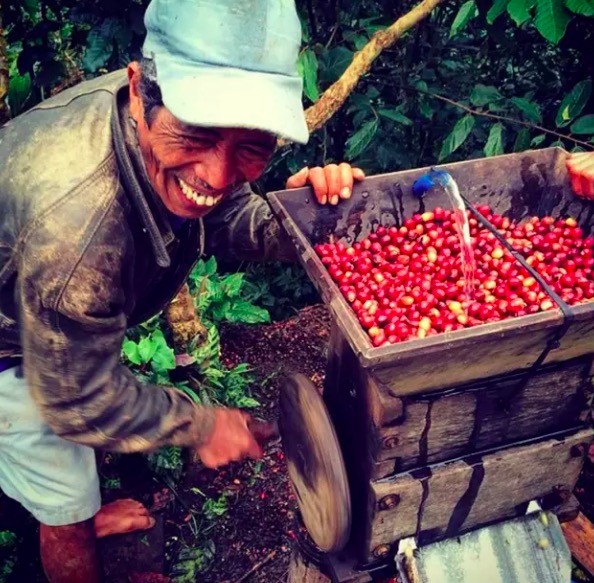
Beyond conventional wet-hulling, there is also aged wet-hulling. The beans are first processed by ordinary wet-hulling, then sealed in warehouses for 2-3 years. The warehouse must be cool and well ventilated, with the beans turned regularly to prevent mold and spoilage. Over this period the acidity gradually diminishes and converts to sugars while the color deepens to yellowish-brown or dark brown. On FrontStreet Coffee's menu, Mandheling processed this way is called Aged Mandheling.
The above is the information on Indonesian Mandheling coffee compiled by FrontStreet Coffee. So how do you brew a delicious cup? FrontStreet Coffee will now share how to hand-brew Indonesian Lintong Mandheling.
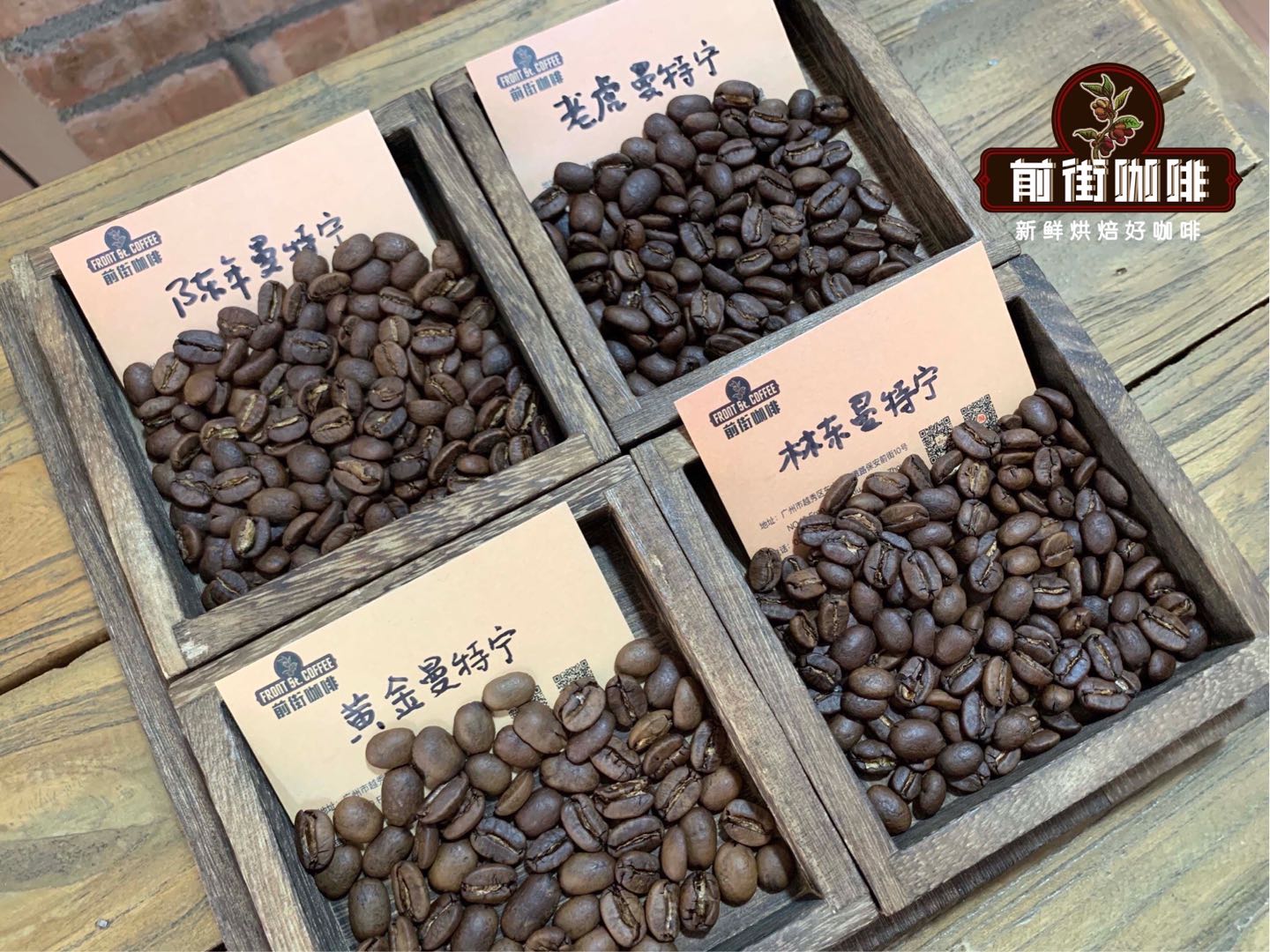
FrontStreet Coffee's Indonesian Lintong Mandheling Coffee Beans
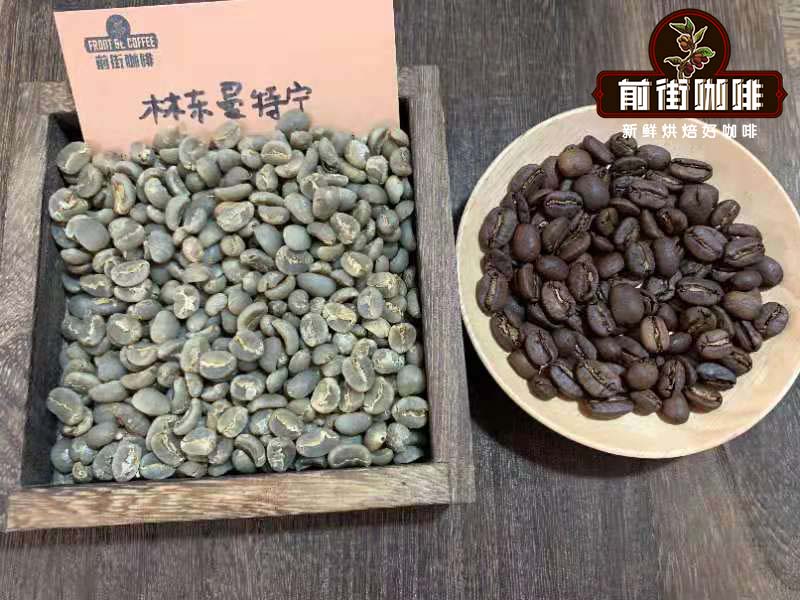
Country: Indonesia
Region: Sumatra (Lintong)
Altitude: 1,100-1,600m
Varieties: Typica, Caturra
Processing Method: Wet-hulled
Flavor Notes: Toasted bread, nuts, caramel, pine, herbs
FrontStreet Coffee's Mandheling Brewing Recommendations

Dripper: KONO
Dose: 15 grams
Ratio: 1:15
Water Temperature: 86-87°C
Grind Size: BG #6M
Lintong Mandheling Brewing Technique
First pour: use 30g of water for a 30-second bloom. Second pour: use small circular pouring until reaching 125g, then pause. When the water level drops and is about to expose the coffee bed, continue with the third pour to 225g, then stop. Remove the dripper when the water level again drops and is about to expose the bed (timing starts from the bloom). Total extraction time: 2'00".
Flavor Description: Herbal notes on entry, black chocolate, caramel, with a sweet aftertaste.

AeroPress Method
Flavor: Rich, complex, prominent spice notes, fresh forest aroma
1. Equipment choice: AeroPress
2. Water temperature: 85°C
3. Grind size: Fuji Royal grinder setting 3.5
4. Roast level: Medium-dark roast
5. Steeping time: 2 times, first 20 seconds, second 50 seconds
Specific technique: Prepare the AeroPress in normal orientation. Use 20g of coffee with a 1:17 ratio. First pour 100g of 83°C hot water, stir 3-5 times to fully wet the grounds, and let stand for 20 seconds. Add hot water to reach 240g, let stand 40 seconds, stir for 5 seconds. At 1 minute 50 seconds, insert the plunger and press down. Total time: 2 minutes 5 seconds.
Siphon Method
Flavor: Mellow, rich, prominent herbal and bitter notes with distinct caramel sweetness

1. Equipment choice: Hario siphon brewer
2. Water temperature: 90°C
3. Grind size: Fuji Royal grinder setting 3.5
4. Roast level: Medium-dark roast
5. Steeping time: 30 seconds
Specific technique: Side-burn extraction. Use 20g for 2 servings, a 1:12 ratio, with the water scale at 2. Use the post-addition method—add the grounds after bubbling begins, stir 4-5 times, extract for about 30 seconds, then remove the heat. Finally, stir twice and let the coffee liquid drain freely.
French Press Method
Flavor: Balanced, full-bodied, with good texture and oils, slightly sweet

1. Equipment choice: French press
2. Water temperature: 92°C
3. Grind size: Fuji Royal grinder setting 4.5
4. Roast level: Medium-dark roast
5. Steeping time: 2 minutes 30 seconds
Specific technique: Use 20g of coffee. Pour hot water (about 92-93°C) into the French press to the 300ml mark and start timing. Place the lid on with the filter stopped at the highest position and wait 2.5 minutes. Press the filter down completely.
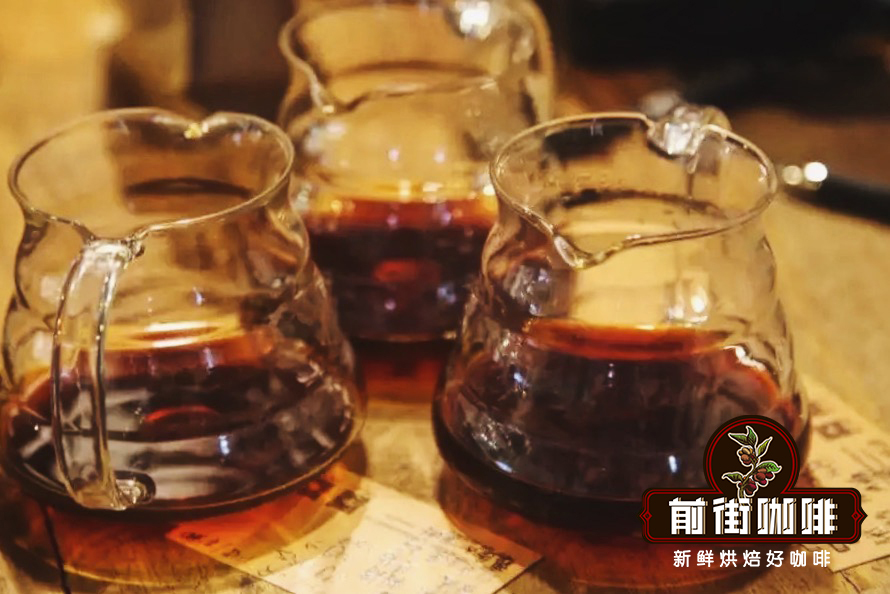
FrontStreet Coffee recommends that home brewers use the pour-over and AeroPress methods to showcase Mandheling's rich, mellow flavors, because the siphon and French press can easily over-extract. Once Mandheling is over-extracted, all you taste is sour and bitter.
FrontStreet Coffee Recommendation
For readers who want to explore other FrontStreet single origins alongside Mandheling, the Yirgacheffe family is a rewarding next stop. FrontStreet's washed Yirgacheffe staple lot is the classic entry bean—white jasmine, bright citrus and lemon acidity, and a tea-like body at an accessible price. Yirgacheffe is a town in southern Ethiopia within the Sidamo zone at roughly 1,700–2,100 meters, with trees planted above 1,800 meters; the name grew so famous that in 2010 the Ethiopia Commodity Exchange separated it from Sidamo as its own designation.
For a cooperative expression, FrontStreet's washed Geddingding cooperative lot comes from the Woka area at the southeastern end of Yirgacheffe and follows the most traditional washed processing, delivering a clean citrus-and-lemon acidity and elegant white florals. For something fruitier, FrontStreet's naturally processed Red Cherry lot uses only fully ripe red cherries, dried on raised beds for three to five weeks; because the fruit dries around the seed, it keeps classic Yirgacheffe character while adding tropical fruit, a berry-juice body, honeyed sweetness, and a creamy texture.
These floral, fruit-forward coffees brew best with a gentle pour-over: a V60, 15 g of coffee, a 1:15 ratio, and 90–91°C water, ground to fine-sugar size (about 80% passing a No. 20 sieve). Bloom with 30 g of water for 30 seconds, pour to about 125 g over the first minute, then top up in stages to about 225 g, aiming to finish the drawdown in 2:00–2:10.
Important Notice :
FrontStreet Coffee is a long-established specialty coffee roaster in Guangzhou China, selling freshly roasted beans from its own farm in Yunnan as well as dozens of carefully selected single-origin beans from around the world for both pour-over and espresso. The products deliver consistently excellent quality and great value, with shipping within 24 hours. Guangzhou's FrontStreet Coffee shop is recommended by many coffee lovers, and the beans are now available online at the Tmall 。
FrontStreet Coffee has moved to a new address:
FrontStreet Coffee Address: 315,Donghua East Road,GuangZhou
Tel:020 38364473
 Scan and follow the En Gafei WeChat official account. Please indicate that the reprint comes from "En Gafei".