Mandheling vs Yirgacheffe: Golden Mandheling Coffee Bean Flavor Profile and Taste Characteristics
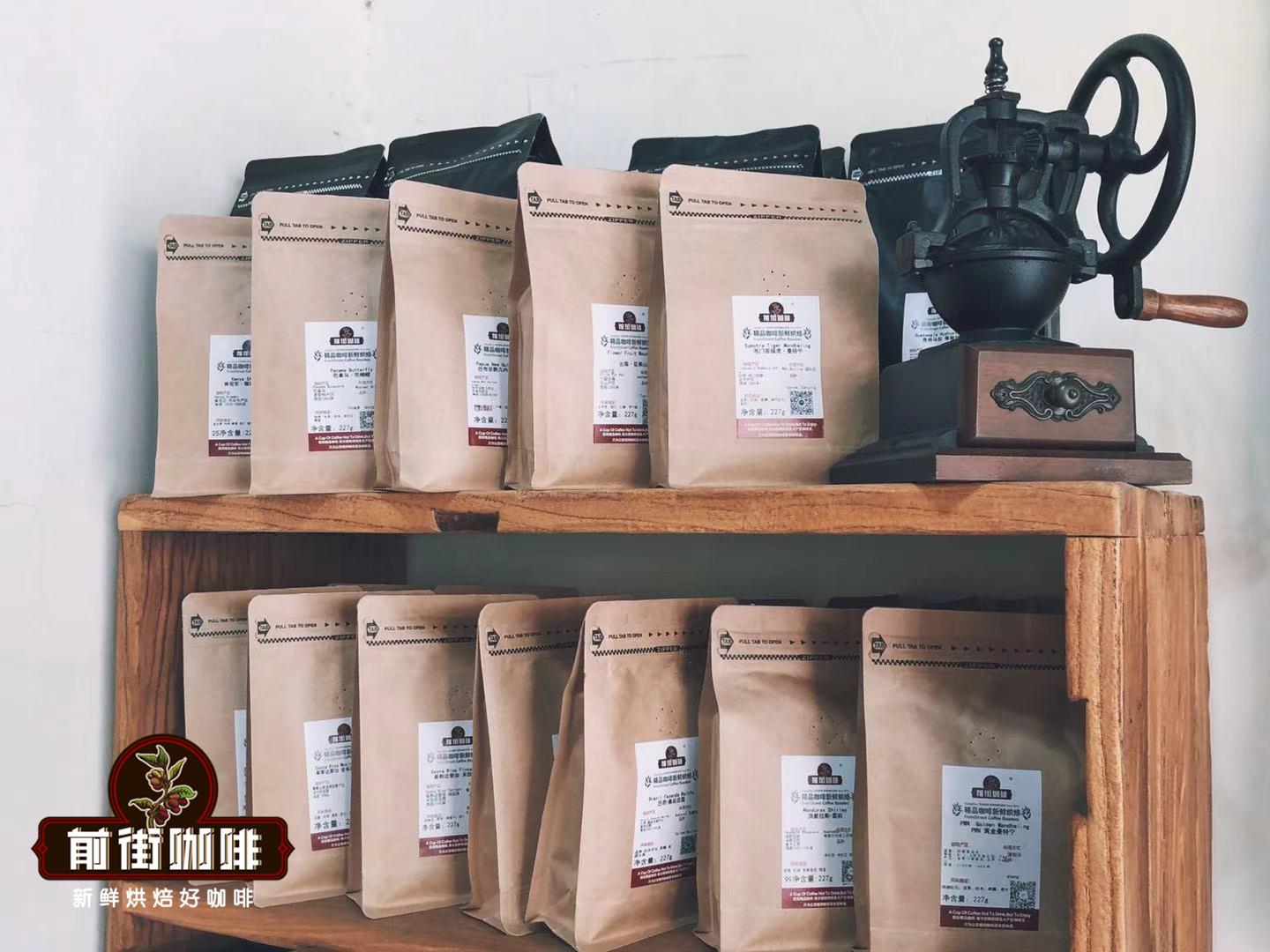
FrontStreet Coffee often has customers asking how to choose coffee beans. That is understandable, because FrontStreet Coffee currently displays more than 30 different varieties, gathered from coffee-growing regions around the world. There are many options, each with its own character, and new origins are introduced from time to time. The goal is simple: every guest who visits should be able to find a coffee they enjoy, one that matches their taste, while also learning about flavors from around the world. Many people who come to FrontStreet Coffee are not only here to drink coffee, and FrontStreet Coffee is not only here to serve a cup of coffee.
With such a wide range on offer, choosing can be hard. When someone has grown used to one bean and wants a change, FrontStreet Coffee recommends in two directions — acidic or mellow — depending on what the customer likes. On the acidic side, FrontStreet Yirgacheffe always comes up; on the mellow side, FrontStreet Indonesia Sumatra Mandheling is usually the first thought. Today FrontStreet Coffee introduces the specific flavor profiles of these two, along with other high-quality beans that represent the same two directions.
Acidic Coffee Bean Recommendations
1. FrontStreet Ethiopia Yirgacheffe Gotiti
Origin: Yirgacheffe, Ethiopia
Altitude: 1900-2300m
Grade: G1
Variety: Heirloom
Processing: Washed
Flavor: Citrus, lemon acidity, distinct black tea, cream, caramel, almond aftertaste, sweet aftertaste
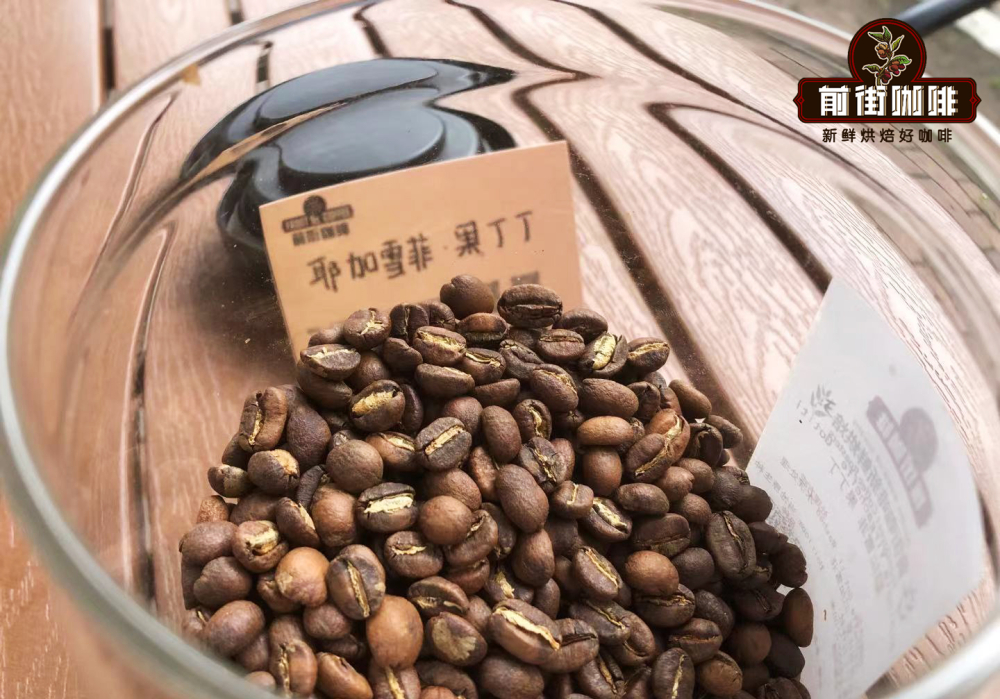
Yirgacheffe is a small town in Ethiopia at 1,700-2,100 meters, which makes it one of the highest coffee-growing regions in the world and a synonym for Ethiopian specialty coffee. Under the ECX (Ethiopian Commodity Exchange) regional classification, Yirgacheffe is mainly divided into four areas: Wenago, Yirgacheffe, Kochere, and Gelana Abaya.
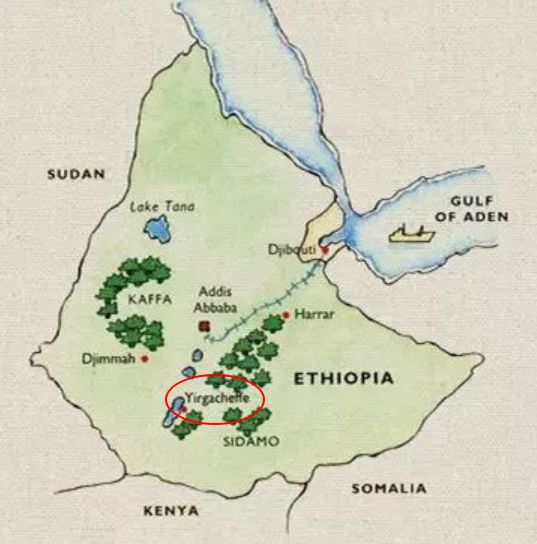
What people usually call the "Yirgacheffe flavor" means generous jasmine florals and citrus-lemon acidity. Different micro-regions add their own notes on top of those two. FrontStreet Gotiti, for example, carries a distinct black tea character — think lemon black tea with a floral lift.
Roasting Recommendations
When roasting FrontStreet Gotiti, FrontStreet Coffee aims to highlight the clean taste and bright fruit acidity, so a light roast is used.
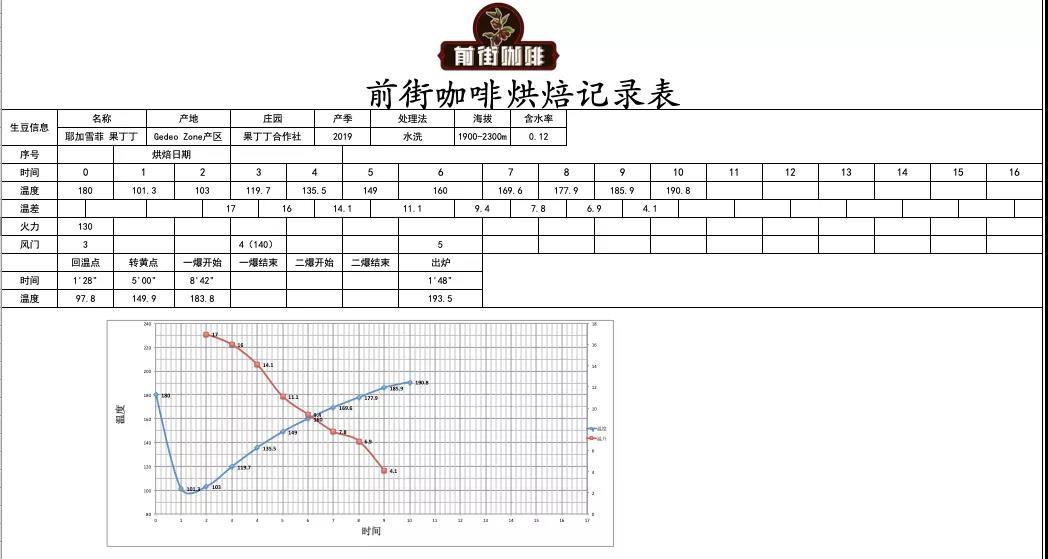
Machine: Yangjia 800N Roaster
Charge Temperature: 180°C
Yellowing Point: 5'00", 149.9°C
First Crack: 8'42", 183.8°C
Development after First Crack: 1'48", dropped at 193.5°C
Brewing Recommendations
FrontStreet recommends brewing with freshly roasted beans so the full flavor comes through. Every bean FrontStreet Coffee ships is roasted within 5 days, because freshness has a large effect on flavor. FrontStreet's roasting philosophy is "freshly roasted quality coffee," so every order arrives as fresh as possible. The resting period is about 4-7 days, which means that by the time customers receive it, the coffee is at its peak and ready to brew.
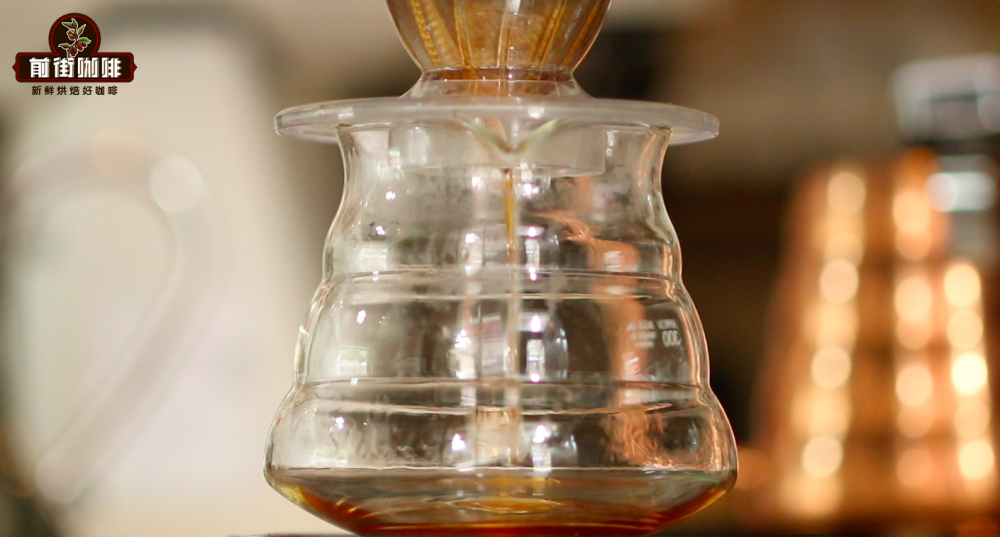
For FrontStreet Gotiti, FrontStreet Coffee uses a higher temperature and a faster-flowing dripper. The idea is to use the heat to pull out the bright acidity without over-extracting. Main parameters: V60 dripper, 1:15 coffee-to-water ratio, 15g dose, water temperature 90°C, grind size at 80% pass-through on the #20 standard sieve.

FrontStreet Coffee uses segmented extraction, a three-pour method. The first pour uses 30g of water for a 30-second bloom; the second pour goes in small circles to 125g, then pauses; when the water level drops and is about to expose the coffee bed, the third pour continues to 225g and stops. When the level drops again and is about to expose the bed, remove the dripper. Extraction time from the start of the bloom is 2'00".
Brewing Flavor
The entry brings citrus and black tea. As the temperature changes, cream, caramel, and almond aftertastes emerge, with an obvious sweet finish and a clean, sweet character.

2. FrontStreet Kenya Little Tomato
Origin: Asali Honey Processing Factory, Thika Processing Factory
Altitude: 1550-1750m
Grade: AA TOP
Variety: SL28, SL34
Processing: K72 Washed
Flavor: Cherry tomato, berry aroma, distinct acidity, brown sugar sweetness, tea-like sensation

Kenya borders Ethiopia and started producing coffee relatively late, but under British colonial rule it developed quickly through research and breeding, grade classification, and refined washed processing. Only decades later did other countries recognize the advantages of this disciplined approach and begin to copy it, which gradually diluted Kenya's unique position.
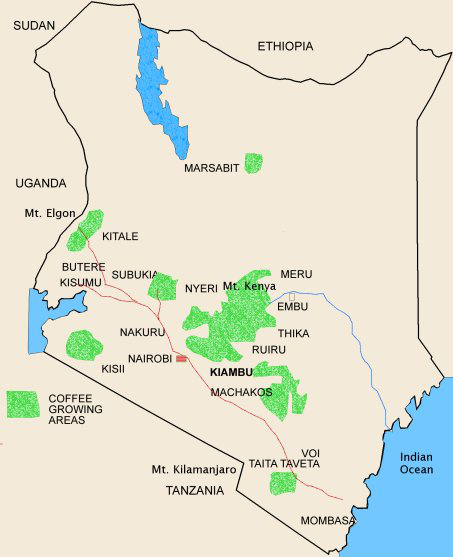
FrontStreet Kenya beans stand out for their bold acidity, thanks to a washed process that extends fermentation to 72 hours and intensifies the acidity considerably. The entry is full of distinct cherry tomato. Kenya beans from different regions express themselves differently, though. FrontStreet Coffee recently launched FrontStreet Sasini Estate beans from the Kiambu region of central Kenya, which show a clear acidity and cherry tomato aroma, but with somewhat gentler acidity than FrontStreet Kenya Little Tomato and more prominent sweetness than FrontStreet Kenya Asalia.
Whenever FrontStreet Coffee launches a new bean, we not only adjust the roast repeatedly and verify flavor by cupping ourselves, we also offer it to customers for tasting. With these two FrontStreet Kenya beans, some people say the difference is not obvious, while others say they can feel it. That is a common phenomenon.

Every bean FrontStreet Coffee sources is specialty grade. Coffee that reaches this level does not have a weak flavor expression. Take these two FrontStreet Kenya beans: both fully express Kenya's distinctive flavors. FrontStreet Coffee explores their differences on top of that foundation, which may sound like nitpicking. The point, though, is to train extensively in flavor recognition so we can present high-quality beans. Talking with customers is also a way for us to improve. FrontStreet Coffee has always held to the idea of spreading coffee to more people and helping them see that coffee is not aloof — it is a warm, everyday pleasure.

Roasting Recommendations
This FrontStreet Kenya Asalia bean has full, round beans. To fully express its bright, mellow acidity, FrontStreet Coffee uses a light roast.
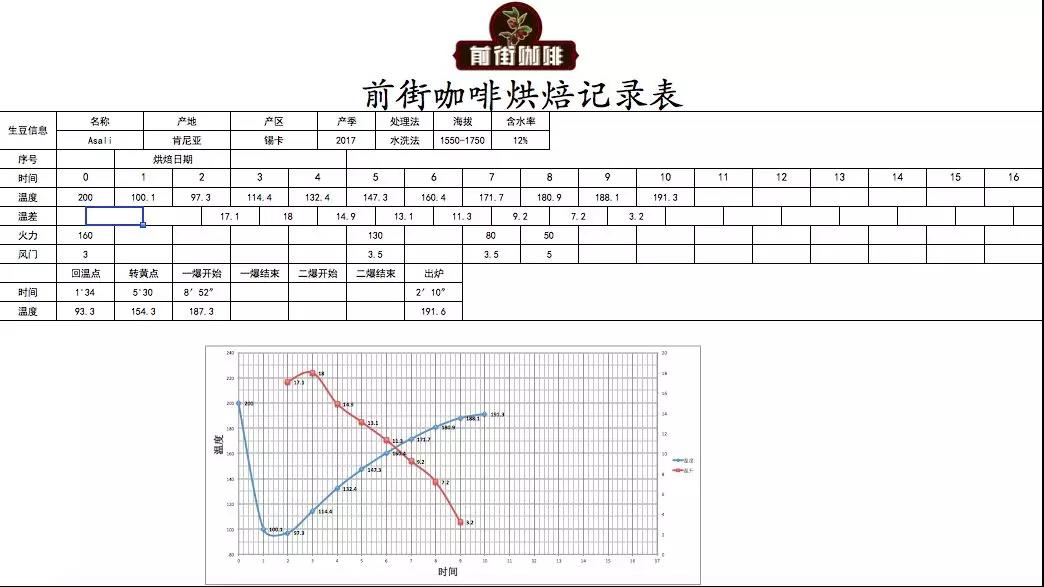
Machine: Yangjia 800N, 550g green beans
Charge Temperature: 200°C
First Crack: 5'30", 154.3°C
Development after First Crack: 2'10'', dropped at 191.6°C
Brewing Recommendations
For FrontStreet Asalia, FrontStreet Coffee applies the same logic as with FrontStreet Gotiti: a higher temperature and a faster-flowing dripper. Main parameters: V60 dripper, 1:15 coffee-to-water ratio, 15g dose, water temperature 90°C, grind size at 80% pass-through on the #20 standard sieve.
FrontStreet Coffee uses segmented extraction, a three-pour method. The first pour uses 30g of water for a 30-second bloom; the second pour goes in small circles to 125g, then pauses; when the water level drops and is about to expose the coffee bed, the third pour continues to 225g and stops. When the level drops again and is about to expose the bed, remove the dripper. Extraction time from the start of the bloom is 2'00".
Brewing Flavor
The wet aroma shows ripe tomato and florals. The entry brings cherry tomato and preserved plum, with bright acidity, a clean and substantial texture, prominent mid-palate sweetness and a juicy feel, and a finish of berry aroma, brown sugar sweetness, and green tea notes.
Mellow Coffee Bean Recommendations
3. FrontStreet Brazil Queen Estate
Origin: Mogiana Estate, Queen Estate, São Paulo State
Altitude: 1400-1950m
Variety: Yellow Bourbon
Processing: Pulped Natural
Flavor: Nuts, dark chocolate, sugarcane sweetness, cream, fruit fermentation aroma

Brazilian coffee arrived in 1720 from French Guiana, in northern South America. Coffee quickly adapted to Brazil and spread from the north to the southeastern state of São Paulo. By 1845, Brazilian beans already accounted for 45% of the world's total coffee and had become the main economic driver of São Paulo state.

Bourbon coffee was originally cultivated on Réunion Island, which was also called Bourbon Island before 1789. Because the Typica variety introduced in 1727 had low yields and was prone to disease, Bourbon was brought to Brazil around 1860 through Campinas in the south and then spread rapidly northward across Latin America.
Bourbon is a subspecies that mutated from Typica and, along with Typica, it is one of the oldest coffee varieties still grown. When the fruit ripens it turns bright red, which is why it is called Red Bourbon; by default, "Bourbon" refers to Red Bourbon. The FrontStreet Brazil Yellow Bourbon recommended here is different. It is a Yellow Bourbon, a cross of Bourbon with a Typica variety that produces yellow fruit. When ripe, the fruit is yellow. Because of its lower yield and weaker resistance to wind and rain, it has never been widely planted.

Yellow Bourbon beans are rich in sweetness. After pulped natural processing — drying with a small amount of mucilage left on — the sweetness becomes even more prominent. FrontStreet Coffee chooses a medium-dark roast for these FrontStreet Brazil Queen Estate beans, which layers rich nutty flavors over that sweet base for a distinct mellowness that stays approachable.
Roasting Recommendations
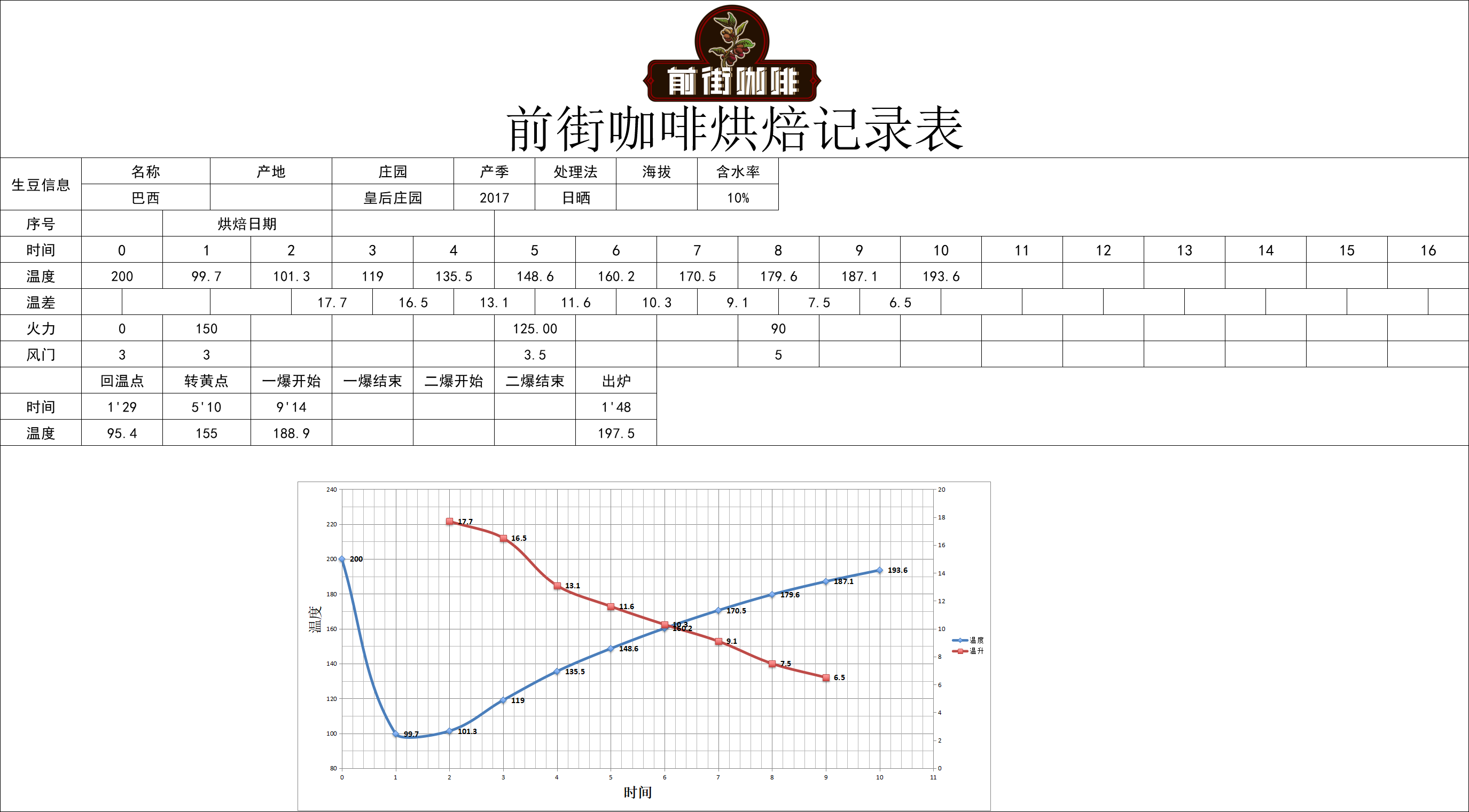
FrontStreet Coffee notes that this FrontStreet Brazil Queen Estate has lower moisture content and a solid texture, which gives the beans a strong capacity to absorb heat. Roasting time therefore has to be steady and unhurried. To reach the best flavor and bring out the aroma, FrontStreet Coffee ultimately settled on a medium roast.
Machine: Yangjia 800N, 550g green beans
Charge Temperature: 200°C
First Crack: 9'14", 188.9°C
Development after First Crack: 1'48'', dropped at 197.5°C
Brewing Recommendations
For FrontStreet Brazil Queen Estate, FrontStreet Coffee considers the darker roast and uses a lower water temperature and a slower-flowing dripper. Darker-roasted beans do not carry many acidic compounds, and the main extraction goal is to highlight the mellow texture. Low-temperature extraction keeps that mellowness while avoiding pulling unwanted compounds. Slow-flow drippers such as the three-hole Kalita and the Kono also help soak the grounds and protect the mellow effect. Main parameters: Kono dripper, 1:15 coffee-to-water ratio, 15g dose, water temperature 88°C, grind size at 70-75% pass-through on the #20 standard sieve.
FrontStreet Coffee uses segmented extraction, a three-pour method. The first pour uses 30g of water for a 30-second bloom; the second pour goes in small circles to 125g, then pauses; when the water level drops and is about to expose the coffee bed, the third pour continues to 225g and stops. When the level drops again and is about to expose the bed, remove the dripper. Extraction time from the start of the bloom is 2'00".

Brewing Flavor
The taste has a distinct sweetness with a light lemon aroma and rich nutty flavors, plus obvious dark chocolate in the aftertaste. The overall experience is rounded — a bean that embodies the character of Brazilian coffee while still showing its own liveliness.
4. FrontStreet Indonesia PWN Gold Mandheling
Origin: North Sumatra, Aceh Gayo Mountains, PWN Company
Altitude: 1100-1600m
Grade: G1
Variety: Ateng
Processing: Wet-Hulled
Flavor: Herbal, mellow and clean, rich nutty and caramel aroma, with chocolate notes

Indonesia lies in southeastern Asia, and its coffee history goes back to 1696, when Dutch plantation owners were looking for broader coffee-growing areas. After extensive exploration, they settled on Java. Thirty years later, Indonesia had built a solid footing in the coffee market.
Today, though, the Indonesian representative is FrontStreet Mandheling. FrontStreet Coffee believes this is partly historical: most of the Java coffee originally shipped to Europe actually came from the Sumatra region, and FrontStreet Mandheling comes from Sumatra. Sumatra can therefore be called an important coffee-producing area in Indonesia.
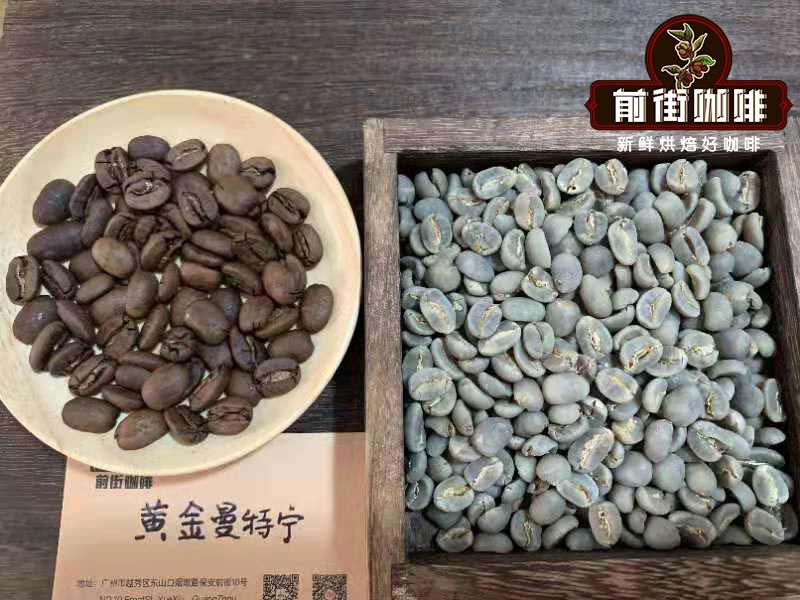
FrontStreet PWN Gold Mandheling beans are of the Ateng variety, which performs excellently in body. The FrontStreet Brazil Queen Estate recommended above also carries some Typica genetics. Beyond the variety, Indonesia's unique wet-hulled process matters: it is fast, avoids excessive fermentation, and highlights the bean's mellow texture. FrontStreet Coffee also offers FrontStreet Aged Mandheling, which extends storage time on top of wet-hulling for a deeper mouthfeel than FrontStreet PWN Gold Mandheling.
Roasting Recommendations
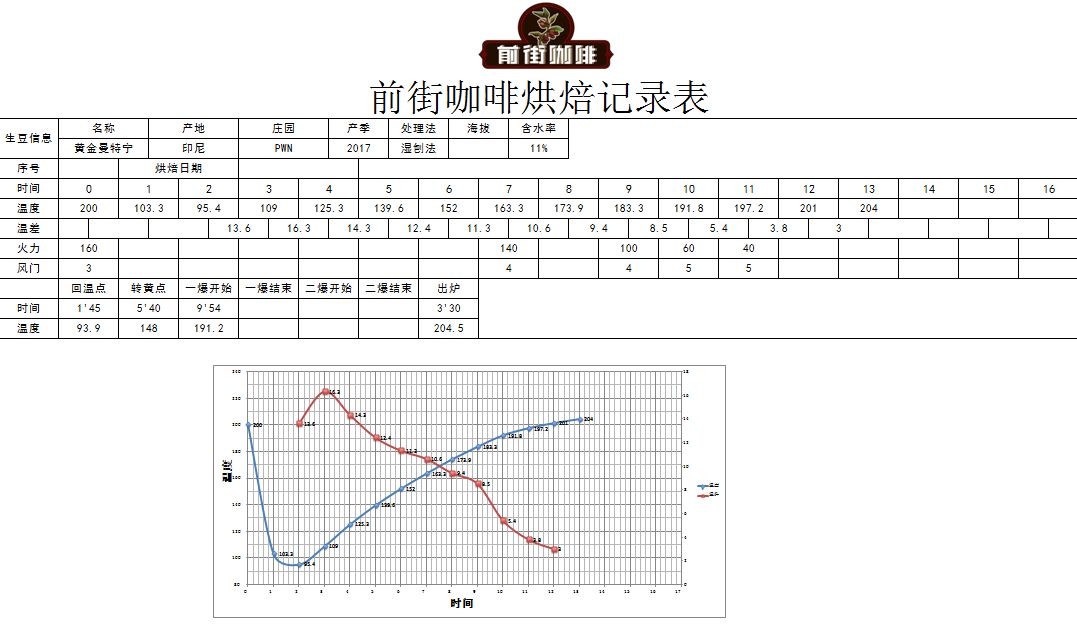
FrontStreet Coffee uses a medium-dark roast for this FrontStreet PWN Gold Mandheling. The green beans have relatively high moisture content, well above that of natural beans, so dehydration needs special attention. FrontStreet Coffee suggests closing the damper immediately after charging, steaming for 30 seconds, then opening the damper to 3 until the beans turn light green or white, opening to 4, and going fully open after first crack.
Machine: Yangjia 800N, 550g green beans
Charge Temperature: 200°C
Yellowing Point: 5'40", 148°C
First Crack: 9'54", 191.2°C
Development after First Crack: 3'30'', dropped at 204.5°C
Brewing Recommendations
When brewing FrontStreet PWN Gold Mandheling, FrontStreet Coffee again considers the darker roast and uses a lower water temperature and a slower-flowing dripper. Main parameters: Kono dripper, 1:15 coffee-to-water ratio, 15g dose, water temperature 88°C, grind size at 70-75% pass-through on the #20 standard sieve.
FrontStreet Coffee uses segmented extraction, a three-pour method. The first pour uses 30g of water for a 30-second bloom; the second pour goes in small circles to 125g, then pauses; when the water level drops and is about to expose the coffee bed, the third pour continues to 225g and stops. When the level drops again and is about to expose the bed, remove the dripper. Extraction time from the start of the bloom is 2'00".
Brewing Flavor
Multi-layered, mellow and clean, with high balance, strong nutty and chocolate flavors, rich spice and caramel aroma, fruity notes, and a persistent finish.
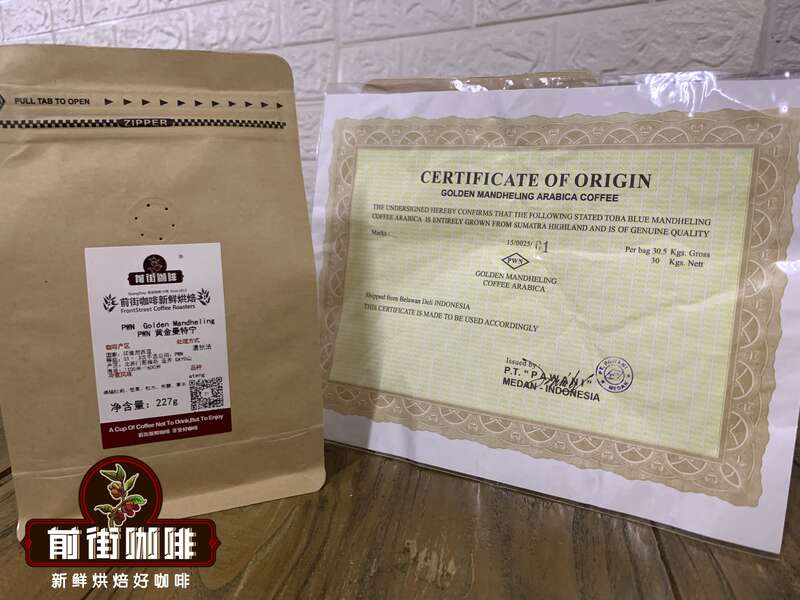
FrontStreet Coffee generally does not steer customers who love mellow coffee straight to FrontStreet Aged Mandheling. Instead, it starts with Brazilian beans that have a gentler body, then moves up to FrontStreet PWN Gold Mandheling. By understanding each customer's needs and drinking habits, FrontStreet Coffee recommends beans that suit their taste.
If they like acidic coffee, FrontStreet Coffee suggests starting with FrontStreet Yirgacheffe, which has a gentler acidity, then moving on to FrontStreet Kenya beans with more assertive acidity.
Professional coffee knowledge exchange | More coffee bean information | Please follow Coffee Workshop (WeChat official account: cafe_style)
For more specialty coffee beans, please add FrontStreet Coffee on private WeChat, ID: kaixinguoguo0925
FrontStreet Coffee Recommendation
If this comparison has you leaning toward the acidic side, start with FrontStreet Coffee's washed Yirgacheffe. It is the classic introduction to Ethiopia, known for white jasmine, bright citrus and lemon acidity, and a clean tea-like body, and its modest price makes it the natural first bag of specialty coffee for many drinkers. The washed Gotiti Cooperative coffee from Gedeb is the next step up, adding a distinct black tea character and a more focused jasmine note.
If you prefer the sweeter, fruit-forward style within the same family, the sun-dried Red Cherry is picked from fully ripe fruit and lands on berry juice, honey sweetness, and a creamy, smooth texture. Together they cover both the bright and the gentle ends of the Ethiopian profile this article describes.
Important Notice :
FrontStreet Coffee is a long-established specialty coffee roaster in Guangzhou China, selling freshly roasted beans from its own farm in Yunnan as well as dozens of carefully selected single-origin beans from around the world for both pour-over and espresso. The products deliver consistently excellent quality and great value, with shipping within 24 hours. Guangzhou's FrontStreet Coffee shop is recommended by many coffee lovers, and the beans are now available online at the Tmall 。
FrontStreet Coffee has moved to a new address:
FrontStreet Coffee Address: 315,Donghua East Road,GuangZhou
Tel:020 38364473
 Scan and follow the En Gafei WeChat official account. Please indicate that the reprint comes from "En Gafei".