2021 Panama Hacienda La Esmeralda Geisha Coffee Bean New Blue Label Flavor Profile Description
Hacienda La Esmeralda's New Natural Process Geisha
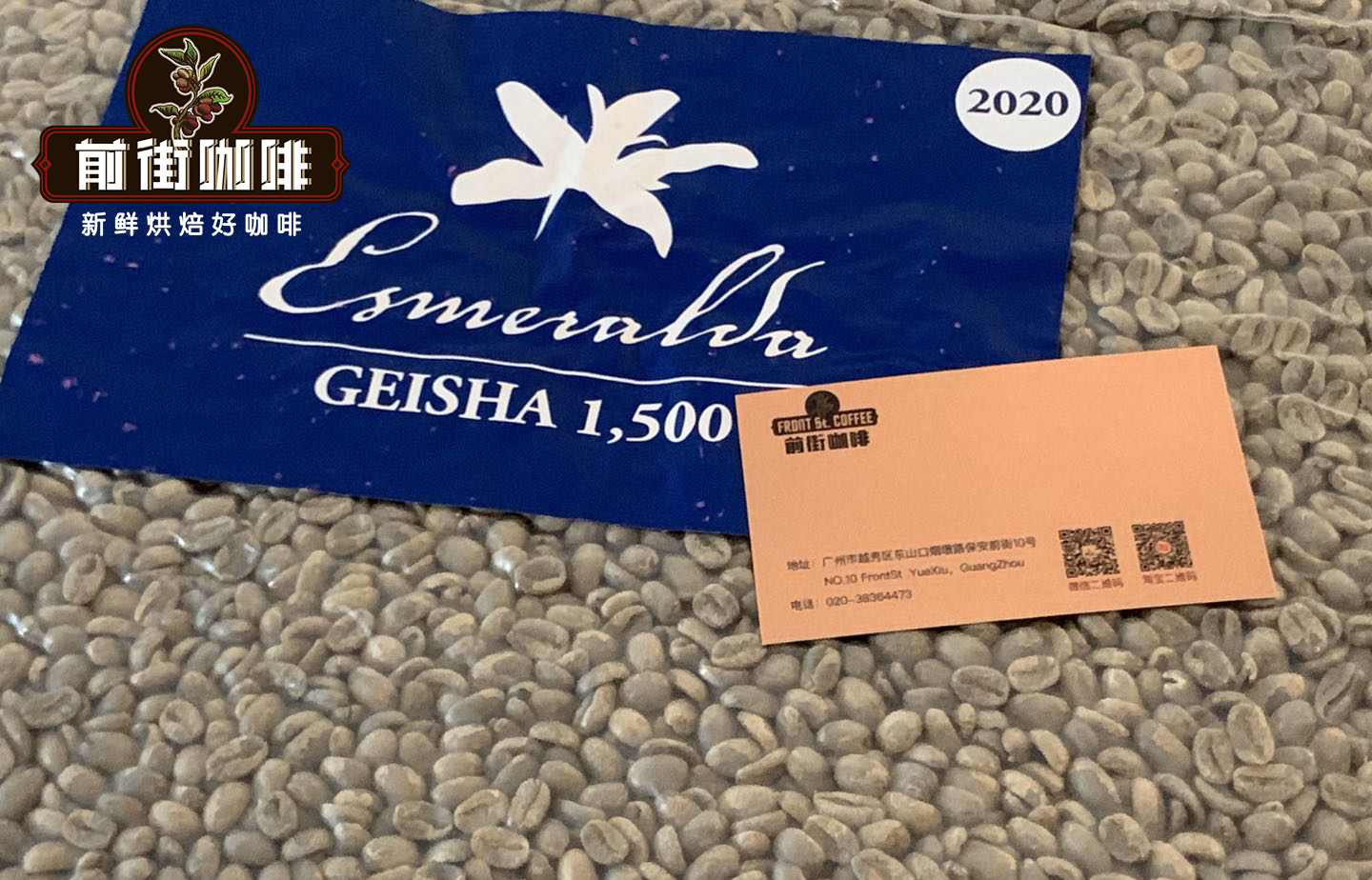
Hacienda La Esmeralda introduced a natural process version of its Blue Label Geisha for the first time in the 2020 harvest season. FrontStreet Coffee, with our research-oriented habits, couldn't pass that up and promptly imported a batch of natural Blue Label for comparison. Blue Label is the estate's "affordable" line, letting people taste La Esmeralda Geisha at an accessible price. In 2021, however, the estate discontinued the Blue Label Geisha for reasons never made public. Before 2020, only the Red and Green Labels came in natural process, so the natural Blue Label was a genuine gift for everyday consumers.
Hacienda La Esmeralda's Plot Distribution
La Esmeralda divides its Geisha growing areas into three main plots — Jaramillo, Canas Verdes, and El Velo — each further split into smaller micro-lots.
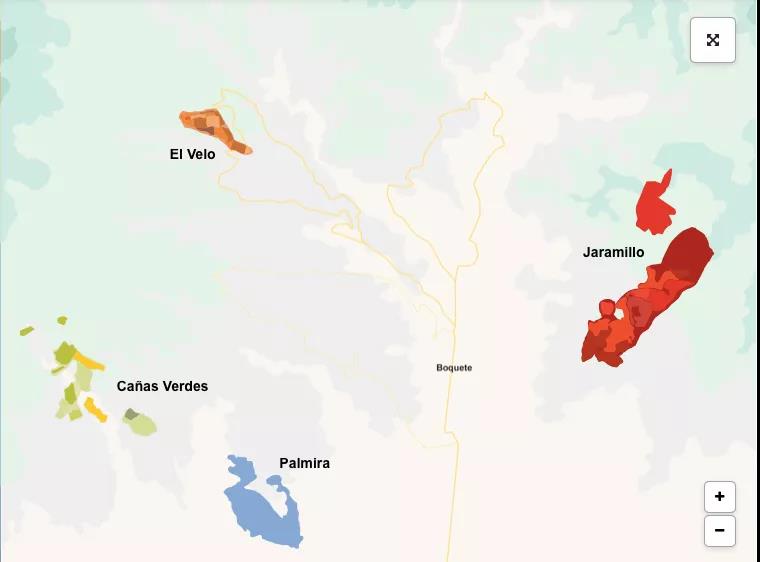
Jaramillo receives 4,000mm of annual rainfall, with average daytime temperatures of 19–25°C and nighttime temperatures of 11–15°C, at an average altitude of 1,600–1,700 meters. It is subdivided into 5 micro-plots: Mario, Noria, Reina, Bosque, and Buenos Aires.
Canas Verdes receives 3,500mm of annual rainfall, with daytime temperatures of 16–23°C and nighttime temperatures of 10–15°C, at an average altitude of 1,600–1,800 meters. It includes 9 micro-plots: Lino, Coronado, Fundador, León, Montaña, Trapiche, Chinta, Cabaña, and Tumaco.
El Velo is the estate's most recently acquired plot, with an average altitude of 1,700–1,900 meters. Besides Geisha and Catuai, it grows small quantities of exotic varieties such as Laurina, Pacamara, Mocha, and SL28. El Velo is divided into 7 micro-plots, including Guabo, Portón, Durazno, Higo, Buena Vista, and Águila.

Hacienda La Esmeralda Geisha Grades
After years of experimentation, the estate found that only Geisha grown above 1,400 meters can express its expected delicate flavors. Using planting altitude as the main criterion — supplemented by actual cupping results — La Esmeralda classifies its Geisha into three grades.
Esmeralda Special
Esmeralda Special, commonly known as Red Label, comes from Geisha grown at 1,600–1,800 meters that cups above 90 points, primarily from Jaramillo and Canas Verdes. Red Label lots are available in both washed and natural process, and can only be obtained through the global auction.

Private Collection
Private Collection, commonly known as Green Label, consists of batches that don't enter the auction but still hold excellent quality. Green Label Geisha is grown at 1,600–1,800 meters and blended from multiple plots, including Jaramillo and Canas Verdes.
Because of that plot blending, the flavor of some Green Label lots can come very close to Red Label. And while Green Label may not quite reach Red Label's level, it carries the classic Geisha profile — floral, fruity, citrus acidity, and a thick, juicy mouthfeel. It is also available in both washed and natural process.

Geisha1500
Geisha1500, commonly known as Blue Label, is grown at 1,400–1,500 meters and combines Geisha from three different plots: Jaramillo, Canas Verdes, and El Velo.
In previous years Blue Label was available only as washed, but this harvest added a natural process version — precisely the natural Blue Label Geisha that FrontStreet Coffee introduced.
Geisha Processing Methods
In La Esmeralda's washed process, coffee cherries are first passed through a depulper to remove the skin, leaving beans coated in mucilage. Underripe and defective cherries are sorted out beforehand by their buoyancy in water. The mucilage-covered beans go into fermentation tanks for 1–2 days so the remaining mucilage layer decomposes, then are thoroughly rinsed with clean water. The parchment beans are dried to 12% moisture for storage, with the parchment removed only at export.

In the estate's natural process, harvested cherries go straight to patios to dry, slowly absorbing fruit and aromatic flavors from the surrounding pulp as they dry evenly. Depending on weather and patio surface, they dry on concrete patios for 3–5 days (8 hours per day). Once sufficiently dry, they finish in a Guardiola dryer for 72 hours to complete drying and prevent fermentation. Machines then remove the dried fruit and other parts.

The Guardiola is the preferred finishing dryer because it handles large volumes whenever lot size permits. It's a horizontal rotating drum that circulates warm air around the beans to draw out moisture. After drying, the beans are bagged in nylon and stored in the warehouse for 30–45 days — a step known as "reposo" that stabilizes the beans and improves cup flavor. FrontStreet Coffee believes this refined natural processing stably controls the degree of fermentation, which in turn stabilizes each batch's flavor and quality.

FrontStreet Coffee Roasting Analysis
Blue Label Geisha takes a medium-light roast to highlight its floral and fruity notes and Geisha's unique, pleasant acidity.
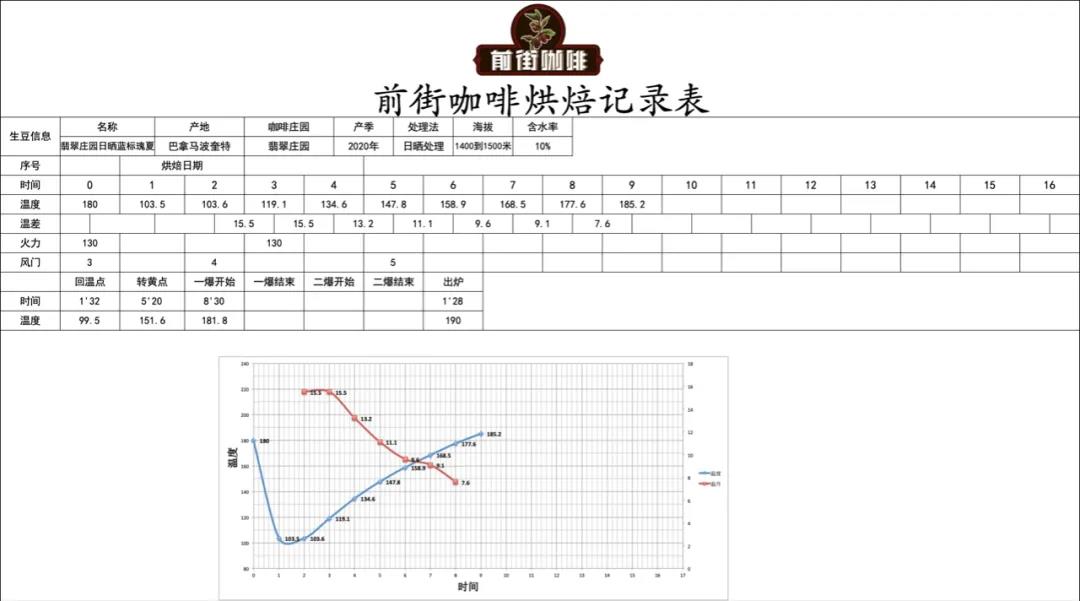
Heat the drum to 180°C, then charge the beans with heat at 130 and airflow at 3. The return temperature comes at 1'32"; when the drum reads 104°C, raise airflow to 4 while maintaining heat. At 151.6°C the beans turn yellow on the surface and the grassy aroma disappears entirely — the dehydration stage. At 7'56", surface wrinkles and black spots appear and the toasted-bread aroma clearly shifts into coffee aroma: the prelude to first crack. Listen carefully now. First crack begins at 8'30"; raise airflow to 5 and develop for 1'28" after crack, dropping the beans at 190°C.
FrontStreet Coffee Brewing Suggestions
Coffee amount: 15g
Ratio: 1:15
Grind: Fine grind (80% pass-through on a #20 standard sieve)
Water temperature: 91°C

FrontStreet Three-Stage Brewing Method
1. First pour 30g of water and bloom for 30 seconds.
2. Then pour the second stage — 100g in circles from the center outward. This pour can be unhurried: Geisha is very extraction-resistant and needs sufficient pouring time to release its aromas. After pouring, wait for the water level to drop by half.
3. When the coffee bed is about to be exposed, pour the third stage of 95g, for a total of 225g. Let the coffee finish draining, then remove the dripper. Total brew time is approximately 2 minutes.
Geisha Coffee Flavor Descriptions
[Red Label] (Natural): bright rose and citrus aromas, brown rice, berries, apricot, complex fruits, honey — a thick, juice-like mouthfeel, rich flavor layers, and noticeable sweetness.
[Green Label] (Washed): rich jasmine florals on entry, high sweetness, citrus, berries, juice-like mouthfeel, cream, green tea, orange peel, cantaloupe — overall richly layered, with a persistent floral and citrus aftertaste.
[Blue Label] (Washed): gentle lemon and grapefruit acidity on entry, with oolong tea, honey, and sucrose in the aftertaste as the cup cools, over a clean, bright mouthfeel.
[Blue Label] (Natural): a fermented aroma and fruity sweetness, with sweet melon and tropical fruit on entry, a juice-like mouthfeel, and very high overall sweetness.

Unfortunately, in 2021 La Esmeralda announced that its 2021 harvest Geisha lineup would include only the Red and Green Label series, with more detailed classifications — with no mention of Blue Label. Rumors flew that Blue Label had been cancelled, and FrontStreet Coffee subsequently received confirmation that no Blue Label Geisha series would be released in 2021.
Does that mean affordable Panama Geisha is gone? Not necessarily. In October 2021, a Panama Boquete Geisha named "Las Rocas" arrived at port in exquisite packaging. Since few estates in Panama produce Geisha, FrontStreet Coffee verified repeatedly and confirmed that the Las Rocas Volcanic Rock Geisha indeed comes from Hacienda La Esmeralda — filling exactly the gap left by the Blue Label.
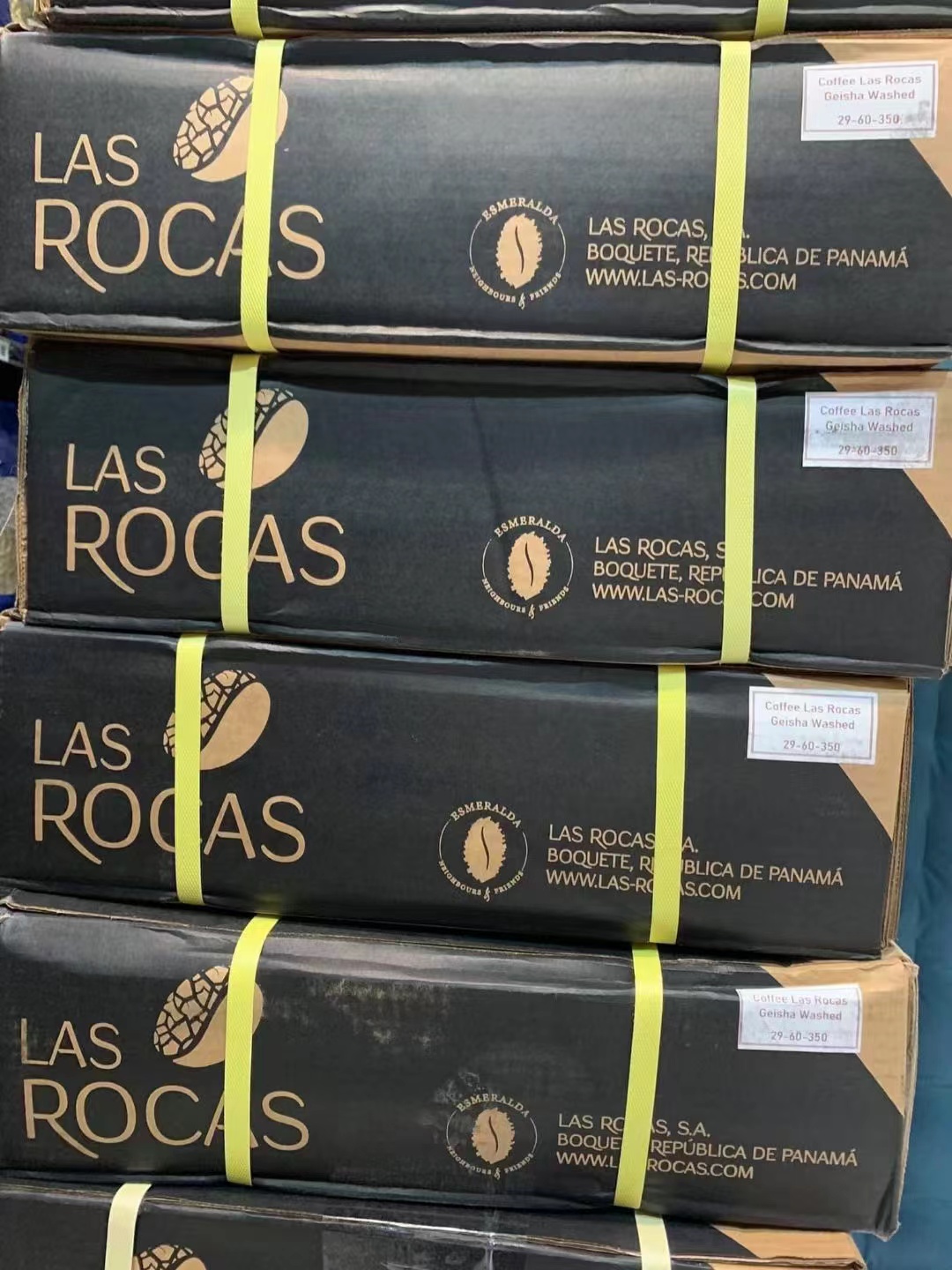
It seems Blue Label hasn't disappeared — it has simply been rebranded. This batch is washed-processed, still handled by La Esmeralda, and clearly maintains Blue Label-level quality. For anyone craving Blue Label Geisha, there's something to look forward to!
FrontStreet Coffee Recommendation
Geisha belongs to the medium-light, floral-fruity roast family, and its dense beans tend to sink and clog the drip bed. FrontStreet therefore recommends a coarse grind — about a 78% pass rate on the Chinese standard #20 sieve (fine-granulated-sugar size) — with water at 91°C.
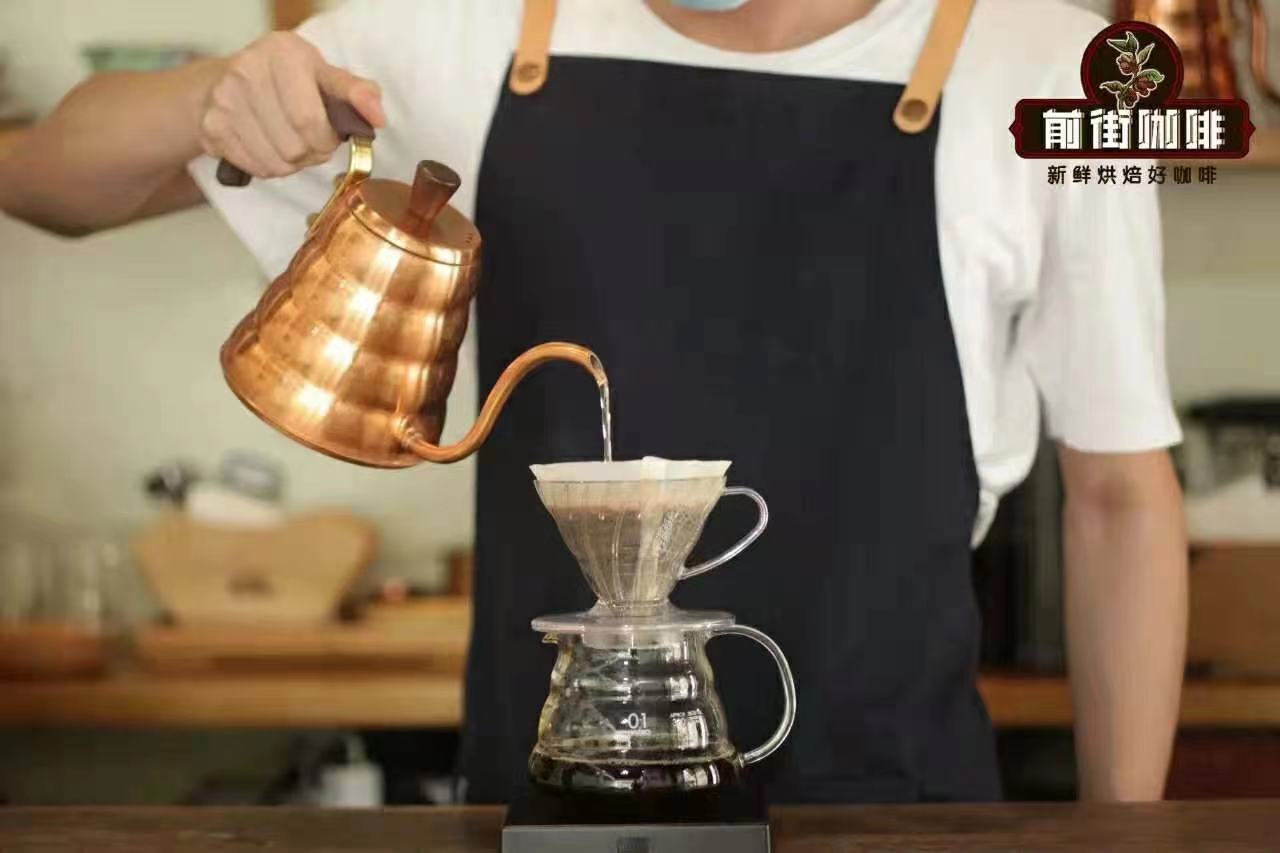
Our house Geisha recipe uses 15g of coffee in a small Hario V60 at a 1:16 ratio, poured in three stages: pour to 30g and bloom for 30 seconds, then pour in slow circles to 125g; once the bed drains to half, continue in slow circles to 225g. Total extraction should run about 2 minutes 10 seconds to 2 minutes 20 seconds.
Beyond La Esmeralda's lineup, FrontStreet also carries Panama Geisha in two other expressions: the Red Label ("Esmeralda Special"), grown at 1,600–1,800 meters and cupping above 90 points from single named plots, and the Green Label ("Private Collection"), blended across plots to deliver the estate's signature high-altitude profile at a friendlier price. For a first taste of classic Panama Geisha, the entry-level Boquete Geisha offers orange-blossom honeyed sweetness, oolong-tea character, and delicate fruit acidity at an accessible price.
Important Notice :
FrontStreet Coffee is a long-established specialty coffee roaster in Guangzhou China, selling freshly roasted beans from its own farm in Yunnan as well as dozens of carefully selected single-origin beans from around the world for both pour-over and espresso. The products deliver consistently excellent quality and great value, with shipping within 24 hours. Guangzhou's FrontStreet Coffee shop is recommended by many coffee lovers, and the beans are now available online at the Tmall 。
FrontStreet Coffee has moved to a new address:
FrontStreet Coffee Address: 315,Donghua East Road,GuangZhou
Tel:020 38364473
 Scan and follow the En Gafei WeChat official account. Please indicate that the reprint comes from "En Gafei".