Methods for Making Starbucks Flat White - Introduction to the Differences Between Flat White and Flat White Coffee
What is Flat White Coffee?
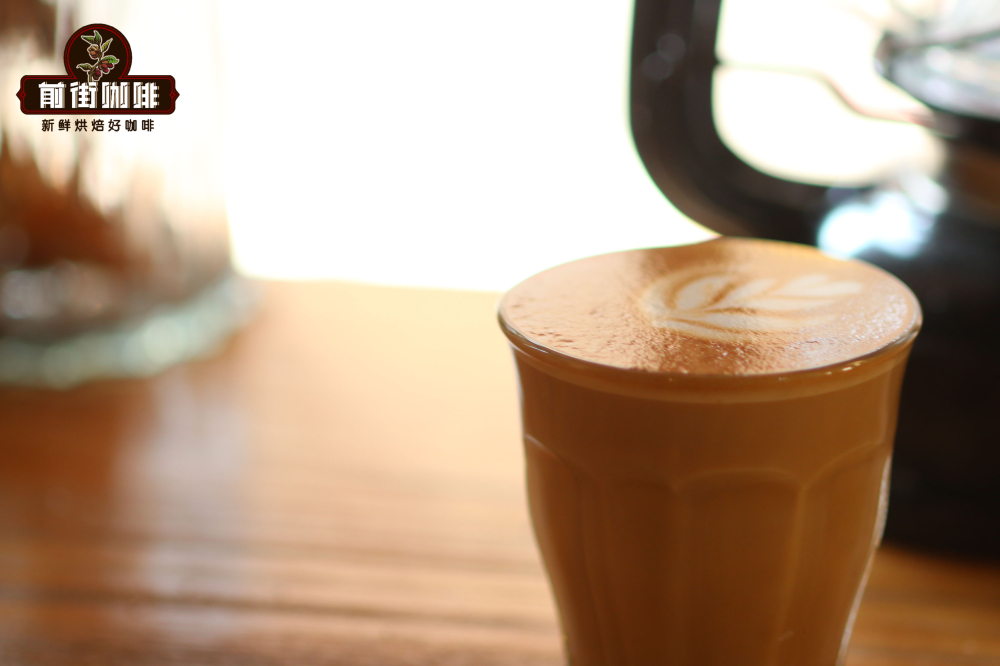
Flat White coffee comes straight from the English name "Flat White." In China it also travels under a host of translated names — Little White Coffee, Fu Rui Bai, Chun Yi Bai, Ao Rui Bai, and more.
Flat White is a coffee drink that originated in Australia — though some insist it was actually born in New Zealand.
Beyond the dispute over its birthplace, recipes for the Flat White also vary from café to café.
Put simply, Flat White is a milk coffee with a stronger coffee flavor, less milk, and thinner milk foam.
As for the espresso base, New Zealanders tend to build a Flat White on a double ristretto, while Australian baristas often prefer a single espresso.

How does Flat White differ from other milk coffees?
Whenever Flat White comes up, it gets compared with the latte and the cappuccino. They're all milk coffees — so what actually sets them apart?
Start with the Flat White. As noted above, it is a coffee built to emphasize coffee flavor.
The latte, by contrast, is a coffee drink with a large amount of milk added, while the cappuccino is a milk coffee defined by its thick, dense foam.
Ranked by foam thickness, cappuccino is thickest, latte comes next, and Flat White has the thinnest foam of all.
So a Flat White drinks like coffee with a little milk; a latte is like milk flavored with coffee; and a cappuccino is a coffee crowned with a plush cap of foam.

Why is Flat White coffee so popular?
It's worth asking why the Flat White has become such a phenomenon in China and around the world. It's a permanent fixture on nearly every café menu.
As we've seen, compared with a latte or cappuccino, the Flat White has thinner foam and less milk, which lets the coffee flavor take center stage. That also makes it far more demanding about its beans.
Built on high-quality beans, a Flat White showcases the coffee's inherent flavors beautifully.
Conversely, if the base beans are poor, the Flat White exposes every flaw.

That's why a Flat White is even better than a latte at revealing bean quality and expressing the character of a coffee's origin — much like today's wildly popular SOE (Single Origin Espresso). It suits the third-wave coffee culture, with its emphasis on origins and traceability, perfectly.
That said, at the end of the day, as long as you start with quality beans and good milk, a Flat White, latte, or cappuccino will all make a delicious cup.
Since most people have tried all three milk coffees, FrontStreet Coffee will briefly trace where each one comes from.
Modern latte and cappuccino both came out of Italy, and they remain the most common and beloved milk coffees in Italian coffee culture.
"Latte" is simply the Italian word for "milk" — so latte coffee is, literally, milk coffee, and the Italian version combines espresso with milk.
As for cappuccino, the name echoes the Capuchin friars — "capuchin" refers to the small white hood of the Franciscan habit. The drink got its name because the white foam sitting on the coffee resembles a monk's hood.

The Flat White is far better known internationally by its original English name.
Fu Rui Bai, Ao Rui Bai, Ping Bai, and Little White Coffee are all just Chinese renderings of "Flat White."
Flat White came out of Oceania (Australia and New Zealand still argue over which one). Think of it as the Australian answer to the latte.
To draw the lines clearly between latte, cappuccino, and Flat White, FrontStreet Coffee compares them on three fronts: cup size and composition, foam thickness, and flavor.
First, cup size. By FrontStreet Coffee's standards, a latte is served in a 300ml wide-mouth ceramic cup, a cappuccino in an 180ml narrow-mouth ceramic cup, and a Flat White in a 210ml glass.
Next, composition. A latte is 2 shots of espresso (40g) plus 260ml of steamed milk with foam. A cappuccino is 1 shot of espresso (20g) plus 160ml of steamed milk with foam. A Flat White is 2 shots of ristretto (30g) plus 180ml of steamed milk with foam. Ristretto is the front, middle portion of an espresso extraction — richer and more intense.

Foam thickness has always been the key marker separating these three drinks.
The cappuccino has the thickest foam (about 1–1.5cm), its signature being "11 parts full" — the foam rises above the rim in a proud, hamburger-like dome;
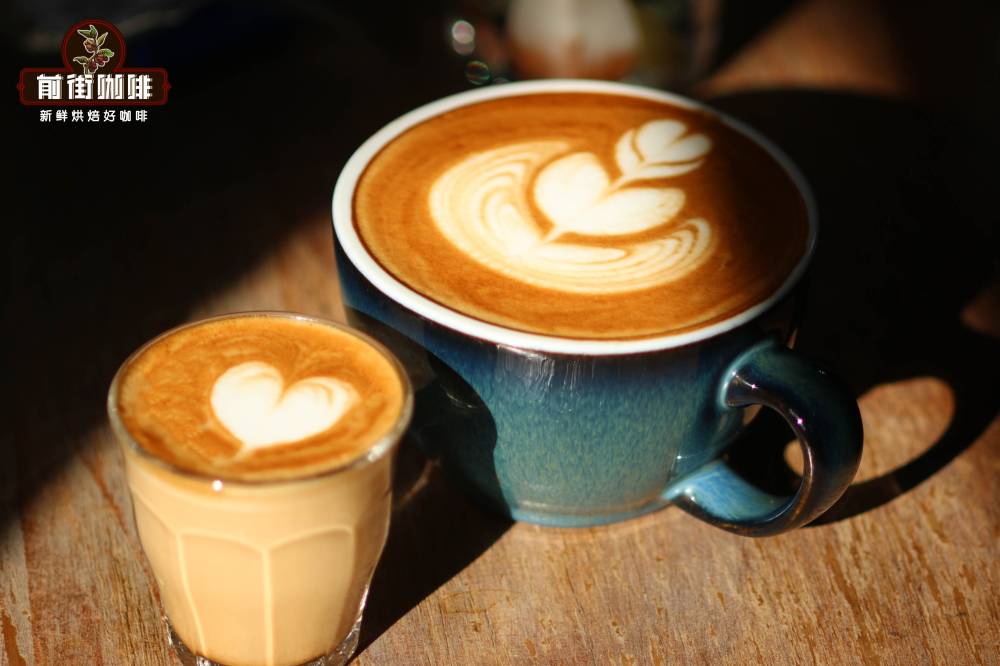
The Flat White has the thinnest foam (about 0.3cm). Because the foam is so thin, the liquid surface sits essentially level with the cup — hence the name "flat" white;
The latte falls in between (about 0.5cm). That foam is ideal for latte art — one reason the wide-mouth cup is chosen is to show off the poured patterns.

On flavor, the latte is the milkiest since it contains the most milk, while the Flat White — with its ristretto base and less milk — highlights the rich aroma of the coffee itself. The cappuccino sits somewhere in the middle.
On texture, the cappuccino is the fullest, thanks to its fine, abundant foam melding with the coffee's crema for an exceptionally smooth, plush mouthfeel — followed by the Flat White, then the latte.
One more note: only the latte comes in both iced and hot versions. Traditional cappuccino and Flat White are served hot only.
Piccolo latte and Flat White have both become favorites on many coffee lovers' must-try lists. Both are small, rich, hot milk coffees — so how do they differ?
What is Piccolo Latte?
"Piccolo" means small in Italian, and "latte" means milk — so a Piccolo Latte is, quite literally, a small latte. How small? A traditional piccolo is made by adding 15–20ml of espresso to steamed milk, and it's now customary to serve it in a special 100ml cup.
How to make Flat White coffee?
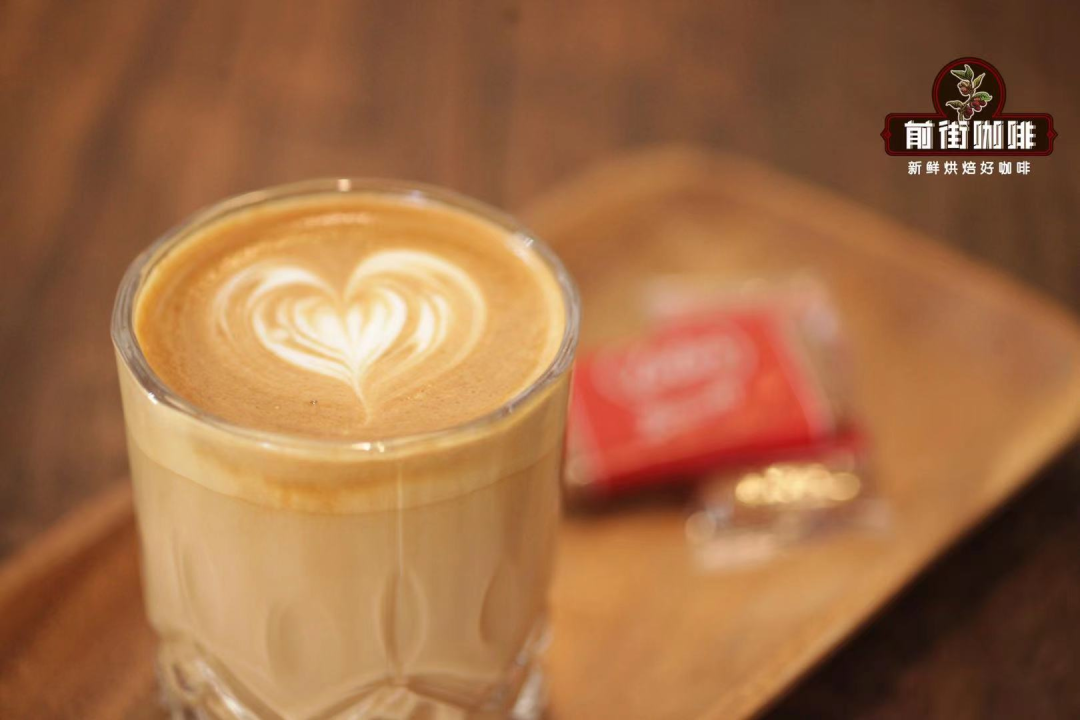
For the base, FrontStreet Coffee pulls a double ristretto from its Sunflower Warm Sunshine Blend, using 20g of coffee to extract 35g of espresso over 26 seconds.
(A reminder from FrontStreet Coffee: every coffee extracts a little differently, so adjust the recipe to suit your actual beans and equipment.)
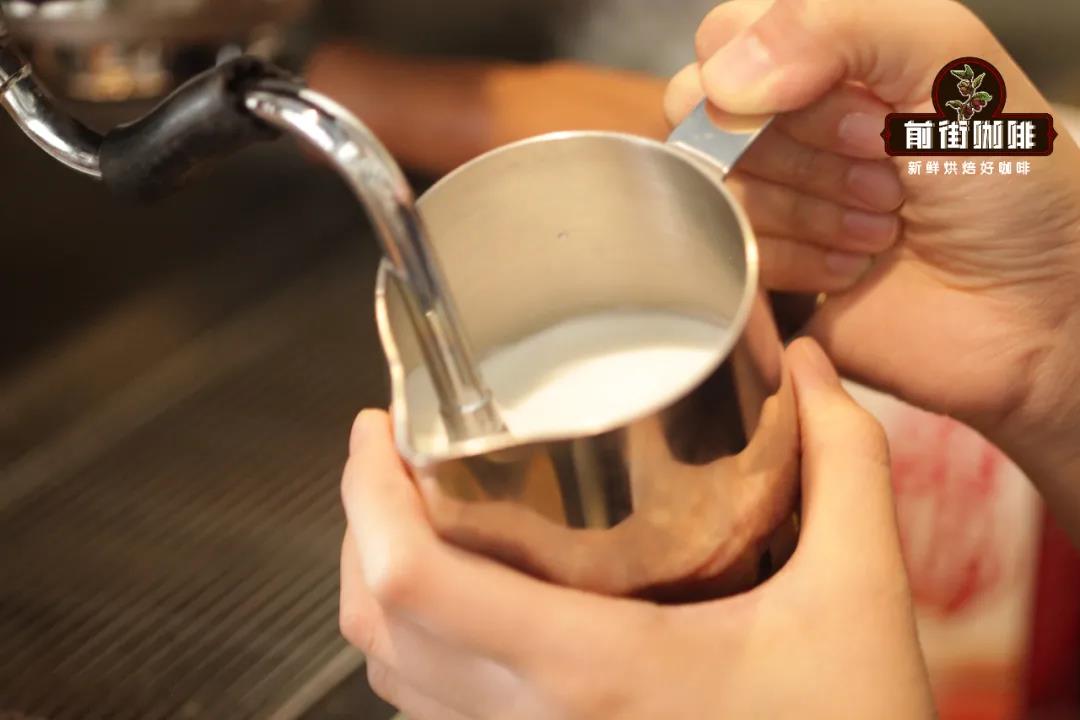
Steaming the milk:
The foam on a Flat White should be roughly 0.3cm thick. Beyond richness, the soul of a Flat White is the silky feel of the foam on the palate.
Steam the milk to between 55°C and 65°C. Too hot, and you'll not only destroy the milk's natural sweetness and nutritional value but also give it a grainy texture.
FrontStreet Coffee builds its Flat White at a milk-to-coffee ratio of 1:5, so we serve it in a 200ml cup.
Finally, fold the steamed milk evenly through the espresso.
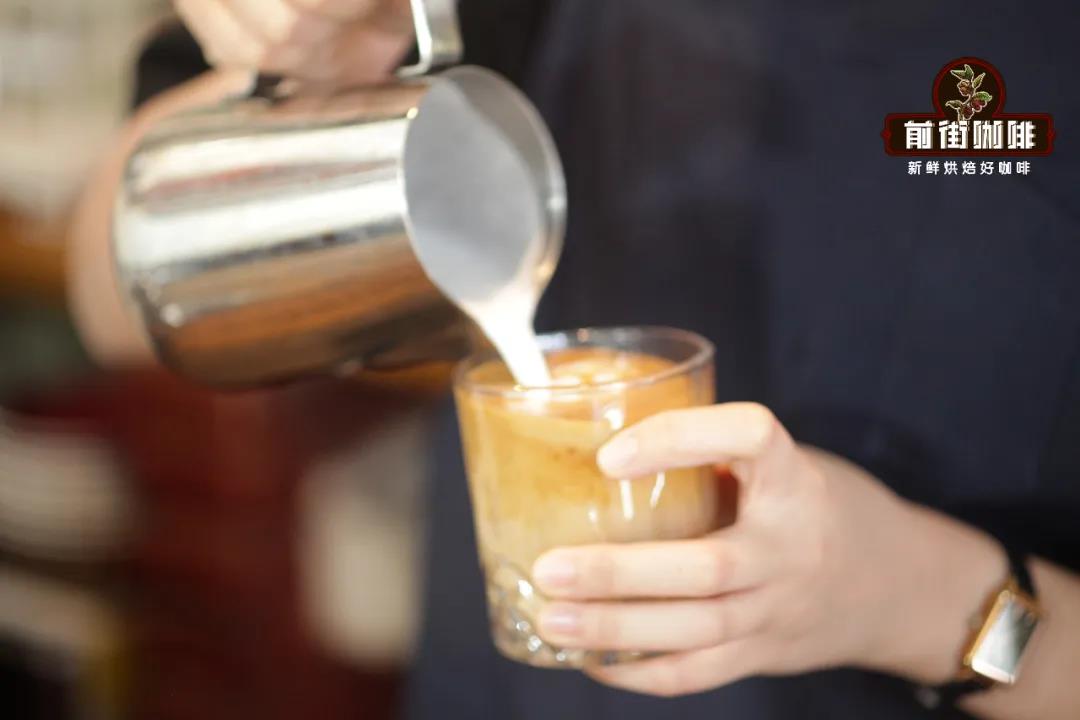
How to make Piccolo Latte?
A traditional Piccolo Latte is 3–4 ounces. At the 2015 World Coffee Championship, winner Sasa Sestic built his piccolo in a 3-ounce cup, integrating the coffee with milk at a 1:2 ratio
and finishing with a whisper of light foam. That balance lets the coffee's flavor come through without turning intense.
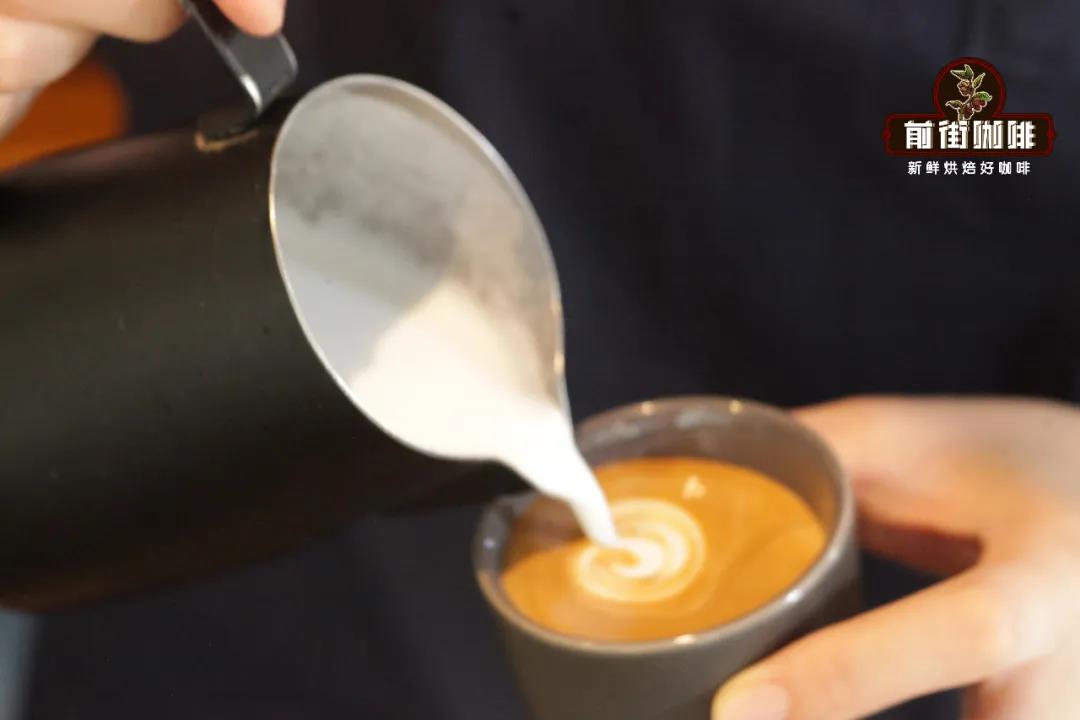
FrontStreet Coffee's piccolo base is also the Sunflower Warm Sunshine Blend, pulled as a single shot.
Our extraction parameters: 12g of coffee to extract 30g of espresso over 23 seconds. (Again, adjust to your setup.)
Steaming the milk:
FrontStreet Coffee uses a 350ml pitcher and pours in 100ml of milk (any less is hard to froth properly). Piccolo foam is even thinner than Flat White foam — about 0.5cm — and the milk is steamed to the same 55°C–65°C range.
For this piccolo we used a 100ml cup: after steaming, pour in 60ml of milk to integrate fully with the coffee, then finish with a layer of light foam — or integrate and pour a small latte-art pattern.
FrontStreet Coffee Recommendation
A Flat White is only as good as its espresso base, so FrontStreet Coffee recommends two espresso blends that pair beautifully with milk:
FrontStreet Classic Blend — a buttery, cheese-like, nutty profile with a full-bodied, low-acid cup and abundant, fine crema. It delivers an outstanding richness when paired with milk, making it our go-to for home Flat Whites.
FrontStreet Strawberry Candy Espresso Blend — a very low-bitterness blend for those who prefer floral and fruity notes. It extracts with full grape and blueberry flavors in balanced sweet-tart proportion, and when combined with fresh milk it produces a Flat White with a strawberry milkshake character that lingers long after the cup is empty.
Important Notice :
FrontStreet Coffee is a long-established specialty coffee roaster in Guangzhou China, selling freshly roasted beans from its own farm in Yunnan as well as dozens of carefully selected single-origin beans from around the world for both pour-over and espresso. The products deliver consistently excellent quality and great value, with shipping within 24 hours. Guangzhou's FrontStreet Coffee shop is recommended by many coffee lovers, and the beans are now available online at the Tmall 。
FrontStreet Coffee has moved to a new address:
FrontStreet Coffee Address: 315,Donghua East Road,GuangZhou
Tel:020 38364473
 Scan and follow the En Gafei WeChat official account. Please indicate that the reprint comes from "En Gafei".