What is Ethiopia Sidamo Guji 3.0 Batch? Flavor Characteristics of Guji 3.0 Coffee

Hua Kui 2.0 is a bean FrontStreet Coffee particularly loves — not because it carries a champion's pedigree, but because focusing on the fundamentals of quality is our commitment to specialty coffee. No matter what competition judges say, we always cup every bean ourselves. This one shows rich tropical fruit aromatics: jackfruit, passion fruit, and a spread of berries. The acidity is gentle and mouth-watering, full without ever being overwhelming; the body is moderate, smooth and clean with no off-flavors; and the aftertaste leaves a brown-sugar sweetness that lingers. That was our impression of Hua Kui 2.0 — and the newly arrived Hua Kui 3.0 promises another standout performance.
The Region

Buku Able refers to the collection stations positioned across different areas of the farm. Hambela lies in the border region between the Sidama and Guji zones in southern Ethiopia, where boundaries have been redrawn several times over the past 20 years and the names of regions and communities have changed with them (compounded by inconsistent transliterations from local languages). Before 1995 the farm's location belonged to the Sidamo region; in 2002 the Guji zone was carved out of neighboring areas. Guji sits within Ethiopia's largest and most populous ethnic-minority region.

The beans come from the Buku Able estate in Hambella, Guji — Ethiopia's largest coffee-producing region. Only natural-processed coffee from the Buku Able estate and its processing station may be called "Hua Kui." The estate's trees all grow at high altitude, and harvested red cherries must meet strict sugar-content requirements before processing begins. With deep experience in green coffee handling, Buku Able imposes precise data requirements on every step of its natural process. After the cherries dry at the Buku processing station, the seeds are separated from the dried pulp. This natural method has been practiced for thousands of years and is the spiritual foundation of Ethiopian coffee tradition, though it is now considered a relatively niche approach locally — modern mills favor washed processing. Going natural lowers perceived acidity and rounds out the mouthfeel.
Bean Information

FrontStreet Coffee: Ethiopia Sidamo Hua Kui 3.0 Coffee Beans
Region: Sidamo Guji Hambella
Processing Station: Buku Abel
Altitude: 2200-2350m
Variety: Heirloom
Processing Method: Natural
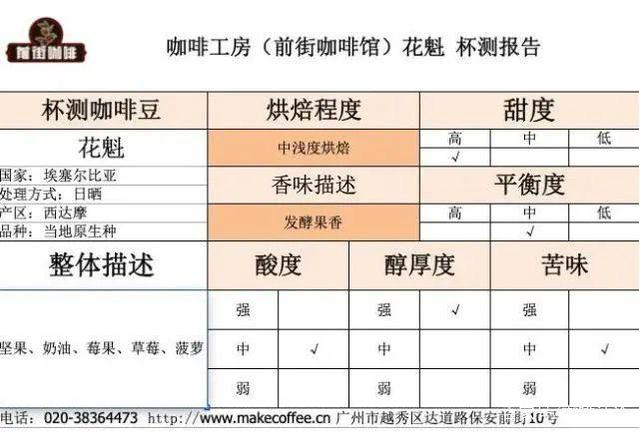
Flavor: Strawberry, black tea, floral, dried mango, lemon
Hua Kui 2.0 vs. Hua Kui 3.0
Hua Kui 2.0 comes from the Mountain Spring processing station, where natural processing only begins once cherry sugar content reads above 21 on the refractometer — the source of its very high sweetness. It also undergoes 21 days of low-temperature fermentation (versus the usual 10-plus days for naturals) to ensure even drying and ventilation and tighter control of fermentation. Compared with the 2018 mixed-variety "Hua Kui," Hua Kui 3.0 shows more uniform bean size and cleaner processing. On the cupping table, the 2019 Hua Kui 3.0 not only retains the rich, enchanting florals and the full red-wine and tropical-fruit character, but adds layers of bright, juice-like sweetness and acidity.
The process itself involves no radical reinvention — just far more precise management guided by scientific measurement. Red cherries enter natural processing only when their sugar content exceeds 21. At night, thick plastic tarps are pulled over the drying cherries to shield them from sudden rain, letting them ferment and dehydrate at relatively low temperatures. After 18 days, once the green beans' moisture has fallen to around 13%, drying stops and the beans are bagged in jute and stored at 12-22°C and 40-50% humidity.

The Natural Process Explained
Natural processing starts with mature and semi-mature cherries that sink in the float tank. They are spread on drying patios and sun-dried — depending on the climate, roughly 2-4 weeks — until the cherry moisture drops to 12% and the fruit hardens. The dried cherries then go through hulling machines to strip away the dry pulp and parchment. Naturally processed coffees tend to be noticeably sweeter, because the beans absorb sugars from the pulp during drying, with a fuller body and amplified fruit character — ripe strawberry, blueberry, tropical fruit. The risk is equally real: dried in full contact with the environment, a sloppy natural picks up earthy, fermenty, or wild off-flavors that ruin the cup.

Green Bean Analysis
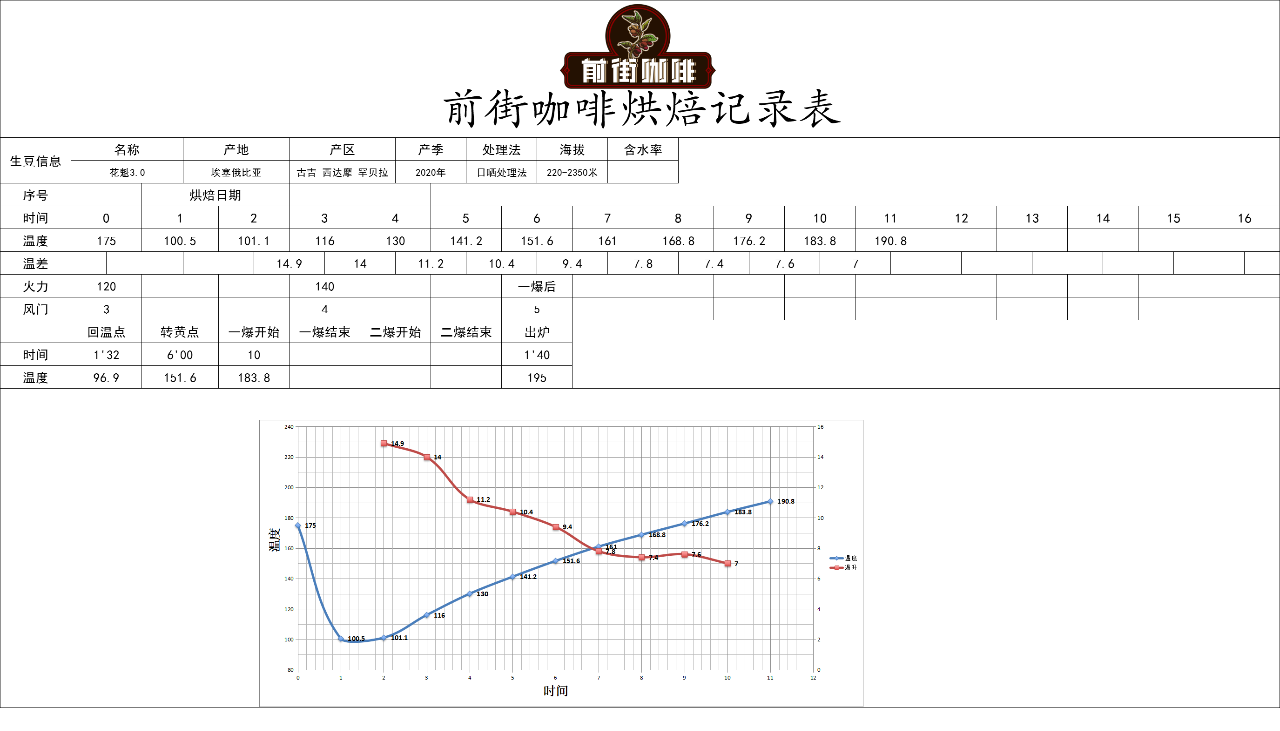
FrontStreet Coffee starts from the supplier's flavor descriptions, then verifies moisture content on arrival. The fresh green beans carry a winey, coffee-flower aroma utterly unlike the grassy smell of ordinary greens. Hua Kui beans vary in size, many with pointed ends (typical of Ethiopian Heirloom), and show good moisture around 11% — though they are not the very hard SHB type. Because the beans are dense and hard, FrontStreet Coffee extends the drying phase early in the roast and pushes the temperature up entering first crack, minimizing the loss of small-molecule aromatics such as florals.
Roasting Notes
Cupping Flavors
Brewing Suggestions
Equipment: Hario V60
Parameters: 15g coffee / 1:15 ratio / 90°C / medium-coarse grind (57% pass-through rate on a Chinese standard #20 sieve)

Technique: Bloom with 30g of water for 30 seconds, then pour directly to 125g in the center, pause, and continue to 225g once you can see the coffee bed. Remove the dripper when the bed shows through. Total extraction time: 2'00".
Flavor: From hot to cool you get strawberry jam, jackfruit, passion fruit, and other tropical fruits over rich florals. The acidity is lively and bright, the florals explode on the first sip, the body is round, the layering is strong, and the aftertaste lingers.
FrontStreet Coffee Recommendation
Ethiopia is the birthplace of coffee and home to an endless roster of native varieties — a treasure trove that keeps coffee lovers coming back. If Hua Kui 3.0 is on your list, a few FrontStreet Coffee staples make worthy companions. Start with the entry-level washed Yirgacheffe: jasmine florals and bright citrus acidity in a light, elegant, tea-like body — like a clean lemon tea. Then try FrontStreet Coffee's Guodingding cooperative lot from the Worka area at the southeastern edge of Yirgacheffe. Once part of the YCFCU's Worka cooperative, Guodingding became an independent cooperative in 2012 with about 300 member farmers; because the fruit is pulped before drying, the coffee's own character comes through with unusual clarity — citrus and lemon tones with graceful white florals, bright and delicate.
For naturals, compare the Yirgacheffe Red Cherry with Hua Kui: defective cherries are removed first, then the fruit dries in the sun for about two weeks until the sugars from the pulp infuse the bean and moisture falls to 12%, after which the dried pulp, mucilage, and parchment are machine-hulled and the beans pass density, color, and hand-sorting checks. The result is peach, cocoa, honey, and lemon in a spotless, fragrant cup. And from the same Sidamo family, FrontStreet Coffee's natural Hamasho 74158 — built on the JARC 74-series disease-resistant varieties from the Jimma Agricultural Research Center — offers perfume-lemon, strawberry, and star-fruit sweetness with slowly emerging florals; small beans, big aromatics.
Important Notice :
FrontStreet Coffee is a long-established specialty coffee roaster in Guangzhou China, selling freshly roasted beans from its own farm in Yunnan as well as dozens of carefully selected single-origin beans from around the world for both pour-over and espresso. The products deliver consistently excellent quality and great value, with shipping within 24 hours. Guangzhou's FrontStreet Coffee shop is recommended by many coffee lovers, and the beans are now available online at the Tmall 。
FrontStreet Coffee has moved to a new address:
FrontStreet Coffee Address: 315,Donghua East Road,GuangZhou
Tel:020 38364473
 Scan and follow the En Gafei WeChat official account. Please indicate that the reprint comes from "En Gafei".