Does Pour-Over Coffee Brewing Require Formulas? How to Calculate Extraction Rate in Coffee Gold Cup Theory
In the past, whether coffee was brewed well depended mainly on experience. Learning to brew coffee often required accumulating considerable hands-on time before gaining real insight. With the gradual refinement of coffee extraction theory, however, coffee brewing has slowly evolved from a mystical art into a science.
Understanding coffee extraction begins with the Golden Cup extraction standards. Of course, looking at it now, version 1.0 has become somewhat incompatible with current practice, and the SCA is researching version 2.0. Before version 2.0 is released, FrontStreet Coffee would like to share knowledge about Golden Cup extraction version 1.0 with everyone.
The Birth of the Golden Cup Standards
In the 1950s, the National Coffee Association (NCA) of the United States hired MIT chemistry PhD Dr. Lockhart to conduct scientific research on coffee. Dr. Lockhart discovered that the substances that can be extracted from coffee beans account for 30% of the bean's weight, while the remaining 70% consists of insoluble solid fiber. He also determined that whether a cup of coffee tastes delicious depends on two factors: coffee extraction rate and coffee concentration (TDS).
Between 1952 and 1960, Dr. Lockhart conducted sample surveys among the American population and found that American preferences for coffee ranged from an extraction rate of 17.5%-21.2% and a concentration of 1.04%-1.39%. This became the prototype of the American Golden Cup Standards.
Subsequently, Dr. Lockhart's team collaborated with the US Army Midwest Research Center to study data and conduct expert cupping, concluding that the optimal extraction range for coffee is 18%-22% with a concentration of 1.15%-1.35%. This became the Golden Cup extraction theory for the Specialty Coffee Association of America (SCAA) and later the merged SCA.
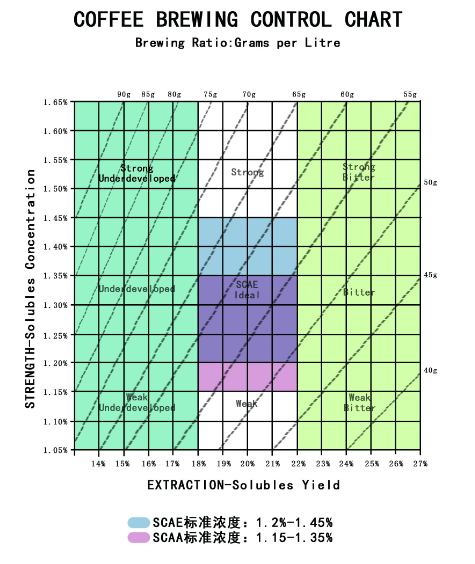
Of course, looking at it now, even if either the extraction rate or the concentration falls outside the Golden Cup range, there is still the possibility of brewing delicious coffee. Discussing the Golden Cup range therefore does not hold much significance today. However, the calculation formulas for extraction rate and concentration that it left behind are still applicable.
How to Calculate Coffee Extraction Rate?
The coffee extraction rate refers to how much coffee substance is released from the coffee beans (grounds) after brewing. With this understanding, we can use traditional methods to simply calculate the coffee extraction rate (though it is somewhat time-consuming).
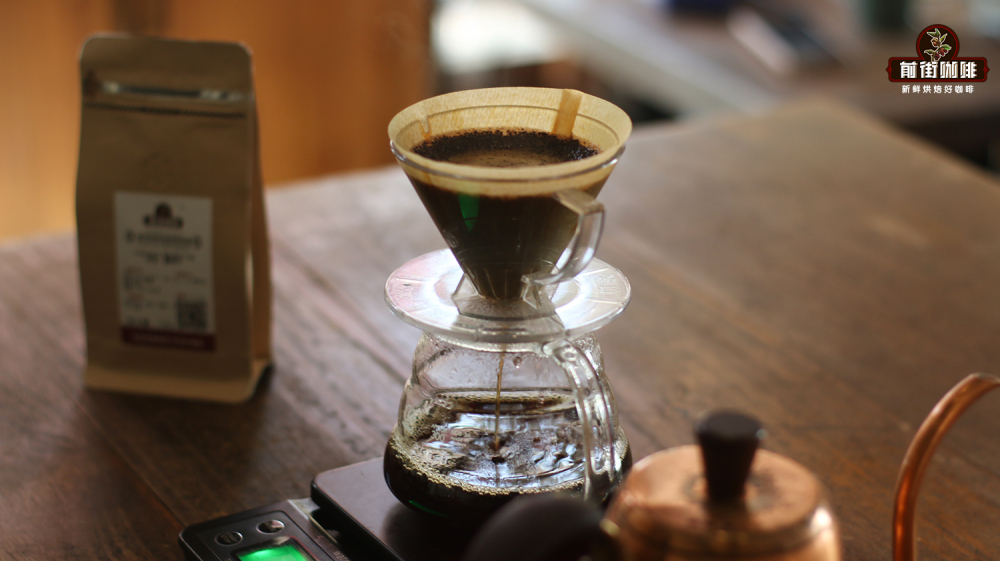
Since we know that coffee grounds dissolve coffee substances when they meet water, and the weight of the dissolved substances equals the weight lost by the coffee beans (grounds), we simply need to dry the brewed coffee grounds and weigh them. The difference from the original coffee bean (ground) weight represents the weight of the extracted coffee substances. Therefore:
Weight of extracted coffee substances ÷ Original coffee bean (ground) weight = Extraction rate
For example: if you use 15 grams of coffee grounds for brewing, then completely dry the coffee grounds and weigh them to be 12.3 grams, the weight of the substances dissolved in water is 2.7 grams. The extraction rate of this coffee would be 2.7÷15=0.18 (18%).
The drawbacks of this method are quite obvious, however. First, it takes a long time. Second, the data accuracy is low, particularly because of losses during the drying process of the coffee grounds and the precision of the weight measurements. Most common electronic scales can only measure to 0.1 gram precision, and a 0.1 gram error can result in a 0.7% error in extraction rate.
The extraction rate calculation method we commonly use today is therefore related to coffee concentration. Using this method first requires a concentration detection instrument (TDS meter).
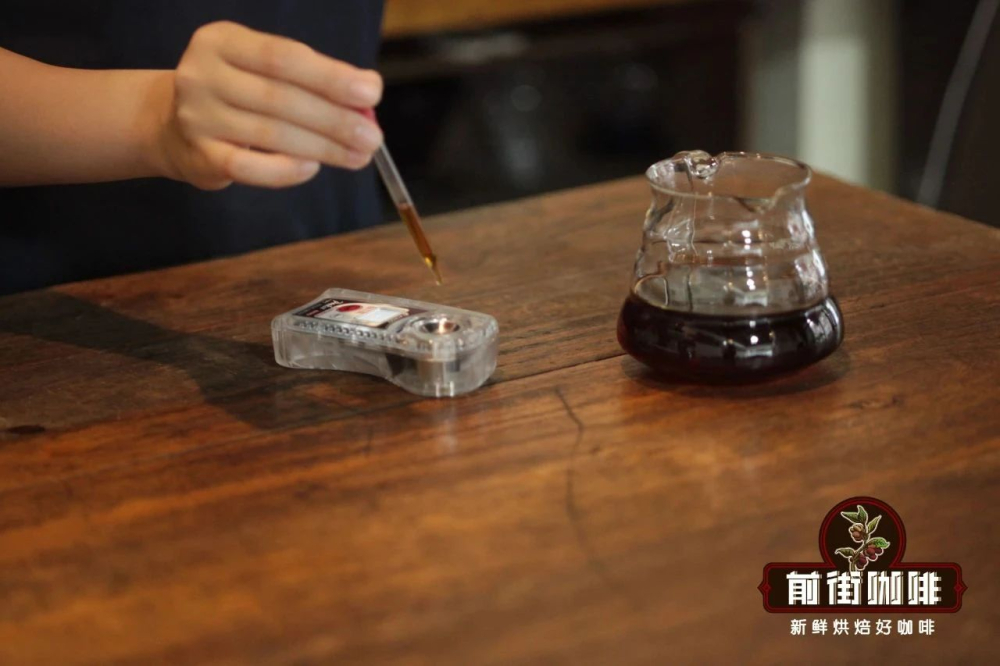
Understanding Concentration and Extraction Rate
First, let's understand what concentration and extraction rate each represent:
[Concentration] represents the proportion of "extracted coffee substances" to the total coffee liquid in a cup.
[Extraction Rate] represents the proportion of "extracted coffee substances" to the total coffee bean weight.
(One is based on coffee liquid, the other is based on coffee beans or coffee grounds.)
Based on these conditions, we can derive:
Coffee liquid concentration = Weight of extracted coffee substances ÷ Coffee liquid weight
Coffee extraction rate = Weight of extracted coffee substances ÷ Coffee bean (ground) weight
Combining these formulas, we can derive the calculation formula for coffee extraction rate:
Coffee extraction rate = Coffee liquid concentration × Coffee liquid weight ÷ Coffee bean (ground) weight
With a concentration meter, we can easily know the concentration of the coffee liquid and thus easily calculate the coffee extraction rate. It is important to note, however, that for drip coffee, since the coffee grounds themselves absorb twice their weight in water:
Coffee liquid weight = Water poured - 2 × Coffee bean (ground) weight
FrontStreet Coffee Recommendation
Once you start tuning extraction by numbers, the dripper becomes the next variable worth understanding. If you are new to pour-over, a practical, easy-to-use, and good-looking choice is the Hario V60. The company behind it was founded in Tokyo in 1921 as a well-known Japanese glassware maker, originally designing and producing heat-resistant glass instruments and equipment for research institutions; the heat-resistant glass sharing pitcher often paired with pour-over coffee is also a popular Hario product. In 2004, Hario redesigned the prototype of the V60, bringing its shape closer to the form we know today, and named it after its distinctive 60° cone angle and "V" shape before releasing it to market a year later.
With its conical shape and 60° angle, the V60 forces water to travel to the center before it drips into the server, lengthening the contact between water and coffee and letting aroma and flavor be fully extracted. Its signature single large hole lets water flow without obstruction, so the flow rate depends heavily on the brewer's control and is directly reflected in the cup. This fast extraction suits the fruit- and floral-forward beans of the third wave, and FrontStreet Gedingding, with its classic Yirgacheffe profile, is a natural fit: an everyday washed Yirgacheffe known for white jasmine florals, bright citrus and lemon acidity, and tea-like body, it carries no traditional bitterness and is the first specialty bean for many newcomers.
If you prefer a bolder tropical-fruit character, FrontStreet Ethiopia Huakui is one of the most successful star products of recent years, with a striking tropical fruit aroma of strawberry, passion fruit, jackfruit, and even lychee, obvious sweetness, very low bitterness, and a smooth, juicy body that many drinkers describe as "the least coffee-like coffee." For a legendary cup, FrontStreet Panama Emerald Estate Red Label Geisha offers elegant jasmine florals with citrus, bergamot, and black tea-like delicacy, a clean, transparent body, and a long, layered finish. FrontStreet Kenya Cherry Tomato, a washed Kenyan coffee from the Sika region at 1550-1750 meters, is built on SL28 and SL34 varieties and the region's 72-hour double washed fermentation, then roasted light to preserve lively acidity and layered fruit: dried cherry tomato and florals in the dry aroma, clear cherry tomato and smoky plum on the palate, snow pear and black plum in the mid-palate, and a clean finish of brown sugar sweetness and light green tea. If you favor a fuller, low-acid cup for pour-over, FrontStreet PWN Indonesia Golden Mandheling is roasted dark for a very low acidity and a rich, lingering body full of herbal and dark chocolate notes, while FrontStreet Brazil Queen Estate is low in acid, balanced, and rich with nut, cocoa, and caramel sweetness, working well in pour-over, espresso, or a moka pot.
Important Notice :
FrontStreet Coffee is a long-established specialty coffee roaster in Guangzhou China, selling freshly roasted beans from its own farm in Yunnan as well as dozens of carefully selected single-origin beans from around the world for both pour-over and espresso. The products deliver consistently excellent quality and great value, with shipping within 24 hours. Guangzhou's FrontStreet Coffee shop is recommended by many coffee lovers, and the beans are now available online at the Tmall 。
FrontStreet Coffee has moved to a new address:
FrontStreet Coffee Address: 315,Donghua East Road,GuangZhou
Tel:020 38364473
 Scan and follow the En Gafei WeChat official account. Please indicate that the reprint comes from "En Gafei".