Introduction to Bolivian Coffee Bean Varieties, Characteristics, and History - Waliki Estate Elevation and Flavor Description
For more premium coffee knowledge, follow FrontStreet Coffee.
The History of Coffee Cultivation in Bolivia
Bolivia is located in central South America, bordered to the north by the coffee-producing giant Brazil and the mysterious coffee nation of Peru. Bolivia is known as the "country of high mountains" — its capital, La Paz, sits at an altitude of 3,660 meters, so cold that even Arabica coffee, which thrives at high elevations, cannot be cultivated there. However, in the Yungas region northeast of La Paz, adjacent to the basin, the altitude is slightly lower and the land fertile, making it very suitable for coffee. Bolivia is therefore a country where coffee is grown at "lower altitudes."

Bolivia's coffee cultivation has a long history, dating back to 1880, when production was conducted primarily through large-scale farming. From 1932 to 1983, however, Bolivia faced internal and external troubles amid political turmoil, and its coffee industry stagnated or even regressed. In 1991, the stabilized government sought to revitalize the national economy and encouraged indigenous people to join coffee cultivation programs, though quality was not a priority at the time. Poor infrastructure and difficult transportation further limited the industry's development.
FrontStreet Coffee believes Bolivian beans are of genuinely good quality, yet they are rarely seen on the market. Bolivia's main producing regions, the Yungas and La Paz areas, have relatively underdeveloped infrastructure and lack large-scale wet processing mills. When coffee ripens, farmers must harvest the fully ripe cherries and immediately transport them up to La Paz — at higher altitude than the growing regions — for processing. The roads from Yungas to La Paz are so perilous they have earned the nickname "Death Road." During transport, coffee cherries easily ferment and rot, producing unpleasant flavors such as pungent aromas.

Yungas lies in the Andean foothills east of La Paz and is a rugged agricultural region. The roads are treacherous, making it difficult to move coffee out. Despite these disadvantages, coffee from this region is very unique thanks to its distinctive microclimates and extraordinary altitude — the world's highest coffee plantation, Finca Takesi, is located here at 2,500 meters.
Caranavi, in La Paz department, sits north of Yungas, also in the Andean foothills but at lower elevation. The average altitude in Caranavi is 1,500 meters, yielding coffee with less complexity and more chocolate character.
Through extensive sourcing and cupping, FrontStreet Coffee finally found a Bolivian coffee with distinctive flavor — this one comes from the Valiki Estate and is of the Java variety.
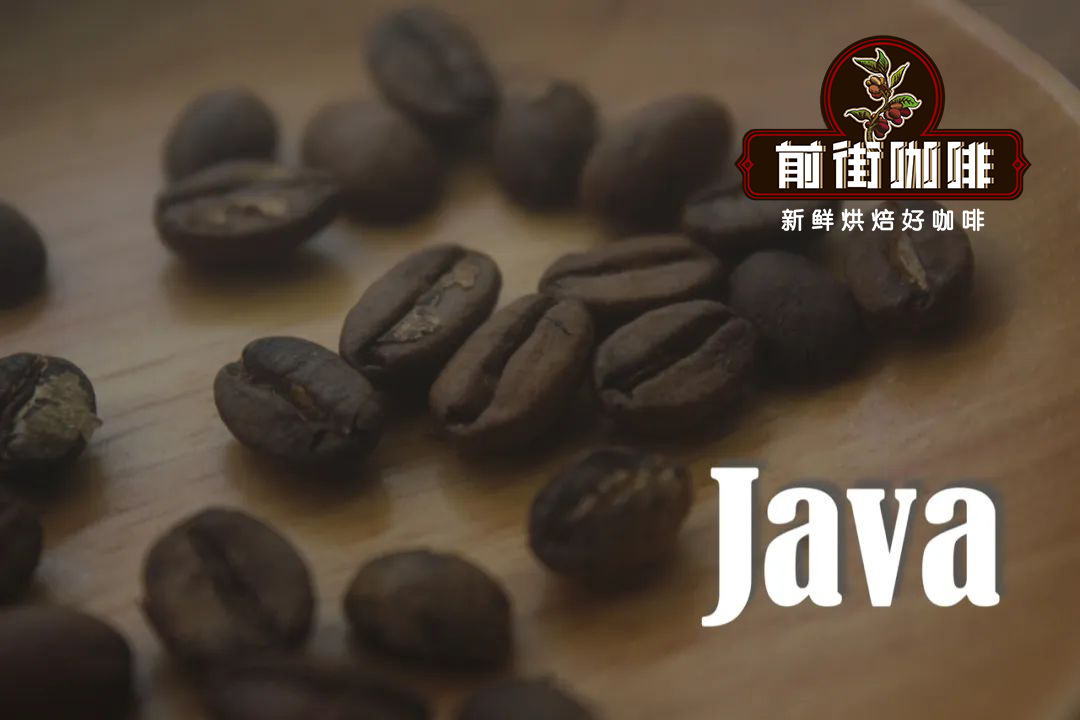
FrontStreet Coffee Bolivia Valiki Estate
Region: La Paz, Bolivia
Estate: Valiki Estate
Altitude: 1,600 meters
Variety: Java
Processing Method: Cocoa Natural
Coffee Varieties
The Java variety is known locally in Bolivia as the "long bean variety," named for its elongated appearance; its official name is Java. Java is a fascinating variety — the name suggests a strong connection to Indonesia, but in fact Java originated from coffee trees in Ethiopia's original forests, collected by local communities and transmitted through Yemen to Indonesia, where it was named Java. It was long believed to be a Typica variant, but genetic comparison revealed that Java is actually the Ethiopian variety Abysinia.

Processing Method
During harvest season, the estate hires pickers from the Borinda community, who select the coffee fruit with great care.
The pickers are trained to harvest only ripe cherries, and the estate picks in multiple passes throughout the season to ensure every cherry is taken at optimal ripeness.
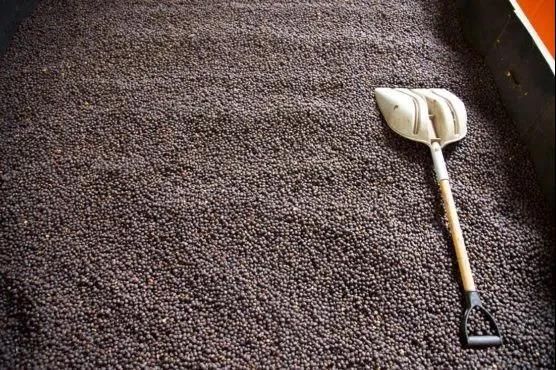
The estate uses crates to prevent damage during transport and maintains air circulation around the cherries, preventing unnecessary early fermentation. After selection and weighing, the cherries are carefully washed, placed on raised African drying beds, and turned every hour. After about a week, the cherries are moved into cocoa dryers.
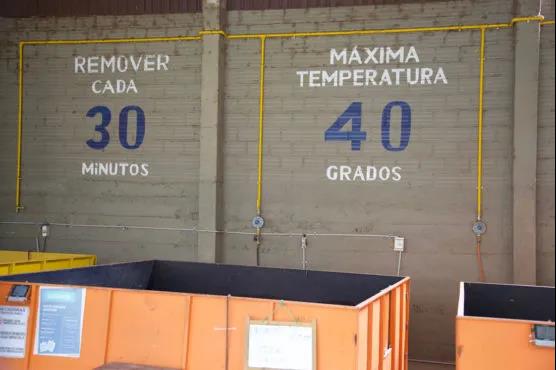
Cocoa dryers had never been used for coffee before, but Pedro Rodriguez of the Rodriguez family has kept innovating and experimenting with different techniques, discovering that cocoa dryers dry coffee slowly and consistently at low temperatures, reducing the impact of weather. The beans are placed in large steel drums at temperatures not exceeding 40°C for about 35 hours, turned every 30 minutes.
Once dried, the beans are transported to La Paz to rest, then hulled at Agricafe's drying facility, La Luna. There, machinery performs careful dehulling and sorting, followed by manual sorting under both ultraviolet and natural light.
Fresh Roasting by FrontStreet Coffee
When roasting this cocoa natural Java, FrontStreet Coffee's roaster uses a medium-light profile to highlight both the fermentation notes from the processing and the Java bean's inherent floral, berry, and nut characteristics. For medium-light beans, FrontStreet Coffee recommends water at 90-91°C — higher temperatures help extract the aromatic compounds and acidity of light roasts. Because medium-light beans are denser, the hotter water improves extraction efficiency and avoids unpleasant sharp acidity.
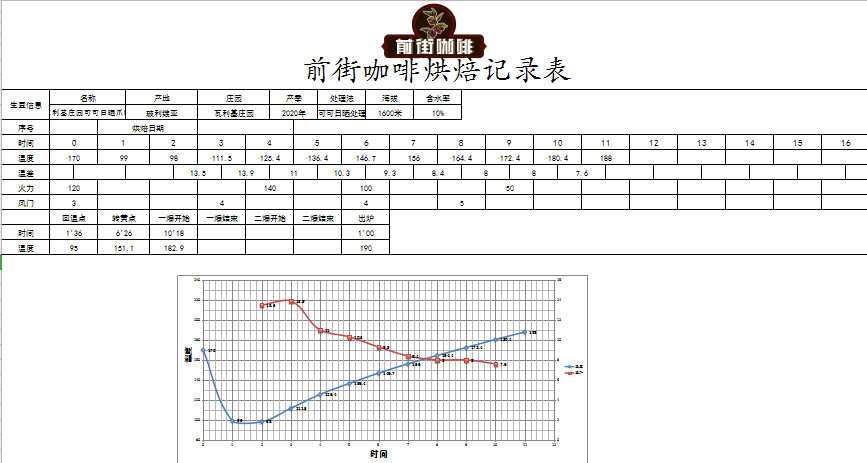
Charge temperature at 170°C, initial heat at 120, air damper at 3. At 111°C, hold the heat and open the damper to 4. During this stage the beans gradually turn from green to yellow, and the grassy aroma of the raw beans fades as they enter the drying phase. At 6'26" they reach the yellowing point, developing a sweet, toasted-bread aroma. At 146°C, reduce heat to 100, keeping the damper at 4.
At 9'38", wrinkles and black spots appear on the bean surface and the toast aroma clearly transitions into coffee aroma — the prelude to first crack. Listen carefully from here. First crack begins at 10'18", with the damper opened to 4. After first crack, develop for 1'00", then discharge at 190°C.

Cupping by FrontStreet Coffee
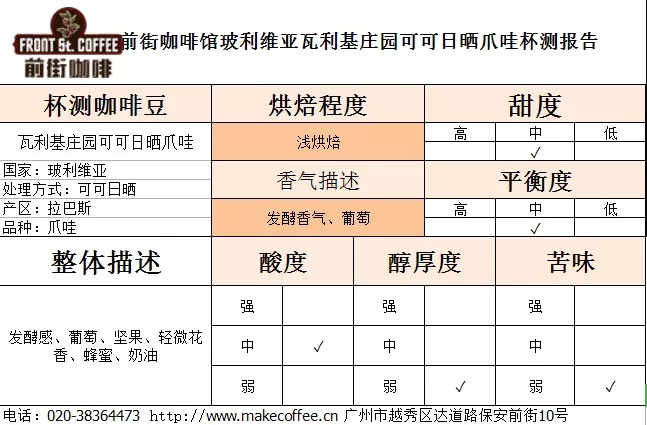
FrontStreet Coffee cups immediately after roasting trials to evaluate flavors and decide whether the roasting profile needs optimization. The final flavor profile of this Bolivia Cocoa Natural Java is as follows:

Brewing Method Shared by FrontStreet Coffee
FrontStreet Coffee brews this coffee with a V60 dripper. The V60's large hole, together with its unique spiral ribs, lets air escape more easily, improving extraction quality. The body may not be as full, but its high concentration brings out sweetness, acidity, and distinct aromas — its major strengths.
Water Temperature: 90-91°C
Grind Size: Fine sugar (78% pass-through rate with #20 standard sieve)
Coffee-to-Water Ratio: 1:15
Coffee Amount: 15 grams

FrontStreet Coffee's Brewing Technique: First, pour 30 grams of water for a 30-second bloom — the grounds expand very fully. After blooming, pour 95 grams in circles from the center outward (scale shows around 125 grams), with abundant golden coffee bubbles emerging. Complete this pour in about 1 minute. When the water level drops to 2/3 of the coffee bed, pour the remaining 100 grams (scale shows around 225 grams), finishing in about 1 minute 40 seconds. Complete extraction between 1'55" and 2'00", then remove the dripper. This coffee needs no vigorous stirring — elegant, slow circular pouring is best to prevent over-extraction.
Brewing Flavor: A subtle fermentation note, with black grape and chocolate sweetness from the natural processing, along with fruity acidity.
FrontStreet Coffee Recommendation
Brazil, Bolivia's giant neighbor to the north, offers a useful contrast for tasting. As the world's largest coffee producer, Brazil grows an enormous variety of beans with moderate acidity and an excellent balance of sweetness, bitterness, and body — ideal for medium roasts that release a wave of nutty aroma and a mellow, faintly tart cup, suitable for both single origin and blends.
If you just want a taste of Brazil, try FrontStreet Coffee's pulped natural Cerrado: a classic Brazilian single origin with rich aromas of creamed peanut, toasted bread, caramel, and hazelnut, a rounded non-acidic mouthfeel with a light bitter edge, at home in pour-over, moka pot, siphon, French press, or even as an espresso SOE. For something rarer, the Queen Estate Yellow Bourbon from Mogiana — a mutation of Red Bourbon with cleaner fruit character — offers a sugarcane sweetness, fruit aroma, and chocolate note that no other origin quite matches.
Brazil's low acidity, balance, and friendly price have also made it the backbone of many espresso blends: FrontStreet Coffee's crema-rich Classic Blend, nutty Signature Blend, balanced Black Cocoa Blend, and café-focused Commercial Blend all contain Brazilian beans, which contribute chocolate and cream aromas, gentle sweet-sour-bitter harmony, and the stable extraction every café relies on.
Important Notice :
FrontStreet Coffee is a long-established specialty coffee roaster in Guangzhou China, selling freshly roasted beans from its own farm in Yunnan as well as dozens of carefully selected single-origin beans from around the world for both pour-over and espresso. The products deliver consistently excellent quality and great value, with shipping within 24 hours. Guangzhou's FrontStreet Coffee shop is recommended by many coffee lovers, and the beans are now available online at the Tmall 。
FrontStreet Coffee has moved to a new address:
FrontStreet Coffee Address: 315,Donghua East Road,GuangZhou
Tel:020 38364473
 Scan and follow the En Gafei WeChat official account. Please indicate that the reprint comes from "En Gafei".