【FrontStreet Coffee Bean Quest】Special Report on T.O.H Yirgacheffe Champion Bean Aricha
Professional Coffee Knowledge Exchange
For more coffee bean information, follow Coffee Workshop.
Yirgacheffe Aricha
Region: Yirgacheffe Adorsi Processing Station
Altitude: 1900-2000m
Processing Method: Natural
Grade: G1
Variety: Heirloom
Region Introduction
Yirgacheffe is a small town in Ethiopia at an altitude of 1700-2100 meters. It is one of the world's highest-altitude coffee-growing regions and a byword for Ethiopian specialty coffee. Lakes Turkana, Abaya, and Chamo bring abundant moisture to the area, and the rift valley — represented by the Misty Valley — is wrapped in year-round mist, with spring-like seasons, gentle breezes, and cool, humid air. Thousands of coffee tree varieties thrive and multiply here, nurturing Yirgacheffe's unique terroir, where floral and fruity aromas intertwine in unpredictable and enchanting ways.
Adorsi Processing Station
This year's Ethiopian harvest-season cupping competition, natural process category, was won by the Adorsi Processing Station.
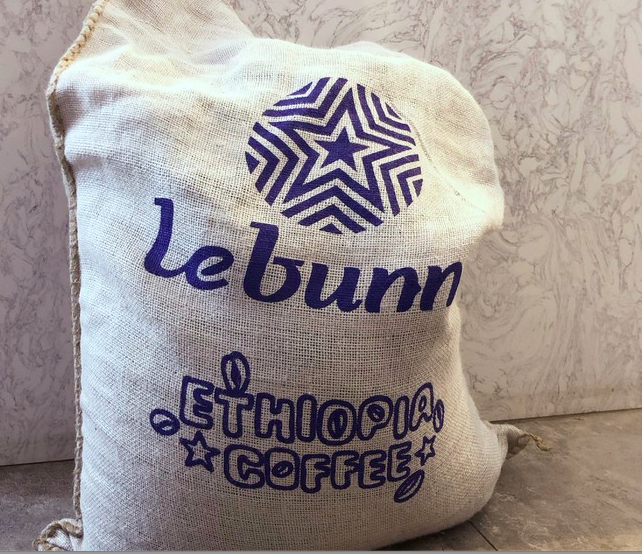
The Adorsi Processing Station belongs to Testi Coffee, an export company operated by the Yonis family and founded in 2009 by Faysel A. Yonis.
In terms of competition results, this championship batch scored 91 points. Last year's Mudan (Peony) batch scored 88 points in the same competition — making Adorsi's score 3 points higher this year.
T.O.H
Taste of Harvest (TOH) is a green bean competition held among African producing countries by the African Fine Coffees Association (AFCA), similar to the Cup of Excellence in Central and South America.
It currently has seven member countries: Ethiopia, Kenya, Uganda, Tanzania, Malawi, Zambia, and the Republic of Congo. The competition is divided into regional and continental rounds, with preliminaries eliminating batches scoring below 80 points. TOH selects the highest-quality green beans from each region, which domestic and international judges then cup and score under Specialty Coffee Association of America (SCAA) standards. This batch scored 88.58 points — the highest this year — and took the championship!
Variety Introduction
The variety of this coffee bean is local heirloom. Anyone who drinks Ethiopian coffee regularly has heard of the "Heirloom" variety. Most Ethiopian varieties are labeled this way because Ethiopia has too many coffee varieties — it is like a natural gene bank for Arabica. On one hand, the sheer number of varieties makes identification and classification difficult; on the other, the Ethiopian government, for protection purposes, is unwilling to disclose information about them, so they are collectively called "Heirloom."
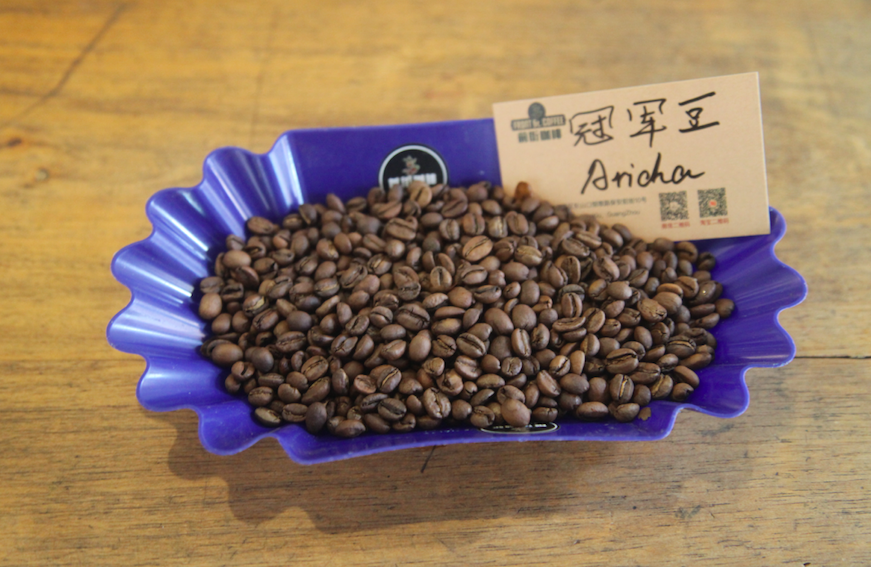
Ethiopia has nearly 2000 recorded coffee varieties, including 1927 native varieties and 128 introduced foreign ones. Purely in terms of appearance, Ethiopian coffee varieties are like a "grand view garden" with everything imaginable: long, short, thin, fat...
Processing Method
This coffee bean uses natural processing.
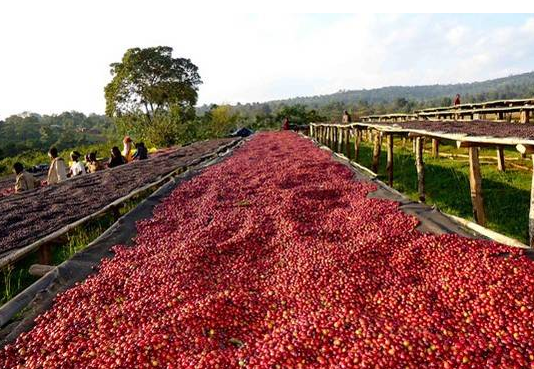
1. Harvest mature coffee cherries.
2. Initial sorting to remove impurities and defective beans.
3. Floatation screening: pour the cherries into water tanks, where mature, full cherries sink to the bottom while immature or damaged cherries float to the surface.
4. Sun drying: remove the mature cherries from the bottom of the tank and spread them on drying grounds, reducing moisture content from 70% to about 10-12%. The cherries must be turned several times daily for even drying and covered at night to avoid moisture absorption.
5. Hulling: after about two to four weeks of sun exposure, the outer layers of the coffee seeds become dry and hard. A hulling machine then removes the outer layers, completing the process.
Roasting Analysis
Roaster: Yangjia 800N (300g batch size)
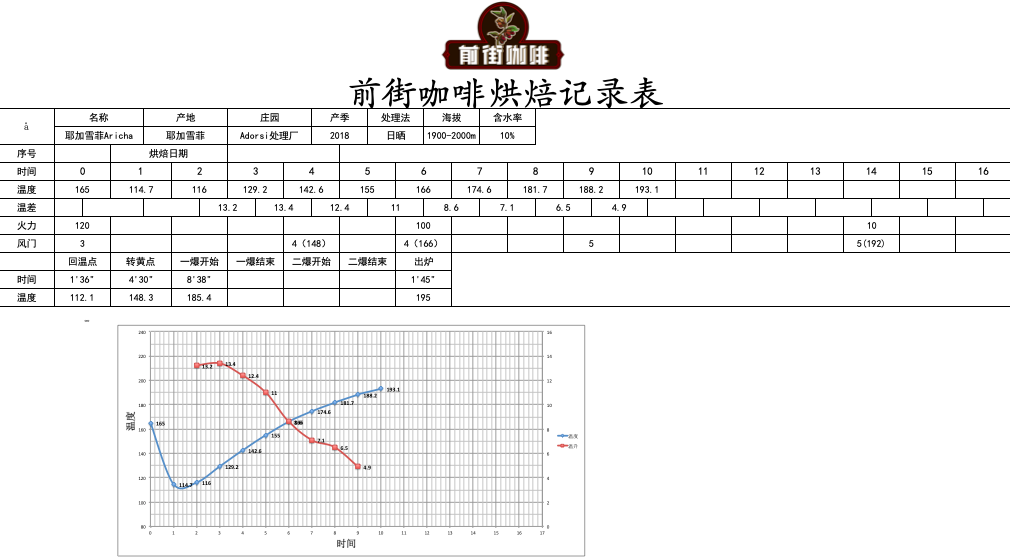
Charge temperature 165°C, heat power 120, damper setting 3. Turning point at 1'36", when temperature reaches 148°C — open damper to 4, heat unchanged. At 166°C the bean surface turns yellow, the grassy aroma disappears completely, and the beans enter the drying phase; heat unchanged, damper at 5.
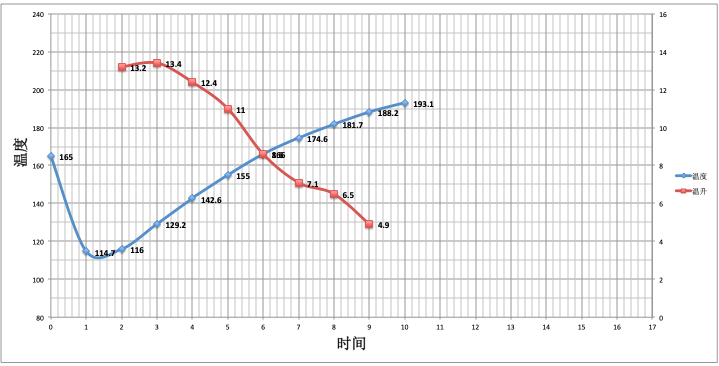
At 7'37", wrinkles and black spots appear on the bean surface and the toast aroma clearly transitions into coffee aroma — the prelude to first crack. Listen carefully from this point on. First crack begins at 8'38"; damper unchanged, development after first crack for 1'45", discharged at 195°C.
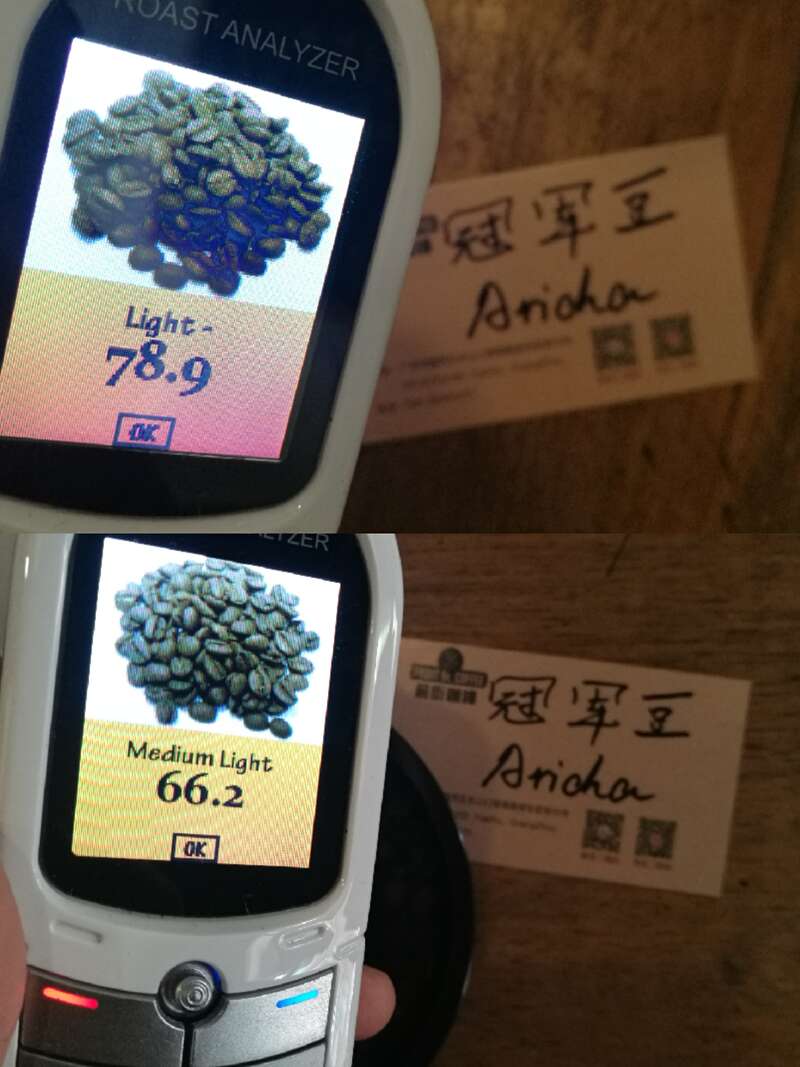
Agtron bean color value 66.2 (bottom image), Agtron ground color value 78.9 (top image), Roast Delta 12.7.
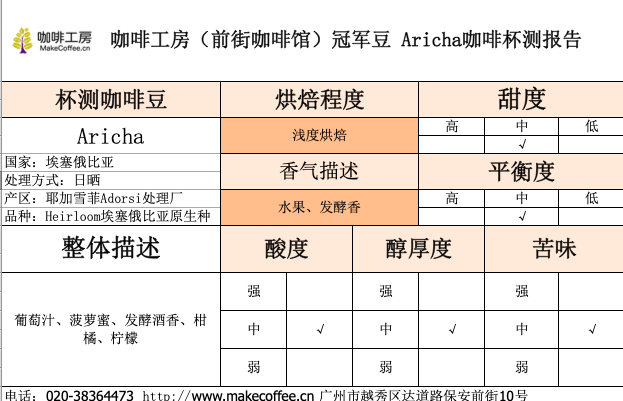
Cupping Flavor Notes
Grape juice, jackfruit, fermented wine aroma, citrus, lemon
1. Flavor descriptions vary by individual and are influenced by water temperature and brewing method. This cupping report describes flavors limited to the flavor wheel under the same brewing equipment and parameters, and is intended for reference only.
2. Content will be updated promptly as new information arrives; the latest updates shall prevail.
Pour-over Brewing Recommendations
Recommended brewing method: Pour-over
Dripper: V60
Water temperature: 90-92°C
Coffee-to-water ratio: 1:15
Grind size: Medium-fine, similar to fine sugar (Grind BG-5R, 60% pass-through rate on China standard #20 sieve)
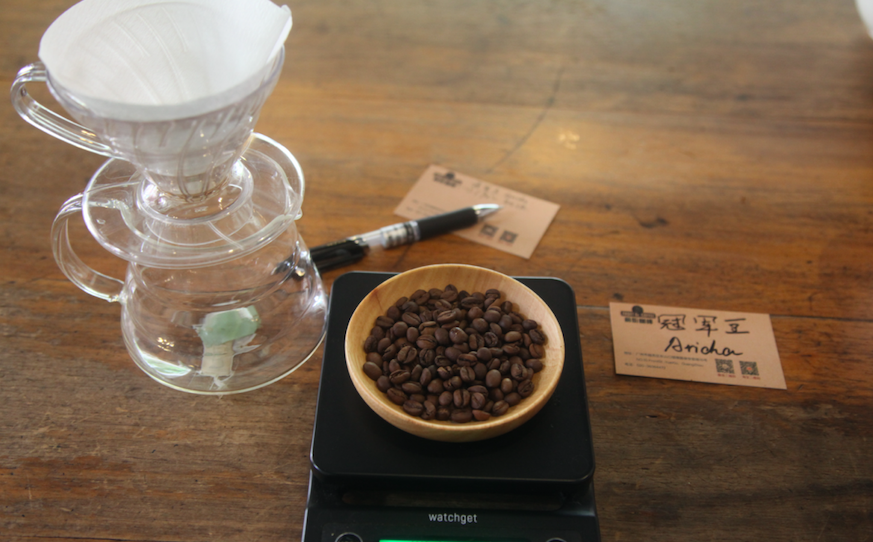
Brewing technique: segmented extraction. Use 30g of water to bloom for 30 seconds. With a small water flow, pour in circles to 125g, then pause. When the water level drops and the coffee bed is about to be exposed, continue pouring to 227g and stop. Once the bed is about to be exposed again, remove the dripper. Extraction time is 2 minutes, timed from the start of the bloom.
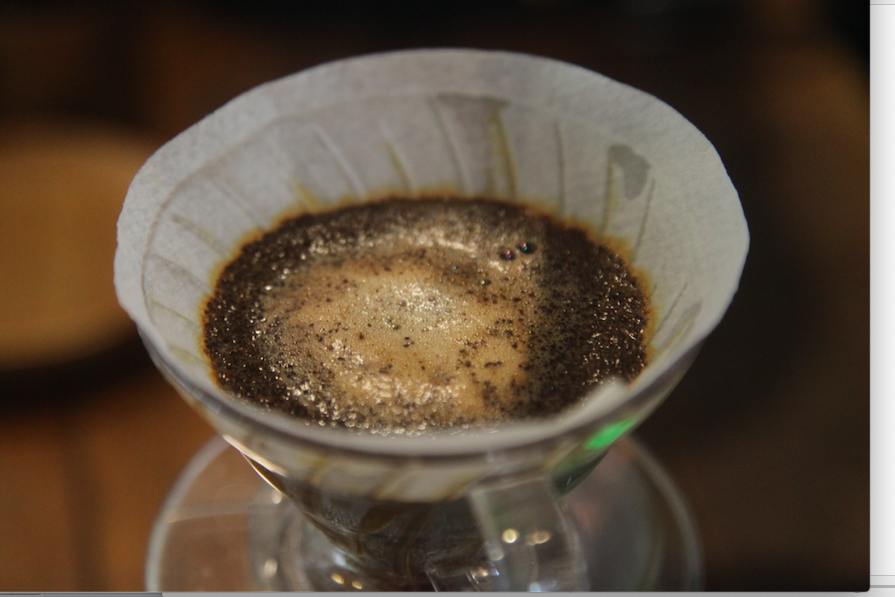
Brewed in the V60, the dry aroma smells of ripe fruit. On entry there is a distinct fermented note and green grape; as the cup cools slightly, lemon acidity and creamy smoothness emerge, finishing with the juicy sensation of ripe grapes.
More Sharing
[FrontStreet Coffee Bean Hunting Notes] Uganda Mount Elgon Grape Special Coffee Report
[FrontStreet Coffee Bean Hunting Notes] Yunnan Arabica Coffee Special Report!
[FrontStreet Coffee Bean Hunting Notes] Colombia Cauca Pink Bourbon Special Report
[FrontStreet Coffee Bean Hunting Notes] Panama Boquete Honey Process Geisha Coffee Special Report
[FrontStreet Coffee Bean Hunting Notes] Costa Rica Megalith Coffee Special Report

FrontStreet Coffee Recommendation
Ethiopia is a treasure trove for coffee lovers — the birthplace of coffee, home to countless native varieties. If the champion Aricha natural has won you over, FrontStreet Coffee's washed Yirgacheffe is the ideal next cup: clear jasmine florals and bright citrus acidity over a light, elegant, tea-like body, like a crisp, clean lemon tea — and it is the most approachable way to start exploring Ethiopian specialty coffee.
For brewing Yirgacheffe, FrontStreet Coffee suggests a V60 dripper with 15 g of coffee at a 1:15 ratio, ground to the texture of fine granulated sugar (about 80% pass-through on a #20 sieve), with water at 90-91°C: pour 30 g to bloom for 30 seconds, pour up to about 125 g over a minute, then finish with 100 g more to roughly 225 g, completing around 1:35 with drawdown of 2:00-2:10.
And if you want to keep exploring champion naturals, look for the Flower Champion lot from Guji's Hambella region — like the Aricha, it is a natural-processed Ethiopian heirloom, showing fermented wine aroma, citrus, mango, honey sweetness, and cocoa with a hint of spice.
Important Notice :
FrontStreet Coffee is a long-established specialty coffee roaster in Guangzhou China, selling freshly roasted beans from its own farm in Yunnan as well as dozens of carefully selected single-origin beans from around the world for both pour-over and espresso. The products deliver consistently excellent quality and great value, with shipping within 24 hours. Guangzhou's FrontStreet Coffee shop is recommended by many coffee lovers, and the beans are now available online at the Tmall 。
FrontStreet Coffee has moved to a new address:
FrontStreet Coffee Address: 315,Donghua East Road,GuangZhou
Tel:020 38364473
 Scan and follow the En Gafei WeChat official account. Please indicate that the reprint comes from "En Gafei".