What is the Flavor of Ugandan Coffee? Introduction to Uganda's Rwenzori Mountains Coffee and Ugandan Coffee Characteristics
For more professional coffee knowledge and coffee bean information, please follow Coffee Workshop (WeChat official account: cafe_style)
Discovering Uganda's Premium Coffee: Rwenzori Mountains Anaerobic Natural
Uganda is often written off as a very poor country, but today FrontStreet Coffee wants to introduce a premium Ugandan coffee - an anaerobic natural from the Rwenzori Mountains. Coffee is one of Uganda's most important economic crops, and although the country's production of specialty-grade coffee is still limited, that has never stopped FrontStreet Coffee from hunting for outstanding coffee there. This anaerobic natural is one of the gems we've found. Through cupping and brewing, FrontStreet Coffee found that spices and nuts dominate the profile. Thanks to the anaerobic processing, it also carries fermented, wine-like aromatics, and the mouthfeel is rich with cream and peanut notes, underpinned by soft fruit acidity and good complexity.
Uganda's Coffee Geography and History
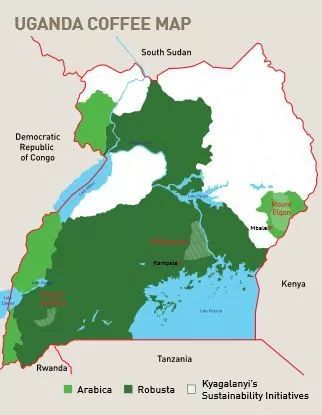
Uganda sits at the source of the Nile and is a landlocked African country with no coastline. Like its East African neighbors, it has a long history of coffee production, but wars driven by ethnic conflict long kept coffee quality from improving. Most of the country's fine coffee is grown in regions bordering Kenya, and for years some good lots were simply shipped into Kenya and blended with Kenyan coffee for sale. It was only about 15 years ago, when the fighting stopped, that Uganda began to emerge as a fast-developing coffee origin.
Uganda boasts dense forests, lakes, and wetlands, with abundant water from its river systems. Coffee is the country's largest agricultural crop: roughly 500,000 farms engage in coffee-related agriculture, accounting for about 25% of the total population. The majority of coffee trees are robusta varieties, which make up about 94% of Uganda's coffee cultivation; only 6% are traditional arabica varieties. These scarcer arabica beans grow in tropical rainforest conditions, and most are exported around the world.
Coffee exports account for 20% of Uganda's national GDP, making it the country's most important export - though most of that volume is lower-grade robusta. On the world specialty coffee map, Uganda is rarely in the spotlight, while Ethiopia, Kenya, and Tanzania are far more prominent. Geographically, arabica can only be grown on the slopes of the eastern and southwestern regions. In fact, arabica was introduced to eastern Uganda from Ethiopia as early as 200 years ago. In the Mbale region in the east, coffee cultivation has a long history, with coffee trees in nearly every household. In the past, however, middlemen would come through the community and buy coffee regardless of quality, at a single price that fluctuated with the market - leaving farmers little incentive to grow better beans.
The Rwenzori Mountains: Coffee Growing Region
The Rwenzori Mountains (Mt. Rwenzori), known as the "Mountains of the Moon," lie in western Uganda and form the border between Uganda and the Democratic Republic of the Congo (DRC). Coffee is Uganda's main economic crop, accounting for 95% of the country's total exports.
Processing Method
After the cherries ripen, they are all hand-picked, soaked and fermented in fermentation tanks, and then dried.
FrontStreet Coffee Green Bean Analysis
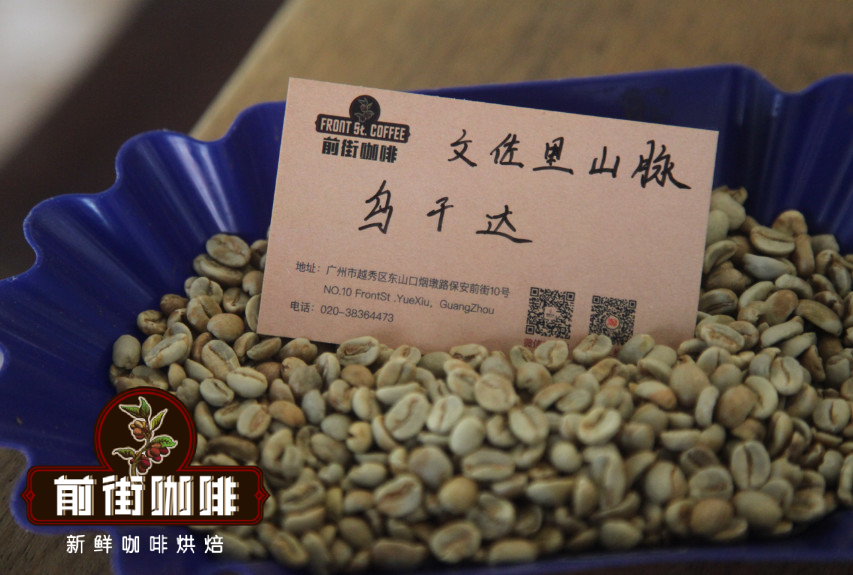
This lot is composed of SL14 and SL28, both fairly common varieties in Uganda. The SL varieties come from the research and selection work of Scott Lab. Kenyan coffee became world-famous thanks to SL28 and SL34, so the Ugandan government vigorously promoted and distributed SL seedlings to farmers. SL14 in particular not only offers excellent flavor but is also drought-resistant and can be harvested just two years after planting - well suited to farmers' needs. The green beans are somewhat uneven in size, yellow-green in color, and smell grassy when sniffed.
FrontStreet Coffee Roasting Analysis
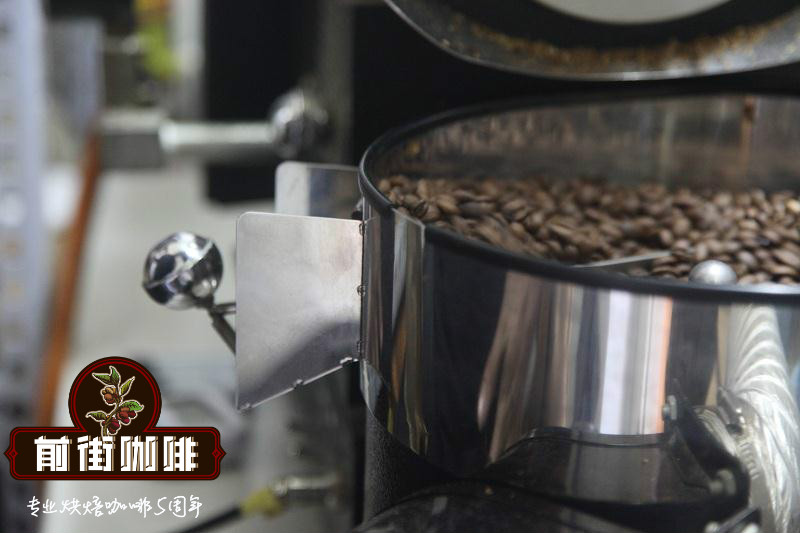
Roaster: Yangjia 800N (batch size: 300g)
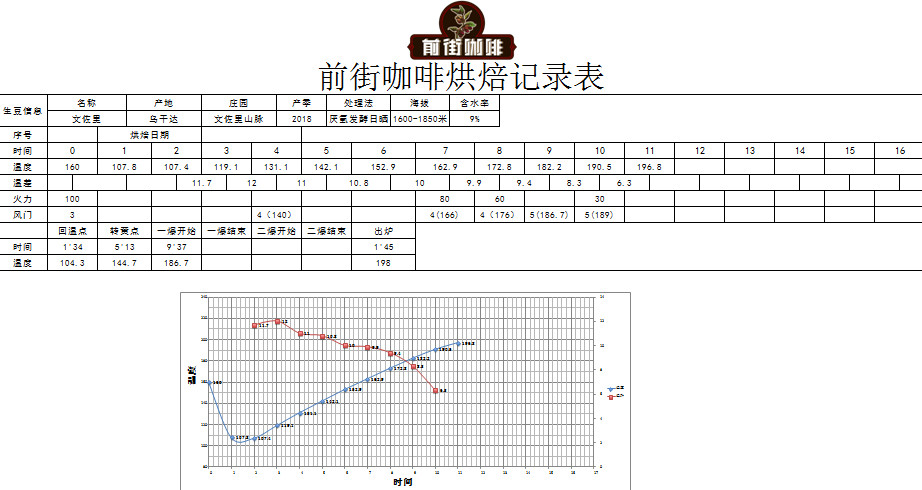
Charge the drum at 160°C with heat at 100% and the damper set to 3; turning point at 1'34". When the drum temperature reaches 140°C, open the damper to 4 and keep the heat unchanged. At 144.7°C the bean surface turns yellow, the grassy smell disappears completely, and the coffee enters the drying stage. At 166°C, reduce the heat to 80 with the damper unchanged. At 8'46", wrinkles and dark spots appear on the bean surface, and the toast-like smell clearly shifts into coffee aroma - the prelude to first crack. At this point, listen carefully for the sound of first crack. At 9'37" first crack begins; open the damper to 5 and develop for 1'45" after first crack, dropping the beans at 198°C.
The Agtron bean color value is 68.4 (left image), the Agtron ground color value is 75.9 (right image), and the Roast Delta is 7.5.
FrontStreet Coffee Cupping Notes
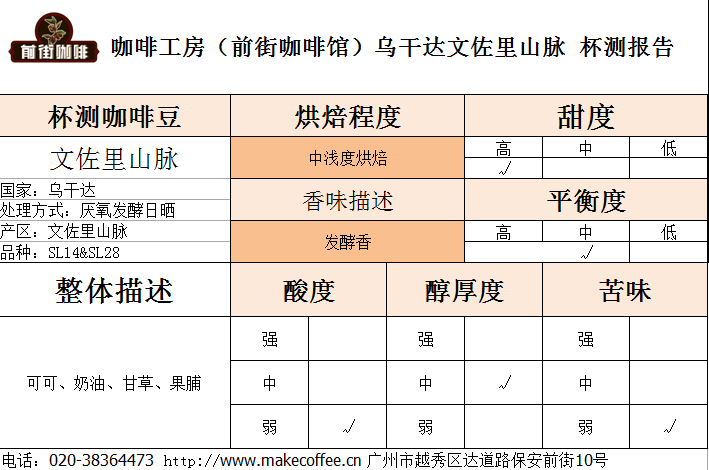
Cocoa, cream, licorice, preserved fruit
Uganda Rwenzori Mountains Anaerobic Natural
Country: Uganda
Region: Rwenzori Mountains
Altitude: 1600-1800 meters
Processing Method: Anaerobic natural
Varieties: SL14 & SL28

FrontStreet Coffee Brewing Analysis
Dripper: V60
Water Temperature: 90°C
Coffee-to-Water Ratio: 1:15
Grind Size: Medium-fine, roughly granulated sugar thickness (BG 6L: 80% pass rate through the China standard #20 sieve)
FrontStreet Coffee Brewing Method
Segmented pouring. Bloom with 35g of water for 25 seconds. Pour in circles up to 130g, then pause the pour. Once the water level drops and the coffee bed is about to be exposed, continue pouring to 227g and stop. When the water level drops and the bed is about to be exposed again, remove the dripper. (Timing starts from the bloom.) Total extraction time is 1'50".
Flavor
It opens with a light fermented aroma, and the cup offers cocoa, cream, peanuts, and a soft fruit acidity.

FrontStreet Coffee Recommendation
If the fermented, fruit-forward character of this Ugandan anaerobic natural appeals to you, FrontStreet Coffee's natural-processed lineup is worth a closer look. Natural processing is the oldest and most widely used way to prepare coffee: ripe cherries are simply dried whole in the sun until the moisture content is right, then hulled. Because the fruit stays intact throughout drying, natural coffees have a fuller body and richer ripe-fruit tones than washed lots.
A great starting point is FrontStreet Coffee's Yirgacheffe natural Red Cherry: only fully ripe, all-red cherries are selected and spread on raised drying beds, kept off the ground to protect the fruit from insects, dust, and contamination, and turned regularly for the 27-30 days of drying that naturals demand. After a light-medium roast it shows elegant florals and bright acidity along with pronounced tropical fruit, a full fermented character, and plenty of sweetness. FrontStreet Coffee's natural Huakui is another favorite: grown at very high altitude in excellent terroir, it delivers a faint fermented note, florals, citrus, and mango with honeyed sweetness, cocoa, a hint of spice, a thick body, and a long finish.
For something different, FrontStreet Coffee's Colombia Pink Bourbon uses a double anaerobic natural process - whole fresh cherries are sealed in tanks injected with CO2 to create an oxygen-free fermenting environment before drying - producing intense tropical fruit aromas of passion fruit, apricot, dried fruit, and grape with an almond-like finish. Fans of gentler cups can try FrontStreet Coffee's Brazil Queen Estate coffee, dried on raised racks with constant turning: sugarcane sweetness, black tea, soft fruit sweetness, gentle nutty notes, a clean low bitterness, and rich chocolate aroma, all in a smooth, silky, balanced cup.
Important Notice :
FrontStreet Coffee is a long-established specialty coffee roaster in Guangzhou China, selling freshly roasted beans from its own farm in Yunnan as well as dozens of carefully selected single-origin beans from around the world for both pour-over and espresso. The products deliver consistently excellent quality and great value, with shipping within 24 hours. Guangzhou's FrontStreet Coffee shop is recommended by many coffee lovers, and the beans are now available online at the Tmall 。
FrontStreet Coffee has moved to a new address:
FrontStreet Coffee Address: 315,Donghua East Road,GuangZhou
Tel:020 38364473
 Scan and follow the En Gafei WeChat official account. Please indicate that the reprint comes from "En Gafei".