Introduction to Major Kenya Coffee Growing Regions - Flavor Profile of Kenya K72 Washed Process Coffee Beans
Kenyan Coffee
FrontStreet Coffee knows that coffee enthusiasts are thoroughly familiar with Kenyan coffee, and that industry professionals count it among their favorites. Kenyan coffee delivers everything drinkers look for in a great cup. It pairs balanced, pleasant acidity with excellent fruit flavors, and its taste is so distinctive that few coffees come close.
FrontStreet Coffee would say the signature of Kenyan coffee is its vivid fruit aroma. Look for that flavor in the cup and pay attention to how it feels on the palate. Citrus is the most common note. Kenyan coffee has a multi-layered taste and a juice-like acidity, with excellent grapefruit and wine flavors and a moderate body.
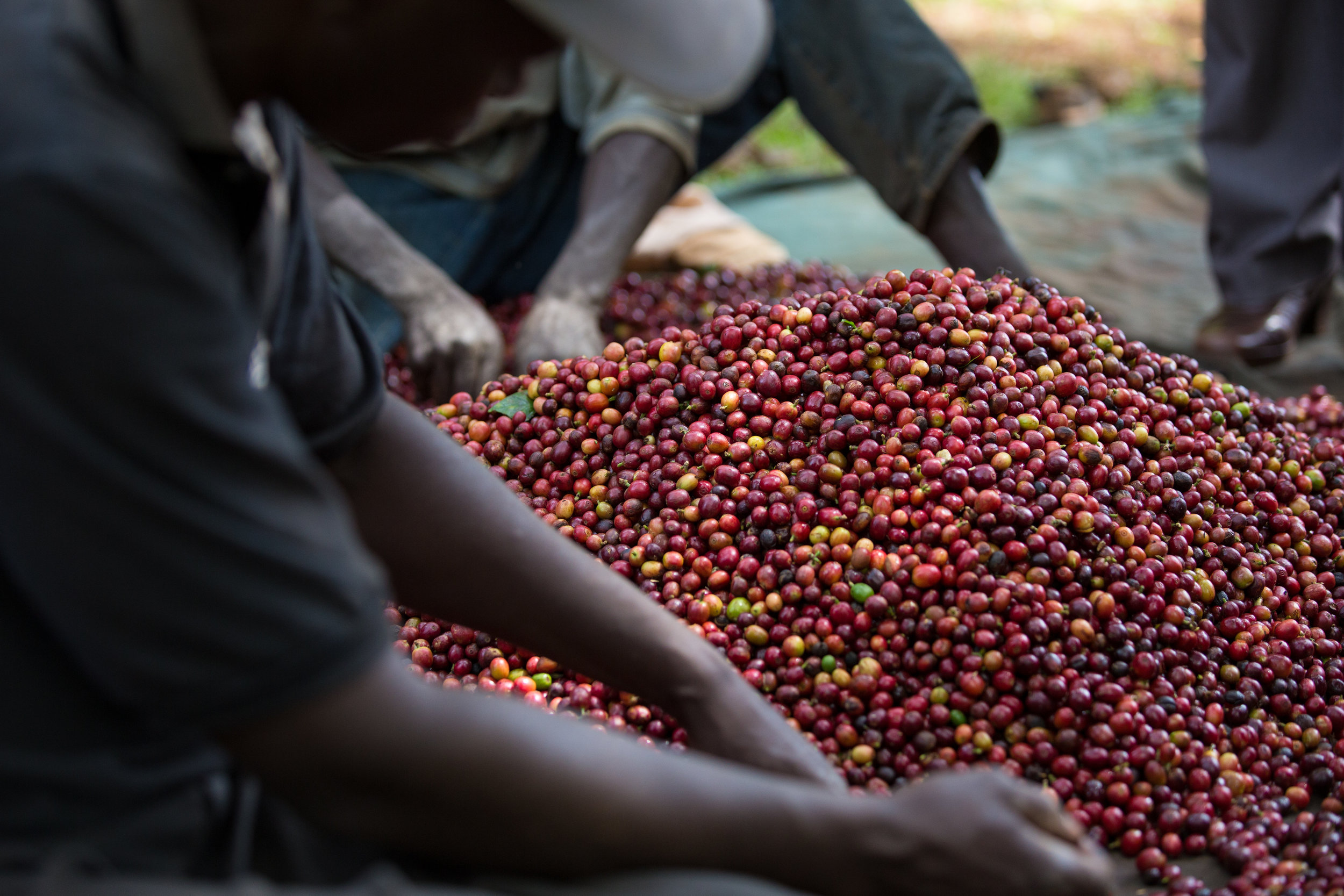
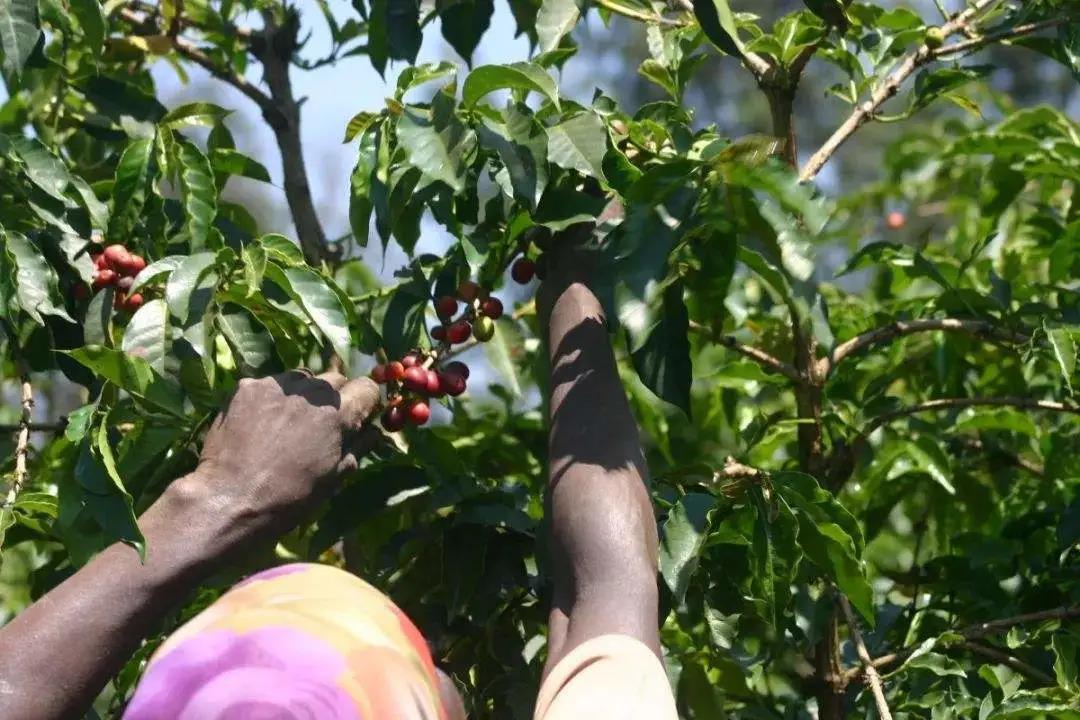
Most Kenyan coffee grows between 1500-2100 meters, and there are two harvests each year. According to FrontStreet Coffee, ensuring that only ripe berries are picked means workers must patrol the fields about 7 times. Kenyan coffee is grown by smallholders, who deliver their freshly harvested cherries to cooperative washing stations. The stations pass the washed and dried coffee on to the cooperatives in "parchment coffee" form, meaning the beans are still covered by the endocarp, the final state before hulling. All the coffee is pooled, and growers receive an average price based on actual quality. FrontStreet Coffee considers this trading method generally sound, and fair to both growers and consumers.

The main coffee varieties in Kenya are SL28, SL34, Batian, and Ruiru 11.
Entry-level drinkers may have heard of varieties such as Catuai, Catimor, Typica, and Bourbon, but what exactly are SL28 and SL34, and how do they differ from the common varieties? FrontStreet Coffee is here to explain.
SL stands for Scott Labs, or Scott Laboratories. In the 1930s, the Kenyan government commissioned Scott Laboratories to research coffee breeding and classification, looking for varieties that could adapt to Kenya's terroir, suit large-scale cultivation, and carry commercial value. SL-28 and SL-34 are two results of that work. The organization was active from the 1930s to the 1960s and no longer exists.
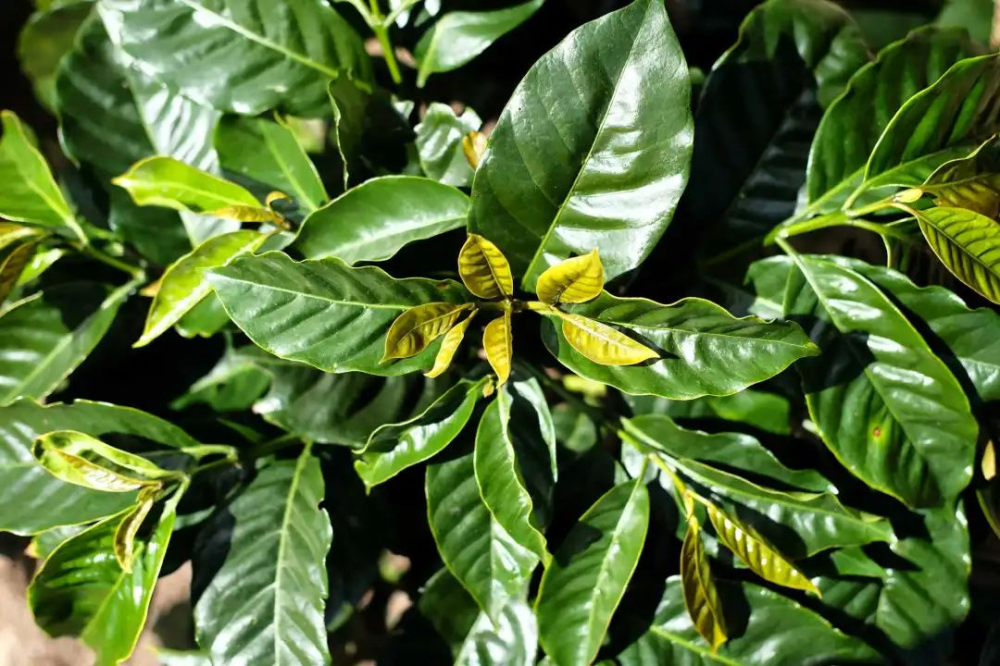
The SL series was researched and selected from ancient Yemen Mocha varieties and Bourbon from Réunion Island. They now account for the majority of Kenya's coffee production. Relatively speaking, SL-28 has earned the higher reputation, while SL-34 yields more and grows at slightly lower altitudes. According to botanists at the SL Laboratory, SL28 and SL34 are genetic variants. SL28, in particular, has mixed heritage from Mocha and Yemen Typica. The original goal in breeding SL28 was to produce large quantities of beans combining high quality with resistance to disease and pests.
Although SL28's yield later proved smaller than expected, its copper-colored leaves and broad, bean-shaped seeds deliver wonderful sweetness, balance, and complex, shifting flavors, along with pronounced citrus and black plum character, and it has been preserved to this day. SL34 shares a similar flavor to SL28, but beyond its complex, changing acidity and wonderful sweet finish, its mouthfeel is heavier, richer, and cleaner than SL28. SL34 carries Bourbon and more Typica heritage. Its beans look much like SL28, but the plant is more resilient, able to withstand sudden heavy rain, for example.
Ruiru appeared after SL28 and SL34. According to FrontStreet Coffee, it was in the 1970s that the Ruiru station began experimenting with different CBD- and rust-resistant varieties, producing Ruiru 11, released in the 1980s. High yield, plus CBD and rust resistance, looked like the answer to all of Kenya's production problems.

Batian, by contrast, was launched by the Coffee Research Institute, or CRI, on September 8, 2010, and is Kenya's newest variety. It is a further experiment drawing on lessons from Ruiru 11. Genetically, it is essentially selected from crosses of SL28 and SL34, and stands closer to SL28 than Ruiru 11 does. That eliminated the problematic Robusta element and improved cupping quality. Ruiru 11 and Batian beans therefore produce more each year than SL28 and SL34: their bushes can yield up to 40 kilograms of coffee per year, and these higher-yielding Kenyan plants are also more disease-resistant.
K72 Washed Processing Method
According to FrontStreet Coffee, Kenyan washed processing uses a repeating cycle of fermentation followed by washing. On harvest day, the highest-quality cherries are selected and depulped for fermentation, which lasts 12-24 hours. After 24 hours they are washed again with clean river water, then fermented once more in clean river water for 24-48 hours and washed again, repeating the cycle twice to reach 72 hours. Hence the name Kenyan 72-hour fermentation washed processing, or K72. This method lets the beans ferment for a long time at low temperatures, giving them a brighter, cleaner, yet fuller flavor.

Of course, the quality of Kenyan coffee also depends on high-quality cherries, which are graded too. They are classified by bean size and cupping results. By size, shape, and hardness, the grades run from highest to lowest as AA, AB, PB, C, E, TT, and T. For AA and AB green beans, an additional grading based on cupping results was introduced, not officially recognized by the Kenyan government but established by exporters, running from highest to lowest as TOP, PLUS (+), and FAQ. Beyond the most common AA and AB grades, drinkers often see "AA+" and "AA++," which have larger grain sizes but in fact all belong to the AA category.
Kenyan Coffee Growing Regions
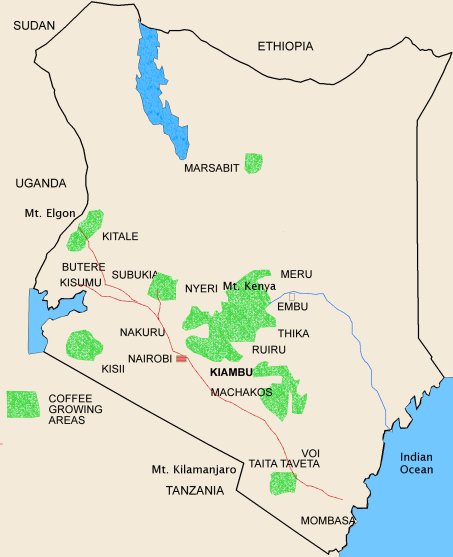
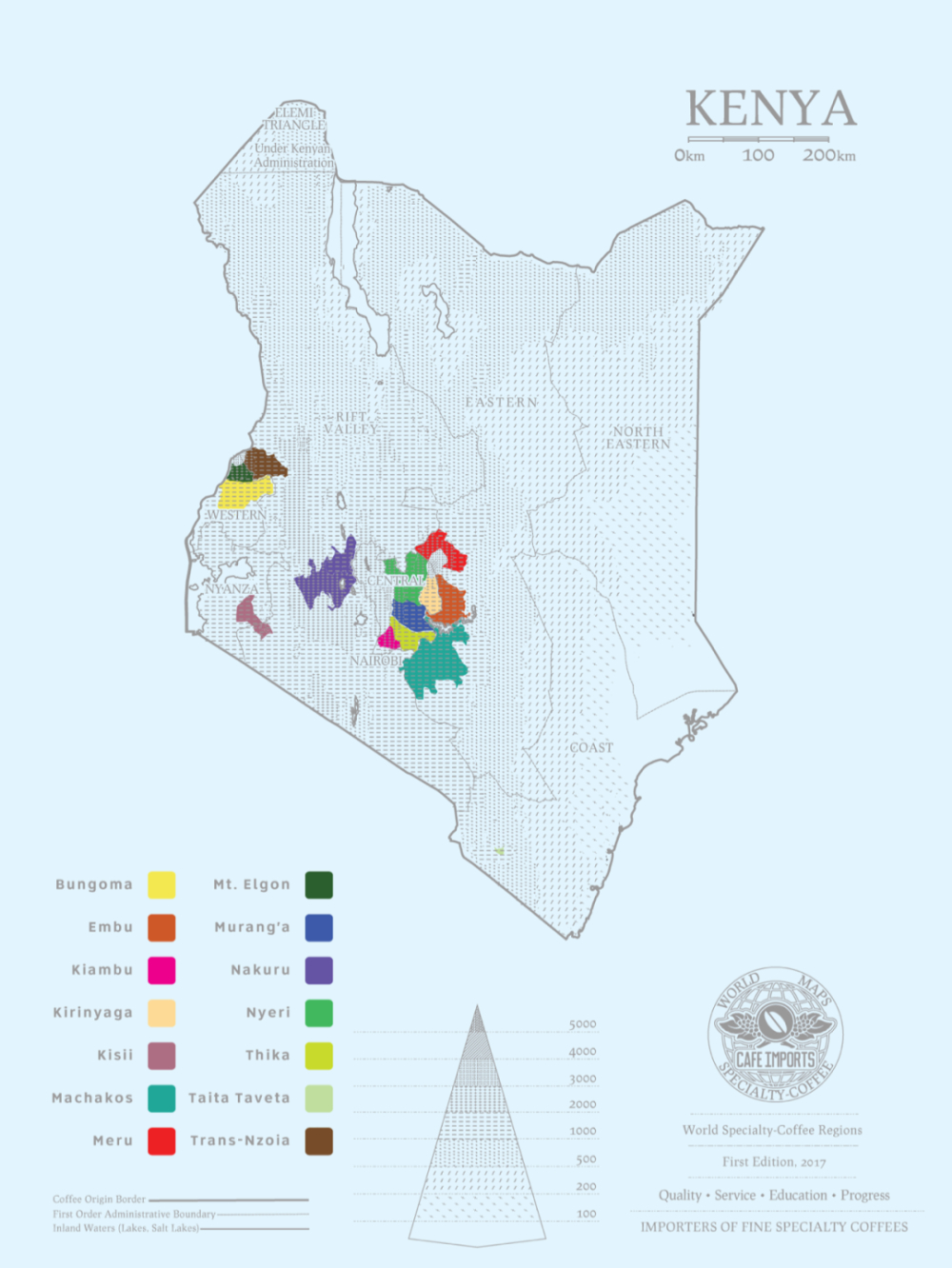
According to FrontStreet Coffee, Kenya's coffee growing regions are best known for six major areas: Thika, Kirinyaga, Mt. Kenya West, Nyeri, Kiambu, and Muranga.
Kiambu Region
The Kiambu region, in the central part of the country, lies within Kenya's central coffee-growing zone. This is a traditional tea-growing area, but it also holds the highest-altitude coffee plots in the region. It takes its name from the town at its center. Coffee production here is relatively small, split between estates and smallholders, and there are two harvest seasons. FrontStreet Coffee finds the flavor of this region, too, is the bright acidity and rich body most people love.
Altitude: 1850~2200 meters
Varieties: SL-28, SL-34, Ruiru 11, Batian
Thika Region
Thika is a small town near Nairobi, Kenya's capital. Coffee fields are common around Nairobi, and Thika is an industrial town surrounded by farmland and waterfalls. The area has about 2000 farmers. Through cupping, FrontStreet Coffee has found that coffee from this region has bright fruit acidity, a thick berry-juice sensation, and honey-like sweetness.
Altitude: 1550~1750 meters
Varieties: SL-28, SL-34

Kirinyaga Region
Kirinyaga sits on the slopes of Mount Kenya, next to the Nyeri region, and is famous worldwide for coffee with strong flavor, rich layers, and a solid mouthfeel. Together with Nyeri, it is recognized as one of Kenya's two best current regions.
Most producers here are smallholder farmers who have joined cooperatives. The cooperatives play an integrating role, providing washing stations where members deliver their cherries for processing. Altitude: 1300 to 1900 meters. Harvest period: October to December (main season), June to August (secondary season). Through cupping, FrontStreet Coffee has found this region's coffee primarily features berry flavors, moderate sweetness, honey, and cream.
Altitude: 1300~1900 meters
Varieties: SL-28, SL-34, Ruiru 11, Batian
Nyeri Region
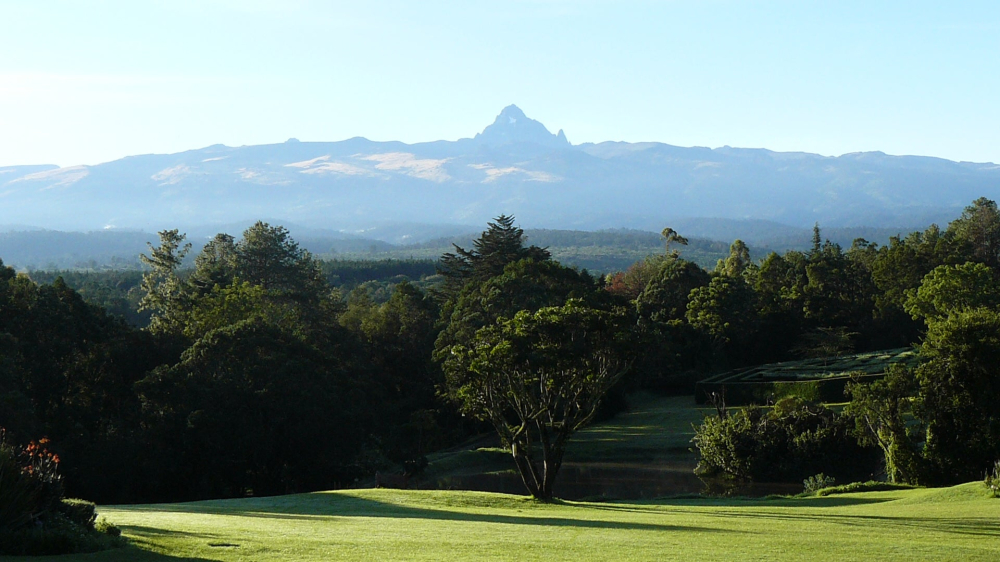
Nyeri lies in the high mountainous area near Mount Kenya and is an important specialty coffee region, with an average altitude above 1500 meters. Many of Kenya's finest coffees come from this area. Nyeri has ample altitude and sits east of the Aberdare Mountains, on the promontory between Mount Kenya and Ben Mountain. Its high terrain and fertile soil have made Nyeri a key town in central Kenya's coffee industry, with relatively well-developed coffee infrastructure. The region's high-altitude Kenyan beans are renowned and of quite high quality. Through cupping, FrontStreet Coffee has found that beans from here show dark berry flavors, a bright and sweet black plum character, and a delicate aftertaste.
Altitude: 1200~2300 meters
Varieties: SL-28, SL-34, Ruiru 11, Batian
Mt. Kenya West Region
The Mt. Kenya West region includes Kisii and the Bungoma area of Mount Elgon. Kisii lies in southwestern Kenya, not far from Lake Victoria, and is a relatively small producing area where most beans come from a joint cooperative of independent smallholders. The coffee flavor here differs noticeably from the central region. According to FrontStreet Coffee's cupping, this region shows roasted nuts and soft fruit acidity, widely favored by buyers who dislike bright acidity.
Altitude: 1450~1800 meters
Varieties: SL-28, SL-34
Muranga Region
The Muranga region belongs to the Central Province and has about 100,000 coffee farmers. This inland area was one of the first settlements chosen by missionaries, because the Portuguese barred them from living in coastal areas. It is another region that benefits from volcanic soil, with more smallholders than estates. According to FrontStreet Coffee's cupping, coffee from this region has bright acidity and a thick, juicy texture.
Altitude: 1350~1950 meters
Varieties: SL-28, SL-34, Ruiru 11, Batian
FrontStreet Coffee currently carries two coffees from the Thika and Kiambu regions. Let us recommend them to all coffee enthusiasts.
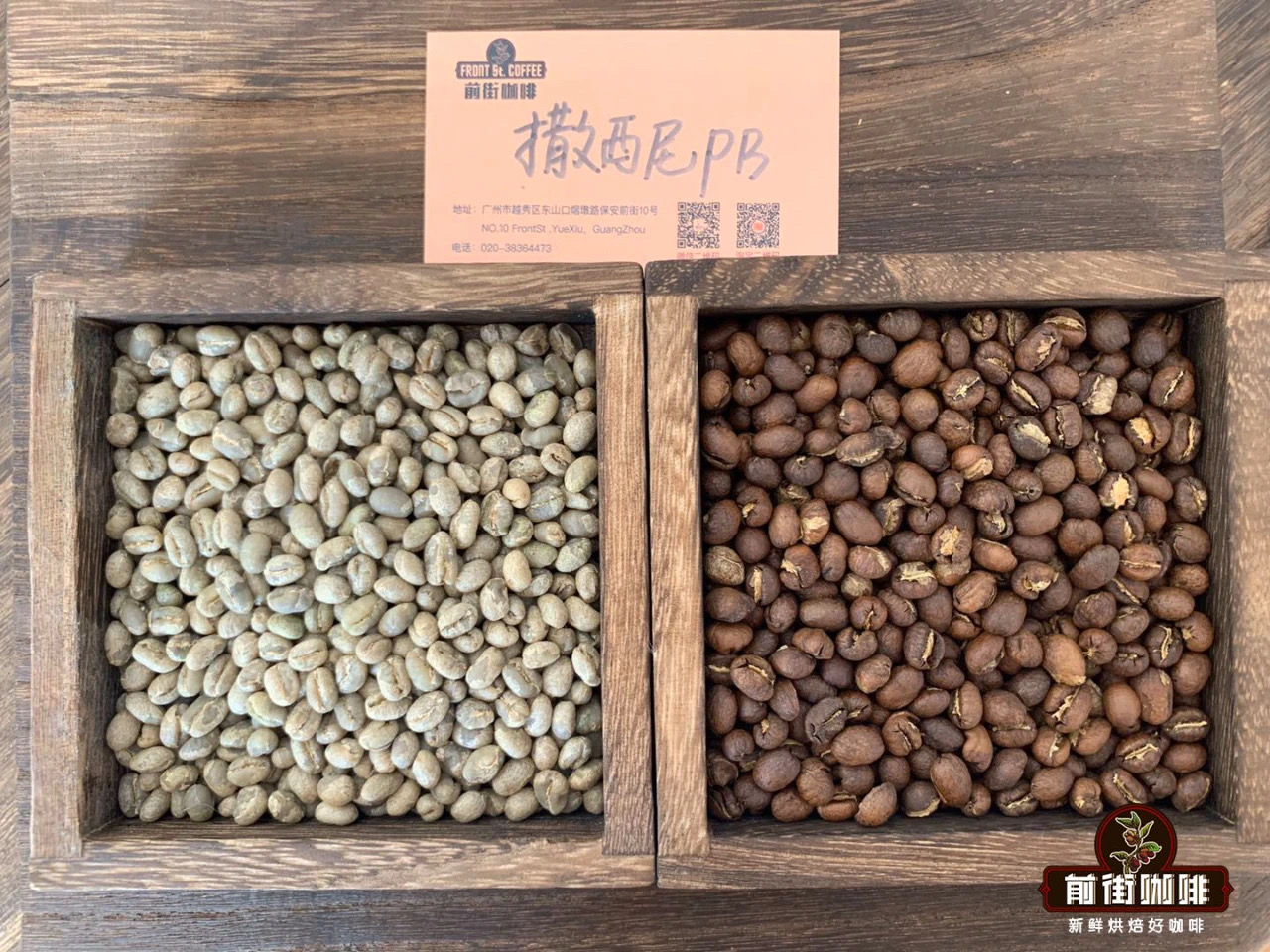
FrontStreet Coffee: Kenya Sasioni Estate PB Coffee Beans
Country: Kenya
Region: Sasioni Estate
Altitude: 1680m
Varieties: SL28, SL34, Ruiru 11
Processing: 72-hour washed processing
Flavor: Tomato, fruit, berries
Sasioni Estate is located in the Kiambu area around Mount Kenya, at an altitude of about 1680 meters. The scenery is beautiful, the climate pleasant, sunlight ample, and the soil conditions superior: fertile acidic red soil with a loose texture, deep layers, good drainage, and a pH between 5.5-6.5. According to FrontStreet Coffee, Sasioni Limited was originally established in 1952 and was one of the first coffee and tea companies founded after Kenya's independence. It has obtained multiple certifications, including UTZ, Rainforest Alliance, and the Kenya Bureau of Standards Diamond mark.
FrontStreet Coffee also holds that good Kenyan coffee has bright fruit acidity and emits an intoxicating fruity sweetness. The sweet-and-sour range is wide, the aftertaste refreshing and sweet, with hints of blackcurrant.
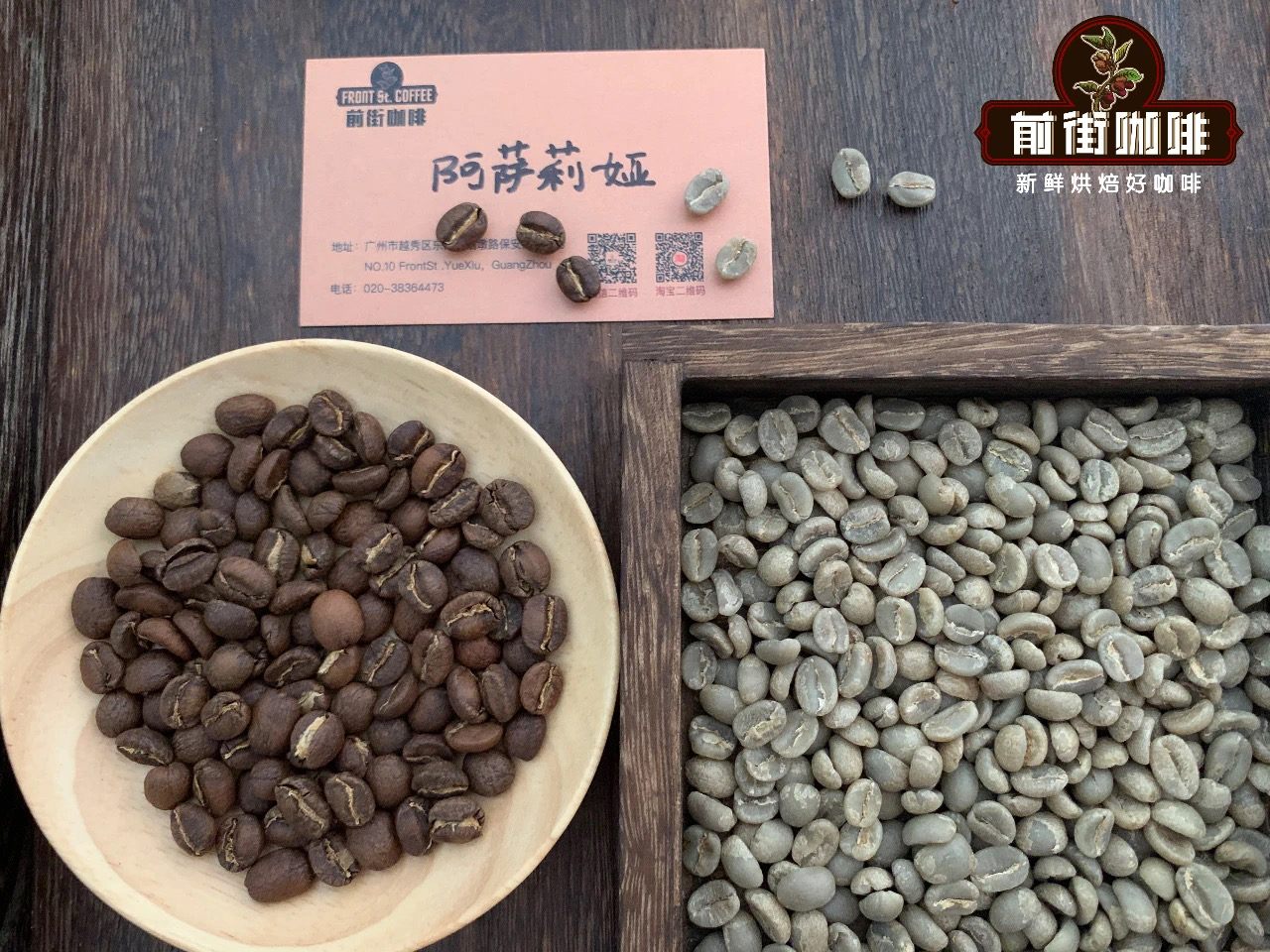
FrontStreet Coffee: Kenya Asalia Coffee Beans
Country: Kenya
Region: Asali (Honey Processing Station)
Altitude: 1550-1750m
Varieties: SL28, SL34
Processing: 72-hour washed processing
Flavor: Snow pear, black plum, brown sugar, cherry tomato, plum
This washed Kenyan from FrontStreet Coffee has dark berry tones and rich fruit flavors, with a taste close to the general impression of Kenya. This Asalia is made up of the SL-28 and SL-34 varieties described above, and the Bourbon variants SL-28 and SL-34 have long been consistent winners in expert cuppings at the Nairobi auction.
Those are all the Kenyan coffees currently available at FrontStreet Coffee, and we hope every coffee enthusiast now has a clearer understanding of Kenyan coffee.
FrontStreet Coffee Recommendation
The washing stations and K72 fermentation described above are what give Kenyan coffee its clarity, and FrontStreet Coffee's Kenya Cherry Tomato is a direct expression of that method. It comes from the Thika region at 1550-1750 meters, where SL28 and SL34 are grown, and it undergoes the classic Kenyan double wash with a 72-hour fermentation. Roasted light to preserve the lively acidity, it opens with dried cherry tomato and floral notes on the dry aroma, then a clear cherry tomato and smoked plum character in the cup, bright and solid, with snow pear and black plum through the middle, brown sugar sweetness and a faint green tea note in a clean, lingering finish.
Two other washed coffees at FrontStreet Coffee show how far the same discipline can travel. The Yirgacheffe Gedeb Cooperative from Ethiopia takes washed processing to its most elegant conclusion: jasmine and bright citrus acidity, then green tea and honey after a medium-light roast, a profile that shines in a pour-over, a cold brew, or an espresso. The Jamaica Blue Mountain No. 1 comes from the Clifton Mount Estate and is fully washed as well, a method that keeps the beans translucent and the defect rate low. Cupped, it shows hazelnut, cream, chocolate, and caramel, balanced so evenly that no single note dominates.
Important Notice :
FrontStreet Coffee is a long-established specialty coffee roaster in Guangzhou China, selling freshly roasted beans from its own farm in Yunnan as well as dozens of carefully selected single-origin beans from around the world for both pour-over and espresso. The products deliver consistently excellent quality and great value, with shipping within 24 hours. Guangzhou's FrontStreet Coffee shop is recommended by many coffee lovers, and the beans are now available online at the Tmall 。
FrontStreet Coffee has moved to a new address:
FrontStreet Coffee Address: 315,Donghua East Road,GuangZhou
Tel:020 38364473
 Scan and follow the En Gafei WeChat official account. Please indicate that the reprint comes from "En Gafei".