FrontStreet Coffee Bean Exploration: Special Report on Colombian Pink Bourbon
FrontStreet Coffee · Colombia · Pink Bourbon
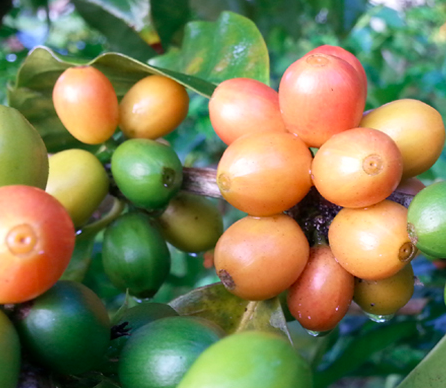
Country: Colombia
Region: Cauca
Estate: Finca El Paraiso
Variety: Pink Bourbon
Processing: Washed
Altitude: 1930 meters
Cauca, Colombia
Colombia is the world's third-largest coffee producer today, trailing only Brazil and Vietnam. Commercial coffee cultivation took root in the 1830s, and by the twentieth century coffee had grown into the country's biggest agricultural export. The landscape helps explain why: rugged mountains threaded with varied tropical microclimates make near-ideal growing conditions. Roughly seventy-five percent of the crop is sold abroad, and coffee remains the single most important source of foreign exchange.

Colombia's key coffee regions include: Huila (San Augustin), Narino, Tolima, Popayan (Cauca), Valle de Cauca, Meta, Antioquia (Medellin), Magdelena (Sierra Nevada), Boyaca, and Santander (Bucaramanga).
Cauca carries an official origin designation. Average altitude sits at 1,758 meters, climbing to 2,100 meters at the highest points, and the interplay of topography, rainfall, temperature, and volcanic soil gives coffee everything it needs. Eighty percent of the department is mountainous, its parallel ranges in the east and center forming part of the Andes system, with two main volcanoes — Sotara and Petacas — anchoring the central cordillera. Like other southwestern regions, Cauca has a distinctly monomodal rainfall pattern: the dry season falls mainly in August and September each year, the rains that follow trigger a tight, concentrated flowering, and a correspondingly concentrated harvest arrives the next year.
The Estate
Diego Bermudez is a young producer from Bolivar, Cauca. He finished his studies in agricultural business management in 2006 and went straight into coffee, deciding from day one to build a specialty operation and putting everything he'd learned at university to work in the field. Since then he has entered a string of quality competitions — and consistently placed near the top.
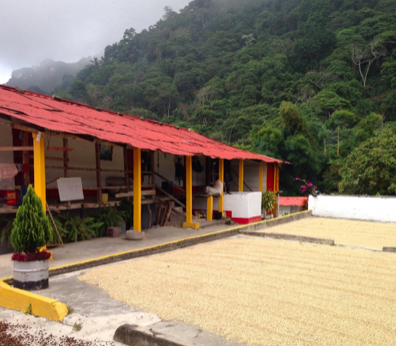
Finca El Paraiso enjoys a mild, humid climate with winds sweeping in regularly from the Pacific — conditions that feed the tropical fruit aromatics in its coffee.
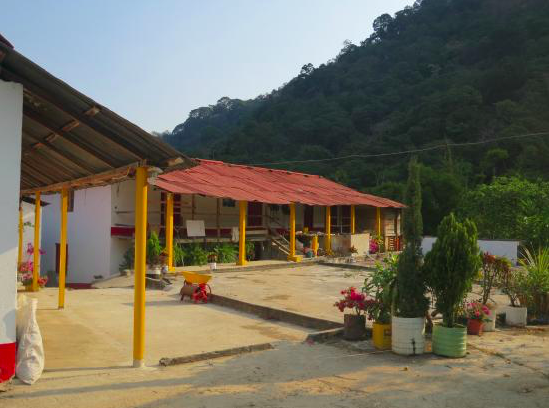
The cherries here ripen slowly and pile up sugar, which translates directly into cup quality. To keep that quality consistent, the estate relies on mechanical, sustainable processing.
Processing Method
FrontStreet Coffee's Finca El Paraiso Pink Bourbon is fully washed.
Selecting coffee cherries —— Removing pulp —— Fermentation —— Washing —— Drying —— Hulling
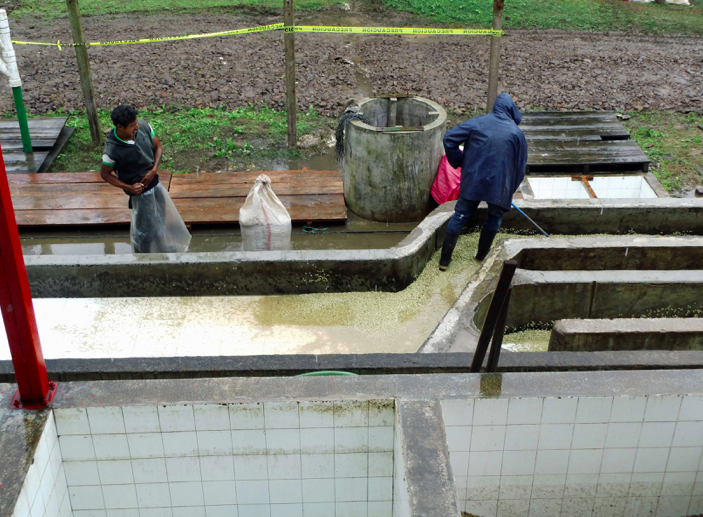
The sorted cherries go into the pulper, which strips off most of the skin and fruit. The beans, still coated in sticky mucilage, then ferment underwater for roughly 24 hours. After fermentation, the parchment coffee is rinsed clean in flowing water channels, then sun-dried or machine-dried until moisture falls to around 12%. The final step is hulling — removing the parchment to reveal the green bean.
Reading the Green Bean
Pink Bourbon does exactly what its name promises: ripe cherries in a romantic shade of pink. It's a genuinely rare new variety, bred from a cross between Red Bourbon and Yellow Bourbon. What makes it so rare is that holding onto that delicate pink color is brutally hard. Harvests sometimes turn up orange Bourbon cherries, because the fruit's final color is governed by recessive genes carried in the pollen. The pollen selected for the hybridization carries both yellow-leaning genes from Yellow Bourbon and red-leaning genes from Red Bourbon — all recessive, and all prone to interfering with one another.
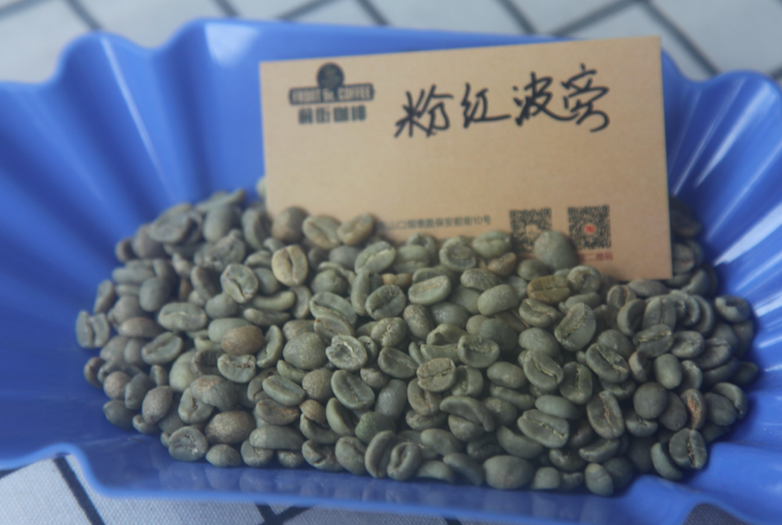
Look at the green beans and you'll notice oval shapes at a relatively large size, though sizing runs uneven. The silver skin clinging to the surface leans yellow with hints of orange, the bean itself a bluish-green veering gray. The dry aroma is grassy, with a whisper of citrus underneath.
Roasting Notes
Roasting machine: Yangjia 800N (500g batch size)
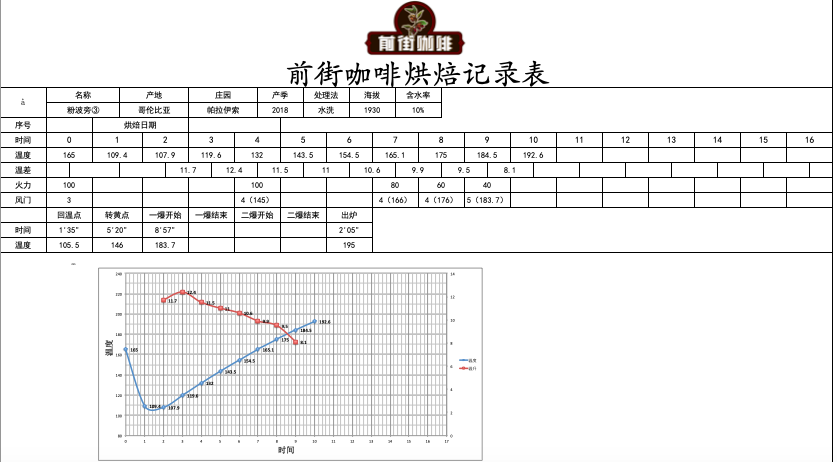
Preheat to 165°C and charge the beans. Set the air damper to 3 and heat to 100. The turning point arrives at 1'35" with the probe reading 145°C — hold the heat there and open the damper to 4. By now the beans have yellowed and the grassy aromas have burned off completely: the drying phase is done. Drop the heat to 80 at 166°C, then to 60 at 176°C, leaving the damper untouched.
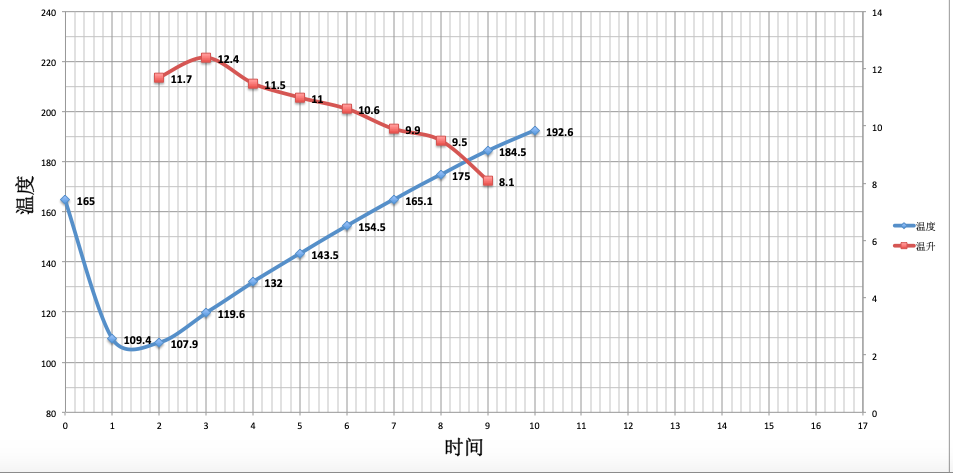
At 7'50", wrinkles and the occasional dark spot show on the bean surface, and the toast-like aroma gives way unmistakably to coffee — the overture to first crack. Now listen closely. First crack opens at 8'57"; cut the heat to 40 and raise the damper to 5 (ease the heat down gently — drop it too far and the cracks will stall). Develop for 2'05" past first crack and drop the batch at 195°C.
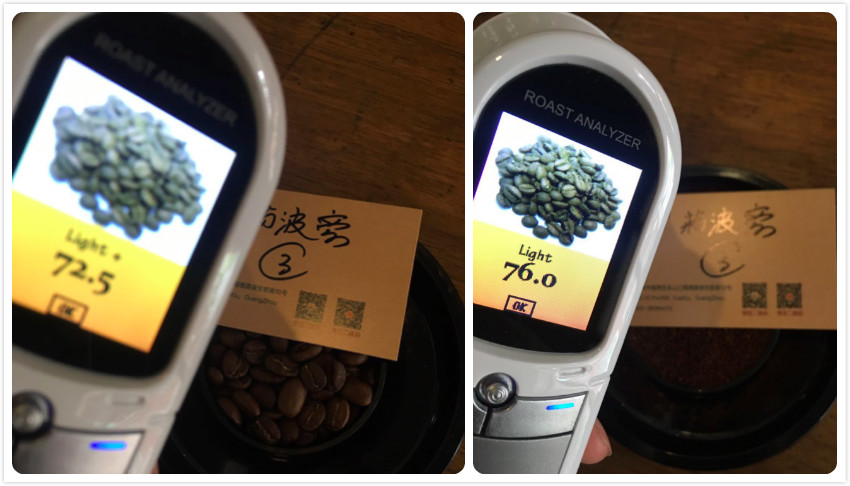
Agtron bean reading: 72.5 (left image); Agtron grounds reading: 76 (right image); roast delta: 3.5.
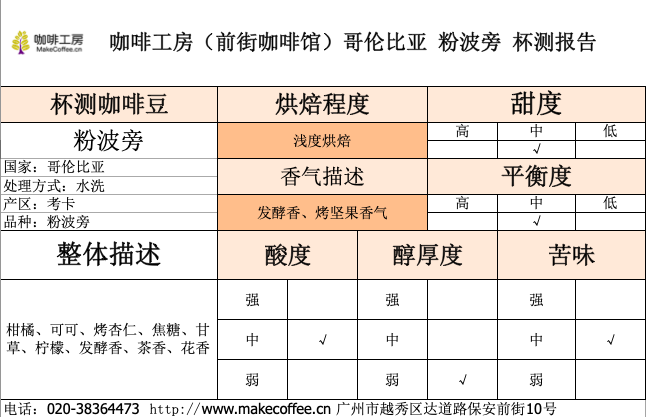
Cupping notes: citrus, cocoa, roasted almonds, caramel, licorice, lemon, fermented notes, tea aroma, florals
1. Flavor perception varies from person to person and shifts with water temperature and brewing method. This cupping report reflects a single setup and a fixed set of parameters, with descriptions bounded by the flavor wheel — treat it as a reference, not a verdict.
2. This content is updated as new information comes in; the latest version always prevails.
Brewing Recommendations
Recommended method: pour-over
1. Dripper: V60
2. Water temperature: 88-90°C
3. Grind size: medium-fine (BG 5R: 58% pass rate through a China standard #20 sieve) — think granulated sugar
4. Coffee-to-water ratio: 1:15
Technique: start with 15g of coffee. Pour 30g of water and bloom for 30 seconds. Pour up to 118g, then pause. Once the bed is just about to peek through the water, resume and pour to 227g, then stop. When the bed threatens to break the surface again, lift out the dripper. Total extraction time: 2 minutes.
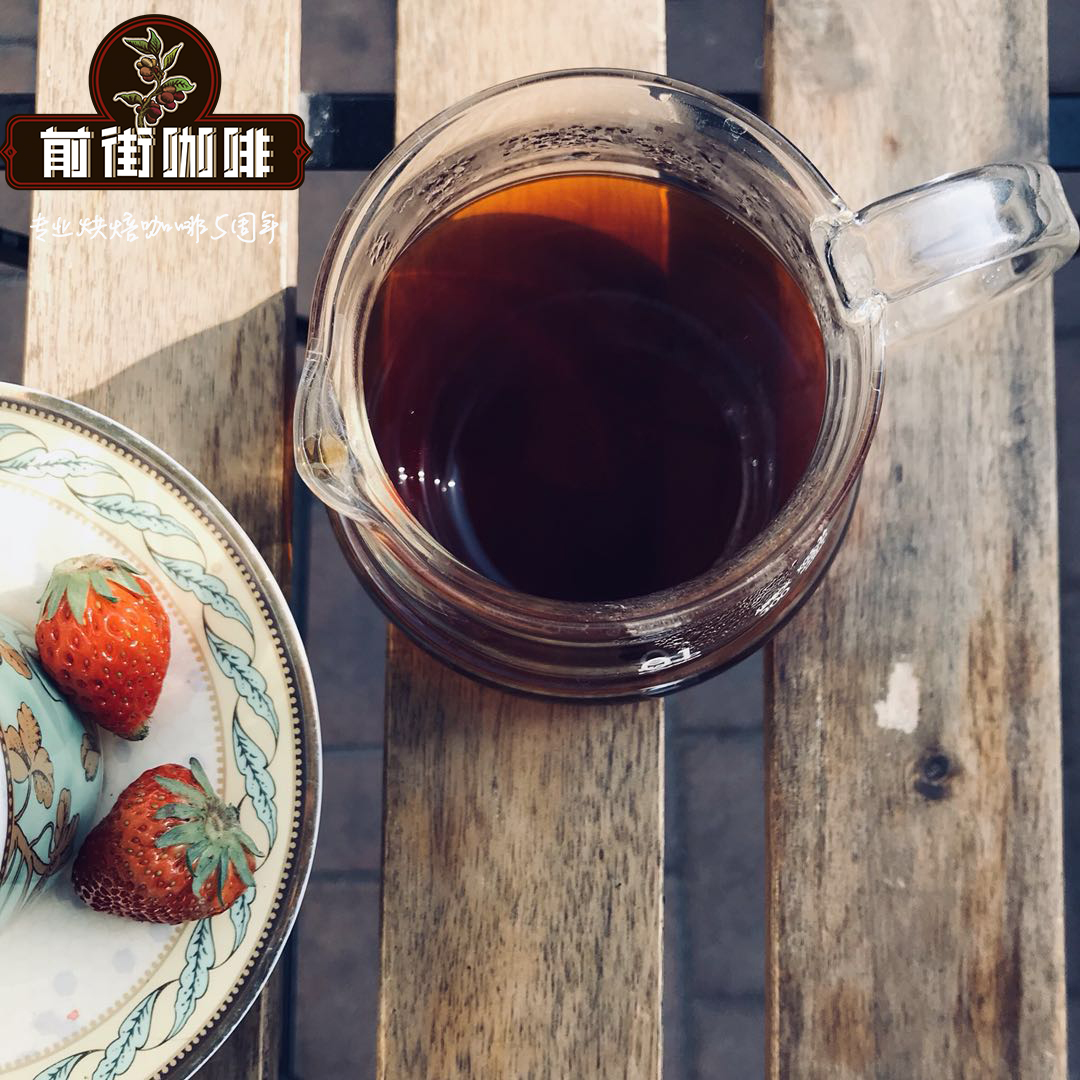
[FrontStreet Coffee Colombia Finca El Paraiso Pink Bourbon]
Flavor: clean and balanced overall, light and silky on the palate, with peach, plum, grapefruit, cream, roasted almonds, and cocoa, closing on a long-lingering tea and floral aroma.
FrontStreet Coffee Recommendation
Craving more after this pink-hued rarity? FrontStreet Coffee's Brazil Cerrado Red Bourbon is an easy next step — a genuinely classic Brazilian single origin from Cerrado, a region renowned for quality. At a medium roast it opens up rich aromas of buttery peanut, toast, caramel, and hazelnut, with a rounded palate, no acidity, and just a trace of pleasant bitterness. It shines as a pour-over but is equally at home in a moka pot, as an espresso SOE, or through a siphon or French press.
And if you'd like to taste what Brazil can do at its most refined, FrontStreet Coffee's Brazil Queen Estate Yellow Bourbon — grown in Mogiana near southern Minas on fertile red volcanic soil — is a rare Yellow Bourbon whose fruit character is remarkably clean, delivering a sugarcane sweetness you won't find from other origins, alongside gentle fruit and chocolate notes.
Important Notice :
FrontStreet Coffee is a long-established specialty coffee roaster in Guangzhou China, selling freshly roasted beans from its own farm in Yunnan as well as dozens of carefully selected single-origin beans from around the world for both pour-over and espresso. The products deliver consistently excellent quality and great value, with shipping within 24 hours. Guangzhou's FrontStreet Coffee shop is recommended by many coffee lovers, and the beans are now available online at the Tmall 。
FrontStreet Coffee has moved to a new address:
FrontStreet Coffee Address: 315,Donghua East Road,GuangZhou
Tel:020 38364473
 Scan and follow the En Gafei WeChat official account. Please indicate that the reprint comes from "En Gafei".