Where Are the Main Coffee Growing Regions in China? Flavor Characteristics of Yunnan Coffee Beans
The cultivation of Yunnan coffee beans has a surprisingly long history. In the 30th year of the Guangxu reign (1904 AD), the French missionary Alfred Dédelé was sent to Yunnan to preach. His destination was a remote village, Zhukula Village, in Binchuan County, Dali City, Yunnan Province.
The name Zhukula comes from the language of the local Yi people. Translated, it means something close to "bend around," describing how difficult and winding the local roads once were. Zhukula has therefore been a remote, poor mountain village since ancient times.
Because transportation was so inconvenient at the time, and to make coffee available for himself and other missionaries, Alfred Dédelé planted coffee trees in the corner of the church wall after it was built. This was the first coffee tree in Zhukula Village with historical evidence.
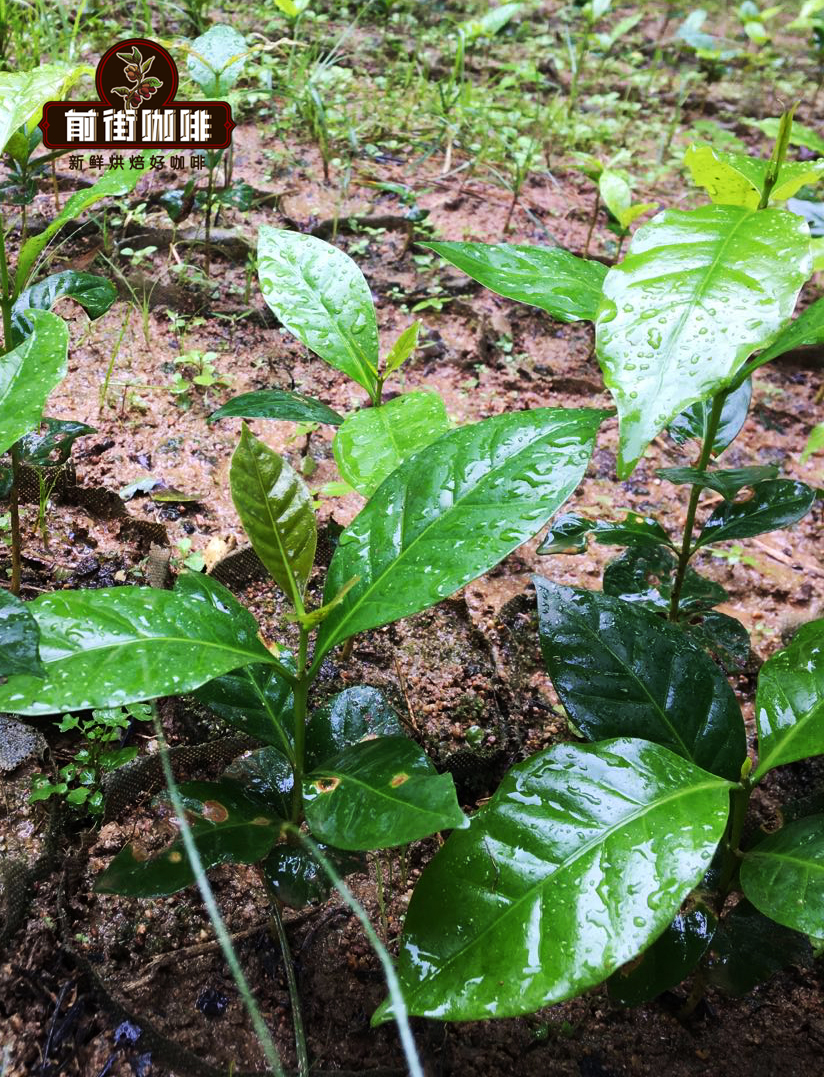
Major Coffee Growing Regions in China
Coffee beans generally grow best between the Tropics of Cancer and Capricorn, the so-called "coffee belt." The western and southern parts of Yunnan Province happen to lie between 15°N latitude and the Tropic of Cancer. At the same time, most areas have the high altitude coffee requires, with mountainous, sloping terrain, large undulations, fertile soil, sufficient sunlight, abundant rainfall, and significant day-night temperature differences.
The flavor of coffee beans is mainly affected by three factors: origin, variety, and processing method.
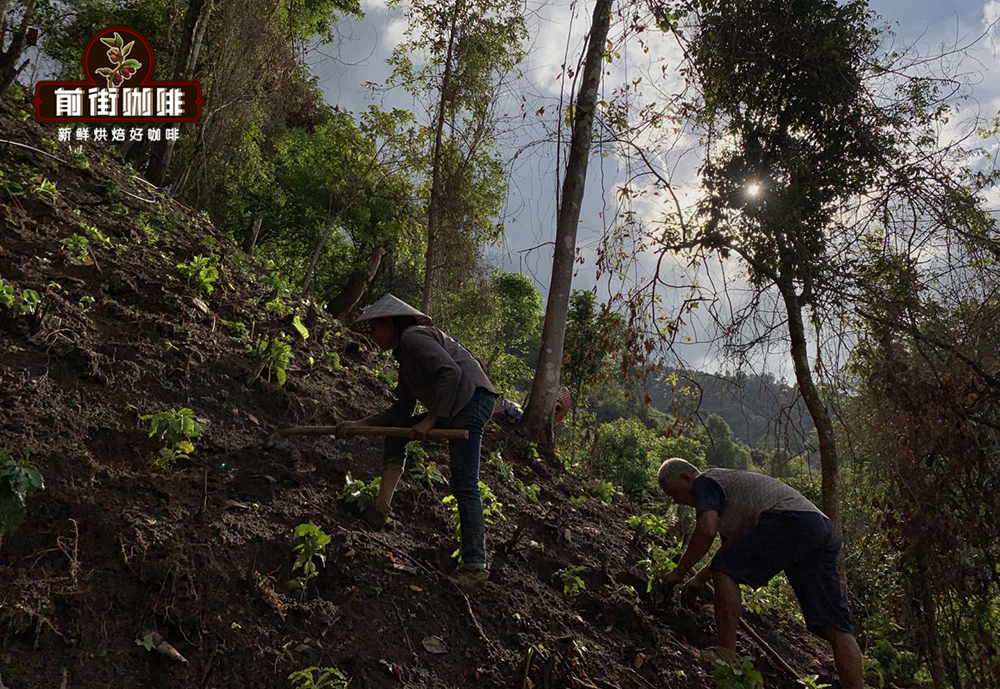
FrontStreet Coffee - Coffee Bean Processing Methods Introduction
Coffee is an agricultural crop. The beans we usually see are the seed part of the coffee, and processing methods refer to how the beans are extracted from the coffee fruit.
Natural Processing Method
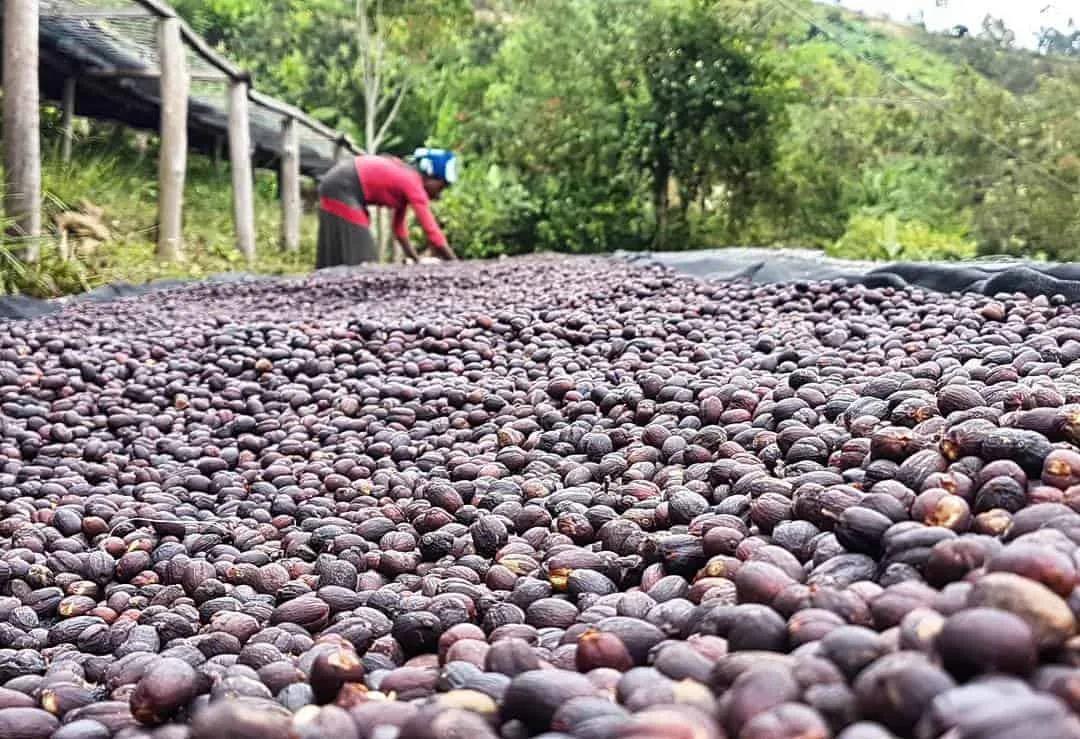
As the oldest processing method, it can be summed up in four words: "dry and peel." Achieving high-quality natural processing, however, is not as easy as it sounds.
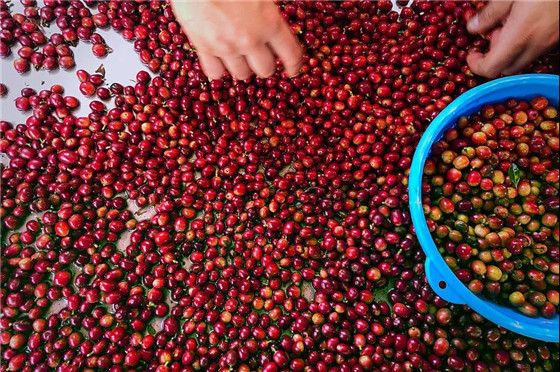
Coffee fruits must be processed immediately after harvesting, starting with screening. Float selection is one of the most common screening methods. After screening, the fruits are dried naturally under the sun.
The drying time for natural processing depends on the weather and generally lasts up to four weeks. The completion sign is when the coffee's moisture content falls to about 11%. Machines are then used to remove the dried pulp, peel, and mucilage.
Washed Processing Method
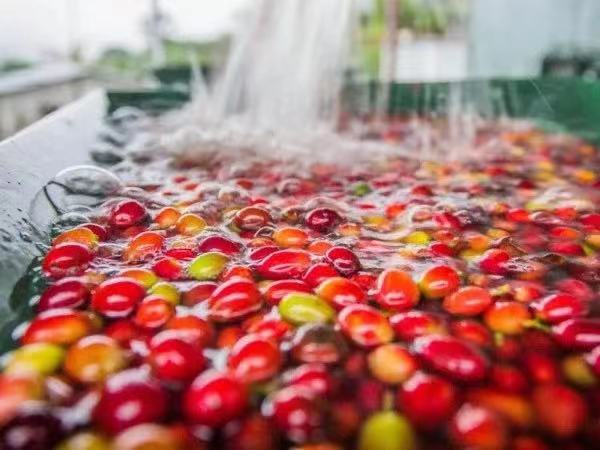
Because coffee cultivation in Ethiopia sits at high average altitudes with scarce water, the earliest and most traditional processing method there was natural processing. But as the steps were rough, the coffee's flavor was too concentrated and not very clean.
In 1972, Yirgacheffe introduced washed processing from Central and South America to improve coffee quality. Subsequently, the jasmine flower aroma and the lemon and citrus notes of washed Yirgacheffe beans became representatives of African specialty coffee and gained popularity in Europe and America. Washed processing gradually became the mainstream in the Yirgacheffe region.
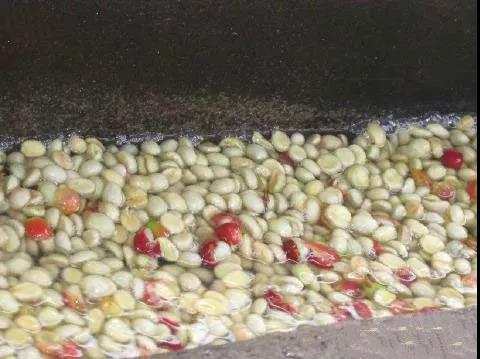
After harvesting, coffee fruits are sent immediately to washing stations for processing.
First, the fruits undergo float selection in water to pick out those with sufficient density and better quality. Machines then remove the peel and pulp. At this point the beans are still wrapped in a sticky mucilage layer. The station places the beans in fermentation tanks so that microorganisms can break down the mucilage; fermentation ranges from 24 to 48 hours. Afterward, the beans are repeatedly washed with clean water to remove the decomposed mucilage and any residual pulp.
Finally, the washed beans are sent for drying. Unlike natural processing, which keeps all the pulp and mucilage, washed processing removes pulp, peel, and mucilage, so the moisture content is much lower. Drying time can therefore be cut by more than half; depending on the weather, it is generally about two weeks.
FrontStreet Coffee - Yunnan Coffee Estate Coffee Bean Introduction
FrontStreet Coffee's bean list has long included a Yunnan washed Typica Huaguoshan coffee. In the 2021 Yunnan new-harvest season, FrontStreet Coffee processed a small batch of Yunnan natural Typica beans. Because the quantity was limited, FrontStreet Coffee included them in promotions as "limited gifts" for everyone to try.
FrontStreet Coffee's baristas also frequently share this house natural Typica bean as a tasting sample for different customers in the store.
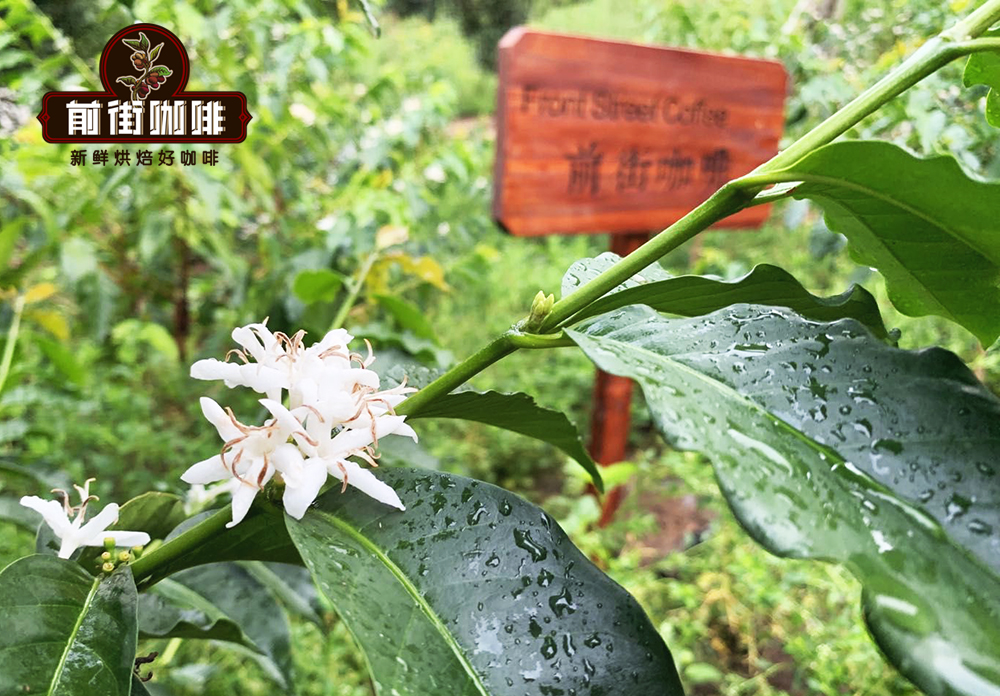
FrontStreet Coffee - Yunnan Coffee Estate
Yunnan coffee today offers more choices in processing methods. In the details alone, various methods can evolve, such as adding steps during anaerobic fermentation.
We would describe washed beans as having a cleaner taste, while naturally processed beans carry more fruit flavors.
FrontStreet Coffee's baristas believe that the traditional processing methods, washed and natural, best express the most fundamental flavors of a producing country and region. That is why FrontStreet Coffee's bean list carries many washed beans, such as those from Ethiopia, Panama, and Colombia.
China Coffee Growing Region - Yunnan Baoshan
Yunnan Baoshan lies on a low-latitude plateau. Its special geographical location creates a three-dimensional climate of "four seasons in one mountain, different weather within ten miles," which suits coffee cultivation particularly well. The coffee grown at the highest altitude here can be comparable in quality to Jamaican Blue Mountain, and the world's most expensive civet coffee is also produced here.
As early as 1952, Baoshan began large-scale coffee cultivation, and it now has a history of more than 60 years. The region has 5,000 mu of coffee gardens, making it the best coffee-growing region in Asia. Data shows that in 2017 China's coffee export volume was 104,900 tons, with an export value of $646 million.
Yunnan Province's coffee production reached 136,000 tons, accounting for over 95% of the country's total, and its export volume ranked highest in the country at 60,700 tons. The coffee industry is also the most developed and mature market-economy industry among China's leading industries. To develop it further, Baoshan has made various attempts, including launching the Yunnan Baoshan Coffee World Project.
Baoshan also has a long history of coffee cultivation and is recognized as one of the best Arabica producing areas, making it one of the better coffee regions in the country and even globally.
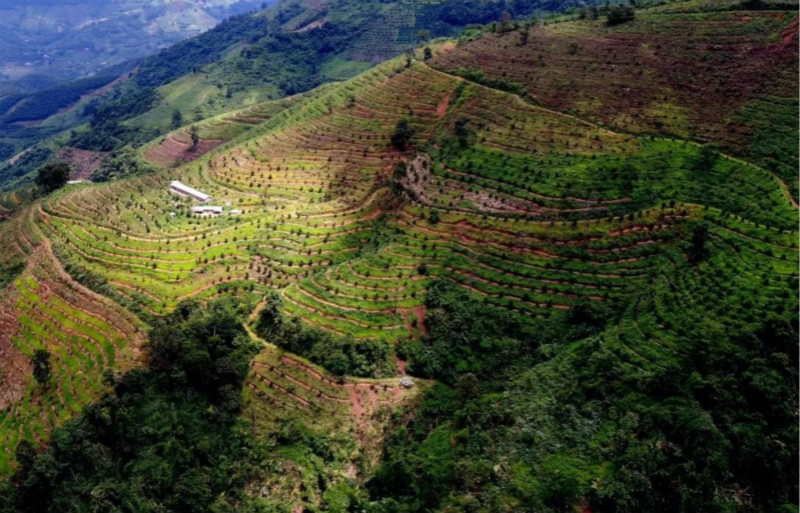
However, because Typica yields very little, only one-third of Catimor's yield, it is more expensive. Typica and Bourbon are also very susceptible to leaf rust, one reason farmers are reluctant to grow Arabica.
Typica and Bourbon have low yields and are susceptible to disease, with high maintenance costs and longer exploration times, to say nothing of whether unique flavors can be developed. On one hand, coffee farmers do not yet have specialty coffee awareness; on the other, even if they do, cutting down old trees and spending years replanting is something farmers would certainly avoid.
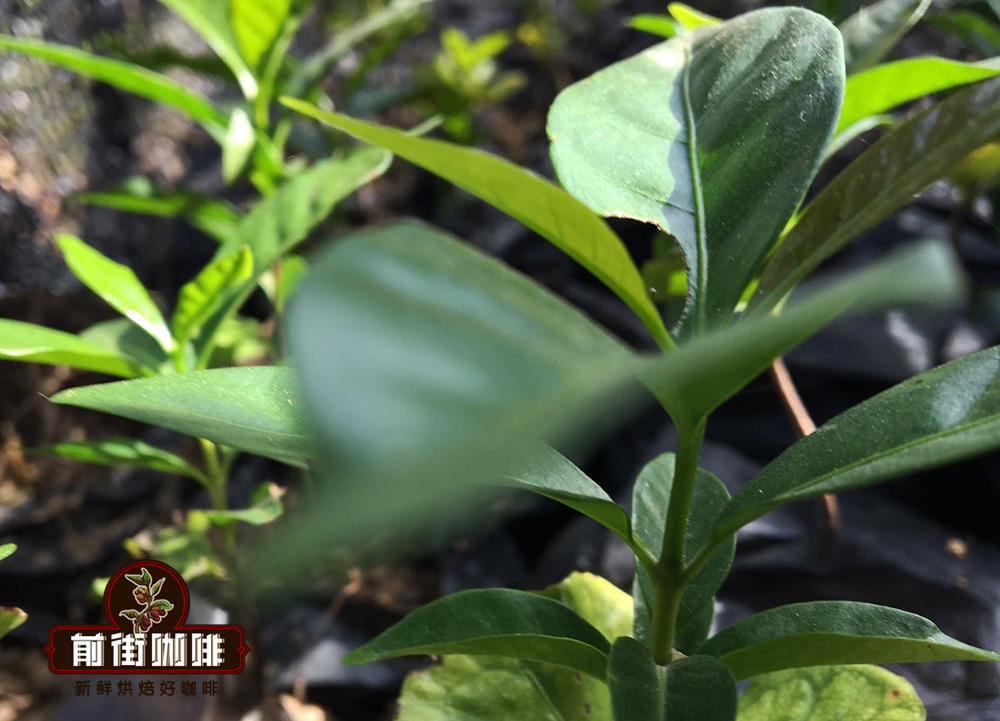
Until a few years ago, one of the major reasons Yunnan coffee couldn't become specialty coffee was that Catimor was too cheap, selling as bulk commodity at about 15-20 RMB per KG. That price could not cover cultivation costs such as labor and fertilizer, so farmers were unwilling to take care of the trees.
Another point is that Yunnan coffee was often used to make instant coffee, which hurt its reputation.
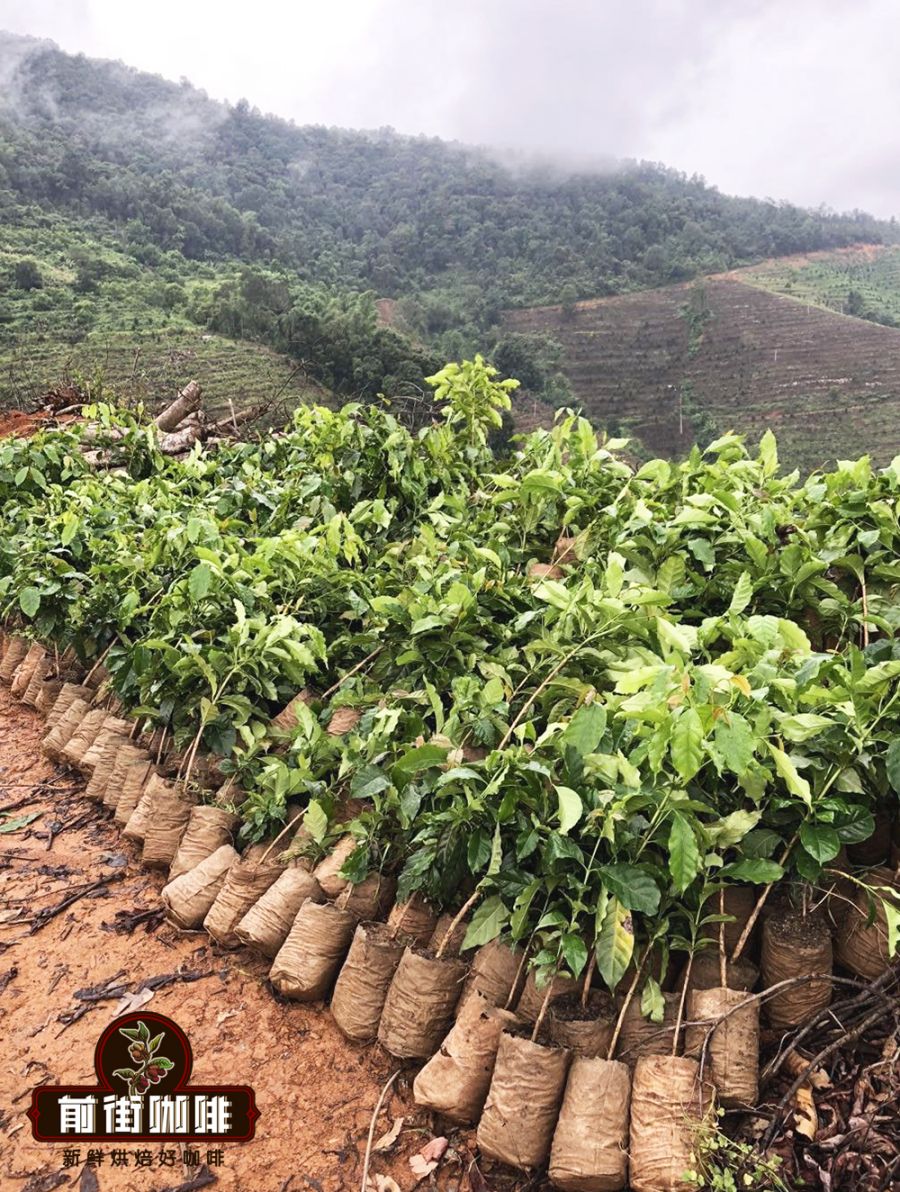
Yunnan Small Bean Coffee (Catimor)
About 3 years ago, FrontStreet Coffee also sourced Catimor (small bean coffee) from the Yunnan Baoshan region, creating a Yunnan small bean daily coffee that represents the characteristics of Yunnan coffee beans.
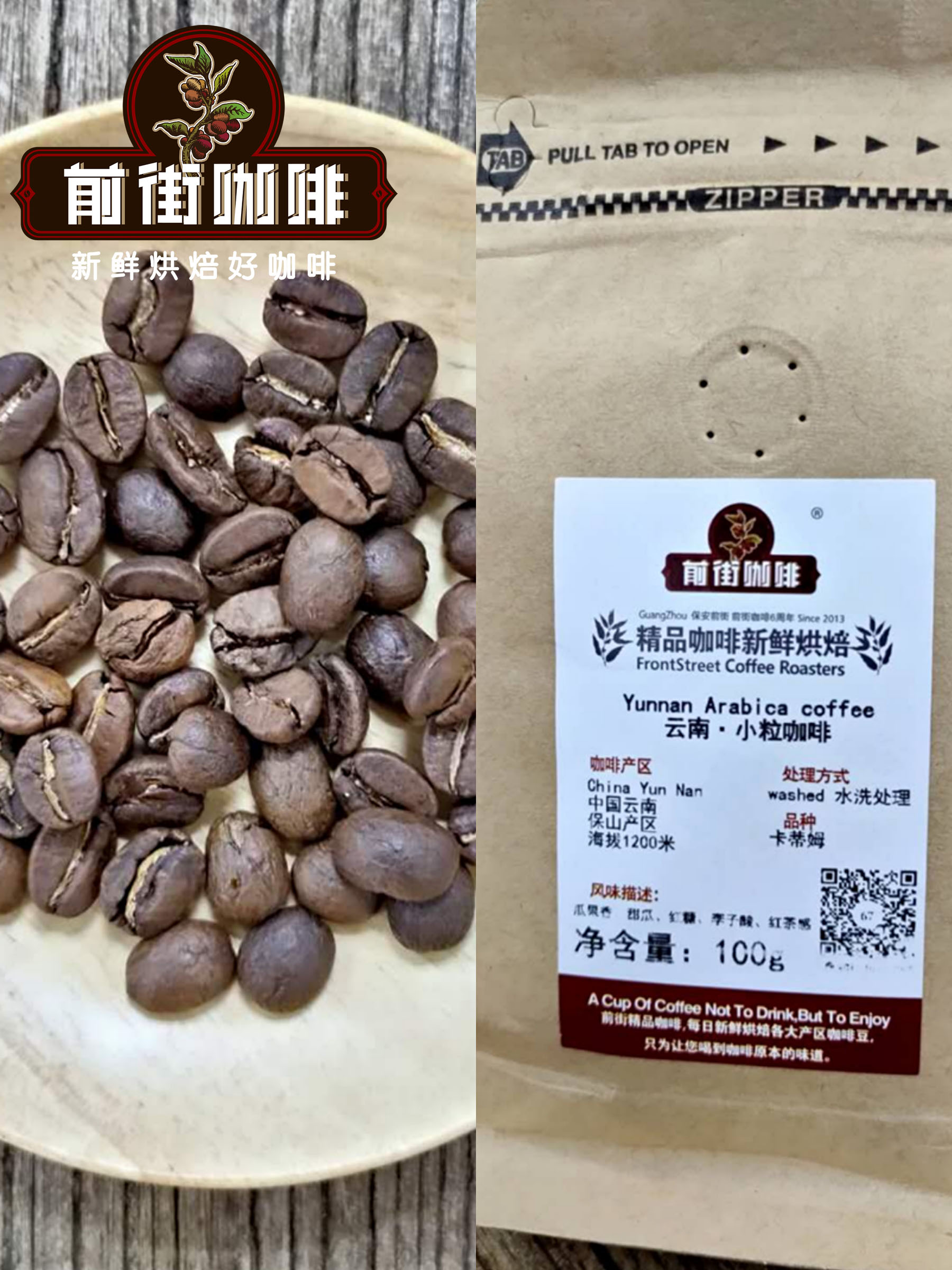
FrontStreet Coffee - Yunnan Small Bean Coffee
Origin: Yunnan Baoshan
Altitude: 1200m
Processing Method: Washed
Variety: Catimor
FrontStreet Coffee - Yunnan Small Bean Coffee Roasting Record
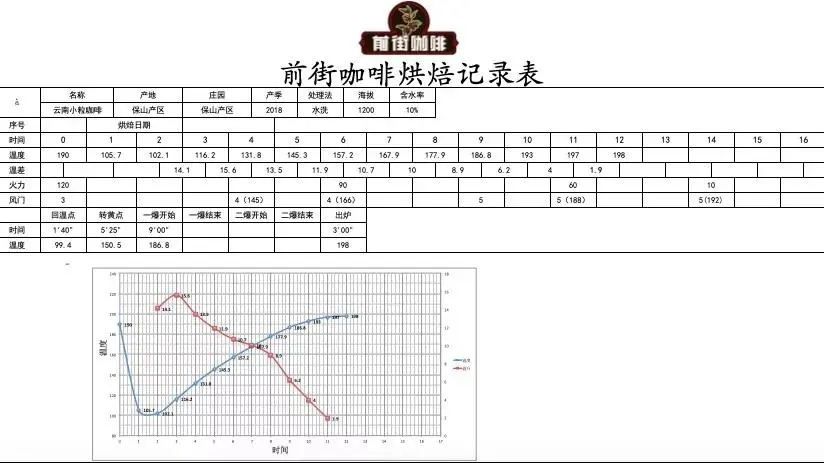
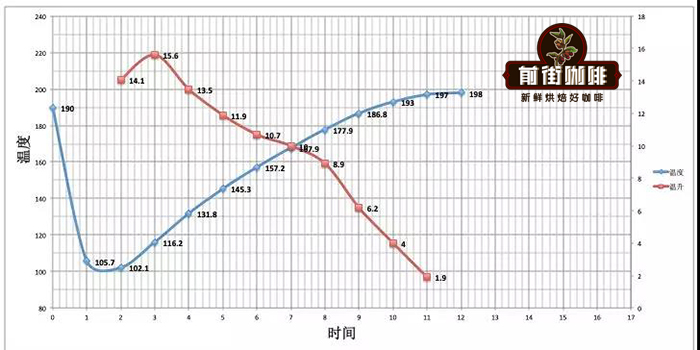
Enter the drum at 190°C, heat at 120, damper at 3; return to temperature at 1'40". When the drum temperature reaches 145°C, open the damper to 4, heat unchanged. When it reaches 166°C, the bean surface turns yellow, the grassy smell disappears completely, and the coffee enters the dehydration stage. When it reaches 188°C, adjust heat to 60°C, damper at 5. At 8'37", the bean surface shows wrinkles and black spots, and the toast smell clearly turns to coffee aroma, which can be defined as the prelude to first crack. Listen carefully for the sound of first crack. First crack begins at 9'00"; keep the damper unchanged, develop for 3 minutes after first crack, and discharge at 198°C.
FrontStreet Coffee - Yunnan Small Bean Coffee Cupping Results
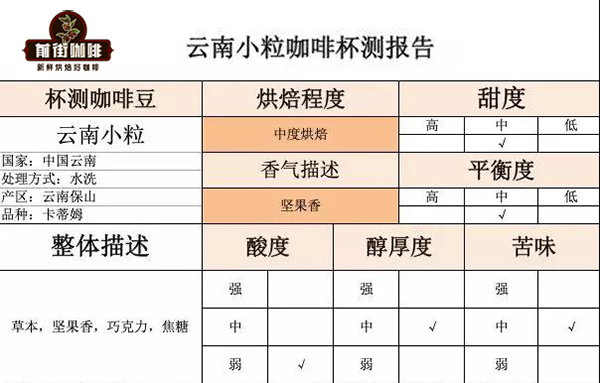
Smooth entry, Asian herbal plant aroma, lively and bright acidity, mouth-watering on both cheeks, balanced soft acidity and richness, rich layers, and an aftertaste with obvious black chocolate, honey, and cane sugar flavors. After complete cooling, brown sugar flavor emerges.
Yunnan Typica Coffee Bean
About 5-6 years ago, FrontStreet Coffee began sourcing Typica from the Yunnan Baoshan region, creating Yunnan Huaguoshan coffee beans, which represent the characteristics of Yunnan coffee beans.
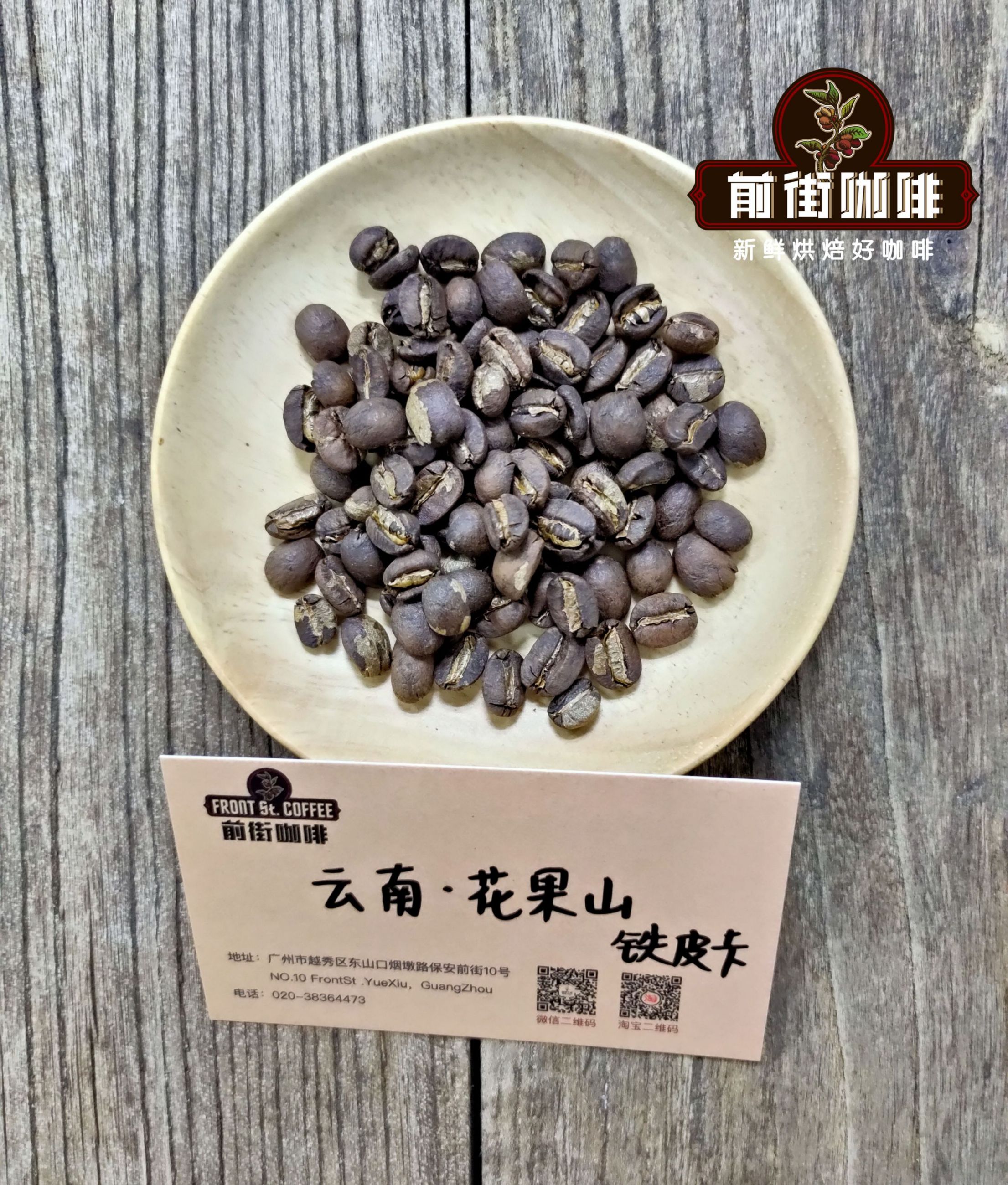
FrontStreet Coffee - Yunnan Huaguoshan Coffee Bean
Coffee Origin: Baoshan
Coffee Variety: Typica
Altitude: 1200m
Grade: AA
Processing Method: Washed
FrontStreet Coffee - Yunnan Huaguoshan Coffee Bean Roasting Record
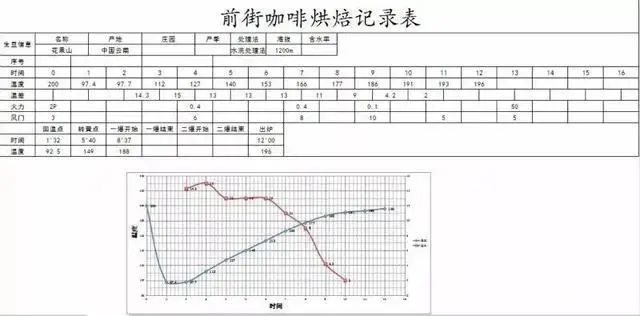
The bean moisture content is 10.9%, so the roasting plan is to enter beans at 200°C, then use high heat and a small damper to speed dehydration. After the dehydration stage ends, use a medium damper and medium heat to avoid rushing the Maillard reaction. Develop for 3 minutes after first crack and discharge.
Return to temperature: 1 minute 32 seconds, 92.5°C; yellowing point: 5 minutes 40 seconds, 148.5°C; first crack: 8 minutes 59 seconds, 188.0°C; develop 3 minutes and discharge: 12'00, 196°C.
FrontStreet Coffee - Yunnan Huaguoshan Coffee Bean Cupping Record
Cupped 12 hours after roasting: rich fruit aroma on entry, melon, plant herbal aroma, a smooth entry, middle notes of nuts and milk chocolate, ending with lively and bright plum acidity, mouth-watering on both cheeks, good balance, and a medium body with full texture. From hot to warm, you can feel the layers of sweet and sour, first sweet then sour, apricot, peach, citrus acidity, and a black tea aftertaste with some brown sugar.
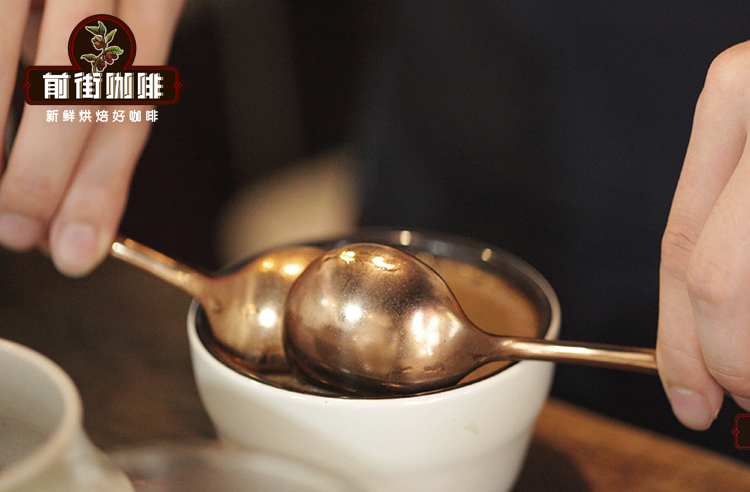
FrontStreet Coffee - Yunnan Small Bean and Yunnan Huaguoshan Coffee Bean Brewing Experience Sharing
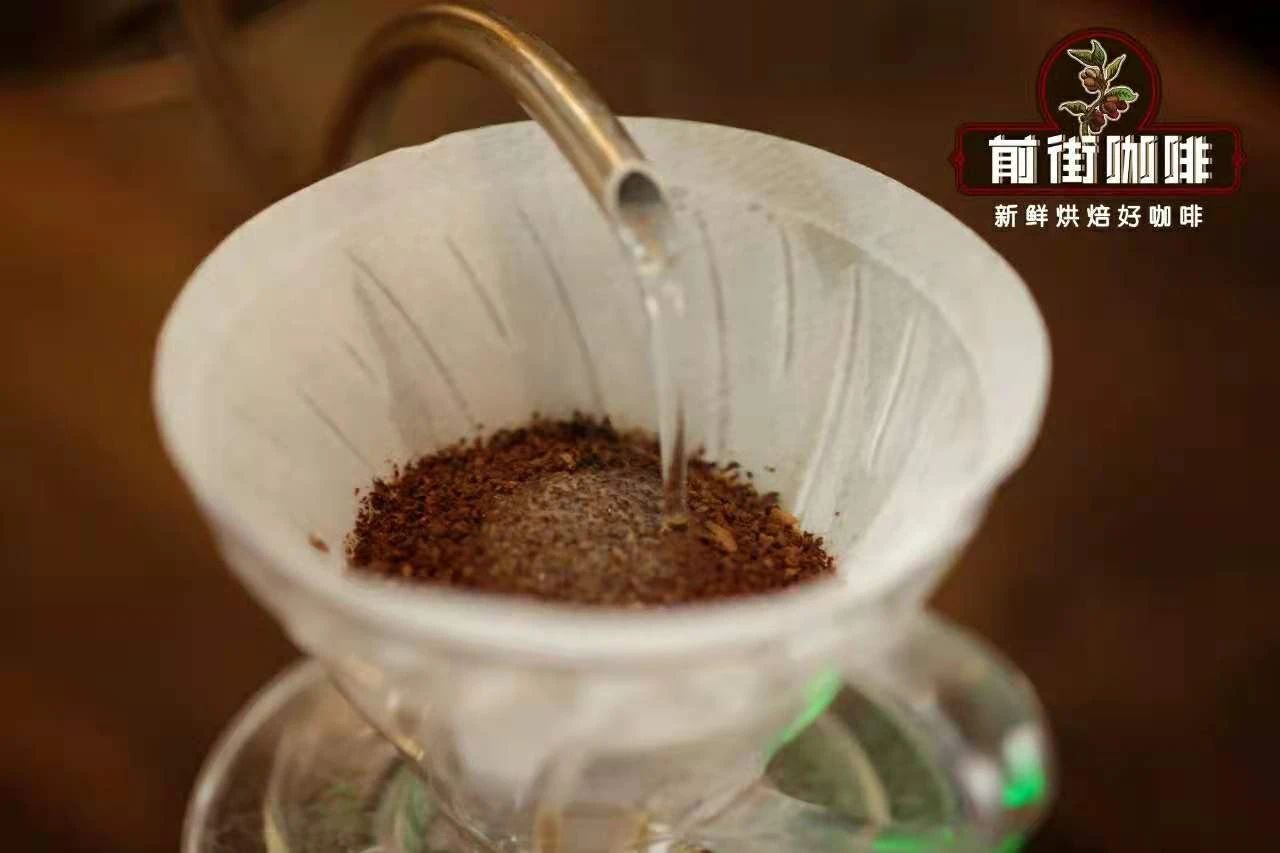
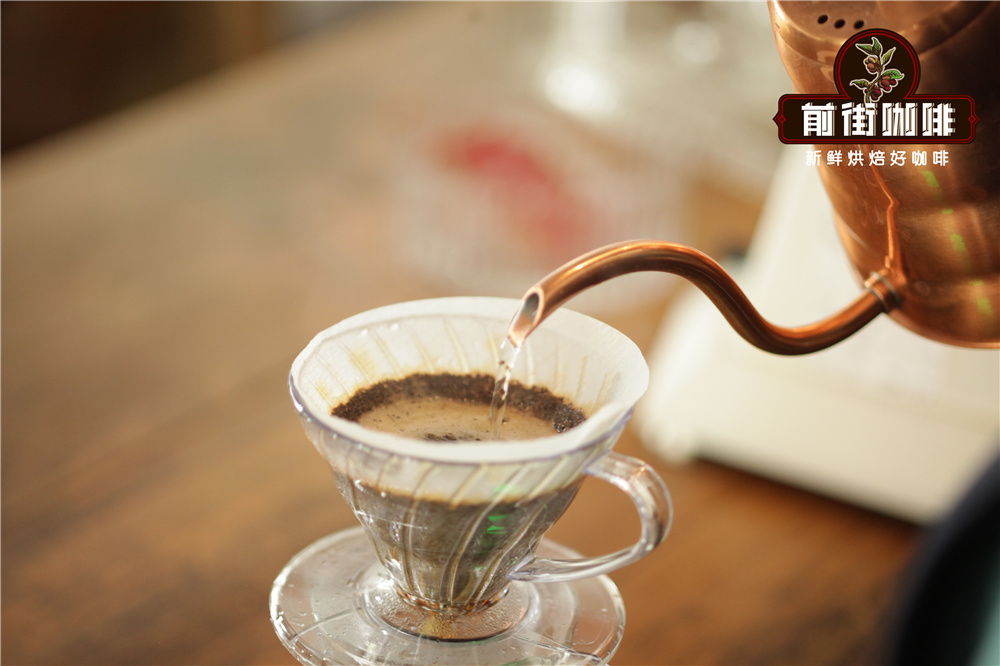
FrontStreet Coffee recommends a V60 dripper. The V60 has a larger opening, and its unique spiral rib design lets air escape more easily, improving extraction quality. The mouthfeel may be less rich, but its high concentration brings out Yunnan coffee's fruit acidity and distinct aroma, which is one of its major characteristics.
Dripper: V60 #01
Water Temperature: 90-92°C
Coffee-to-Water Ratio: 1:15
Grind Size: Medium-fine, similar to fine sugar (57% pass-through rate on a China standard #20 sieve)
Brewing Method: segmented extraction. Bloom with 30g of water for 30 seconds. Pour in small circular motions to 124g for the first segment. When the water level drops and is about to expose the coffee bed, continue pouring to 227g and stop. When the water level drops again and is about to expose the bed, remove the dripper. Timing starts from the bloom; extraction time is 2 minutes.
FrontStreet Coffee - Yunnan Small Bean Coffee Flavor Description
Smells of rich nutty aroma, with herbal, chocolate, and caramel notes on entry, and an aftertaste with light fruit acidity.
FrontStreet Coffee - Yunnan Huaguoshan Coffee Bean Flavor Description
The dry aroma has light citrus acidity and nutty aroma. Tasting reveals plum and citrus acidity with nutty flavors, melon and fruit fragrance, and brown sugar sweetness. The aftertaste carries some black tea sensation. Overall, the flavor layers are quite rich.
FrontStreet Coffee Recommendation
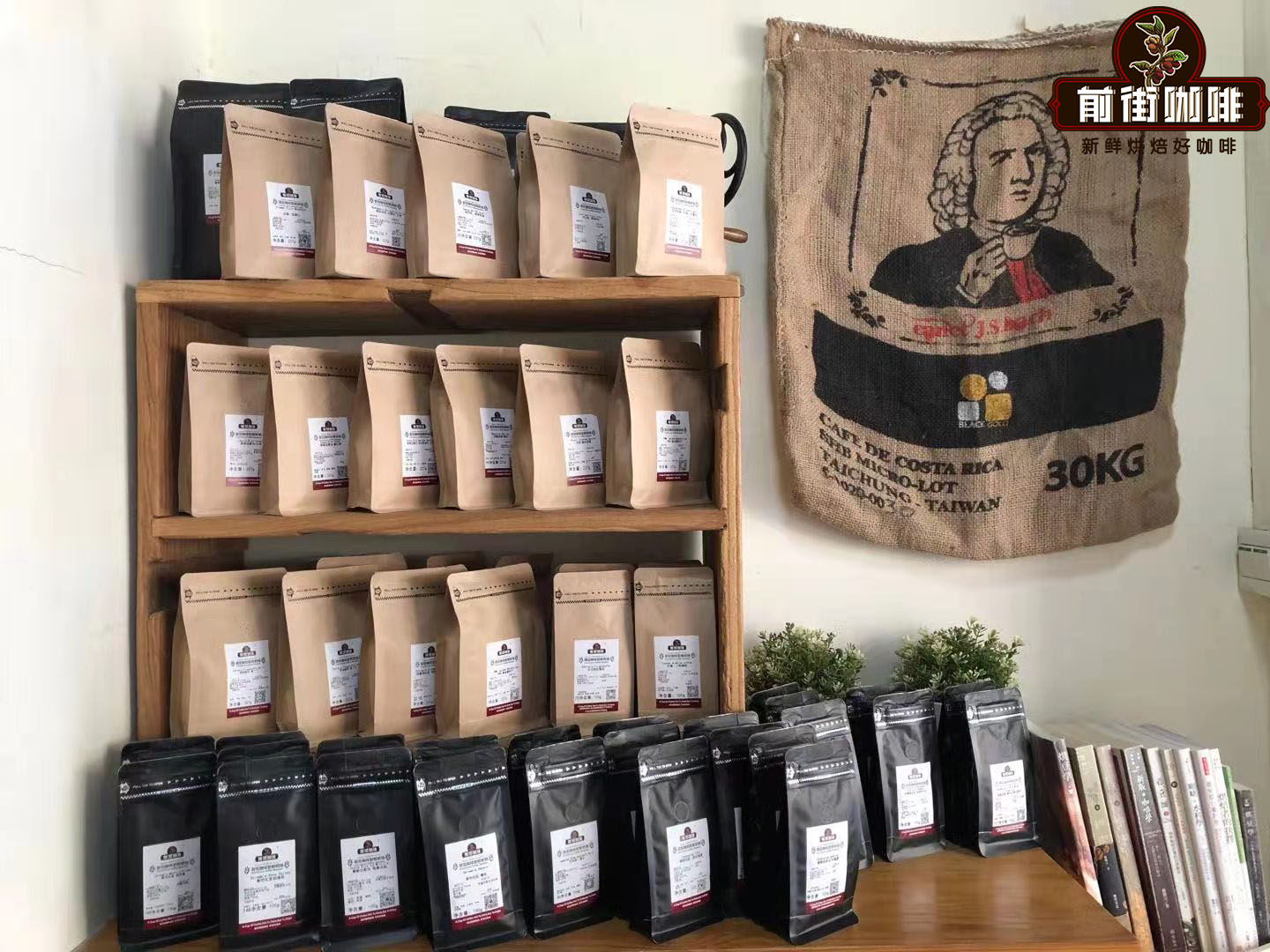
As this look at Yunnan's growing regions suggests, the region rewards careful sourcing, and FrontStreet Coffee's Yunnan lineup shows what those conditions can produce. The FrontStreet Yunnan Small Bean comes from Baoshan, where the dry-hot river valley climate and wide day-night temperature swings build a distinctive sweet finish; washed and medium-roasted, it shows soft nutty and chocolate sweetness with a light plum acidity. For a clearer, more expressive cup, the FrontStreet 2013 Natural Typica uses only fully ripe red cherries and a natural process with a medium roast, yielding dark berry notes, caramel sweetness, chocolate, a touch of dried apricot, and a black-tea finish. If you prefer Yunnan in espresso form, the FrontStreet Black Cocoa Blend pairs Yunnan small bean with Brazil Cerrado, where Brazil supplies mixed-nut aroma and balance while Yunnan adds chocolate and citrus.
Important Notice :
FrontStreet Coffee is a long-established specialty coffee roaster in Guangzhou China, selling freshly roasted beans from its own farm in Yunnan as well as dozens of carefully selected single-origin beans from around the world for both pour-over and espresso. The products deliver consistently excellent quality and great value, with shipping within 24 hours. Guangzhou's FrontStreet Coffee shop is recommended by many coffee lovers, and the beans are now available online at the Tmall 。
FrontStreet Coffee has moved to a new address:
FrontStreet Coffee Address: 315,Donghua East Road,GuangZhou
Tel:020 38364473
 Scan and follow the En Gafei WeChat official account. Please indicate that the reprint comes from "En Gafei".