African Coffee Beans - Differences Between Yirgacheffe Red Cherry and Limu Varieties and Their Distinct Flavor Profiles
FrontStreet Coffee · Ethiopia Red Cherry G1
Ethiopia's main coffee regions include Yirgacheffe, Sidamo, Bench Maji (Bonga Forest), Lekempti, Kembata, Illubabor, Harar and Limu. Yirgacheffe is a small town and one of the highest coffee-growing areas in the world, sitting at 1,700-2,100 meters above sea level. It is wrapped in mist almost year-round, enjoys spring-like weather in every season, and gets gentle breezes that keep the environment cool and humid.
During harvest, Ethiopian coffee trading companies come to town to buy the beans farmers have collected, and the coffee is eventually auctioned and exported under the Yirgacheffe brand. In pursuit of high-quality fruit, the Red Cherry Project was introduced: 100% of the harvest is picked by hand and only fully red cherries are taken. That lets farmers give more attention to screening and bean selection, and as a result these coffees command relatively higher prices.
The refined natural method is used here. Once the usable cherries have been selected they are laid on raised drying racks to dry in the sun, which keeps them off the ground, prevents earthy off-flavours and produces an exceptionally clean fruit profile. After more than two weeks of sun-drying, the dark brown cherries are stored professionally and left to mature fully in flavour, which lifts the sweetness.
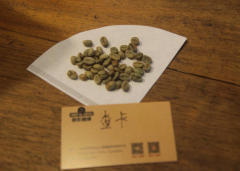
The Yirgacheffe variety consists of local heirloom cultivars and is characterized by small, round beans — mostly between 14 and 15 screen size. The Ethiopia Yirgacheffe Red Cherry G1 green beans FrontStreet Coffee sources show a yellowish-green colour typical of natural-processed coffee, with uniform, full-bodied beans and very few defects.
FrontStreet Coffee's Ethiopia Yirgacheffe Red Cherry G1 has intense fruit aromatics, with rich dried fruit notes of plum, strawberry and lemon. The mid-palate brings honey-like sweetness, and the finish reveals chocolate. The entry is not overpowering, the body is medium and the acidity subtle — reminiscent of fruit tea.
FrontStreet Coffee · Ethiopia Limu
Production from Limu is relatively small and goes mainly to European and American markets. It was once hard to buy in China but has long been popular in Europe and America, where its reputation is second only to Yirgacheffe's. The varieties grown are Ethiopian local heirloom cultivars, farmed by smallholders using 100% organic methods. The soil is vertisol, and coffee grows at altitudes between 1,850-1,900 meters.
Limu produces mainly washed coffee. In flavour it is somewhat milder than coffee from Sidamo, with a lighter body and often citrus character. Its floral and citrus notes are less pronounced than Yirgacheffe's or Sidamo's, but it makes up for that with additional grassy and cocoa aromas alongside sandalwood. Less famous than Sidamo or Yirgacheffe it may be, but Limu still produces plenty of distinctive lots.
Washing here uses fermentation and rinsing to remove pulp, mucilage and parchment, with a continuous flow of fresh water. During processing the fermented beans are placed in pools and moved back and forth, so that friction between the beans and the power of the flowing water scours them until they are smooth and clean. After washing, the beans remain in parchment at a moisture content of 50%. They must be dried down to 12%; otherwise they keep fermenting and turn mouldy and spoiled. Sun-drying follows and takes 1-3 weeks, but it yields an exceptionally flavourful result that is highly prized.

FrontStreet Coffee Recommendation
If you want to understand the Ethiopia region, start with the most classic bean of all: FrontStreet Washed Yirgacheffe, the everyday drinker. It is known for white jasmine, bright citrus and lemon acidity and a tea-like body, and its affordable price has made it the first specialty coffee many people ever buy. Yirgacheffe is a town in southern Ethiopia, inside the Sidamo province, at roughly 1700-2100 meters — and the coffee trees are planted above 1800 meters, making it one of the highest coffee regions in the world. The area has been wetland since ancient times, and the name Yirgacheffe became shorthand for a highly recognizable white floral and lemon-citrus profile within Ethiopian specialty coffee. In 2010, because the Yirgacheffe name had become so famous, the Ethiopia Commodity Exchange finally separated it from the Sidamo region — which is why Yirgacheffe is now a household name.
Within Yirgacheffe there are many smaller zones and villages, and several of them have cooperatives with seasoned technique whose coffee is a step above. The best example is FrontStreet Washed Gutingting Cooperative, from Gutingting village in the Worka area at the southeastern edge of Yirgacheffe. It began as part of the Worka cooperative under the Yirgacheffe Coffee Farmers Cooperative Union, and as demand for green coffee traceability grew it was singled out as a single origin by coffee hunters around the world. Gutingting still follows the most traditional washed processing, and is often called Yirgacheffe's last pure land: there is none of the traditional bitterness, just fresh, bright citrus and lemon acidity and the fragrance of jasmine.
FrontStreet Natural Red Cherry comes from the same region but takes the other route, using 100% red cherry natural processing — only fully ripe, sound cherries are picked. They go through a first screening at the mill and are then laid straight on raised beds to dry; in the first days they are turned every two to three hours so they do not heat unevenly and over-ferment. After three to five weeks of sun-drying, the outer fruit is scraped off by machine according to weather and temperature and the beans are moved to storage. Because the cherries dry with the fruit still on them, the coffee keeps the classic Yirgacheffe character while gaining tropical fruit from the natural process: citrus acidity, juicy berry, honeyed sweetness and a creamy smoothness.
For brewing, FrontStreet suggests a V60 dripper at 90-91°C, 15g of coffee and a 1:15 ratio, ground at 10 on an EK43s — the texture of fine sugar, with 80% passing a #20 sieve. The pour: first 30g of water for a 30-second bloom, then pour to 95g (about 125g on the scale), finishing in roughly 1 minute; when the water level drops to two-thirds of the coffee bed, add the remaining 100g (about 225g on the scale), finishing in about 1 minute 35 seconds. Drawdown completes at 2:00-2:10; remove the dripper and the brew is done.
Important Notice :
FrontStreet Coffee is a long-established specialty coffee roaster in Guangzhou China, selling freshly roasted beans from its own farm in Yunnan as well as dozens of carefully selected single-origin beans from around the world for both pour-over and espresso. The products deliver consistently excellent quality and great value, with shipping within 24 hours. Guangzhou's FrontStreet Coffee shop is recommended by many coffee lovers, and the beans are now available online at the Tmall 。
FrontStreet Coffee has moved to a new address:
FrontStreet Coffee Address: 315,Donghua East Road,GuangZhou
Tel:020 38364473
 Scan and follow the En Gafei WeChat official account. Please indicate that the reprint comes from "En Gafei".