What are the characteristics of wet hulling processing? Why does Indonesian Mandheling coffee use wet hulling?
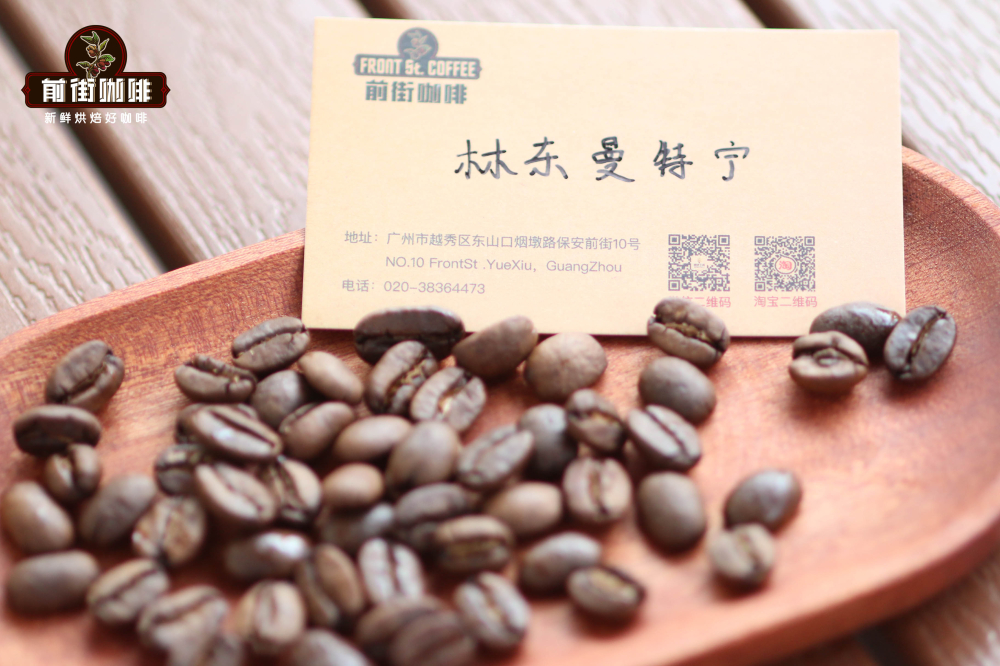
What is Wet Hulling?
What exactly is the wet hulling processing method, and what are its specific steps?
Wet hulling, known locally as Giling Basah, is a traditional Indonesian coffee processing method. The familiar FrontStreet Coffee Golden Mandheling, for instance, is processed this way. Although "wet hulling" sounds similar to wet processing (washed), the cup flavors of the two methods are completely different. Coffee processed by wet hulling typically shows rich, bold flavors with a very distinctive character.
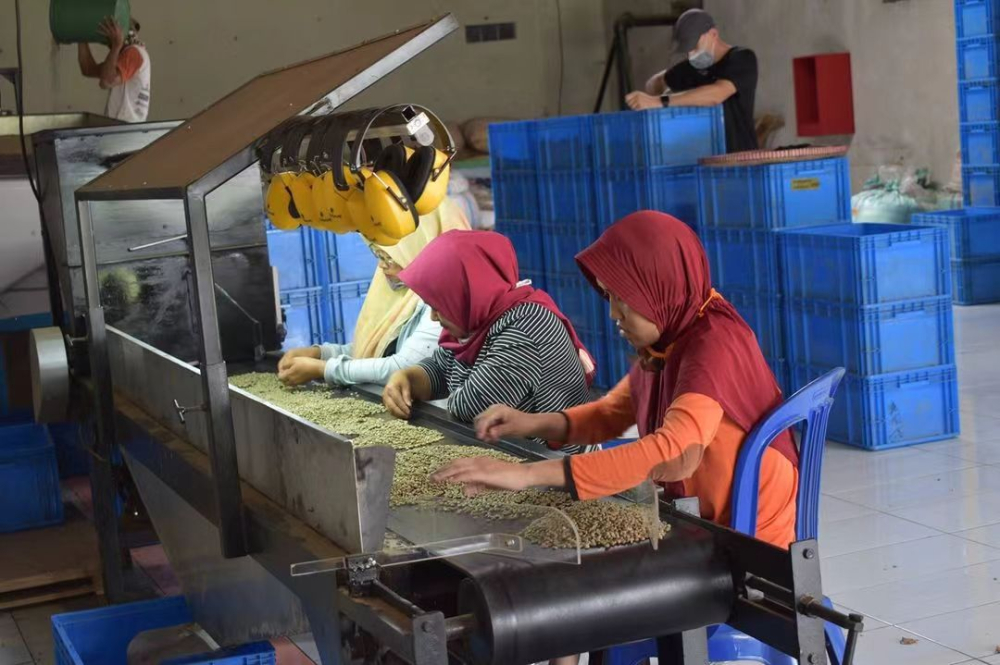
Because there is considerable space between the parchment and the green bean, farmers sell the coffee to local collection centers when moisture reaches 35-40% after the first drying. During collection, some beans are bagged separately and others are mixed, so moisture levels vary from bean to bean. Some lots may have fermented incompletely or still carry some mucilage attached to the parchment in a partially dried state. No quality assessment is made at collection - it all goes into bags together.
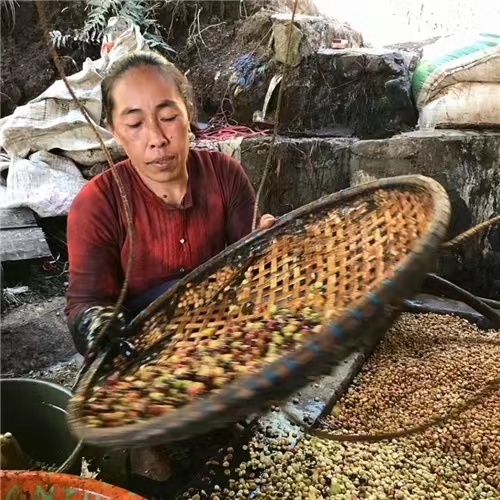
The parchment-covered beans are sun-dried for 2-3 days until moisture reaches 20-24%, then put through a specially designed wet hulling machine. The machine uses heavy friction to tear away the parchment that clings tightly to the green bean. At this stage, white or green mucilage typically flows out. Because of the long mucilage soaking and the humid environment, the beans look soft, pale and swollen, taking on a grayish-green color. Through the friction and agitation they bruise and crack easily, especially at the ends, forming small gaps that create what are known as "horse hoof" or "goat hoof" beans (called kuku kambing locally).
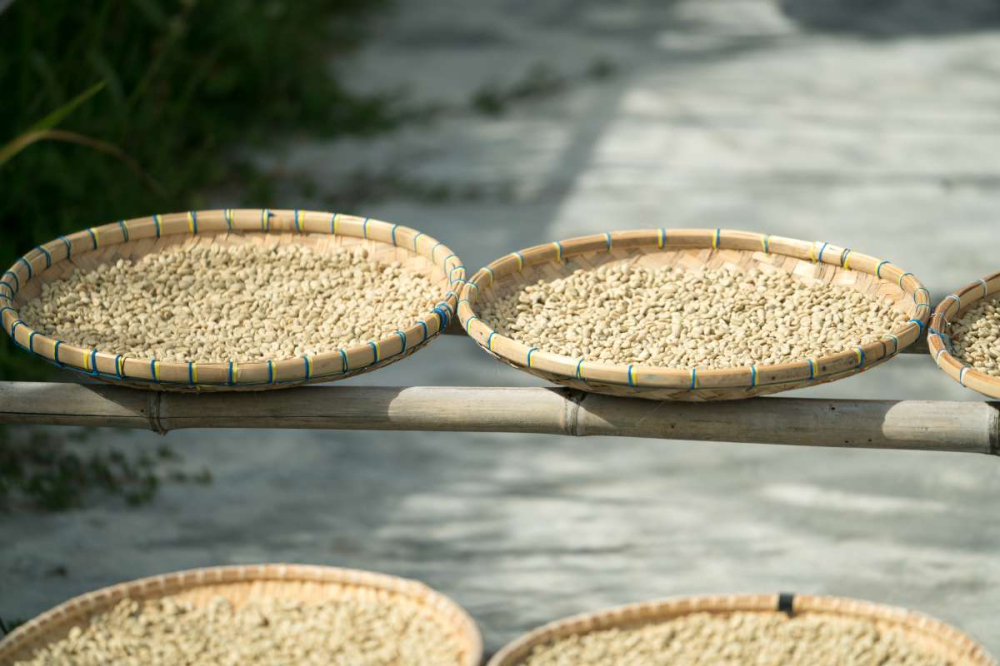
Before export, the hulled green beans are dried directly in courtyards, on tarps or on roads. Without the parchment for protection, they dry very quickly, eventually reaching 12-13% moisture. At that point the beans show a deep green or bluish-gray color, and they are then sorted, bagged and prepared for export.
Without the protection of parchment, the green beans are directly exposed to the environment and may be affected by molds, yeasts and bacteria. In direct sunlight, moisture evaporates quickly, causing uneven drying with spots, which can in turn lead to inconsistent roast levels. Excessive heat during hulling may also make coffee age quickly, producing the woody and earthy flavors often tasted in FrontStreet Coffee Mandheling.
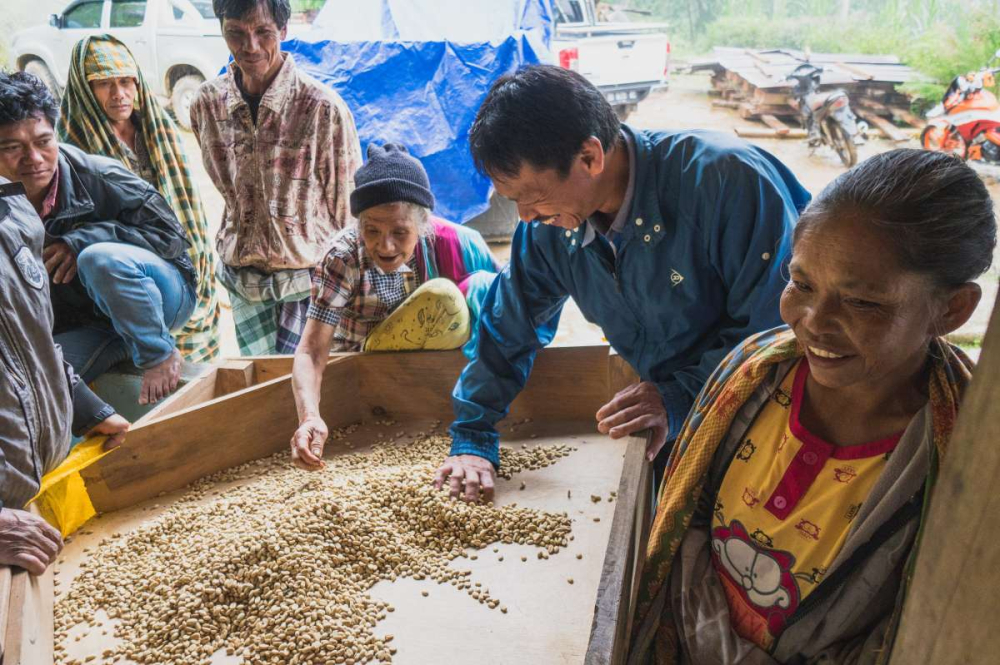
Wet Hulling Processing Steps
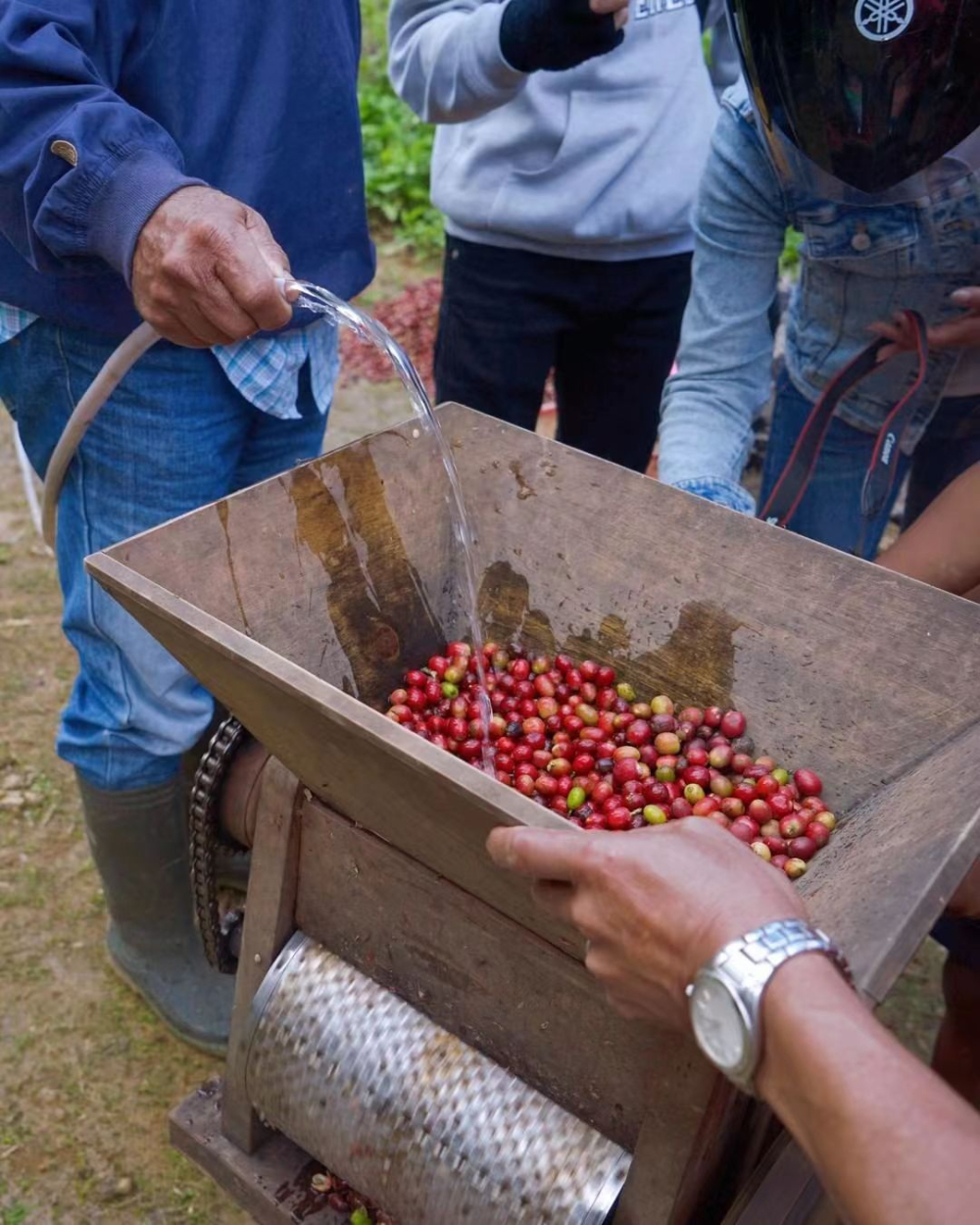
1. Remove the skin and pulp, keeping the parchment and mucilage
2. Water tank fermentation
3. Wash off the mucilage
4. Sun-dry with parchment for 2-3 days until moisture content reaches 20-24%
5. Hull off the parchment
6. Dry the green beans to 12-13% moisture content
7. Prepare for export
Why Use Wet Hulling?
The wet hulling tradition in Indonesia comes from the local weather. Indonesia's humidity stays between 70-90% year-round, with constant typhoons, and in some regions annual rainfall can reach as much as 2,000mm. Coffee beans are most vulnerable to rain, so how does Indonesia overcome such harsh weather to produce the rich, mellow FrontStreet Coffee Mandheling? The answer is wet hulling.
In a tropical climate, coffee usually takes 2-3 weeks to dry. In Indonesia's especially humid climate, drying is a serious challenge. Drying must take longer, and during that time the coffee stays humid, making it easier for bacteria to penetrate the green bean. In regular washed processing, drying happens with the parchment on, which protects the bean to some extent. Wet hulling, though, removes the parchment for the final drying step, so direct sunlight reaches the green bean surface and drying runs 2-3 times faster than washed processing.
FrontStreet Coffee's bean selection includes two Indonesian Mandheling coffees processed with wet hulling: FrontStreet Coffee Lintong Mandheling and PWN FrontStreet Coffee Golden Mandheling.
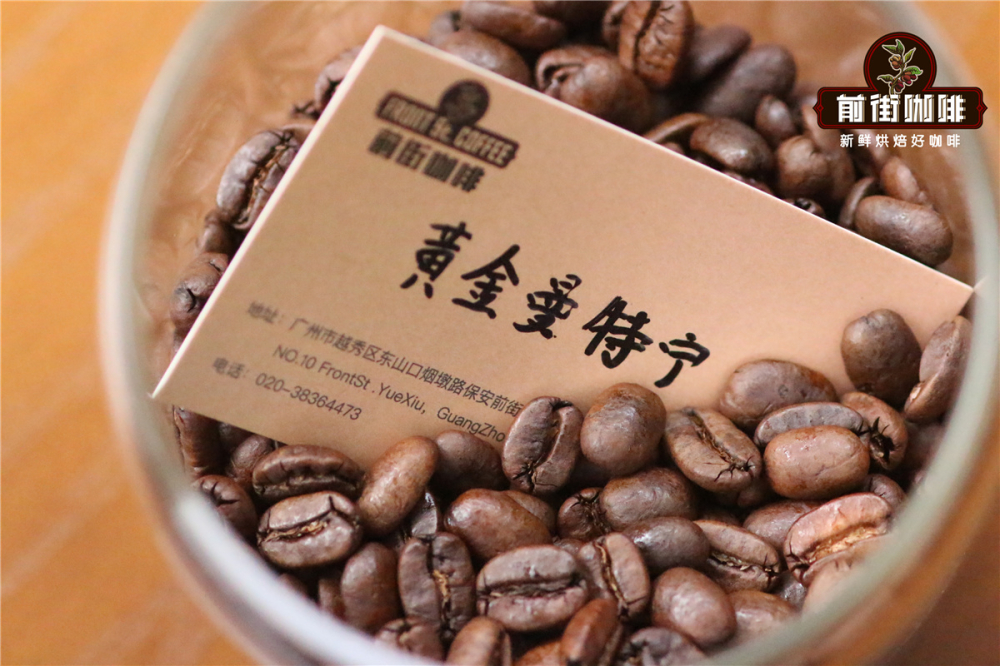
FrontStreet Coffee Golden Mandheling comes from Indonesia's famous PWN company and is processed by the wet hulling method. Although wet hulling raises the defect rate considerably, the flavor is not negative; instead it brings herbal, mellow aromas. In the final drying stage, without parchment, the green beans are directly exposed and various microorganisms grow, which gives Indonesian coffee its unique woody, spicy and herbal plant notes - what we call "terroir flavor."
Because wet hulling uses "rough" friction to force off the parchment while the beans are semi-dry, FrontStreet Coffee Mandheling green beans undergo significant pressure during production, deforming or even breaking. Wet hulling therefore results in a higher defect rate for FrontStreet Coffee Mandheling green beans. PWN company consequently invests heavily in its green coffee: it first buys only G1 grade FrontStreet Coffee Mandheling from the Lake Tawa area of Mount Gayo in northwestern Sumatra, then runs four rounds of manual sorting to ensure uniform color, shape and size of FrontStreet Coffee Mandheling beans. This is why PWN FrontStreet Coffee Golden Mandheling tastes cleaner and brighter, with more pronounced body and sweetness. (Green beans above 18 mesh with fewer than 3 defective beans in a 300g sample are classified as G1, the highest grade for Indonesian green beans.)
To present the classic rich flavor of FrontStreet Coffee Mandheling, FrontStreet Coffee's roasters choose a medium-dark roast to enhance the explosive aroma of dark chocolate and caramel. FrontStreet Coffee's baristas also adjust brewing to the beans' roast level and flavor profile.
How to Make Hand-Poured FrontStreet Coffee Golden Mandheling Taste Delicious?
FrontStreet Coffee's brewing parameters are based on the beans' character, roast degree and flavor profile. FrontStreet Coffee Mandheling is a dark-roasted, bitter-profile coffee, so FrontStreet Coffee's baristas choose the KONO dripper for beans with such a rich mouthfeel. Compared with the V60, the KONO has a smooth curved surface with weaker exhaust and straight ribs covering only one-quarter of the dripper, letting the coffee bed and hot water form an immersion extraction for rounder, fuller flavors. The KONO also suits coffees such as FrontStreet Coffee Brazil Queen Estate and FrontStreet Coffee Jamaica Blue Mountain No. 1.
Dark roasting leaves the internal structure of the beans loose - we can easily crush them with a gentle pinch - which signals strong water absorption after grinding. To avoid releasing too many bitter substances once the grounds absorb water, FrontStreet Coffee adjusts to a coarser grind and uses lower-temperature water for pouring.
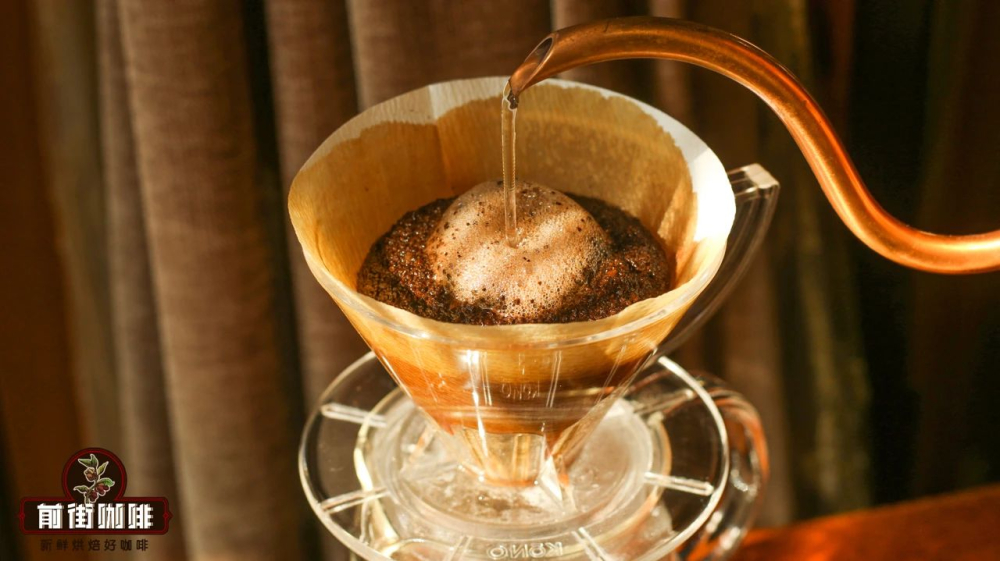
Grind degree is one of the most critical factors in coffee flavor. Once beans are ground and meet hot water, they release large amounts of water-soluble flavor compounds. FrontStreet Coffee sets grind degree with a tool - the Chinese No. 20 0.85mm standard sieve. For light to medium roasts, FrontStreet Coffee consistently uses a 75-80% pass rate, while for medium-dark roasts it uses 70-75%. Compared with light-roasted coffee, medium-dark FrontStreet Coffee Mandheling has a looser internal structure and absorbs water better, easily releasing large-molecule bitter substances. To avoid over-extraction, FrontStreet Coffee chooses a grind with a 70% pass rate on the No. 20 standard sieve.
Water temperature plays a role similar to grind degree - a higher temperature means higher extraction efficiency, releasing more substances and raising concentration. Near-boiling water easily extracts unpleasant bitterness, so when brewing medium-dark coffee FrontStreet Coffee uses different parameters than for light roasts. The caramelization reaction goes further than in a light roast, making it easier to release bitter, large-molecule substances. To avoid extracting too many undesirable flavors, FrontStreet Coffee slightly lowers the water temperature - 91-93°C for light-roasted coffee, while FrontStreet Coffee recommends 87-88°C for medium-dark roasts.
Recommended brewing temperature: 87-88°C
Coffee powder: 15 grams
Powder to water ratio: 1:15
Grind size: Medium-coarse grind (70% pass rate on a Chinese standard No. 20 sieve)
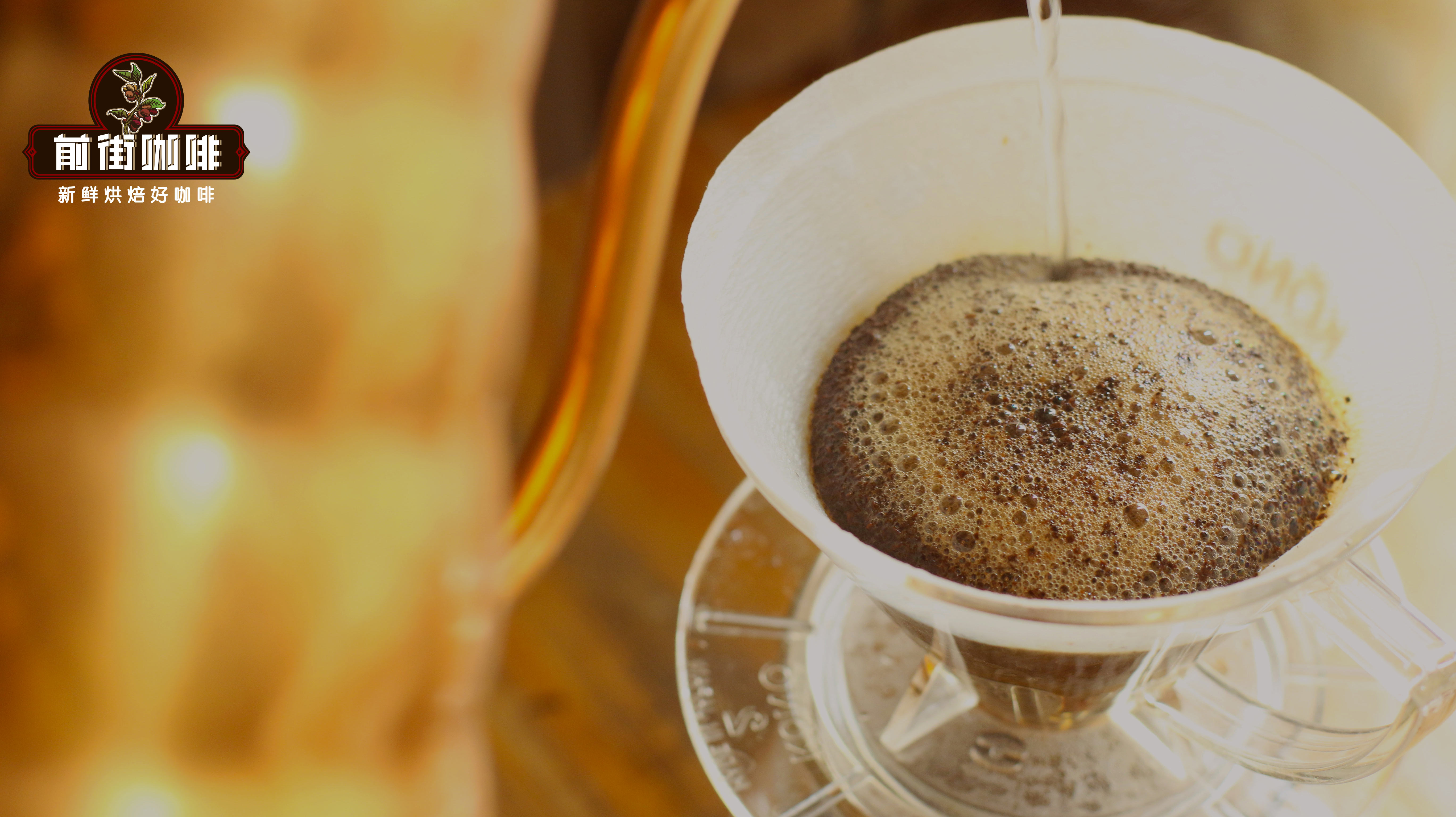
The brewing method uses a three-stage pour, divided into three stages to better express the rich body and caramel sweetness of FrontStreet Coffee Golden Mandheling.
The first stage is a 30ml bloom pour, fully wetting the grounds for degassing so flavor compounds extract better later. The second stage injects 100ml, mainly to bring out the golden foam of Mandheling and raise the coffee bed. The final stage is a gentle center pour of 95ml, which enhances sweetness and expresses an overall rich body with caramel sweetness alongside chocolate and nut flavors.
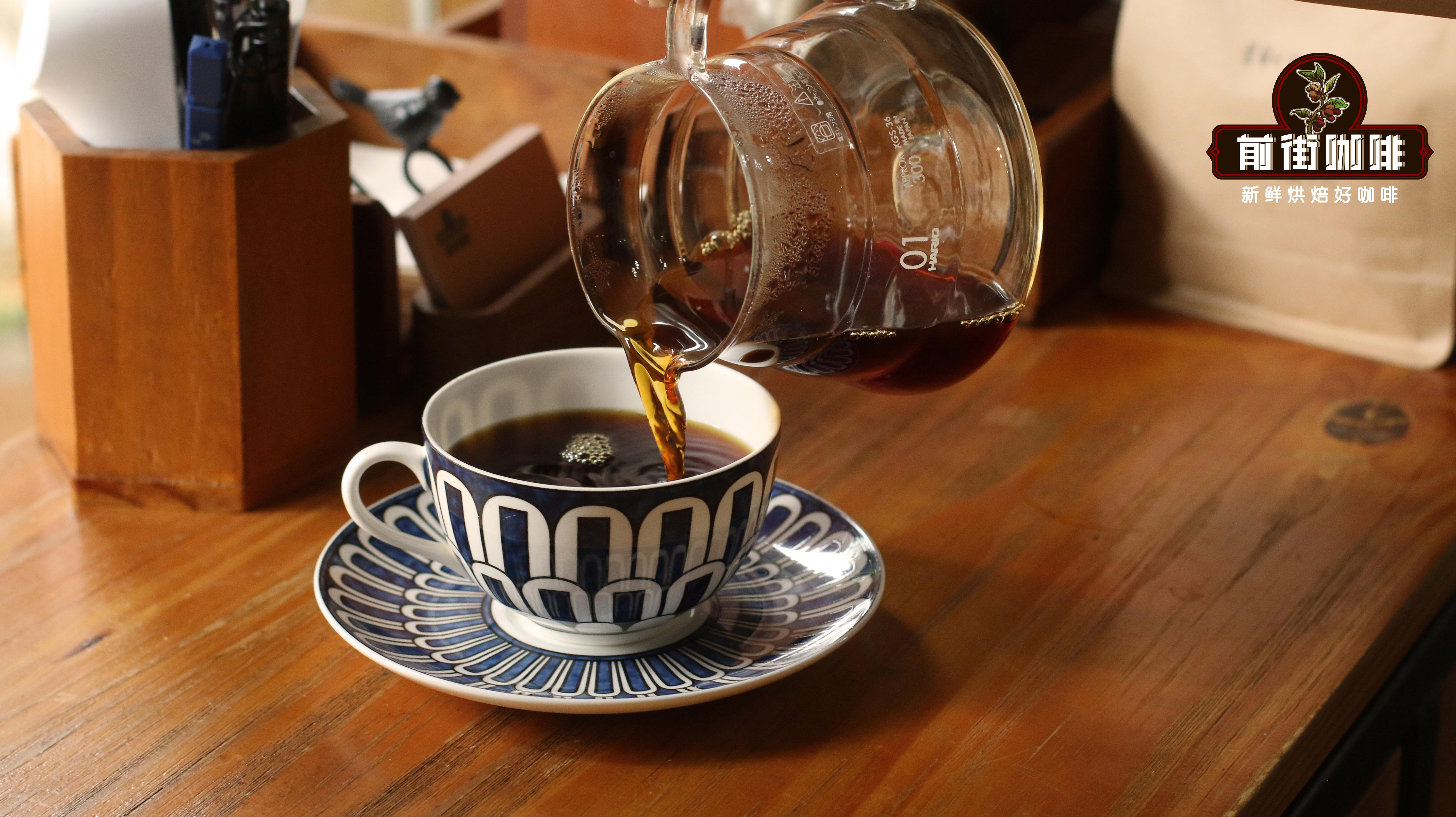
For professional coffee knowledge exchange and more coffee bean information, keep reading with FrontStreet Coffee.
For more specialty coffee beans, FrontStreet Coffee welcomes coffee lovers who want to explore Indonesian origins.
FrontStreet Coffee Recommendation
Wet hulling is what gives Mandheling its unmistakable character, and FrontStreet Coffee's two Indonesian Mandheling coffees let you taste it at different levels. FrontStreet Coffee Lintong Mandheling, from the Lintong region of North Sumatra, is a single origin built for pour-over, with a rich aroma and mellow body. It also works as espresso, where an espresso machine pulls a concentrated shot with generous oils and an intense, caramel-forward profile.
For the highest grade, choose FrontStreet Coffee PWN Gold Mandheling, sourced by PWN from the Gayo highlands of Aceh. PWN buys only high-quality Mandheling green beans and screens them to remove any defects, so the beans are even and translucent with a low defect rate. After a medium-dark roast they carry a full roasted aroma, and the brewed black coffee is clean and full-bodied - perfect for anyone who dislikes sour coffee. To get the most from it, brew pour-over at 87-88°C with 15g of coffee and a 1:15 ratio, a coarse-sugar grind, and a three-stage pour: a 30ml bloom to wet the grounds and degas, a 100ml second pour to raise the bed and draw out the golden foam, and a gentle 95ml center pour to lift the sweetness, for a thick body with caramel sweetness and chocolate and nut notes.
Important Notice :
FrontStreet Coffee is a long-established specialty coffee roaster in Guangzhou China, selling freshly roasted beans from its own farm in Yunnan as well as dozens of carefully selected single-origin beans from around the world for both pour-over and espresso. The products deliver consistently excellent quality and great value, with shipping within 24 hours. Guangzhou's FrontStreet Coffee shop is recommended by many coffee lovers, and the beans are now available online at the Tmall 。
FrontStreet Coffee has moved to a new address:
FrontStreet Coffee Address: 315,Donghua East Road,GuangZhou
Tel:020 38364473
 Scan and follow the En Gafei WeChat official account. Please indicate that the reprint comes from "En Gafei".