What Should Be the Grind Size for AeroPress Standard Brewing Method? Introduction to AeroPress Coffee Extraction Techniques
Some time ago we compared grind sizes using the AeroPress inverted method. But the AeroPress can also be brewed with the standard pressing method — after all, that is the officially recommended way to use it. So when brewing with the standard method, how much difference do grind sizes actually make?
The Standard Pressing Method
Unlike the inverted method, where you flip the device to steep and extract before pressing, the standard method has the AeroPress sitting directly on the server throughout brewing and steeping, with the plunger then pressing the finished coffee out.
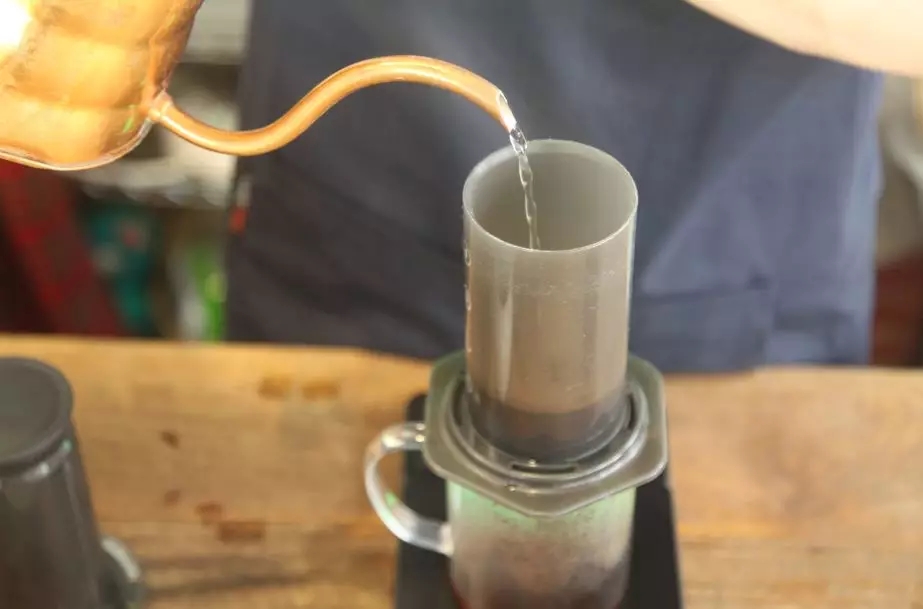
When extracting with the standard method, the flow rate is comparatively slow, but some liquid will still drip through while you pour — what we usually call runoff.
To us, brewing with the standard method feels much like using a flat-bottomed pour-over dripper. The main difference is that drainage is slower if you apply no pressure. And unlike the inverted method, when the plunger goes down it mostly compresses air rather than touching the coffee liquid directly, so the rubber seal has less influence on the final flavor.
Bean Information
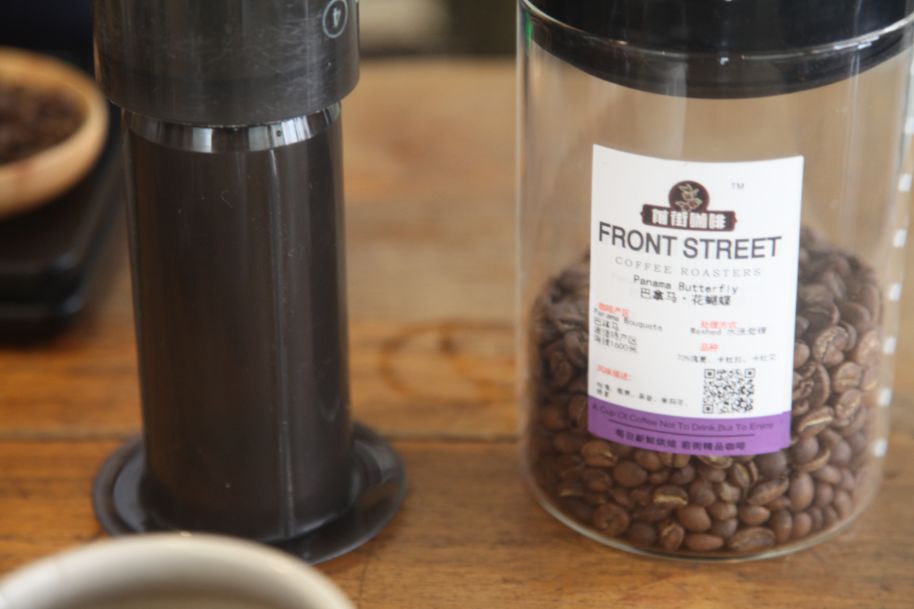
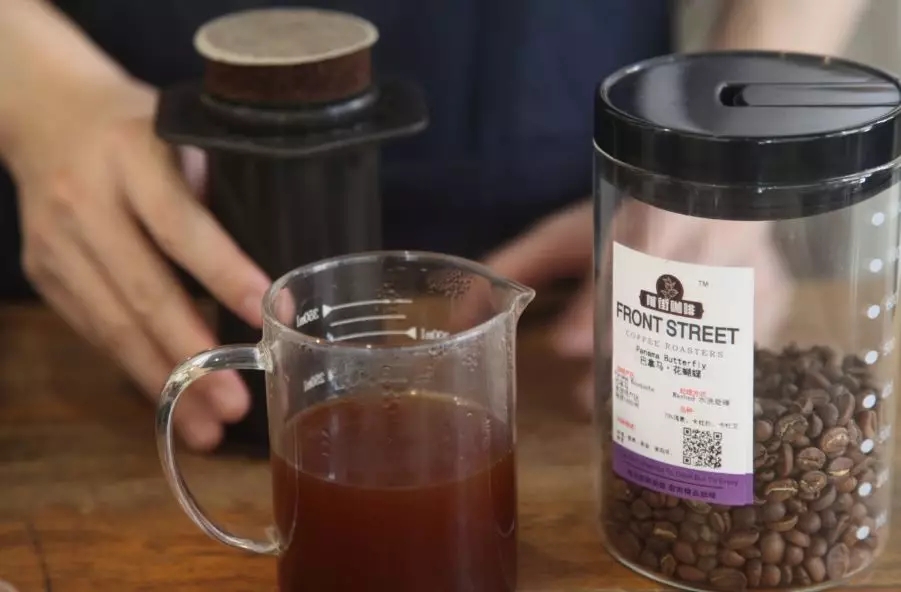
The coffee for today's experiment is FrontStreet Coffee Panama Washed Mariposa, a blend of 70% Geisha with 30% Caturra and Catuai. A light-medium roast preserves its floral and fruity aromatics: citrus and jasmine on the nose, with flavors of honey peach, citrus, honey, and a tea-like finish.
FrontStreet Coffee Washed Mariposa
Country: Panama
Region: Boquete
Altitude: 1600 meters
Processing method: Washed
Variety: 70% Geisha, Caturra, Catuai
Roast level: Light roast
The Experiment
We chose three grind settings for the standard pressing method: BG 5M (60% passing through a China standard #20 sieve), BG 5R (58% passing), and BG 6M (47% passing). Only the grind changed; every other parameter and technique stayed as consistent as possible. Since the water pour provided agitation, no extra stirring was used.
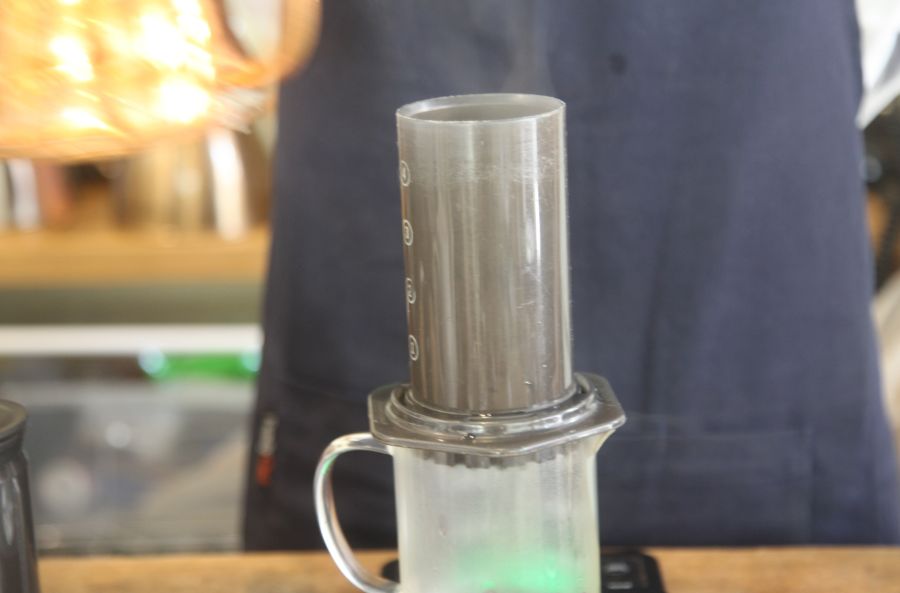
Parameters & technique: Water temperature 90°C, coffee-to-water ratio 1:15, bloom with 35g for 30 seconds, pour with agitation to 125g, then continue pouring to 228g and stop. Steep until 1:30, then press out; total press time 1:48.
BG 5M
Flavor: Jasmine on the aroma; the first sip brings citrus and starfruit acidity with sucrose and brown-rice notes, but woody off-flavors tag along and the cup lacks cleanliness.
BG 5R
Flavor: A light floral aroma, with sweet citrus and orange acidity up front, caramel and honey sweetness in the middle, and a finish of tea, nuts, and cream. The layers are rich, the mouthfeel smooth, and the balance impressive.
BG 6M
Flavor: Citrus and lemon acidity on entry, some brown sugar and cream, and a lemon-black-tea finish.
Conclusion
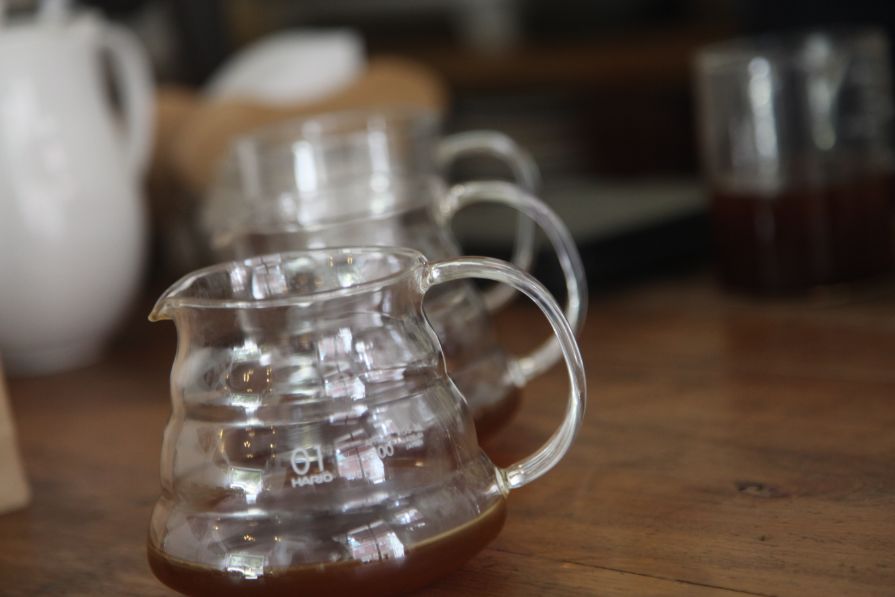
Across the three grinds, coffee made at BG 5M showed obvious woody flavors and poor clarity; BG 6M was clean but leaned heavily on fruit acidity with sweetness falling short; and BG 5R delivered the best balance of sweetness and acidity with a clean mouthfeel.
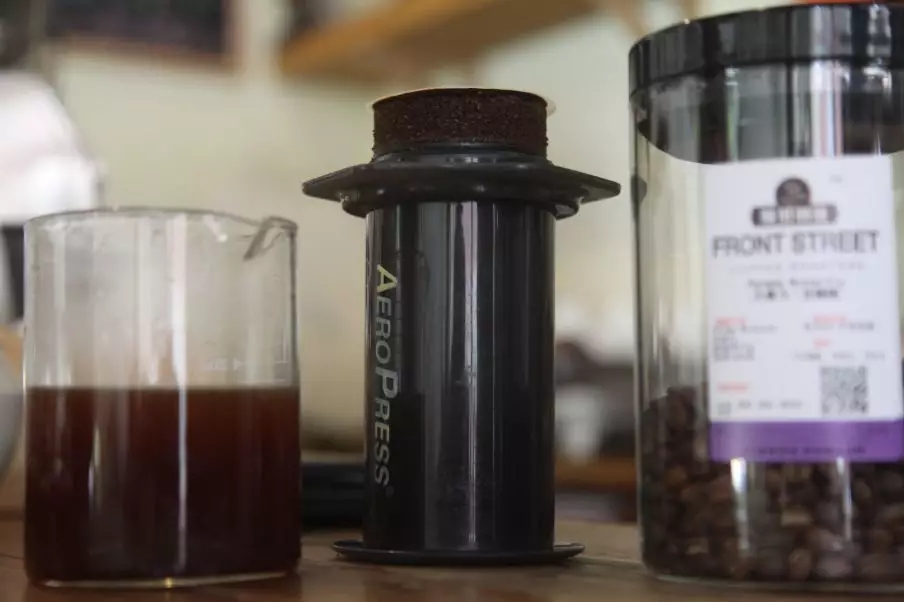
In other words, whether you use the standard pressing method or the inverted method, you can simply choose a grind similar to what you would use for your everyday pour-over.
And although the extraction parameters sit close to pour-over, the AeroPress is a pressurized method, so the finished cup wears a thin layer of crema and drinks with a certain silky smoothness that pour-over does not have.
FrontStreet Coffee Recommendation
Since today's test bean is a Panama Geisha blend, here are a few more FrontStreet Coffee Geisha selections worth exploring, drawn from our house notes:
FrontStreet Coffee Esmeralda Red Label and Green Label Geisha
Great coffee needs a great champion, and Panama's Hacienda La Esmeralda is the estate that put Geisha on the world map. Its current lineup is split into two grades. The Red Label, officially "Esmeralda Special," grows at 1,600–1,800 meters; every batch must cup above 90 points, carries its own lot number, and comes entirely from a single small plot — our Red Label, for instance, hails from the Harimiu plot, letting buyers pick lots by subtle flavor differences. The Green Label, officially "Private Collection," blends batches from multiple plots to express Esmeralda's signature high-altitude Geisha character rather than any single plot's identity. That makes it noticeably more affordable — in our view the better value of the two.
FrontStreet Coffee Boquete Geisha
If you are new to Geisha and want a first taste of the legend, we always suggest starting here. This entry-level Panama Geisha lets you experience the classic orange-blossom sweetness, oolong-tea texture, delicate fruit acidity, and clear layering of a high-quality Panamanian Geisha at a friendly price.
FrontStreet Coffee Geisha Village Gold Label and Red Label
Ethiopia, coffee's birthplace, has its own Geisha-famous estate: Geisha Village, built by a couple 12 miles from the original Geisha forest on 475 hectares, where they cultivated the varieties closest to the wild Panama ancestry. Its grading is even stricter than Esmeralda's. The Gold Label (RARITIES) is the Gesha 1931 variety — just 10% of the estate's total output, its finest coffee outside the auction lots, and a frequent choice of competition baristas; our lot is an intricate natural process. The Red Label (GROWERS RESERVE) is Gori Gesha, about 15% of production, scoring 88 or above on the SCA 100-point scale, sold as a single-terroir series with full traceability — farm block, variety, and processing date for every batch.
FrontStreet Coffee Genlana Estate Geisha
Genlana is a rare single-variety estate in Yirgacheffe. Our lot comes from the Genlana washing station, founded in 2014 and run by Mr. Israel Degefa, at the border of Kochere and Genji Abaya, where coffee grows across 700 mostly uncultivated hectares of fertile, shade-drenched soil. Fully ripe cherries are hand-picked and dried on raised beds for 14 to 20 days depending on the weather. Roasted medium-light, it shows bright citrus acidity, elegant ginger-flower aromatics, the full sweetness of ripe fruit, and a silky texture with Geisha's signature refined finish.
Important Notice :
FrontStreet Coffee is a long-established specialty coffee roaster in Guangzhou China, selling freshly roasted beans from its own farm in Yunnan as well as dozens of carefully selected single-origin beans from around the world for both pour-over and espresso. The products deliver consistently excellent quality and great value, with shipping within 24 hours. Guangzhou's FrontStreet Coffee shop is recommended by many coffee lovers, and the beans are now available online at the Tmall 。
FrontStreet Coffee has moved to a new address:
FrontStreet Coffee Address: 315,Donghua East Road,GuangZhou
Tel:020 38364473
 Scan and follow the En Gafei WeChat official account. Please indicate that the reprint comes from "En Gafei".