Geisha Coffee Bean Growing Regions and How to Distinguish Panamanian La Esmeralda's Red, Green, and Blue Label Grades

The Origin and Development of Geisha Coffee
Geisha coffee originated in Ethiopia, where the variety was first discovered in the Gori Geisha forest. In 1931, Geisha made its quiet journey from the Geisha mountains of southwestern Ethiopia to Kenya's Coffee Research Institute and then traveled through various coffee-growing regions: first to Uganda and Tanzania in 1936, on to Costa Rica in 1953, and finally to Panama around 1960.
For nearly half a century afterward, Geisha drew little attention. That changed in 2003, when Hacienda La Esmeralda separated it from other varieties and entered it in the Best of Panama (BOP) competition. It won the BOP championship in 2004, stunning the coffee world by defeating established varieties like Bourbon, Caturra, Catuai, and Typica. The victory cemented La Esmeralda's standing in the specialty coffee industry and thrust Geisha into the global spotlight. In the following years, Geisha took first prize at the Panama Cup of Excellence in 2005, 2006, and 2007.

Now that Geisha's fame is tied to Panama's Hacienda La Esmeralda, Panamanian coffee has risen with it, and Geisha is now cultivated across major coffee-producing countries — with flavors that vary considerably. FrontStreet Coffee explains the differences between Panama, Costa Rica, and Ethiopian Geisha.
Ethiopian Geisha Coffee
Ethiopia is the birthplace of Geisha. In 2009, an idea from renowned estate owner and BOP judge Willem Boot inspired documentary director Adam Overton and his photographer wife Rachel Samuel. The couple returned to Ethiopia and, following Willem Boot on an "expedition" through the Gori Geisha forest, found wild Geisha. They collected seeds from native Geisha trees, conducted selection, planted them at Geisha Village, and established an estate there — the source of the Ethiopian Geisha Village coffee beans currently on FrontStreet Coffee's menu.

However, the Geisha now cultivated in Ethiopia's Geisha Village bears little genetic relation to the Panama Geisha we know. Ethiopian Geisha comes in three varieties: Gori Gesha (GG), which replicates the genetic diversity of the Gori Gesha coffee forest; Illubabor Forest 1974 (IF), discovered during a 1974 expedition and later developed by the Ethiopian Research Center into a disease-resistant variety; and Gesha 1931 (G31), a composite of varieties from different forests, selected by observing plant morphology, bean appearance, screen size, and cup quality — and very similar in type to Panama Geisha.
The first two varieties are genetically worlds apart from Panama Geisha. Even Gesha 1931, officially described as the closest to Panama Geisha in plant form and cup performance, shares a very low actual genetic consistency. In short, the flavor profiles of Ethiopian and Panamanian Geisha are entirely different things.

Costa Rica Geisha Coffee
Costa Rica has grown coffee for nearly two hundred years, and as one of the country's key economic crops, its coffee industry is mature. Many newly established estates today have both the resources and the willingness to cultivate Geisha — the most famous being the Geisha from Candlelight Estate.

Candlelight Estate's microclimate is a gift to coffee. On dry-season mornings the estate can see temperatures of 9°C, rising to 35°C by noon, then falling back to 9°C by dusk. This dramatic diurnal swing lets the cherries accumulate more nutrients and develop more refined flavors.
Panama Geisha Coffee
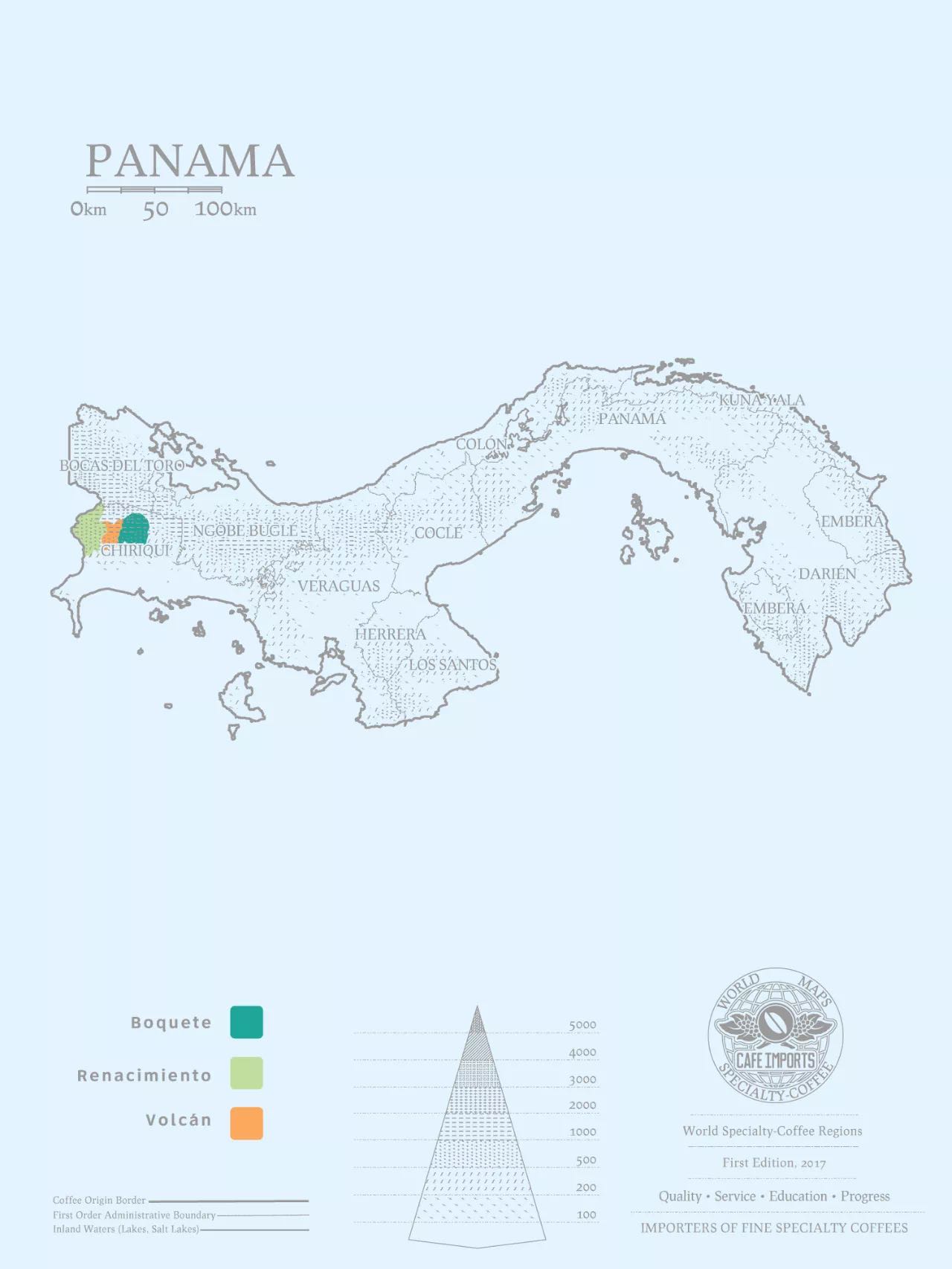
Panama's coffee was introduced from Costa Rica, and Panama Geisha is where our modern definition of Geisha began. The description "Geisha coffee has enchanting floral aromas and berry-like sweet-tartness" originated with the Geisha of Panama's Hacienda La Esmeralda. Today the estate cultivates Geisha on four farms: Cannas Verdes, El Velo, Jaramillo, and Palmira.

How to Distinguish Red Label, Green Label, and Blue Label Geisha?
Newcomers to Geisha often ask what separates the red, green, and blue labels. First, know that Hacienda La Esmeralda sells its Geisha under three brands: Esmeralda Special, Private Collection, and Geisha 1500. Higher altitude generally brings richer aromatic complexity, and Geisha has the peculiar trait of performing best in extreme growing environments — so the estate's classification is based primarily on planting altitude, with cupping quality as a secondary criterion.
Premium — Red Label [Auction Batches]

The red label everyone talks about is the Geisha sold under Esmeralda Special: beans grown at 1,600–1,800 meters that cup above 90 points, from the Jaramillo and Cannas Verdes regions.
The red label offered through La Esmeralda's independent auctions consists of Geisha batches from designated plots selected for bidding. Non-auction red labels also exist on the market today — Geisha from the same plots that simply wasn't submitted to auction. The variety and quality are identical; only the price differs.
Secondary — Green Label [Reserve Batches]

Private Collection is what we know as green label — not independent competition batches, but Geisha from plots outside the auction that still maintains excellent quality. It selects beans grown at 1,600–1,800 meters, blended in micro-batches from different plots including Jaramillo and Cannas Verdes.
Because the lots mix beans from different plots without detailed plot specifications, green label sometimes tastes remarkably similar to red label, yet with subtle differences. Though a tier below red label, it keeps the classic Geisha character: florals, fruit, citrus acidity, and a thick, juicy texture. FrontStreet's green label Geisha comes in both natural and washed processing: the washed shows florals, fruit, and citrus acidity over a fresh, clean texture, while the natural builds on that washed foundation and adds a thick, juice-like body.
Regular — Blue Label [Selected Batches]

Blue label is grown at 1,400–1,500 meters and blends Geisha from three different plots: Jaramillo, Canas Verdes, and El Velo. In previous years blue label came only in washed processing, but the 2020 batch added a natural process version. FrontStreet's blue label Geisha is available in both: the washed has delicate florals and bright acidity, while the natural carries subtle florals and a full, juice-like mouthfeel.
What Variety Is Panama Geisha?
Panama Geisha belongs to the Geisha variety, which traces back to a forest called Gori Geisha in the Geisha mountains of southwestern Ethiopia — meaning "Geisha" is both a variety name and a place name, coined because the variety's origin lies in Ethiopia's Geisha region. Ethiopian Geisha today divides into three varieties: Gori Gesha (GG), Illubabor Forest 1974 (IF), and Gesha 1931 (G31). But the Geisha now cultivated in Ethiopia's Geisha Village shares little genetics with the Panama Geisha we know — the first two varieties are entirely different, and even Gesha 1931 is only distantly related.

Pour-Over Parameters for Geisha Coffee Beans
FrontStreet recommends brewing with freshly roasted beans to best appreciate a coffee's rich flavors. Beans shipped by FrontStreet Coffee are roasted within 5 days of your order, because freshness profoundly affects flavor. Our roasting philosophy is "freshly roasted quality coffee," and with a resting period of about 4–7 days, coffee arrives right at its flavor peak.
Recommended parameters: Hario V60 dripper, 90°C water, 15g coffee dose, 1:15 coffee-to-water ratio, grind size EK43S #10 (80% pass rate on the China standard #20 sieve).

The technique is segmented extraction — also known as three-stage brewing. Bloom with 30g of water for 30 seconds, then pour in small circles to 125g for the first segment. When the water level drops and the coffee bed is about to be exposed, continue pouring to 225g and stop. When the bed is about to break the surface again, remove the dripper. (Timing starts at the bloom.) Total extraction time: 2'00".
For more specialty coffee beans, please add FrontStreet Coffee on WeChat: kaixinguoguo0925
FrontStreet Coffee Recommendation
Geisha is a medium-light, floral-fruity coffee with dense beans that tend to sink and clog the drip bed, so FrontStreet recommends a coarse grind — about a 78% pass rate on the Chinese standard #20 sieve (roughly fine-granulated-sugar size) — and water at 91°C.
Our house Geisha recipe uses 15g of coffee in a small Hario V60 at a 1:16 ratio, brewed in three stages: pour to 30g for a 30-second bloom, then in slow circles to 125g; once the bed drains to half, continue in slow circles to 225g, finishing in about 2 minutes 10 seconds to 2 minutes 20 seconds.
For Panama Geisha at its peak, the FrontStreet La Esmeralda Red Label (Esmeralda Special) grows at 1,600–1,800 meters, cups above 90 points, and comes entirely from single named plots like Jaramillo. The Green Label (Private Collection) blends batches from multiple plots to express the estate's signature high-altitude profile at a friendlier price — arguably its best-value expression. And beyond Panama, FrontStreet offers Ethiopian Geisha Village beans in Gold Label and Red Label tiers from a large estate beside the original Gesha forest, for those curious about Geisha's homeland.
Important Notice :
FrontStreet Coffee is a long-established specialty coffee roaster in Guangzhou China, selling freshly roasted beans from its own farm in Yunnan as well as dozens of carefully selected single-origin beans from around the world for both pour-over and espresso. The products deliver consistently excellent quality and great value, with shipping within 24 hours. Guangzhou's FrontStreet Coffee shop is recommended by many coffee lovers, and the beans are now available online at the Tmall 。
FrontStreet Coffee has moved to a new address:
FrontStreet Coffee Address: 315,Donghua East Road,GuangZhou
Tel:020 38364473
 Scan and follow the En Gafei WeChat official account. Please indicate that the reprint comes from "En Gafei".