Flavor Characteristics of Colombian Geisha Coffee Beans - Introduction to Colombian San Pedro Estate Coffee Cultivation
 Professional coffee knowledge exchange, more coffee bean information, please follow Coffee Workshop (WeChat public account: cafe_style)
Geisha coffee represents the pinnacle of specialty coffee, capturing the unforgettable first-love flavor that many dream of. While this might sound somewhat exaggerated, Geisha is undoubtedly one of the top-tier coffees in the specialty coffee world. Among them, Panamanian Geisha boasts the highest quality and greatest recognition, becoming synonymous with Geisha itself. This does not mean Geisha from other countries lacks quality, however: there are exceptional Geishas waiting to be discovered, such as this particular variety from Colombia.
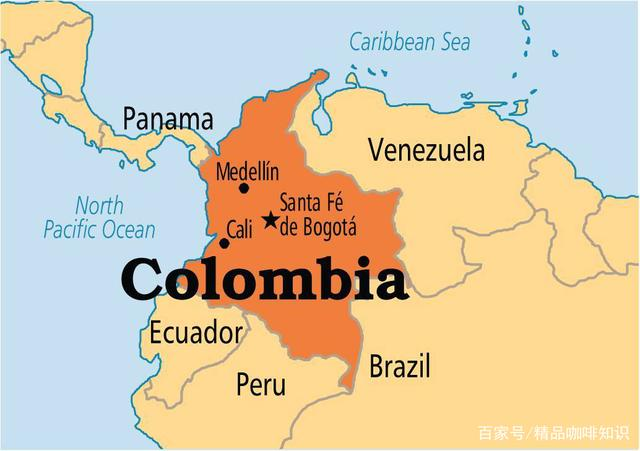
Colombian Geisha: A Rising Star
Colombian Geisha has undoubtedly outshined its Panamanian counterpart in recent years, not merely due to Colombia's favorable terroir but because it has repeatedly triumphed over Panama's most renowned Hacienda La Esmeralda in international competitions. In 2012, it again secured second place in the SCAA COTY green bean competition, demonstrating its formidable prowess.
This Geisha, grown at elevations of 1,700-1,950 meters in Colombia's Cauca Valley, offers aromas of premium Darjeeling tea, orange, and sweet yellow lemon, with flavors reminiscent of brown sugar and citrus juice, complemented by osmanthus fragrance and a rum-like finish. It presents gentle, non-acidic fruit notes with excellent body and the texture of premium tea. As the temperature decreases, the acidity becomes mellower, followed by distinct sweetness after the gentle acidity.
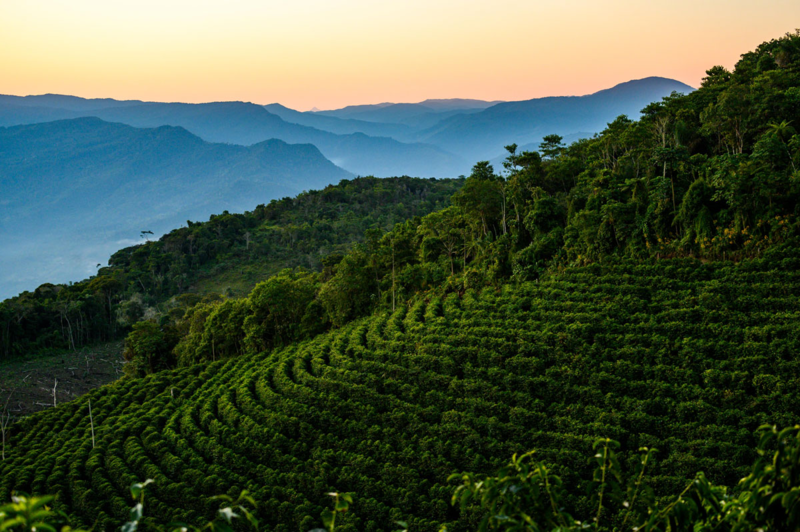
Colombia · Finca San Pedro
Colombia ranks as the world's third-largest coffee exporter, primarily producing Arabica coffee and exporting the highest volume of Arabica beans. Colombia boasts abundant natural resources, with coffee, flowers, gold, and emeralds celebrated as the "four treasures."
Tolima
Tolima borders Huila and Cauca, featuring the north-south running Andes Mountains and Cordillera ranges, with the Magdalena River flowing between these two famous mountain systems.
The name Tolima originates from the earliest inhabitants, the "Pijao people," in whose ancient language Tolima means "snow-covered."
Farms in Tolima are generally slightly larger than those in other southern Colombian growing regions, typically ranging between 10-15 hectares. Cooperative models are prevalent here, with farmers delivering their small batches of fresh coffee cherries to cooperative processing facilities. Some farmers also choose to process their own coffee using small-scale facilities capable of handling daily harvest volumes.
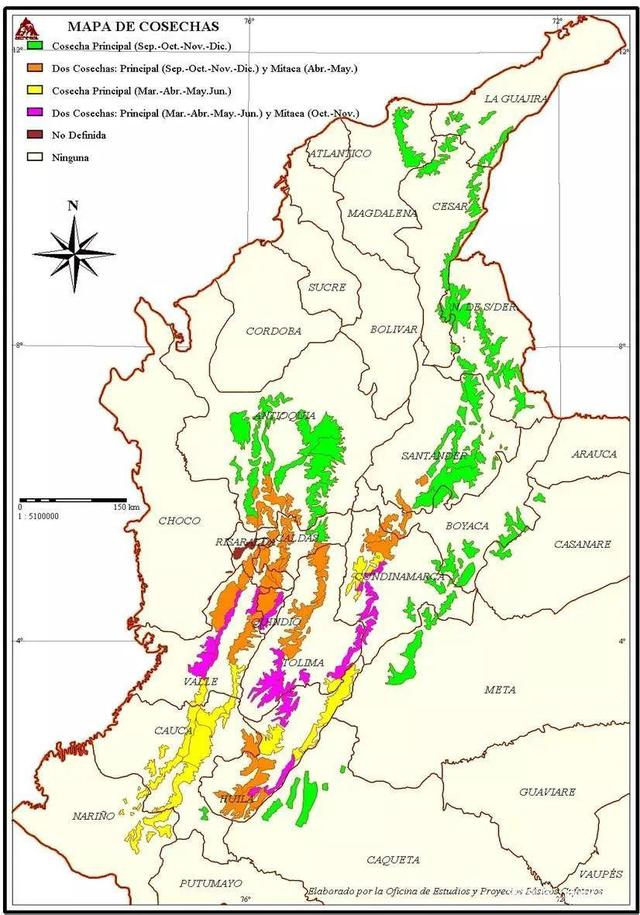
Tolima Growing Region
Tolima borders Huila and Cauca, featuring the north-south running Andes Mountains (M. Andes) and Cordillera ranges (M. Cordillera), with the Magdalena River (R. Magdalena) flowing between these two famous mountain systems.
The name Tolima originates from the earliest inhabitants, the "Pijao people," in whose ancient language (Pijao word) Tolima means "snow-covered."
Farms in Tolima are generally slightly larger than those in other southern Colombian growing regions, typically ranging between 10-15 hectares. Cooperative models are prevalent here, with farmers delivering their small batches of fresh coffee cherries to cooperative processing facilities. Some farmers also choose to process their own coffee using small-scale facilities capable of handling daily harvest volumes.
Finca San Pedro
Finca San Pedro is located in Vereda La Marimba village, where most of the region's premium coffee is cultivated. His son Alberto serves as the community leader, collaborating with many neighboring families to improve coffee quality throughout the region.
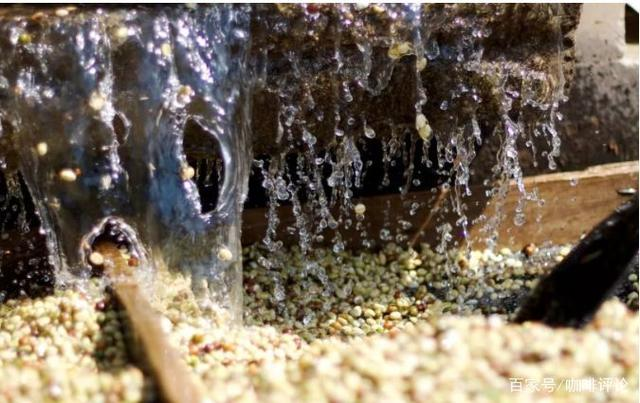
Finca San Pedro's processing methods are exemplary, featuring one shallow tank for removing immature cherries and another for fermenting coffee cherries. The coffee cherries ferment for 20-24 hours, followed by 5-7 rounds of washing and drying on new parabolic drying beds.
For them, this new drying bed represents a significant improvement: their previous drying bed was only 12 square meters, meaning insufficient space to evenly dry all the coffee during peak harvest season. Now, with a new 47-square-meter bed, all coffee beans can be slowly and thoroughly sun-dried.
Processing Method
This Geisha is processed using the washed method.
Selecting coffee cherries — removing pulp — fermentation — washing — drying — hulling
The selected coffee cherries are placed in a pulper to initially remove their skin and pulp; the coffee beans with remaining pulp and mucilage are placed in water to ferment for approximately 24 hours. After fermentation, the parchment coffee beans are placed in flowing water channels to wash away pulp and mucilage. After washing, the coffee beans are sun-dried or dried using mechanical dryers until moisture content reaches approximately 12%. Finally, the parchment is removed from the green coffee beans.
Green Bean Information
Colombia Tolima Finca San Pedro
- Country: Colombia
- Region: Tolima
- Elevation: 1,860M
- Processing: Washed
- Grade: SUPREMO
- Variety: Geisha
Green Beans & Roasting
The uniqueness of Geisha lies in its very distinct and clear floral and citrus flavors, extremely high cleanliness, soft and elegant acidity, lasting cotton-like sweetness, and the mouthfeel of premium tea. The floral aroma and intense sweetness of tropical fruit create a unique floral-fruity fragrance. We therefore typically choose light roasting to showcase the beans' inherent characteristics.
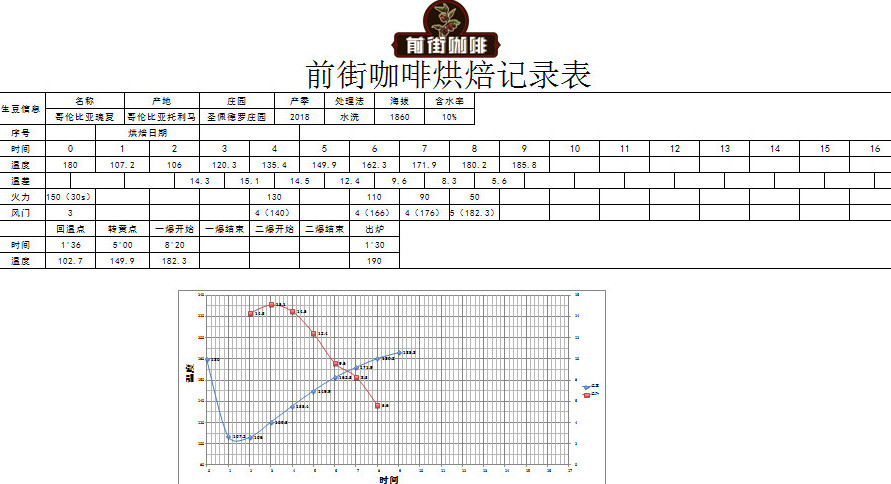
Colombia Tolima Finca San Pedro Geisha - Roasting Profile
Roaster: Yangjia 800N
Preheat the roaster to 180°C, set the damper to 3, and after 30 seconds, adjust the heat to 150, keeping the damper unchanged. The temperature returns to 1'36", and when the drum temperature reaches 140°C, adjust the heat to 130 and open the damper to 4. At this point, the bean surface turns yellow, the grassy aroma completely disappears, and the dehydration stage begins. When the drum temperature reaches 166°C, reduce the heat to 110°C, keeping the damper unchanged.
At 7'50", ugly wrinkles and black spots appear on the bean surface, and the toast aroma clearly transitions to coffee aroma, which can be defined as the prelude to first crack. At this point, listen carefully for the sound of first crack, which begins at 8'20". Reduce the heat to 50°C and adjust the damper to 5 (be very careful when adjusting heat—do not reduce it so much that there is no cracking sound). Develop for 1'30" after first crack, then drop at 190°C.
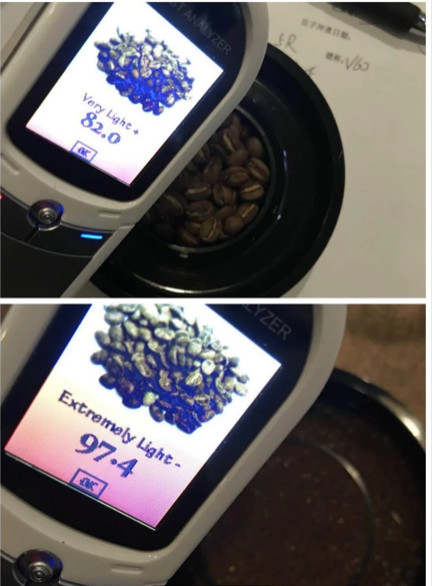
Agtron bean color value 82 (top image), Agtron ground color value 97.4 (bottom image), Roast Delta value is 15.4.
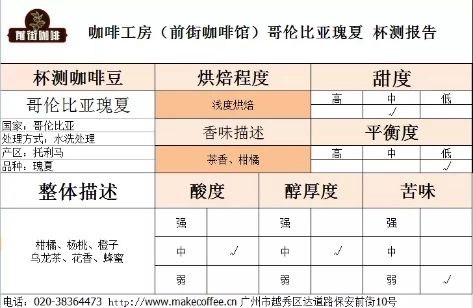
Cupping
- Flavor descriptions vary by individual and are influenced by water temperature and brewing methods. This cupping report provides descriptions based on the flavor wheel parameters using the same brewing equipment and parameters, intended for reference purposes only.
- Content will be promptly updated based on new information; the latest updates should be considered authoritative.
Colombia Tolima Finca San Pedro Geisha
Parameters: HARIO V60/90°C/1:15/VARIO 5O (Chinese standard #20 sieve, 57% pass-through rate)

Brewing Method: Step-by-step Extraction
Technique: Use 30g of water for a 30-second bloom, then pour to 124g. Wait until the water level drops to reveal the coffee bed, then pour to 228g. Remove the filter cup when the coffee bed becomes visible. Extraction time: 1'58".
Flavor: During brewing, you can smell citrus acidity and the fresh aroma of green tea. When hot, the entry reveals distinct cane sugar and licorice sweetness, followed by mid-palate notes of lemon acidity and an oolong tea finish, somewhat reminiscent of lemon tea. The finish shows prominent citrus flavors with persistent honey and cane sugar aftertaste, creating a honey green tea sensation.

FrontStreet Coffee Recommendation
If a Colombian Geisha has whetted your appetite for a classic, balanced cup, FrontStreet Jamaica Blue Mountain No. 1 is a natural next step. Strictly speaking, only coffee grown in a specific area of Jamaica's Blue Mountain range and certified by the Jamaican government can be called Jamaica Blue Mountain Coffee. The Blue Mountain range lies in eastern Jamaica, one of the highest in the Caribbean, with its tallest peak reaching 2,256 meters, and it is shrouded in cloud and mist year-round, which is how it earned the name "Blue Mountain." The high altitude brings a wide day-night temperature swing that lengthens the ripening cycle of the cherries, the fertile volcanic soil supplies abundant nutrients, and the ample, even rainfall and mild, stable climate let the cherries slowly accumulate sugars and flavor compounds, producing the delicate body and balanced flavor that made Blue Mountain famous.
That reputation also rests on scarcity and history. The total annual output of the entire Jamaican Blue Mountain area is under 2,500 tons, only a tiny fraction of world coffee production, and the Japanese market, which long held a stable trading relationship with Jamaica, historically bought more than 70% of that output, leaving even less for the global market. In the early days of the Chinese market, the lack of formal import channels made Blue Mountain seem mysterious and rare, and sayings such as "you cannot get real Blue Mountain in China" or "every Blue Mountain in a cafe is fake" once circulated widely. In fact, the Chinese market still accounted for an important share of global Blue Mountain consumption even before the import system matured, and since 2003 Jamaican Blue Mountain green beans have been formally exported to China, so consumers can now buy certified Blue Mountain through legitimate channels. When judging authenticity, certification matters most: genuine Blue Mountain carries no traceability code, but importers generally hold complete export certification documents and proof of origin, or clear physical evidence of the green beans. Traditionally, Blue Mountain is shipped in wooden barrels of 15, 45, and 70 kilograms, and each barrel is itself a mark of the genuine article; FrontStreet's Blue Mountain No. 1 is a top-grade batch from the long-established Clifton Mount estate, where coffee has been grown and processed since around the mid-18th century, roughly 1750. The estate's growing and processing area sits at an average of 4,300 feet (1,310.64 meters), where sufficient altitude, mild afternoon cloud cover shading the hillsides, ample sunshine, and mineral-rich soil give the coffee trees excellent growing conditions and extend the ripening of the cherries.
Blue Mountain is not limited to pour-over; its excellent balance means it also shines in a moka pot or as espresso. For pour-over, FrontStreet recommends a 1:15-1:16 ratio at 85-88°C with a medium-coarse grind, which highlights the cream, caramel, and nut notes while keeping a soft, bright sweet-tartness and a cleaner, more transparent cup with richer layering; FrontStreet also suggests a Kono dripper, which enhances the coffee's full body, using 15g per person and resting the beans for 4-7 days from the roast date as day one. The grind should be coarser than for a light roast, roughly white-sugar size, at 87-88°C, since water that is too hot is a common cause of scorched, bitter flavors while water that is too cold leaves the coffee flat and lifeless. FrontStreet uses a 1:15 ratio and a three-stage pour: 30g of water for a 30-second bloom, then a vertical, slow small-flow pour to 120g, then a slightly faster pour with circling to 225g to reduce fines clogging the filter and over-extracting. Freshly roasted within 5 days of shipping, the beans arrive near peak flavor and can be brewed right away. Medium-dark roasting brings out the coffee's full body and classic bittersweet depth, and the cup is very clean, complex, and gentle, with chocolate sweetness, strong body, a perfect balance of sweet, sour, and bitter that carries no bitterness at all—only a moderate, well-judged acidity—and a lingering fruity finish.
Important Notice :
FrontStreet Coffee is a long-established specialty coffee roaster in Guangzhou China, selling freshly roasted beans from its own farm in Yunnan as well as dozens of carefully selected single-origin beans from around the world for both pour-over and espresso. The products deliver consistently excellent quality and great value, with shipping within 24 hours. Guangzhou's FrontStreet Coffee shop is recommended by many coffee lovers, and the beans are now available online at the Tmall 。
FrontStreet Coffee has moved to a new address:
FrontStreet Coffee Address: 315,Donghua East Road,GuangZhou
Tel:020 38364473
 Scan and follow the En Gafei WeChat official account. Please indicate that the reprint comes from "En Gafei".