How Long to Brew Drip Coffee and How Many Times It Can Be Brewed - Office Drip Coffee Brewing Methods
As specialty coffee culture spreads, drip bag coffee — made from freshly roasted beans ground to a specific coarseness — has become a staple for office workers and home enthusiasts alike. Compared with pour-over, a drip bag is both convenient and simple: with almost no effort you can brew an aromatic, full-bodied black coffee with a long finish.
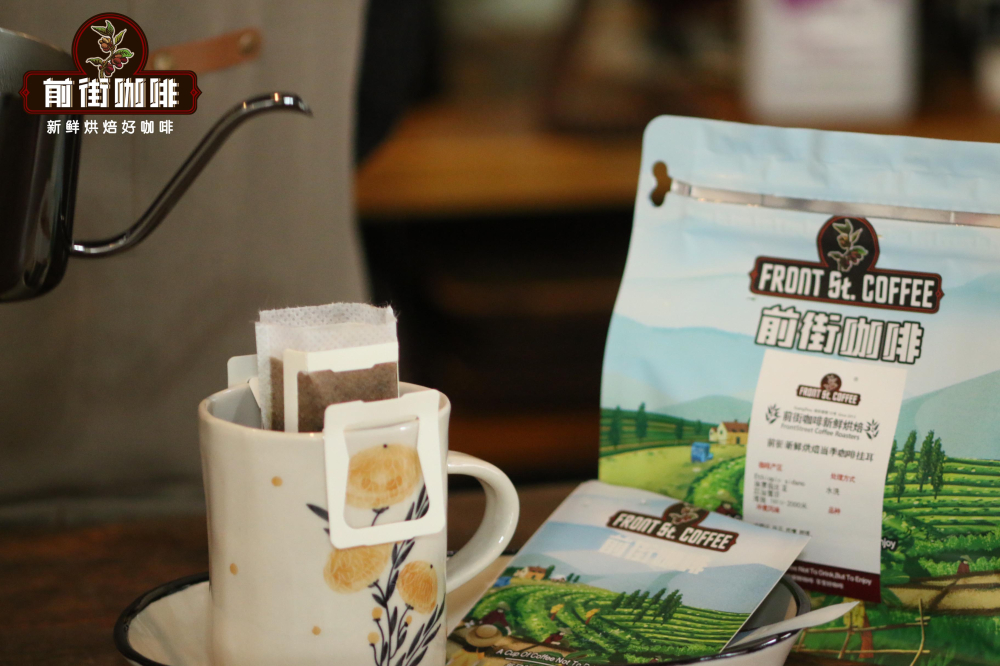
FrontStreet Coffee currently produces drip bags from every one of its selected single-origin specialty beans. All drip bag coffee is ground immediately after roasting and cooling, then packed into 10g bags that are sealed individually.
The Secret to a Delicious Drip Bag
Freshly roasted beans are the single most important factor. After roasting, coffee slowly releases carbon dioxide, and that gas carries aroma and flavor away with it. To keep the cup at its best, all drip bag coffee and whole beans sold by FrontStreet Coffee ship within 5 days of the roasting date.

There is plenty of choice when it comes to flavor. FrontStreet Coffee's menu offers more than 50 single-origin beans that can be turned into drip bags. If you like floral or fruity coffee, start with the classic fruity, bright options such as Guji, Yirgacheffe and Geisha. If you favor a rich body and a sweet aftertaste, look for nutty specialty beans like Mandheling, Colombian Huila and Jamaica Blue Mountain No. 1. And if you want neither much acidity nor bitterness, FrontStreet Coffee recommends Honduras Sherry, whose wine-like aroma you can enjoy anywhere, any time.

The Optimal Tasting Window
Making a drip bag means grinding the beans in advance, and the resulting increase in surface area speeds up the loss of carbon dioxide and aroma. FrontStreet Coffee seals each bag as quickly as possible after grinding, but even so a drip bag's aroma fades faster than that of whole beans.
Based on its own testing and comparison, FrontStreet Coffee finds that a freshly roasted and ground drip bag is at its best within 30 days of the roast date. Past 30 days the aroma and flavor drop off noticeably, and the brewed coffee is simply not as fragrant.
Drip Bag Mistakes to Avoid
Ⅹ Brewing with whatever kettle is at hand. A drip bag is simple, but you cannot brew it with your eyes closed — water temperature, ratio and pouring technique all matter.
Ⅹ Leaving the drip bag to soak in a small cup. Even with the right parameters this will not work, because the bag sits in the water continuously and easily over-extracts.
Ⅹ Treating the drip bag like a tea bag and steeping it in the cup.

Ⅹ Tipping the grounds out of the bag and brewing them directly in the cup.
Ⅹ Brewing the same drip bag a second time.
The Correct Way to Brew a Drip Bag
Brewing temperature: 88-92°C. Adjust according to the roast level — light to medium roast recommends 90-91°C, medium-dark to dark roast recommends 88-89°C.
Brewing ratio: 1:15 — a 10g drip bag with 150g of hot water.
Technique: a simple three-stage pour.
Equipment: a drip bag pouring kettle (available for just over 10 yuan, and effective at keeping the flow steady), a thermometer and a tall, heat-resistant cup.
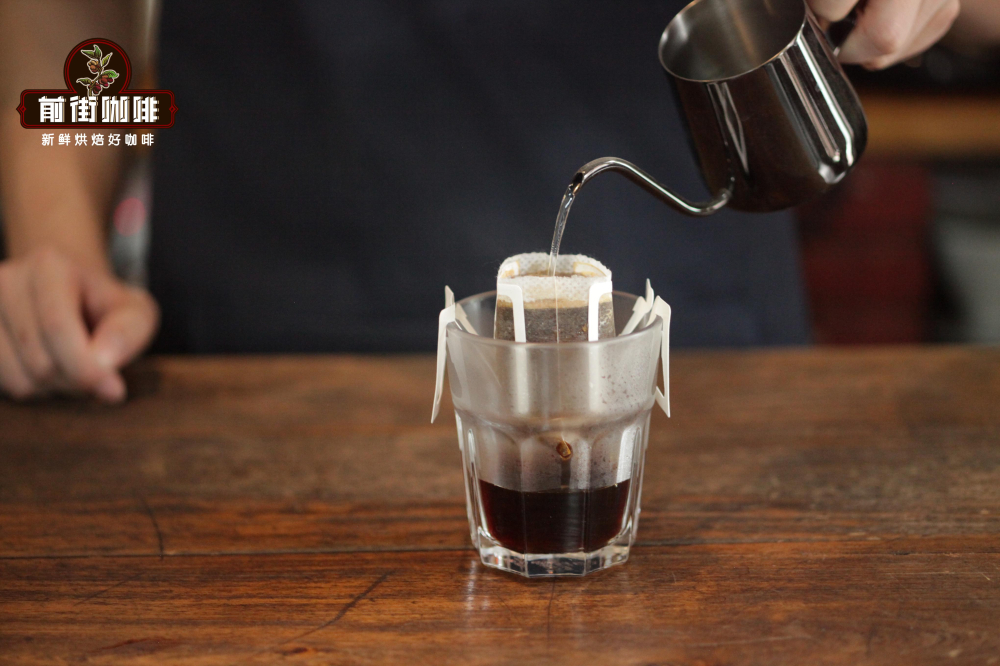
Step-by-Step
1. Choose a cup that is tall enough that the drip bag never touches the brewed coffee during the pour.
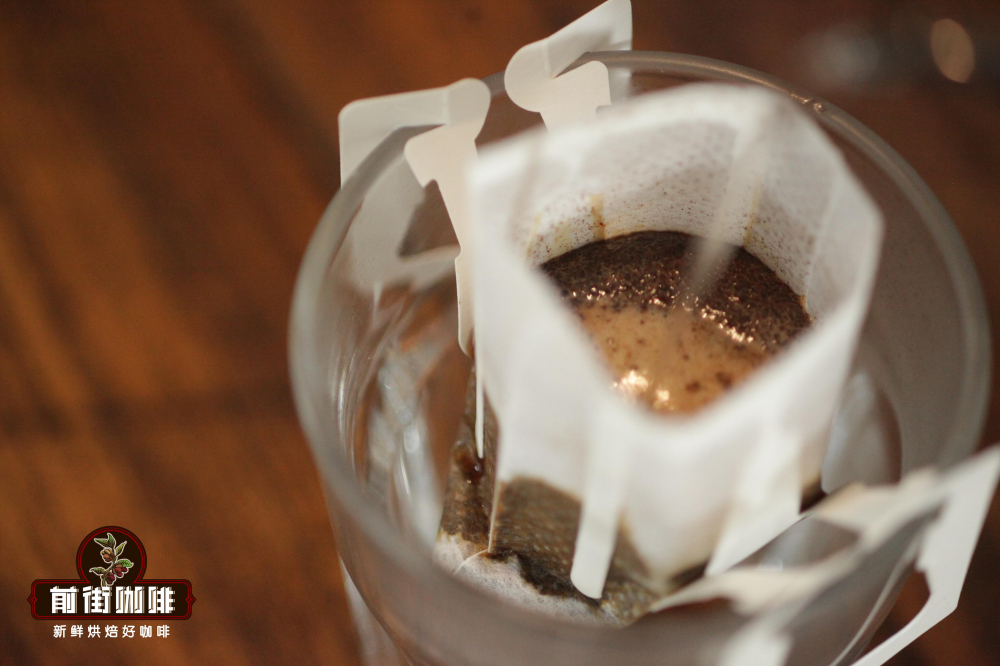
2. Open the packet, take out the drip bag and tear it open along the dotted line. Gently pull apart the cardboard flaps on both sides and hang the bag on the rim of the cup.
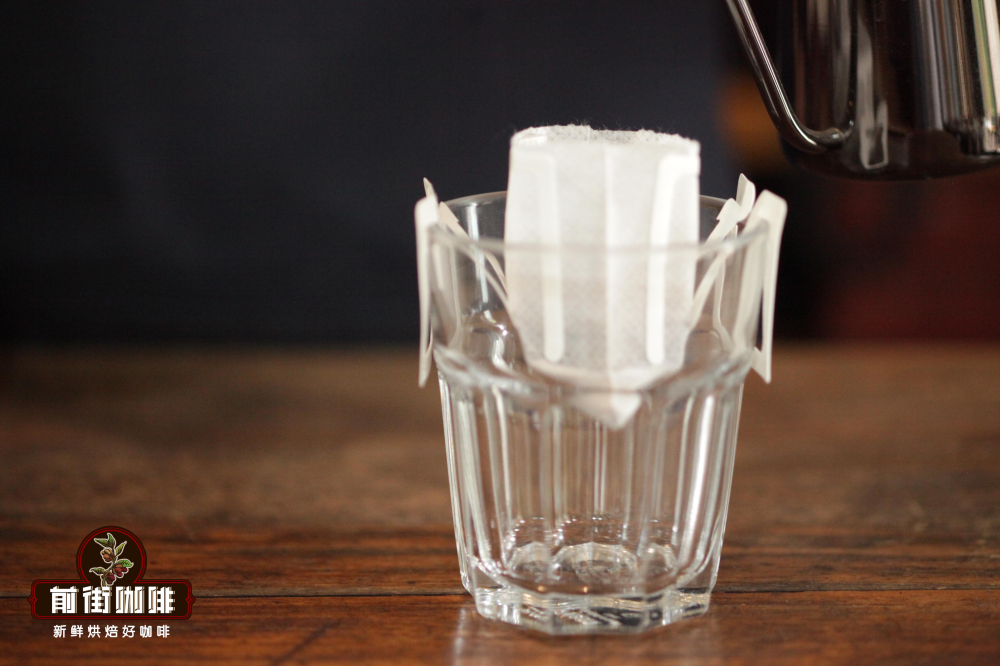
3. First pour 30ml of water and wait 20-30 seconds for the grounds to bloom. Then pour twice more at 10-second intervals, roughly 60ml each time.
4. Once the coffee has finished dripping, lift out the bag and discard it. Give the cup a shake to mix the coffee evenly, then enjoy.
One last warning: never brew the same bag a second time. All of the good flavor has already dissolved into the cup the first time round.
FrontStreet Coffee Recommendation
When you buy drip bags, the bean inside is what matters most. FrontStreet Yirgacheffe Gudingding is the classic place to begin: light-roasted, with clear citrus, berry and floral notes and a green-tea sweetness, its acidity soft and bright rather than sharp. It is one of the easiest specialty coffees to enjoy.
For a more exuberant fruit character, FrontStreet Ethiopia Huakui is packed with tropical aromas — strawberry, passion fruit, jackfruit and lychee — alongside pronounced sweetness and very little bitterness. It brews into a juicy, smooth cup that wins over drinkers who normally avoid coffee's bitterness.
If you prefer body and sweetness, FrontStreet PWN Golden Mandheling is roasted dark for very low acidity and a thick, long finish. Expect herbal and dark-chocolate aromas with a faint earthy note — ideal for anyone who likes a bold, low-acid cup.
And for balance above all, FrontStreet Jamaica Blue Mountain No. 1 sits exactly between the two extremes: neither the sharp fruit acidity of some African coffees nor the heavy bitterness of a dark roast. It brings cream, caramel, chocolate, nuts and honey together with a light fruity touch, smooth at the front and sweet through the middle with a clean, lingering finish.
Important Notice :
FrontStreet Coffee is a long-established specialty coffee roaster in Guangzhou China, selling freshly roasted beans from its own farm in Yunnan as well as dozens of carefully selected single-origin beans from around the world for both pour-over and espresso. The products deliver consistently excellent quality and great value, with shipping within 24 hours. Guangzhou's FrontStreet Coffee shop is recommended by many coffee lovers, and the beans are now available online at the Tmall 。
FrontStreet Coffee has moved to a new address:
FrontStreet Coffee Address: 315,Donghua East Road,GuangZhou
Tel:020 38364473
 Scan and follow the En Gafei WeChat official account. Please indicate that the reprint comes from "En Gafei".