Ethiopian Hambela Guji 5.0 Coffee Beans - Sidamo Coffee Beans Flavor Profile and Characteristics Introduction
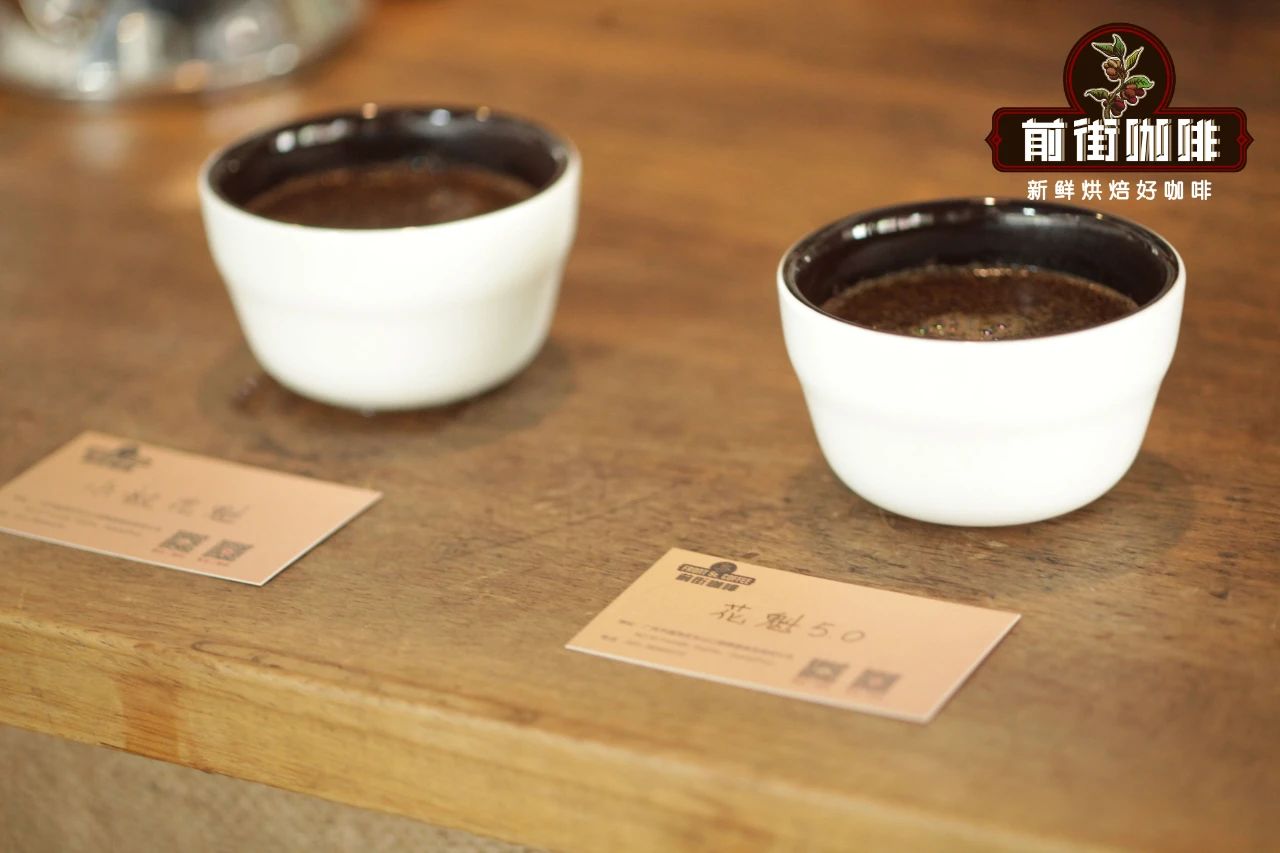
Ethiopia is the world's largest coffee gene pool. In recent years the Ethiopian government has devoted itself to developing several world-class specialty coffee regions, and Guji is one of these flagship projects.
Ethiopia's Premier Coffee Region: Guji
Guji has become a highly regarded producing region in recent years, with excellent results in both flavor expression and quality. It was formerly part of the Sidamo region before the Ethiopia Commodity Exchange (ECX) established it as an independent producing region in 2010.
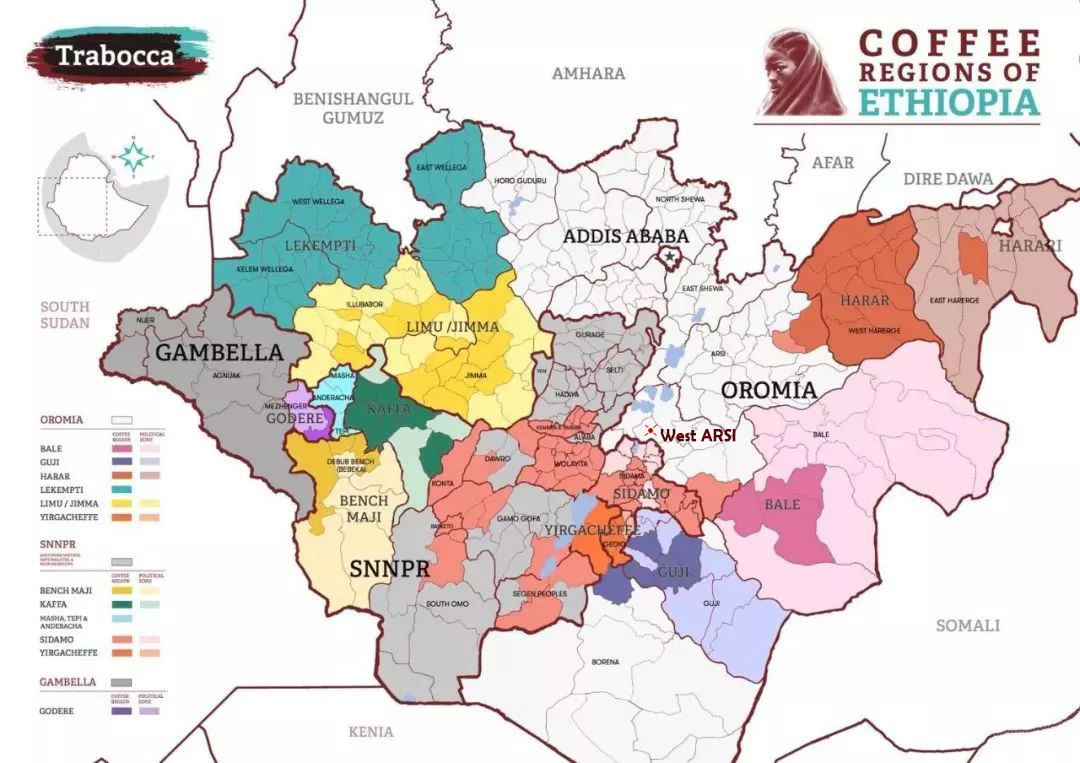
Located southeast of Yirgacheffe, Guji borders Sidamo and the Gedeo Zone. Its terrain is complex, ranging from towering mountains and highlands to plateaus, valleys, and plains.
The region's greatest advantage is that it keeps its soil vital through the natural circulation of organic matter, using withered leaves and fallen debris from the surrounding forests, along with plant residues, as natural fertilizer.
Hambella: The Heart of Guji
Hambella is administered by Oromiyaa, Ethiopia's southernmost administrative state. To the west it faces the Kochere area of Yirgacheffe across mountains at a distance of 3200m. To the east it borders Shakiso, to the south Uraga, and to the north Kercha.
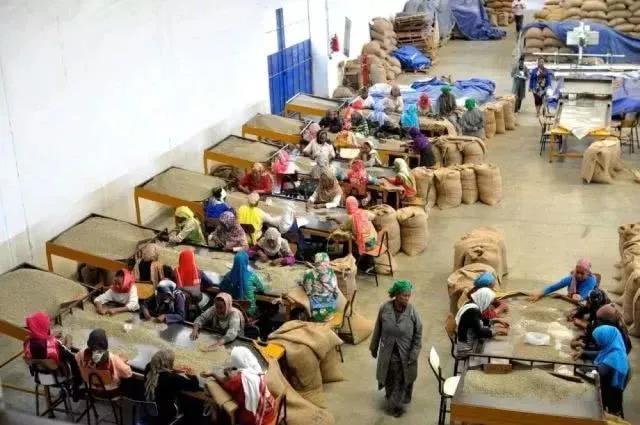
At present there are about 20 processing plants within Hambella, spread across different villages and estates and varying widely in scale.
Grading System
Ethiopia's old grading method was based simply on defect counts, with washed beans reaching Grade 1 (G1) as the highest level and natural processing reaching Grade 3 (G3) as the highest. The current system, established by the ECX, combines physical characteristics with cupping quality scores to set the grade.
All coffee is categorized into three types based on processing method, natural or washed:
a. Specialty (washed and unwashed): few defects, high cupping quality;
b. Commercial (washed and unwashed): does not reach specialty grade but is above the domestic consumption grade;
c. Local/Domestic (washed and unwashed): many defects such as unripe beans, off-season, and poor storage resulting in relatively poor flavor.
Of these, the Specialty and Commercial grades are for the international export market, while Local is for domestic sale.
The specific ECX grading and scoring standards are as follows:
A. Scoring Definition for Washed Processing
1. Physical characteristics account for 40%: defect count (20%), appearance size (10%), color (5%), aroma (5%)
2. Cupping quality accounts for 60%: cleanliness (15%), acidity (15%), mouthfeel (15%), flavor characteristics (15%)
B. Scoring Definition for Natural Processing
1. Physical characteristics account for 40%: defect count (30%), aroma (10%)
2. Cupping quality accounts for 60%: cleanliness (15%), acidity (15%), mouthfeel (15%), flavor characteristics (15%)
C. Overall Summary:
1. All coffee is first classified by processing method: natural or washed;
2. Each is graded from G1 to G9 (9 levels) based on physical characteristics and basic cupping quality;
3. G1-G3 undergo additional cupping according to SCAA standards for a more detailed flavor attribute evaluation, with G1 and G2 scoring not less than 85 points classified as Q1 grade;
4. G1, G2, and G3 scoring between 80-85 points are classified as Q2 grade, while all G1, G2, and G3 scoring below 80 points are classified as G3 grade;
5. Q1 and Q2 are classified as Specialty Grade for export. G4-G9 keep their original grading and are classified as Commercial Grade for export along with G3.
Washed Grade 1 represents 0-3 defective beans per 300 grams of raw beans; Grade 2 represents 4-12 defective beans per 300 grams. In practice, seller and buyer standards for defective beans certainly differ somewhat, otherwise we could not pick out so many defective beans, but the comparison of defect rates is still easy to distinguish. G1 defective beans are significantly fewer than G2, which means that, setting aside specific flavors and roast levels, Ethiopian G1 beans are of higher quality and score higher than G2 beans, at least in terms of defect flavors.
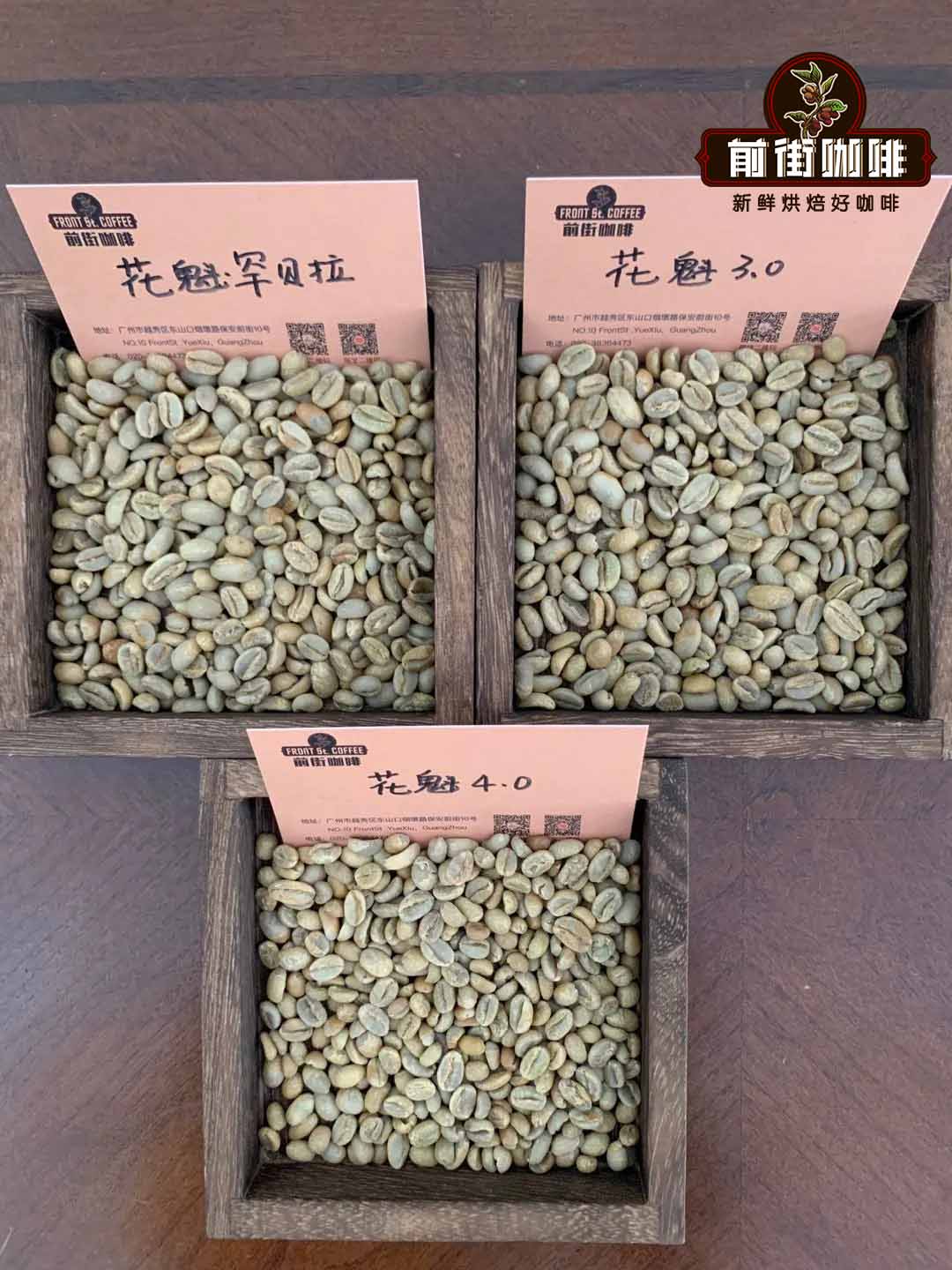
FrontStreet Coffee currently purchases Hambella G1 grade beans, ensuring superior quality and stability throughout roasting and flavor expression.
Coffee Processing Methods
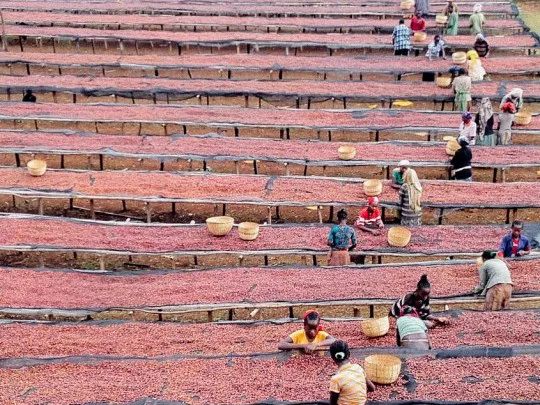
Natural sun-drying is the most traditional method. After harvesting, the cherries are dried in the sun as follows:
1. Farmers place the harvested cherries directly on sun-drying patios to dry in sunlight;
2. During exposure, regular turning and stirring are necessary to avoid uneven drying or fermentation;
3. It generally takes 2-4 weeks to reach complete dryness;
4. A hulling machine removes the pulp and skin from the dried beans to extract the green beans.
Advantages: natural processing keeps the mucilage on the beans, and mucilage itself carries sweetness. During the process, sugars transfer into the coffee beans, giving relatively stronger sweetness, a rich mouthfeel, and distinct layering.
Disadvantages: more defective beans, inconsistent bean appearance, and a tendency to absorb ground odors and earthy flavors.
FrontStreet Coffee Brewing Recommendations
Brewing equipment: HARIO V60
Parameters: 15g coffee / 1:15 ratio / 90 degrees Celsius
Grind size: medium-coarse grind (Chinese standard 57% pass-through rate through a #20 sieve)
Technique: 30g water for a 30-second bloom, then pour directly to 125g in the center before segmenting. After the coffee bed shows, continue pouring to 225g. Remove the filter cone when the bed is visible. Total extraction time: 2'00".
Flavor: full-bodied berry fruit juice, black tea character, pomelo peel, short sweet aftertaste.

FrontStreet Coffee Recommendation
If Hambella's berry-and-black-tea profile appeals to you, FrontStreet washed Yirgacheffe is the natural next step. It shows clear jasmine florals and bright citrus acidity, with a light, elegant body and a tea-like finish that drinks like a clean, refreshing lemon tea.
For more floral lift, FrontStreet Gutingding Cooperative comes from the Woka area at the southeastern edge of Yirgacheffe, once part of the Woka cooperative and later recognized in its own right as a single-origin producer. Its traditional washed process keeps the cup bright and precise, with citrus and lemon acidity over elegant white florals, and none of the traditional bitter note.
To lean into fruit, choose FrontStreet Sun-Dried Red Cherry, made only from fully ripe cherries and dried on raised beds for three to five weeks, then rested in the warehouse. It keeps the classic Yirgacheffe profile while adding tropical fruit from the natural process: citrus acidity, berry-juice sweetness, honey, and a creamy, smooth body. Brew it in a V60 at 90-91 degrees Celsius with 15g to a 1:15 ratio.
Important Notice :
FrontStreet Coffee is a long-established specialty coffee roaster in Guangzhou China, selling freshly roasted beans from its own farm in Yunnan as well as dozens of carefully selected single-origin beans from around the world for both pour-over and espresso. The products deliver consistently excellent quality and great value, with shipping within 24 hours. Guangzhou's FrontStreet Coffee shop is recommended by many coffee lovers, and the beans are now available online at the Tmall 。
FrontStreet Coffee has moved to a new address:
FrontStreet Coffee Address: 315,Donghua East Road,GuangZhou
Tel:020 38364473
 Scan and follow the En Gafei WeChat official account. Please indicate that the reprint comes from "En Gafei".