The Differences Between Arabica and Robusta Coffee
Coffee beans fall into three main categories: Arabica, Robusta and Liberica. Since Arabica and Robusta are by far the most common varieties circulating on the market today, some readers have written in to ask how these two types actually differ.
To help everyone understand the two varieties better, today we'll look at the differences between Arabica and Robusta coffee beans.
1. Harvest Period and Yield

Arabica coffee trees take five years from planting to bearing fruit. Brazil's main harvest runs from May to September each year, while Colombia's runs from April to June. Arabica accounts for roughly 70-75% of the global market. Robusta coffee trees, by contrast, need only two to three years to bear fruit. In Indonesia the harvest runs from April to August each year, while in Vietnam it runs from October to April of the following year. Robusta accounts for roughly 20-25% of the global market.
2. Characteristics and Uses
Arabica has a relatively mild flavor with fragrance and wine-like acidity, which makes it the higher-quality bean. It therefore carries greater commercial value, and Arabica beans offer different flavors under different roast levels, giving drinkers plenty of room to explore. In FrontStreet Coffee's list of more than fifty coffee varieties, for example, more than 95% are single-origin Arabica varieties.

Robusta has strong resistance to pests and diseases, but the beans it produces lack aroma, carry strong bitterness (thanks to their high caffeine content) and have insufficient acidity, so they are used mainly for instant coffee, canned coffee or three-in-one instant mixes. Compared with Arabica, Robusta also sells at a lower price.
Arabica offers more refined flavors and a smoother mouthfeel, with generally better quality overall. Single-origin Robusta specialty coffee is rare on the market today, though some specialty importers do carry it. Washed Robusta is of higher quality and can be used in blends to add body and intensity, complementing the strengths of Arabica. The three famous coffees—Hawaii Kona, Jamaica Blue Mountain and Yemen Mocha—all belong to the Arabica variety. Arabica green beans have a dark, narrow appearance and are regarded as the highest-quality highland varieties, prized for rich flavors including sweetness, acidity and aroma.

Generally speaking, Arabica is used mainly for single-origin or specialty coffee, while Robusta goes into instant coffee. Although Arabica can be defined as premium and Robusta as secondary, there is no need to rank them that way—it is better to choose based on the flavors you prefer. Looking at flavor preferences, the United States and Japan more often drink light coffee brewed from Arabica, while Europe prefers espresso made from a blend of Arabica and Robusta.
Shape Differences
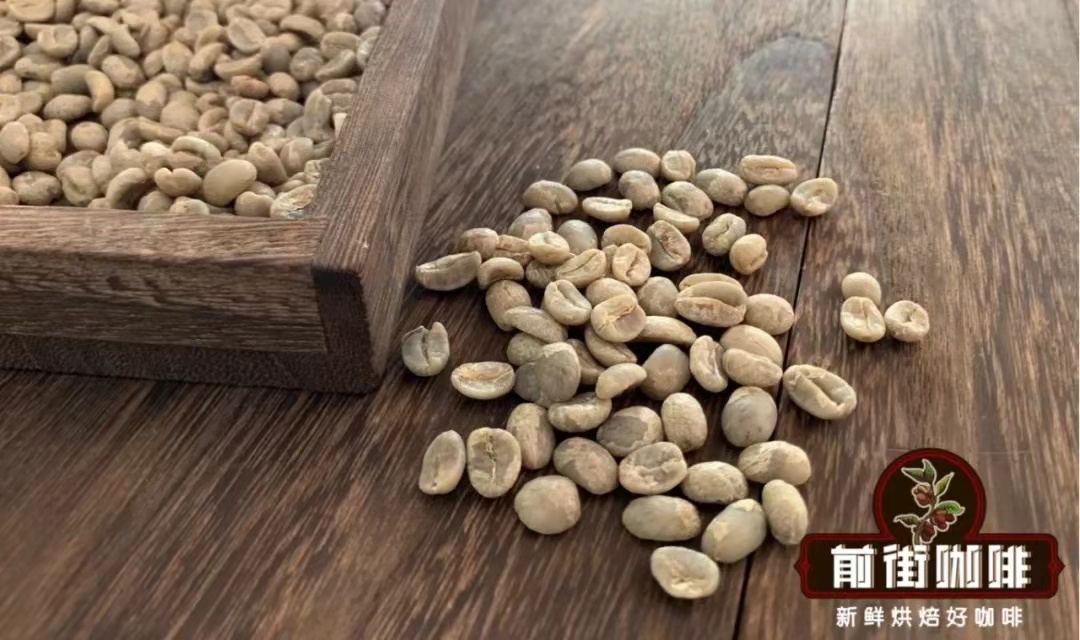
Arabica cherries are oval and typically contain two slightly flat beans. The beans are small and round, with an oval front face and a narrow, curved S-shaped crack down the middle. The back of the bean has a relatively flat arc. Main growing regions include South America, the Central American countries, Africa and Asia; Yunnan, Hainan and Taiwan in China also cultivate small amounts of Arabica.

(Left: Arabica, Right: Robusta)
Robusta beans are oval, small and relatively round. The side with the crack is slightly puffed, with straighter grooves. They have weak aroma and strong bitterness, reminiscent of soybeans, and are used mainly for instant coffee. Because the species originated in Africa, most Africans drink Robusta coffee.
Different Flavor Characteristics
[Arabica]
Arabica has diverse and broad potential flavors. Arabica grown in different regions, altitudes and climates typically has unique characteristics, showing distinctly different personalities. Unroasted Arabica smells of fresh grass. After appropriate roasting it reveals "fruit aroma" (light to medium roast) and "caramel sweetness" (dark roast), and it generally has better aroma and flavor than Robusta. This is why Arabica is the only one of these native varieties that can be enjoyed on its own, suitable both as a single origin and in espresso blends.

[Robusta]
Robusta coffee typically has rather plain, stiff and pungent flavors. Because most Robusta worldwide is grown in low-altitude regions (today only India grows rare high-altitude, high-quality washed Robusta), the flavor differences between regions and climates are not significant and it lacks individuality. Unroasted, it smells like raw peanuts. Cheap Robusta beans after roasting typically show flavors ranging from "wheat tea" (light to medium roast) to "rubber tire" (dark roast), and it is difficult to coax out delicate flavors.
Does Yunnan Small Bean Coffee Belong to Arabica?
99% of the coffee grown in China comes from Yunnan. Yunnan coffee belongs to a variant of the Arabica species, developed through long-term cultivation and domestication, and is generally called Yunnan Small Bean coffee, with more than a hundred years of cultivation history.

To set expectations fairly, first: Yunnan is definitely not the worst coffee in Asia—Indonesia's Robusta and East Timor's hybrid varieties sit at the bottom of that comparison.
Second, Yunnan is not the worst coffee in China either, because Hainan Xinglong's Robusta ranks below it.
Third, Yunnan is not the finest coffee in China either—the country's most prized high-mountain lots come from Taiwan.
What is Yunnan Small Bean Coffee?
"Yunnan Small Bean" is named in contrast to Vietnam's "medium bean" coffee, because the two regions grow different varieties. Yunnan grows Arabica, whose beans are smaller than Vietnam's Robusta, hence the name "small bean." The variety planted in Yunnan belongs to the same Arabica species as the most expensive Blue Mountain coffee. Yunnan is China's largest Arabica growing region, so the Arabica produced there is also called small bean coffee.

What Varieties Does Yunnan Small Bean Coffee Include?
Typica and Bourbon, two classic premium varieties, are the main varieties cultivated in Yunnan. In 1991, the Catimor series was introduced from Kenya (with stronger virus resistance and higher yield), belonging to an Arabica variant (also called the small bean variety). Because the two varieties have similar morphology and habits, they are often mixed in cultivation.

Typica originated in Ethiopia and southeastern Sudan and is the most widely cultivated coffee variety in the Western Hemisphere. Typica plants are relatively robust, with tall, slender forms and bronze-colored top leaves, which is why they are commonly known as red-top coffee. However, the variety is not tolerant of light, has poor disease resistance and low yield, so many farmers chasing high yields are unwilling to plant it and switch to more productive varieties instead. This is the main reason Typica is becoming increasingly rare today. Its flavor, though, is mellow and elegant, suiting a range of brewing methods. FrontStreet Coffee's own Yunnan coffee uses the Typica variety.
Bourbon originated from a natural mutation of Typica, with the bean shape changing from slender and pointed to round. It was first discovered on Bourbon Island, Réunion, off the east coast of Africa. In 1715, France transplanted round beans from Yemen Mocha to Bourbon Island (renamed Réunion after the French Revolution), and the variety took its name from the island. Bourbon round beans were introduced to Brazil for cultivation in 1727.

Although its yield is not high, Bourbon has better resistance to leaf rust than the weaker Typica. Bourbon grown at high altitude has rich, delicate flavors, strong aroma and smooth acidity. The Bourbon cherries we usually see change from green to light yellow, orange-yellow and red, and finally to fully ripe dark red—the familiar Red Bourbon. There is also a rarer Yellow Bourbon, whose ripe cherries turn bright yellow. FrontStreet Coffee's Brazil Queen Estate coffee belongs to the Yellow Bourbon variety.

Catimor is a combination of Arabica and Robusta. Robusta has good resistance to leaf rust, rich oils, high yield and easy cultivation. After hybridizing with Arabica Typica, Catimor gained 25% Robusta genes. It improved resistance to leaf rust and kept the rich oils, while also retaining some of the rich flavor of the original Typica. That is why most Yunnan estates began large-scale cultivation of Catimor. FrontStreet Coffee finds that Catimor grown in Yunnan has nutty, brown sugar and plum-like flavors, though its overall cleanliness is not quite as fine as Typica.
FrontStreet Coffee Recommendation
To taste a clean, balanced Arabica at an everyday price, start with FrontStreet Coffee's Brazil Cerrado pulped natural Red Bourbon. Grown in the well-known Cerrado region, it is roasted to a level that brings out creamy peanut, toasted bread, caramel and hazelnut aromas; the cup is rounded, not acidic, with a light bitterness, and it works just as well in a pour-over as in a moka pot, an SOE, a siphon or a French press.
If you want an Arabica with more fruit and sweetness, FrontStreet Coffee's Brazil Queen Estate is a rare Yellow Bourbon. It comes from Mogiana, where fertile red volcanic soil lets the fruit absorb plenty of nutrients and develop a full aroma. Its Yellow Bourbon genetics—a mutation of Red Bourbon—give a cleaner fruit character, and the cup shows the bright sugarcane sweetness and fruit and chocolate notes that other regions seldom offer.
Brazilian Arabica is also the backbone of many of FrontStreet Coffee's espresso blends, from the crema-rich FrontStreet Coffee classic blend to the nutty premium blend and the balanced FrontStreet Coffee Black Cocoa blend. Adding Brazilian beans brings chocolate and cream aromas along with a gentle sweet-sour-bitter balance, and that balance also helps keep extraction stable from shot to shot.
Important Notice :
FrontStreet Coffee is a long-established specialty coffee roaster in Guangzhou China, selling freshly roasted beans from its own farm in Yunnan as well as dozens of carefully selected single-origin beans from around the world for both pour-over and espresso. The products deliver consistently excellent quality and great value, with shipping within 24 hours. Guangzhou's FrontStreet Coffee shop is recommended by many coffee lovers, and the beans are now available online at the Tmall 。
FrontStreet Coffee has moved to a new address:
FrontStreet Coffee Address: 315,Donghua East Road,GuangZhou
Tel:020 38364473
 Scan and follow the En Gafei WeChat official account. Please indicate that the reprint comes from "En Gafei".