World's Three Great Coffees: Flavor Characteristics of Blue Mountain Coffee, Gesha Coffee, and Kopi Luwak

If you are a coffee enthusiast, three beans are probably already familiar names: Jamaica Blue Mountain, Panama Geisha, and Indonesia's Kopi Luwak. Today FrontStreet Coffee explores all three at once — why each commands its premium, and what each actually tastes like.
Jamaica Blue Mountain
Blue Mountain is one of the standard-bearers of high-quality coffee, and it owes that to Jamaica's Blue Mountains — their weather, their geology, and their terrain together form an ideal environment for the bean.

The ridge that runs through Jamaica reaches the island's eastern end. The Blue Mountains rise above 2,100 meters, but Blue Mountain coffee is cultivated only between 910 and 1,700 meters, because everything above 1,700 meters is a nature reserve. Up there the weather is cool and foggy with frequent rain; fertile soil and rainwater combine with a mixed-cultivation method in which coffee trees are planted on terraces alongside banana and avocado trees that shade them.
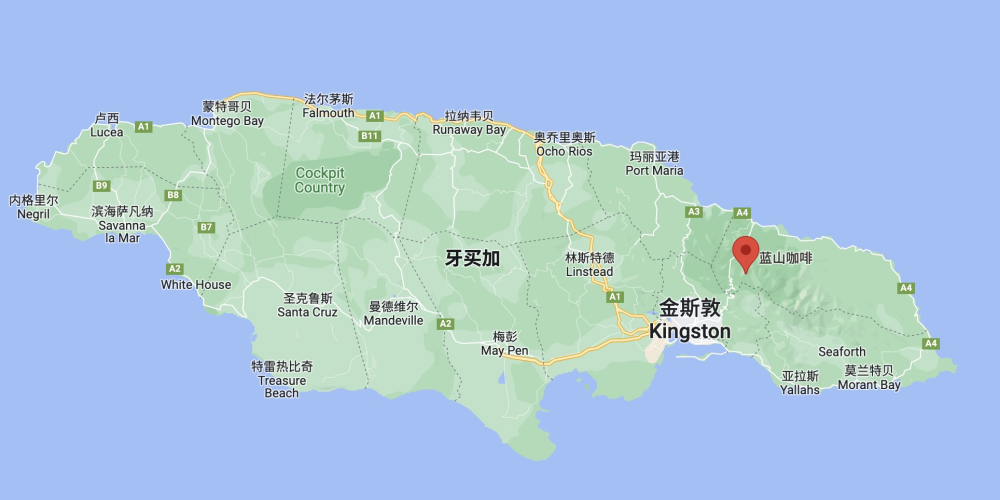
An excellent growing environment, fertile volcanic soil, and the oldest coffee variety, Typica, give Blue Mountain its remarkably balanced and clean flavor. FrontStreet Coffee sells a washed Blue Mountain from Jamaica's oldest coffee estate, Clifton Estate, grown at 1,310 meters. Cupped after a medium-dark roast, it shows a perfect balance of acidity, sweetness, and bitterness: within a thick dark-cocoa body there is a subtle, lively fruit acidity and a clear sweet finish that leaves anyone who tastes it unable to forget it.
Why is Blue Mountain so expensive?
One reason is that Jamaica's coffee industry faces a run of challenges — hurricanes, rising labor costs, and the difficulty of mechanizing terraced fields. Many small estates and farms struggle to make cultivation pay, so annual Blue Mountain production stays limited.

Another reason is Japan's long investment in the Jamaican coffee industry. Before 2012 most Blue Mountain was controlled by Japanese interests, which also held priority purchasing rights. In 1992 Jamaica sold 688 tons of Blue Mountain to Japan, 75 tons to the United States, and 59 tons to the United Kingdom. Today 90% of Blue Mountain is bought by Japan. With the rest of the world able to reach only the remaining 10%, demand stays high at almost any price.
It was not until 2012 that the Jamaican government cancelled Japan's priority purchasing rights, opening more opportunity for other countries to import Blue Mountain. Jamaica's Blue Mountain harvest runs from June to November each year and is usually picked by hand. After harvesting, the beans go through washing, pulping, fermentation, dehydration, drying, hulling, and roasting before they become finished Blue Mountain beans.
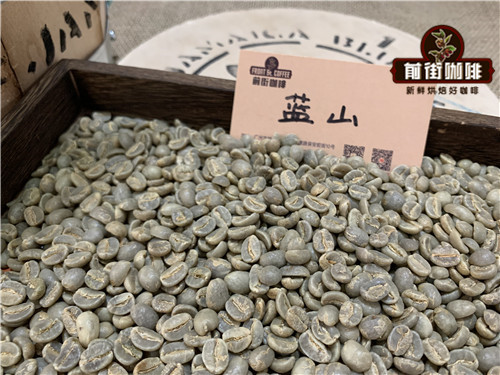
At every step of green-bean processing, dedicated staff supervise quality. For such a precious coffee, Jamaica's packaging and transport are distinctive too: instead of the 60kg burlap bags used elsewhere, Blue Mountain is packed and shipped in wooden barrels of 15, 30, or 70 kilograms.

Jamaica is also the last country still using traditional wooden barrels to package and ship coffee. Every lot of Jamaican Blue Mountain must receive a quality certification from the Jamaican Coffee Industry Board, the only body authorized to issue one, and for each export batch dedicated supervisors sample, roast, grind, and brew the coffee before ruling on whether it meets the standard.
Blue Mountain is still priced above many other origins, though it is markedly cheaper than a decade ago. FrontStreet Coffee's Jamaica Blue Mountain No. 1 is priced at 158 RMB per 100g.

Panama Geisha
Geisha is a coffee variety, its name a transliteration of "Geisha," and it belongs to the same family as Typica and Bourbon. It originated in the forests of Ethiopia. In 1931 it was brought from Geisha Mountain in southwestern Ethiopia to research institutes in Kenya and Tanzania, then transplanted to Uganda and Costa Rica; during the 1960s and 70s the Don Pachi Estate introduced it from Costa Rica to Panama for cultivation.

At the time it was far less popular than varieties such as Caturra and Catuai, thanks to low yields, tall plants, and difficult harvesting; Geisha trees were often used as windbreaks. Only when Panama's Hacienda La Esmeralda separated it from other varieties in 2003, and it took the BOP championship in 2004, did Geisha properly arrive in the public eye.
Geisha trees are demanding and quite picky about their surroundings. They need altitude, cloud and shade or abundant shade trees, and fertile soil to develop their rich, captivating florals, delicate fruit acidity, and tea-like sweet finish.

Panama's climate suits Geisha exceptionally well. Bordering Costa Rica and Colombia, Panama's east-west geography lets cold air flow through the central mountain range and converge above 1,900 meters, creating a unique microclimate in the Boquete and Piedra de Candela regions whose temperature and rainfall are ideal for plant growth. This microclimate zone is Panama's main coffee-producing area. Beyond climate, the surrounding land is nutrient-rich, and fertile soil gives the coffee perfect growing conditions, shaping many distinctive, high-quality coffees. FrontStreet Coffee believes it is precisely these Panamanian factors that let Geisha develop delicate fruit acidity and clear floral aromas — the very flavors that have made Panama Geisha popular worldwide.
Since Geisha became famous in Panama it has been cultivated worldwide, and even Yunnan now grows it. Many regions grow Geisha — Ethiopia, Colombia, Guatemala, Costa Rica, and even China's Yunnan — but climate, altitude, temperature and humidity, sunlight hours and intensity, soil fertility, irrigation water, and the growers themselves all shape the flavor, and none matches Panama Geisha. Geisha varieties are diverse and each has its own character, and FrontStreet Coffee believes Geisha from other origins is well worth trying too.
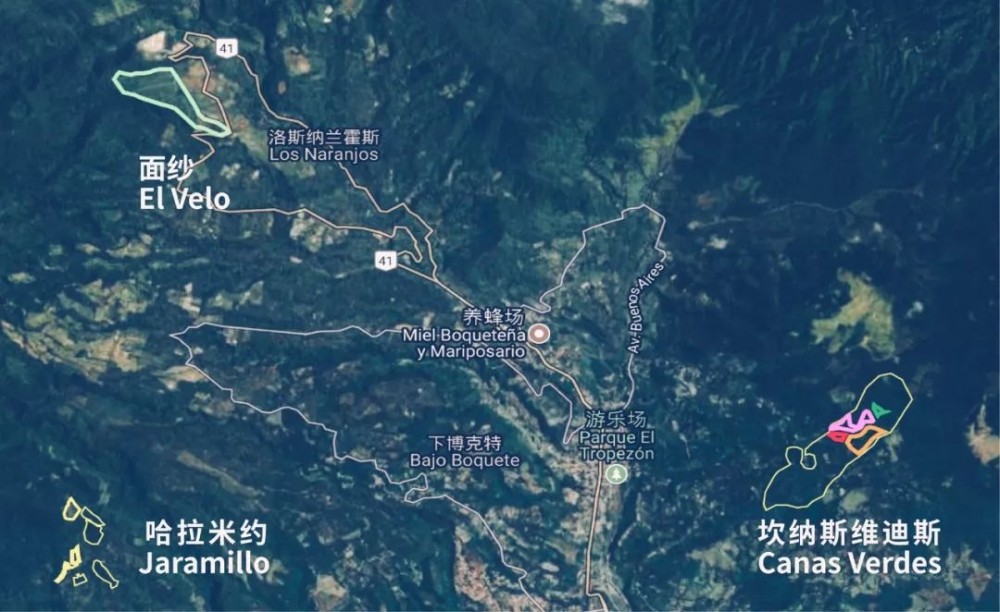
FrontStreet Coffee's Geisha range reaches beyond Panama to include Ethiopia's Gesha Village Red Label, Colombia's Hanami, and Costa Rica's Mirasu — all very popular single-origin coffees.
Hacienda La Esmeralda, the estate that discovered Geisha, divided its land into plots early and built a product-positioning strategy around them. Originally there were three Geisha brands and two non-Geisha brands: Esmeralda Special, Private Collection, and Geisha 1500, alongside two Catuai brands, Diamond Mountain and Palmyra.


Later, as the international market shifted, Geisha's global popularity grew, and other Panamanian estates began probing the limits of the variety, Hacienda La Esmeralda adjusted its line-up between 2020 and 2022. Auction lots were separated from the Red Label into an independent product line, Auction Batches. The Red Label kept its traceability to specific plots and now represents the highest grade sold outside auction. The Green Label de-emphasizes individual plots and blends lots harvested between 1,600 and 1,800 meters, while still expressing the estate's signature Geisha character. The Blue Label, the best-value series, was discontinued.
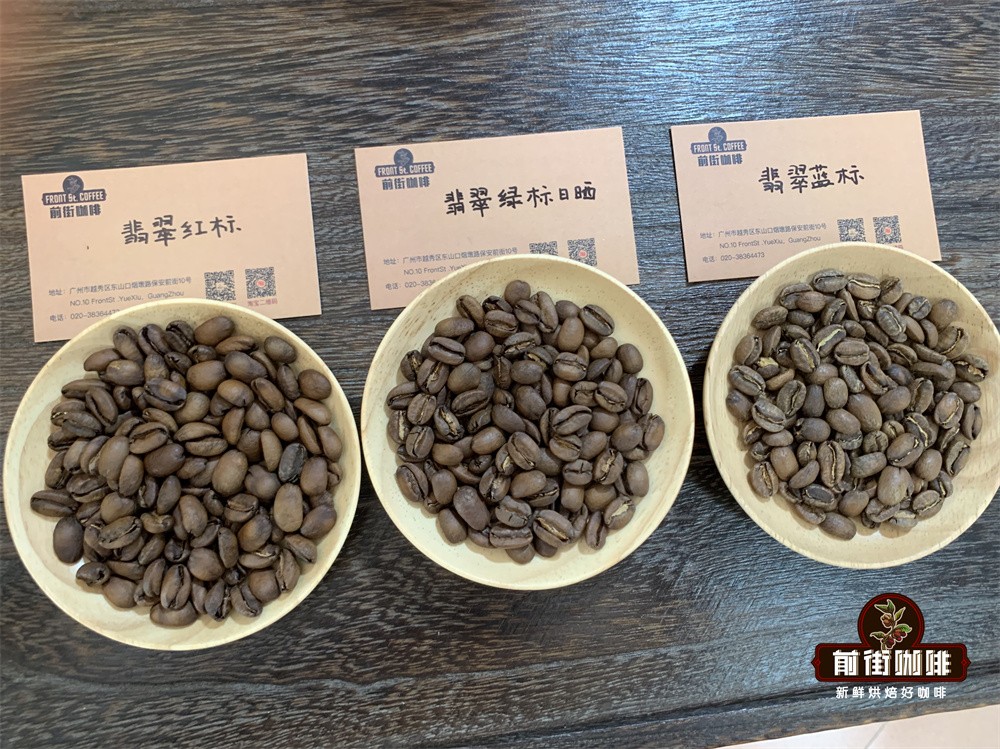
Because Geisha brings florals, fruit, honey sweetness, and a clean, bright mouthfeel, it is usually roasted medium-light. On price, Geisha can be surprisingly accessible. For the highest-grade single-plot Geisha, FrontStreet Coffee suggests La Esmeralda Red Label at 350 RMB/100g; for high-quality Geisha, FrontStreet Coffee's La Esmeralda Green Label at 168 RMB/100g.
Indonesia Kopi Luwak
Kopi Luwak, also known as civet coffee, is a household name. Everyone knows it as the world's most expensive coffee and the one produced in the smallest quantity. Its annual output is limited because the beans ferment inside the animal's body, developing a special herbal aroma and excellent body. That scarcity made it a favorite of the wealthy, and its price is extremely high; despite the cost, the underlying bean quality is generally average.

The Asian palm civet mainly inhabits tropical rainforests and the edges of subtropical evergreen broadleaf forest, including shrubland and grassland in hills and mountains below 2,100 meters altitude, choosing rock caves, burrows, or tree hollows as its habitat. These coffee beans are typically Robusta, because the civet's range sits at low to medium altitude where most coffee grown is Robusta; high-altitude Arabica Kopi Luwak is rare.
What does Kopi Luwak taste like?
The Asian palm civet is omnivorous. Its animal foods include small mammals and birds; its plant foods include the stems and leaves of Solanaceae plants, the seeds of various figs, and fruits such as Lansium parasiticum and Physalis. But civets digest plants poorly, so berries amount to dessert while meat is the mainstay. Because of that poor plant digestion, they live in the broadleaf forests, shrublands, and agricultural areas of South Asia and Southeast Asia — environments also well suited to coffee. Many of the Physalis fruits a civet eats are in fact coffee cherries. All it can digest is the skin and pulp; the seeds inside — the coffee beans — are eventually excreted. Since the civet's habitat is Indonesia's low-altitude regions and the coffee is the low-quality Robusta bean, Kopi Luwak carries the earthy, herbal flavors typical of Robusta. Combined with its unusual processing, the coffee has high viscosity, syrupy and substantial on the tongue.
Its special method — in-body fermentation
In the past, locals collected wild civet droppings from the forest, extracted the undigested coffee seeds, and processed them into green beans. Because production was limited and the in-body fermentation unique, many traders spotted the opportunity and began capturing and caging civets on a large scale. Civets, which should eat meat, were left with only coffee cherries — and the nutrition in coffee cherries cannot keep a civet healthy.

The claim is that although the beans are not digested in the civet's tract, highly corrosive digestive fluids corrode their surface, and those fluids contain a special protease that breaks down the beans' original protein chains, splitting long-chain proteins into smaller particles, short-chain peptides, and amino acids. In reality, because they consume only coffee cherries over the long term, civets may excrete the beans within just one or two hours of eating them. Two hours in a civet's stomach is far too little to produce the changes described; the beans emerge essentially as they went in, and any flavor change is minimal.
FrontStreet Coffee's neutral view
FrontStreet Coffee believes the natural formation of Kopi Luwak is not itself the problem: civets use their noses to identify ripe coffee cherries, much as Ethiopia's red cherries are harvested fully ripe, and the two approaches achieve similar results. The problem lies with the people who cage civets and force them to eat cherries regardless of ripeness purely to raise Kopi Luwak output — that is cruelty, and it falls outside any discussion of coffee.

Consider this: if passing through a digestive tract really made coffee taste better, then feeding civets large amounts of beans regardless of ripeness should also produce good-tasting coffee — which is exactly why farmed Vietnamese, Yunnan, and Indonesian Kopi Luwak is so widespread. FrontStreet Coffee holds that only beans from ripe coffee cherries taste good. Even if Kopi Luwak production continues, it should be done by giving civets a large free-range area to choose the cherries they judge fit, while also providing other sources of nutrition.
Can the in-body method be replaced by technology?
Chasing this coffee and its very high price can lead to wild animals being imprisoned and forced to produce beans. It is not worth persecuting wild animals for a gustatory thrill.

Some reports suggest that, as microbial technology advances, people are attempting more environmentally friendly ways to ferment green coffee. Some are working to develop modern technology and microbial techniques that simulate a civet's digestive system to process coffee cherries. If that research succeeds, such a simulated Kopi Luwak would neither threaten wild animals nor produce a superior cup.

Given its scarcity and price, FrontStreet Coffee does not recommend drinking Kopi Luwak. Genuine Kopi Luwak can be excellent, but other origins are outstanding too. For those who love florals, FrontStreet Coffee suggests Panama Geisha, one of the world's most expensive coffees. For those who prefer fresh, acidic coffee, FrontStreet Coffee suggests Ethiopia's Buku beans, with black tea and berry notes. For a balanced nut-and-caramel cup that is neither sour nor bitter, FrontStreet Coffee suggests Brazil beans. And if you still love the rich, thick texture of Indonesian coffee, the highest-grade FrontStreet Coffee Golden Mandheling is the pick: multiple hand sortings keep the defect rate low, giving clearer aroma and a better finish.
FrontStreet Coffee Recommendation
Of the three beans above, Blue Mountain is the one FrontStreet Coffee returns to most often for its sheer balance — the quality that lets it appeal to almost anyone. Authentic Blue Mountain is not hard to identify once you know what to look for: FrontStreet Coffee shows the certificate from Jamaica's Clifton Estate and the stacks of used Blue Mountain barrels, since traditional Blue Mountain is shipped in wooden barrels of 15, 30, or 70 kilograms and each barrel is itself a mark of the genuine article. FrontStreet Coffee Jamaica Blue Mountain No. 1 is the highest grade, roasted medium-dark to draw out its creamy, caramel, chocolate, nutty, and honeyed layers, with a soft, rounded entry rich in mid-palate sweetness and a clean, long finish — balanced across sweet, acid, and bitter, with almost no bitterness and only a moderate acidity. It is sold within five days of roasting, so it arrives still at full flavor and can be brewed the day it lands.
For that coffee FrontStreet Coffee recommends a Kono dripper, which reinforces the body: 15g of beans rested 4-7 days from the roast date, ground a little coarser than a light roast would need, about the texture of white sugar. Brew with water at 87-88°C and a 1:15 ratio, in three pours — 30g for a 30-second bloom, then a second pour to 120g with a vertical, slow, small circle, then a third pour to 225g with a slightly faster stream and circle to keep fines from clogging the filter. If you want a denser cup instead, a moka pot suits Blue Mountain just as well: grind a touch finer than for pour-over, start with hot water in the base, heat over medium-low, and take it off the heat the moment the coffee finishes flowing — it pushes the chocolate, caramel, and nut notes forward and makes an excellent latte or flat white.
Important Notice :
FrontStreet Coffee is a long-established specialty coffee roaster in Guangzhou China, selling freshly roasted beans from its own farm in Yunnan as well as dozens of carefully selected single-origin beans from around the world for both pour-over and espresso. The products deliver consistently excellent quality and great value, with shipping within 24 hours. Guangzhou's FrontStreet Coffee shop is recommended by many coffee lovers, and the beans are now available online at the Tmall 。
FrontStreet Coffee has moved to a new address:
FrontStreet Coffee Address: 315,Donghua East Road,GuangZhou
Tel:020 38364473
 Scan and follow the En Gafei WeChat official account. Please indicate that the reprint comes from "En Gafei".