Flavor Characteristics of Sidamo Guaxia Coffee - Taste Differences Between Natural and Washed Ethiopian Coffee Beans
Has Ethiopia's washed Yirgacheffe ever led you to believe that Ethiopian coffee beans are processed only one way? FrontStreet Coffee sets the record straight: the original method for Yirgacheffe was in fact the ancient natural process. Early natural-processed beans, however, were often dried straight on the ground, inevitably picking up earthy and dusty flavors, and with poor sorting the quality was generally mediocre. In 1972, Ethiopia introduced washed techniques from Central and South America to raise quality, which made Yirgacheffe's jasmine fragrance and citrus-lemon freshness clearer and more vibrant, quickly lifting it to become one of the world's representatives of specialty coffee. The standard-bearer for washed processing is Yirgacheffe, while the standard-bearer for natural processing is Guji's Horsemen coffee.
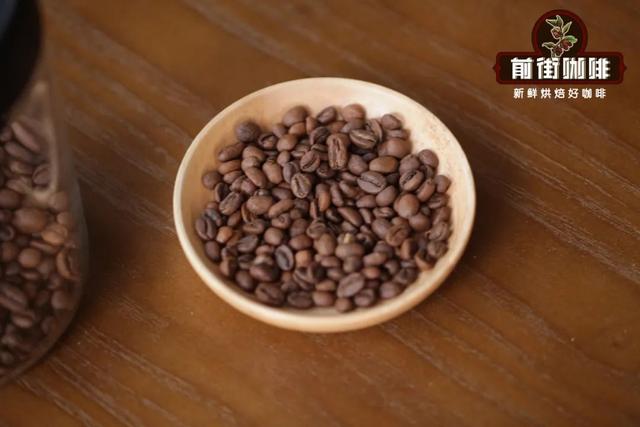
The name "Horsemen" sounds like the leader of all flowers, and it is every bit as lovely as it sounds. How did it come by such a name? FrontStreet Coffee learned that in 2017 Ethiopia's DW green bean company sent its coffee to the TOH (Taste of Harvest) competition hosted by the African Fine Coffee Association, where its natural-processed batch won the championship among Ethiopian coffees. That batch of green beans was named "Horsemen" to honor its championship status. A Beijing green bean company, Hongshun Company, introduced Horsemen coffee to China and gave it the name "Horsemen," expressing high expectations. Many people mistakenly believe that all coffee from the Hambella region is Horsemen coffee, but that is not the case. Only the natural-processed beans from the Buku Abel estate are truly Horsemen coffee, and for that reason Buku Abel also earned the nickname "Horsemen Estate."
Guji Production Region in Sidamo
Coffee, being an agricultural product, shows flavor variations closely tied to climate and environment. Sidamo's coffee flavors are extremely diverse: different soil types, microclimates and countless native varieties create distinct differences in the coffee from each town. Horsemen beans come from the Guji production region in Sidamo. The Sidamo region lies in southern Ethiopia, extending east to the Arsi and Bale administrative regions and west to Gamogofa. Sidamo coffee is cultivated at altitudes between 1400m-2000m. The Guji production region was formerly part of Sidamo but was separated into a new region by the Ethiopian Commodity Exchange (ECX) in 2010. Guji lies southeast of Yirgacheffe and features complex topography with towering mountains, valleys and plains. Its geology consists of nutrient-rich black soil (Vertisol) reaching nearly two meters deep, at an average altitude above 1800 meters. The significant day-night temperature differences created by this geography provide all the terroir conditions needed for high-quality specialty coffee.
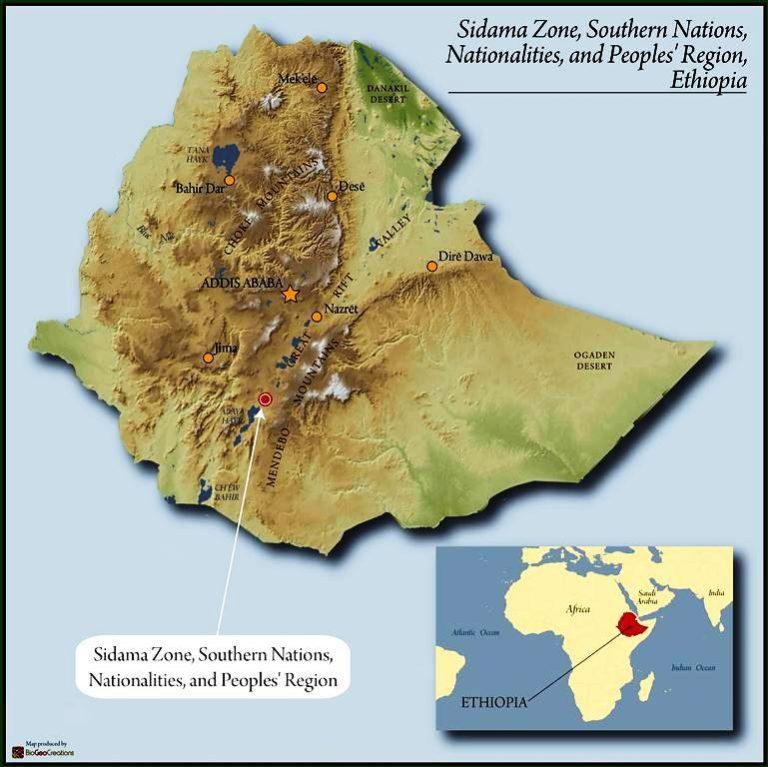
"Hambella" lies within Ethiopia's largest coffee production region, Guji (GUJI), and is administratively under the Oromia Regional State. Hambella's western side faces the Yirgacheffe Kochere region across mountainous terrain, the two areas separated by highlands reaching 3200 meters in altitude and about 30 kilometers in width. To the southeast, north and south it borders Guji's Shakiso, Uraga and Kercha sub-regions, making it Ethiopia's highest-altitude coffee sub-region (Harrar is Ethiopia's highest-altitude main production region).
As an agricultural product, coffee flavors vary each year. That is why the beans Hongshun Company introduced from the "Buku Abel" processing plant in the Hambella region are the ones called Horsemen coffee: only beans from the Hambella "Buku Abel" plant qualify.
Hongshun Company distinguishes between Horsemen coffees of different batches and seasons by year, naming them Horsemen 2.0, Horsemen 3.0, Horsemen 3.1, Horsemen 4.0 and Horsemen 5.0. With this year being 2022, should Horsemen be called Horsemen 6.0? Let's look forward to Horsemen 6.0.
Horsemen Coffee Natural Processing Method
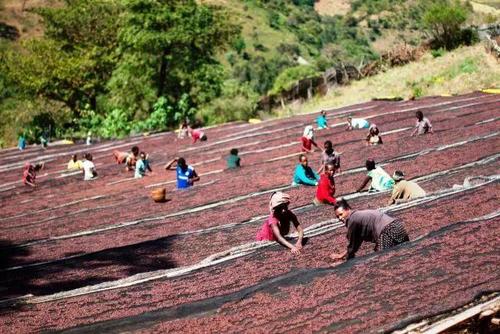
Horsemen coffee's berry, citrus, lemon and tea-like flavors are closely tied to its processing. This Horsemen coffee from FrontStreet Coffee also uses the natural method. Natural processing in the Sidamo region is meticulous: only ripe cherries are picked during the season. After picking, the cherries are uniform in size, similar in ripeness and free of other impurities. During processing, strict manual sorting removes defective beans first, then the red cherries are spread evenly on raised wooden beds or entire drying racks to dry in the sun, preventing mold and earthy odors. During sun exposure the cherries are turned constantly for even drying and even moisture loss; every three to five days, farmers manually sort and remove defective or moldy beans. Once the fruit skin has dried and hardened, a hulling machine removes the dry, hard skin. After the green beans are obtained, farmers do one final sorting in pursuit of perfect flavor.
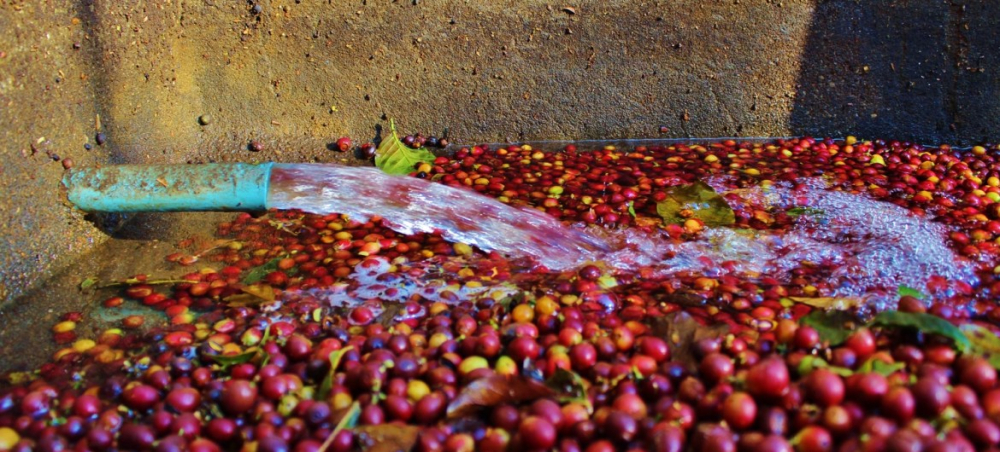
The most fundamental difference between natural and washed processing lies in whether the bean's flavor has been influenced by the fruit pulp. In washed processing, after selecting high-quality fruit, the cherries are depulped before entering fermentation tanks, then dried to a moisture content of about 12%. Natural processing dries the fruit to about 12% moisture before removing pulp and skin. The methods clearly show how much the pulp is involved: washed processing better reflects the bean's original flavor, giving a cleaner, more vibrant taste, while natural processing adds aroma and sweetness to that base.
FrontStreet Coffee Brewing Recommendations
To fully extract Horsemen's rich layers, FrontStreet Coffee uses a higher water temperature and a finer grind size. To avoid over-extraction from the heat, we use faster-flowing drippers such as the V60. The V60 has a 60° conical shape, which lets the grounds concentrate while pouring and channels the water toward the center of the dripper, ensuring enough contact time between water and grounds to extract a fitting cup. The spiral ribs inside the V60 run clockwise from bottom to top, leaving space between the filter paper and the dripper for good water flow, and the large hole at the bottom lets water pass through faster than in many other drippers.
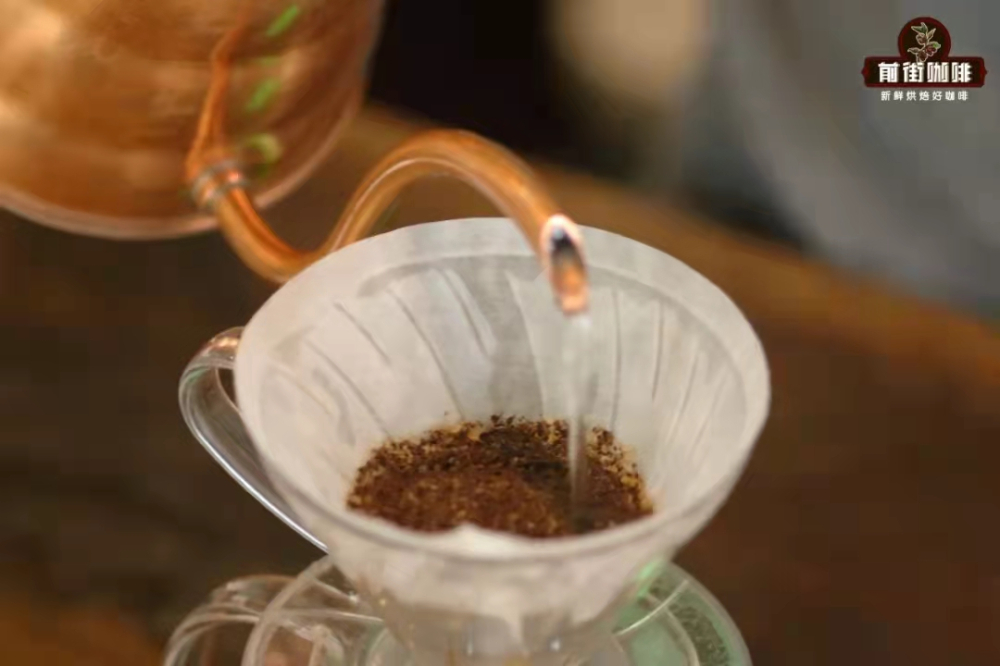
The specific parameters FrontStreet Coffee uses are: V60 dripper, water temperature 90°C, water-to-coffee ratio 1:15, coffee dose 15g, medium-fine grind size (80% pass-through rate on a China #20 standard sieve).
FrontStreet Coffee's segmented extraction: first, use 30g of water to fully saturate the grounds into a "hamburger" shape for a 30-second bloom. The second pour at the 1'00" mark brings water to 125g, then wait for the water level to drop to 2/3 of the coffee bed before the third pour. The third pour at 1'40" brings water to 225g, and after the coffee liquid has completely dripped through, total extraction time is 1'59". The total brewing time is 2'00". After extraction, gently swirl the coffee to mix the liquid fully before tasting.
Flavor Description
Natural-processed Sidamo Horsemen coffee: a light fermented wine aroma with more pronounced caramel, a richer and more complex mouthfeel, honey sweetness, cocoa undertones with subtle spice, a full body and a persistent aftertaste.
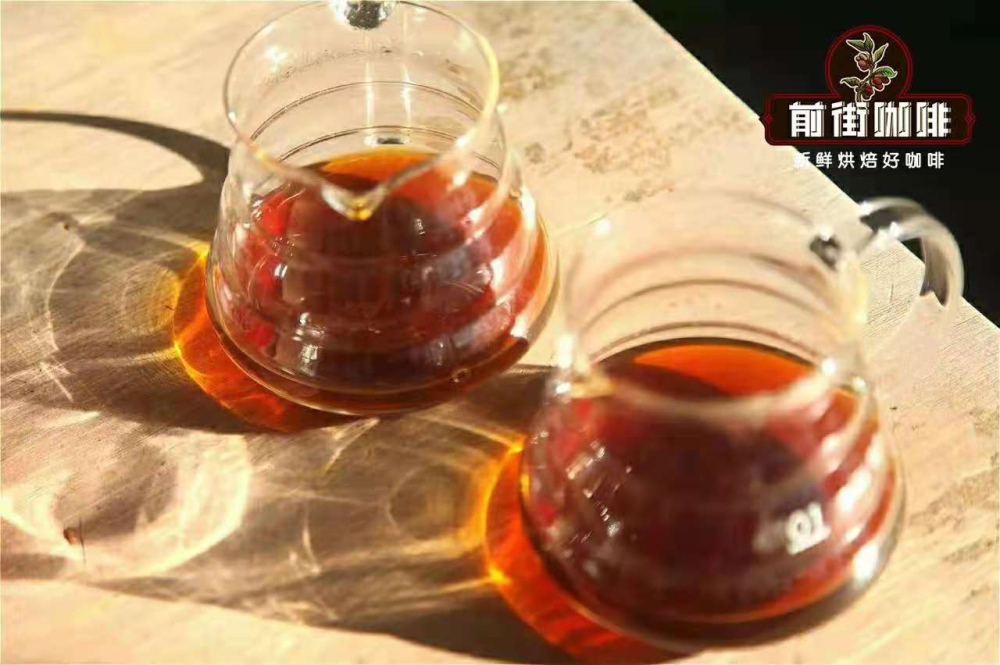
Washed Yirgacheffe flavor: aromatic with jasmine flowers and citrus acidity, with lemon and grapefruit notes on entry, along with black tea characteristics and some cocoa in the finish with a caramel aftertaste.
For coffee brewing, FrontStreet Coffee always recommends freshly roasted beans to better showcase the flavors. All beans sold by FrontStreet Coffee are therefore roasted within 5 days. FrontStreet's roasting philosophy is "Freshly Roasted Quality Coffee," ensuring every customer receives the freshest coffee on order. The resting period is about 4-7 days, so the coffee is at peak flavor when it reaches you.
Some customers need FrontStreet Coffee to grind the beans for them, which is fine too. FrontStreet reminds everyone, however, that once beans are pre-ground they should be brewed promptly. Ground coffee needs no resting period, because the pressure from carbon dioxide building up in the packaging during transport also helps round out the flavor, so you can brew a cup as soon as it arrives.
Coffee powder, though, oxidizes relatively quickly when exposed to air, meaning the flavor dissipates faster and quality drops. FrontStreet Coffee therefore recommends buying whole beans and grinding fresh before brewing to appreciate the coffee's flavors at their best.
FrontStreet Coffee Recommendation
To taste the contrast at the heart of this article, FrontStreet Coffee's washed Yirgacheffe is a clean counterpoint to Horsemen. This washed Ethiopian lot is known for white jasmine, bright citrus and lemon acidity and a tea-like body, and it shows the clarity that washed processing is prized for. FrontStreet suggests a V60 dripper at 90-91°C, with 15g of coffee and a 1:15 ratio, ground to about the texture of fine granulated sugar, around 80% passing a No. 20 sieve.
Brew in three stages: bloom with 30g of water for 30 seconds, pour to about 125g over roughly a minute, then finish to about 225g when the bed drops to two-thirds, with the drip completing between 2 minutes and 2 minutes 10 seconds. For the natural, fruit-forward side, FrontStreet Coffee's naturally processed Red Cherry is picked from fully ripe, deep-red cherries, dried on raised beds and roasted medium-light, delivering tropical fruit, a full fermented character and honeyed sweetness alongside the region's signature florals.
Important Notice :
FrontStreet Coffee is a long-established specialty coffee roaster in Guangzhou China, selling freshly roasted beans from its own farm in Yunnan as well as dozens of carefully selected single-origin beans from around the world for both pour-over and espresso. The products deliver consistently excellent quality and great value, with shipping within 24 hours. Guangzhou's FrontStreet Coffee shop is recommended by many coffee lovers, and the beans are now available online at the Tmall 。
FrontStreet Coffee has moved to a new address:
FrontStreet Coffee Address: 315,Donghua East Road,GuangZhou
Tel:020 38364473
 Scan and follow the En Gafei WeChat official account. Please indicate that the reprint comes from "En Gafei".