Flavor Profile of Brazil Queen Estate Coffee - Introduction to Characteristics of Brazilian Coffee Beans with Semi-Dry Processing Method
The Exceptional Brazilian Coffee from Queen's Farm
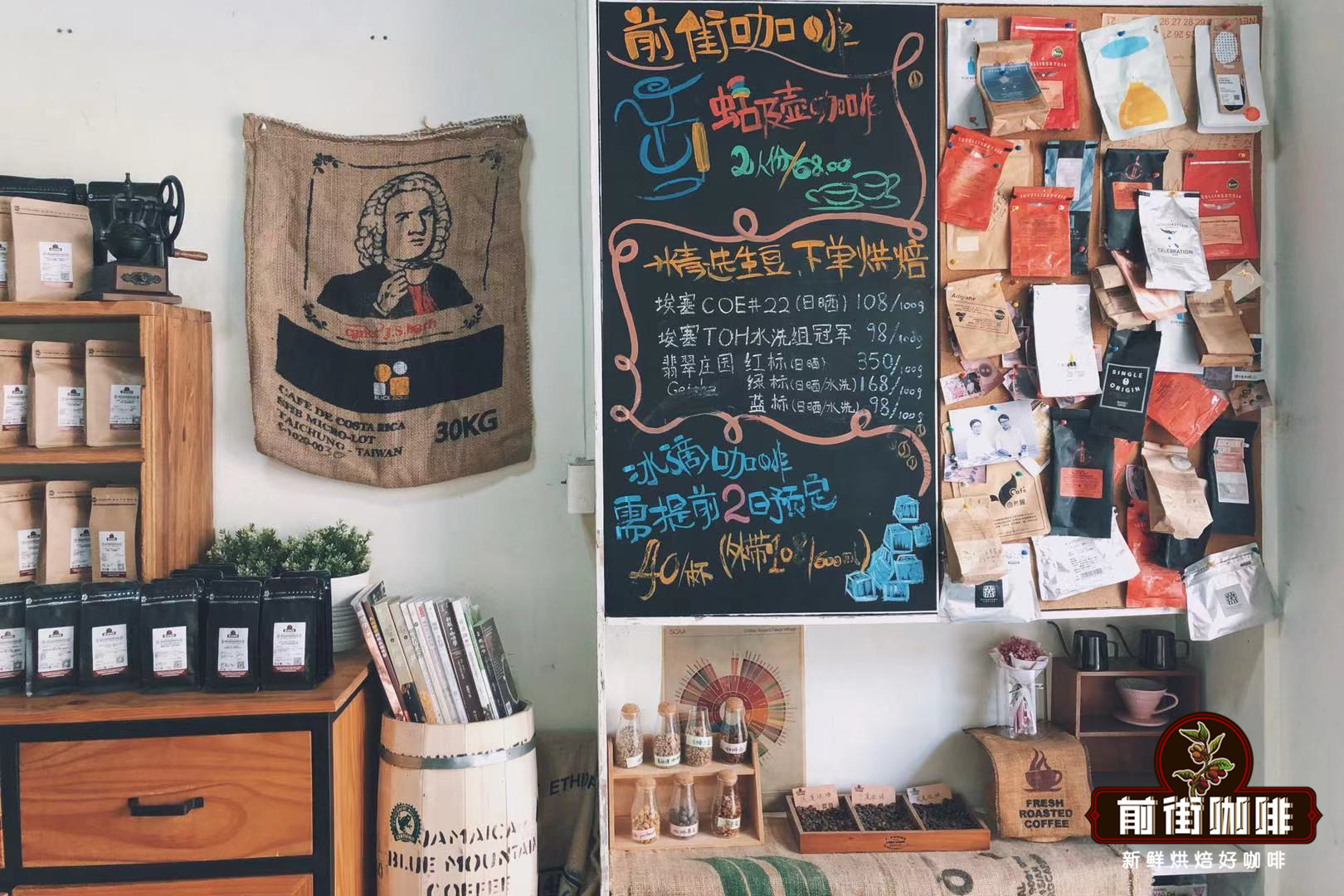
The coffee beans on FrontStreet Coffee's menu come from around the world, and one Brazilian offering—Queen's Farm—enjoys particularly high popularity. This pulped natural (semi-dried) coffee delivers distinct sweetness, and while its acidity may not be as bright as Kenyan or Ethiopian lots, it represents genuinely characteristic Brazilian coffee.
Brazil's Unique Coffee Terroir
If you frequently drink FrontStreet Coffee's Brazilian beans and know a little of Brazilian coffee history, you'll notice the terrain splits in two: the Brazilian plateau above 500 meters and the Brazilian plain below 200 meters. Combined with lower altitudes and abundant sunshine, Catuai coffee trees there are often grown fully exposed to open air. FrontStreet Coffee believes this exposure plays a significant role in shaping Brazil's unique flavor profile. The specialty industry generally defines premium Arabica cultivation as starting at 1200 meters—an altitude Brazilian coffee doesn't meet—so you might wonder why FrontStreet Coffee carries this bean at all.
Queen's Farm: A Legacy of Excellence
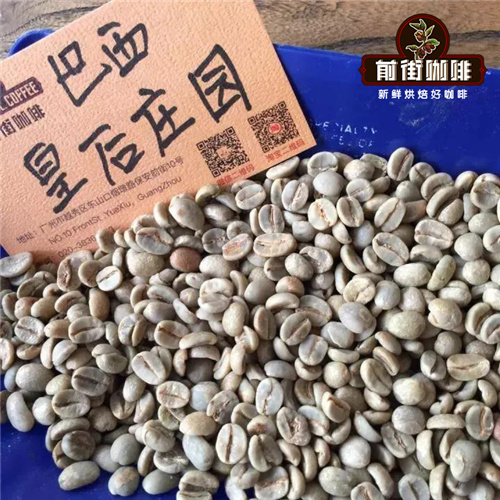
The answer begins with the farm's pedigree. Queen's Farm (Fazenda Rainha) belongs to the renowned and respected Carvalho Dias coffee family, whose beans took first place in Brazil's Cup of Excellence. The four major Carvalho Dias estates have won awards every year since the first Brazil Cup of Excellence in 1999, accumulating over 12 awards in 7 years. In 2004 they even swept the podium's neighborhood, taking 1st, 9th, and 11th places. Many Brazilian estates, large and small, consider it an honor simply to enter the competition, but Queen's Farm has collected awards year after year—clear evidence that its quality stands far above typical Brazilian beans.
Crafting the Perfect Roast
That pedigree is one reason FrontStreet Coffee offers this bean. Before listing it, FrontStreet Coffee ran corresponding cupping and brewing experiments. On arrival, the green beans showed low moisture content and a solid texture, which gives them strong heat absorption. Roast control therefore must be steady, never rushed. To optimize flavor expression and draw out the aroma, a medium roast was adopted.

The Art of Cupping
Typically, between eight to twenty-four hours after roasting, FrontStreet Coffee cups this bean. Our barista uses a 200ml standard cupping bowl, a grind size that achieves 70%-75% pass-through on a #20 standard sieve, 11.3g of coffee, and water at 94°C. First the coffee is ground for dry aroma assessment—the pulped natural Brazilian beans give off nutty aromas. Then the bowl is filled with water for wet aroma evaluation. After 4 minutes, the crust is broken and removed for flavor scoring. After that, pour-over brewing can begin!
Mastering the Three-Stage Pour-Over Technique
FrontStreet Coffee brews this Brazilian bean with a three-stage method. First, 30 grams of hot water thoroughly saturate the grounds. The second pour can begin when the scale reads 30 seconds. Start from the center, injecting a small stream down to the bottom of the grounds bed; to concentrate the water's penetration, keep the circular movement tight, then expand outward. Throughout, control the flow steadily—no surges, no interruptions. Too little water leaves grounds under-saturated, producing noticeable rough astringency and a short finish; too much means the bloom water can't extract enough coffee solids, yielding a monotone cup where early acidity dominates and masks other flavors. FrontStreet Coffee believes a stable circular flow can move inside-out, outside-in, or simply spiral from the center—adjust these techniques to your own preference. For the third pour, watch the water level and begin before the coffee bed is exposed. Again pour from the center outward, keeping the water level below the height of the grounds bed. Stop pouring at 1 minute 50 seconds, with filtration completing at 2 minutes.

Flavor Profile and Characteristics
The flavor presents distinct sweetness with subtle lemon aromas, rich nutty notes, and prominent dark chocolate in the finish. The overall experience is well rounded—a bean that embodies the essential character of Brazilian coffee while showing its own special vibrancy. That is ultimately why FrontStreet Coffee offers it.
Brazilian Coffee Varieties
Brazil cultivates numerous varieties. The main ones include Red Bourbon, Yellow Bourbon, Mundo Novo, and Catuai. Yellow Catuai comes from a cross of Mundo Novo and Catuai, originally bred by Brazil's Agricultural Research Institute. Both Yellow and Red Catuai show extremely high disease resistance and suit high-altitude cultivation, with delicate, clean acidity.

Meticulous Harvesting and Processing
Queen's Farm still harvests its coffee cherries entirely by hand—one reason its beans reach such quality. This Queen's Farm lot uses pulped natural (semi-dried) processing. Because Brazil's climate is relatively dry, local farms developed this characteristic method: after depulping, the parchment coffee with its mucilage is dried under controlled fermentation. Pulped natural skips the "tank fermentation, clean-water rinse" step of washed processing, and without that fermentation the bean's flavor is entirely different.

Brazilian Coffee Grading System
As FrontStreet Coffee understands it, Brazil's grading system differs from Kenya's size-based sorting. And because Brazilian altitude is comparatively low, the Colombian altitude-based approach doesn't fit either. Brazil grades its beans on four criteria: bean size, defect rate, cupping score, and flavor.
FrontStreet Coffee Recommendation
Brazil is the world's largest coffee producer, and its beans' moderate acidity, balanced sweetness and bitterness, and smooth body make them ideal for medium roasts—brewing up heady nut aromas and a mellow, gently tart cup that works as single origin or blend base. If you just want a first taste of Brazil, FrontStreet Coffee's pulped natural Cerrado Red Bourbon is a classic: medium roasted, it offers creamy peanut, toasted bread, caramel, and hazelnut aromas with a rounded, non-acidic cup and only a light bitter note—suitable for pour-over, moka pot, single-origin espresso, siphon, or French press.
For a step up, choose FrontStreet Coffee's Queen Estate Yellow Bourbon from the Mogiana region. Yellow Bourbon, a mutation of Red Bourbon, shows cleaner fruit character; grown in Mogiana's fertile red volcanic soil near southern Minas, it delivers a sugarcane sweetness you won't find from other origins, alongside fruit aromas and chocolate flavor.
Brazil's low acidity and balance also make it a favorite base for espresso blends. FrontStreet Coffee's blend lineup—the crema-rich Classic Blend, the nut-forward Premium Blend, the balanced Black Cocoa favored by baristas, and the cafe-oriented Commercial Blend—all include Brazilian components that contribute chocolate and cream aromas plus a gentle sweet-sour-bitter balance that stabilizes extraction.
Important Notice :
FrontStreet Coffee is a long-established specialty coffee roaster in Guangzhou China, selling freshly roasted beans from its own farm in Yunnan as well as dozens of carefully selected single-origin beans from around the world for both pour-over and espresso. The products deliver consistently excellent quality and great value, with shipping within 24 hours. Guangzhou's FrontStreet Coffee shop is recommended by many coffee lovers, and the beans are now available online at the Tmall 。
FrontStreet Coffee has moved to a new address:
FrontStreet Coffee Address: 315,Donghua East Road,GuangZhou
Tel:020 38364473
 Scan and follow the En Gafei WeChat official account. Please indicate that the reprint comes from "En Gafei".