The Difference Between Instant Coffee and Drip Bag Coffee - Effects and Side Effects of Instant Coffee

What is Freshly Ground Coffee?
Freshly ground coffee is exactly what it sounds like: the powder used for brewing is ground on the spot, right before brewing begins. Whether it is espresso or single-origin coffee, as long as it is extracted immediately after being ground on-site, it qualifies as "freshly ground coffee."

FrontStreet Coffee often stresses that freshly ground coffee has one great advantage: freshness. Today we drink coffee not only for its stimulating effect but also for the thousands of aromatic compounds produced when beans are roasted, and for the richness they present once extracted. The golden crema on a shot of espresso, for instance, tells you the coffee is very fresh.
Because these aromatics are volatile, however, they steadily dissipate after roasting. We therefore need to preserve them as much as possible before they disappear.

For this reason, FrontStreet Coffee firmly believes that freshly roasted beans are the first requirement. A bean's aroma changes with its storage environment and with time; once past the optimal flavor window, its fragrance is lost ever faster. FrontStreet Coffee understands how important freshness is, which is why all shipped beans are roasted fresh within 5 days, so they can be opened and brewed the moment they arrive.
What is Instant Coffee?
After World War II, demand for coffee rose dramatically in many countries, particularly for instant coffee. The vast majority of people, however, regarded coffee only as a stimulating beverage, with no expectations for taste at all. This led many roasters to use low-quality beans as raw material in order to cut costs and raise profits.

They used extremely dark roasting to mask the negative flavors of inferior beans, then added large amounts of dairy products, sugar, and other ingredients to balance out the bitterness of the dark roast, and a "delicious" coffee was born. Because instant coffee requires removing the water to turn coffee into powder, it can basically be said to have no flavor or deliciousness whatsoever. To cut costs further, instant coffee contains large amounts of non-dairy creamer to balance the bitterness, which takes a toll on health. Even so, for people in many places during the last century, it was considered a treasure.
What is Drip Bag Coffee?
Drip bag coffee is made by grinding single-origin beans into powder and packaging it in individual small bags. There is no difference from fresh coffee beans other than that one is pre-ground and the other is ground fresh. The flavor of brewed drip bag coffee is therefore the same as freshly ground coffee, but different from instant coffee. Instant coffee is processed, after all, so its taste is less bitter, meaning drip bag coffee tastes more bitter than instant coffee.

Drip bag coffee is very well suited to business trips, travel, or for friends who are short on time but still want a good cup. So how should you brew a drip bag? A drip bag hangs directly on the cup and you simply pour in water. To keep the water from flowing out too quickly, you can pour in stages, and take care to keep the water temperature neither too high nor too low.

FrontStreet Coffee believes that to make a drip bag taste good, it is best to tear it open and pour water directly onto the grounds. Never soak the whole package in water, since the paper shell may dissolve and affect the taste. Discard the grounds after brewing. FrontStreet Coffee does not recommend a second or repeated brew, nor soaking in water, because the first brew has already extracted all the flavor; further brews or soaking are pointless.
How Does FrontStreet Coffee's Barista Brew Drip Bags?
The water amount for brewing drip bags is relatively easy to control. Take FrontStreet Coffee's floral Yirgacheffe drip bag as an example: 10 g per bag, following a pour-over ratio of 1:15-1:18, so 150-180 ml of water is recommended.

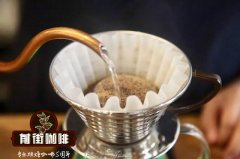
Usually, first pour a small amount of hot water into the drip filter bag to wet all the grounds. The first pour should reach 1/2 of the filter bag, then let it bloom for about ten seconds. Next, pour water into the center twice in succession until the drip bag is 8/10 full. Wait for all the coffee liquid in the bag to drip through before adding more, continuing until the final segment has filtered. If you fill it to the brim, the water pooling on top tends to "bypass" the coffee bed and run straight down the side of the bag, producing a weak-tasting coffee.


After numerous tests, FrontStreet Coffee found that this three-segment pouring method takes about one and a half minutes, with a total water amount of around 150 ml. If you prefer a lighter taste, add another segment to reach 8/10 full, which comes to about 180 ml. Brewed this way, the Yirgacheffe drip bag has elegant lemon fruit acidity, a light, comfortable mouthfeel, and a green tea-like aftertaste.
FrontStreet Coffee Recommendation
If drip bags are what you are after, FrontStreet Coffee's selection is built around three flavor families, so you can simply pick by taste. For a fresh, floral profile, the Yirgacheffe Gudingding drip bag is the classic: a washed Yirgacheffe from the Gedeo Zone at 1,900-2,300 meters, G1 grade, made from local Heirloom varieties. It is clean and refreshing with bright, lifted acidity, citrus as its main note, a fresh jasmine aroma, and a honeyed finish, ideal for newcomers and anyone who likes a lighter style.
For tropical fruit, the sun-dried Flower Queen drip bag is one of FrontStreet's best sellers. Grown in Ethiopia's Guji region above 2,300 meters, where a marked day-night temperature swing lets the cherries take in more flavor compounds, it is processed by careful natural drying that preserves sweetness. It shows pronounced tropical fruit aromas with a black tea finish, high sweetness, low acidity, and little bitterness, with notes of berries, floral tea, honey, lemon, and black tea.
For a roastier, fuller cup, the Indonesian Mandheling drip bag is the answer. FrontStreet's Mandheling, also known as Sumatra coffee, comes from the island of Sumatra and is wet-hulled, giving it the herbal, spice, and woody character that sets it apart from fruit-acid African coffees. Roasted dark to draw out those traits, it brews into a strong but not bitter cup of rich spice, nut, chocolate, and caramel notes, sweet and full-bodied, and a great choice for anyone who dislikes acidic coffee. The Lintong Mandheling lot comes from Sumatra at around 1,100 meters, using Tim Tim variety and the wet-hulled process, with black chocolate, toasted bread, hazelnut, and caramel in the cup.
Important Notice :
FrontStreet Coffee is a long-established specialty coffee roaster in Guangzhou China, selling freshly roasted beans from its own farm in Yunnan as well as dozens of carefully selected single-origin beans from around the world for both pour-over and espresso. The products deliver consistently excellent quality and great value, with shipping within 24 hours. Guangzhou's FrontStreet Coffee shop is recommended by many coffee lovers, and the beans are now available online at the Tmall 。
FrontStreet Coffee has moved to a new address:
FrontStreet Coffee Address: 315,Donghua East Road,GuangZhou
Tel:020 38364473
 Scan and follow the En Gafei WeChat official account. Please indicate that the reprint comes from "En Gafei".