Is Specialty Coffee Only Light to Medium Roasted? Does Dark Roast Count as Specialty Coffee? Are Dark Roasted Coffee Beans Delicious?

Today's coffee shops love to bill themselves as "specialty coffee." But what does "specialty coffee" actually mean, and why do more than 90% of artisan roasters choose to interpret their beans through light-to-medium roasting?
Anyone who reads even casually about coffee has heard of the "third wave of specialty coffee." The first two waves each brought their own revolution. The first wave gave us instant coffee, making coffee easier and more convenient; the second gave us espresso-based chains, raising quality and turning coffee from a commodity into something closer to a luxury. The third wave pursues something more still.
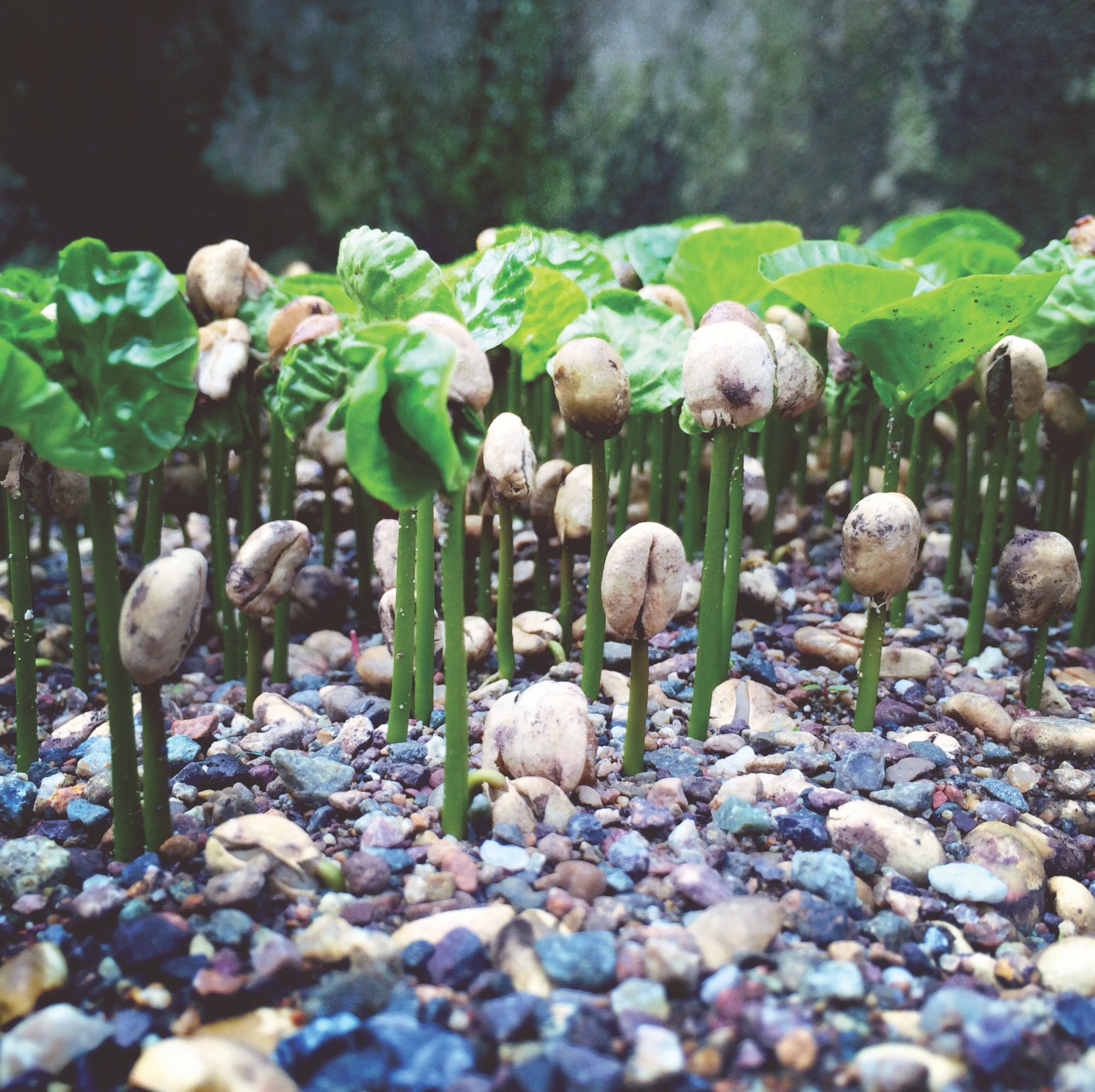
Natural, washed, and honey processing; low-impact methods; origin cultivation; micro-lots, the third wave pursues many things, but its core is a single idea: terroir.
"Terroir" is a concept borrowed from wine: the notion that any subtle condition of the place of origin can change a bean's flavor.
We used to describe coffee simply as "Ethiopian," "Blue Mountain," or "Kenyan." Today we talk about Ethiopia's Yirgacheffe region, the sub-region Kochere, the Boli washing station, the natural process, grade G1, altitudes of 1,800–2,300 meters, the Ethiopian heirloom variety, and the story of the Red Cherry Project...

All those labels exist so we can use knowledge to reach toward flavors we haven't yet tasted, in short, to help drinkers find beans and flavor profiles they will love. It is precisely this pursuit of pristine, detailed flavor expression that made light roasting fashionable. At light-to-medium roast levels, a coffee's inherent terroir is easiest to express: the bright, lively fruity acidity these roasts aim for pairs best with "black" extraction methods, pour-over, siphon, AeroPress, the approach most aligned with third-wave ideals.
Light roasts also retain more chlorogenic acid. Coffee research suggests the compound helps raise HDL cholesterol and may protect the liver and slow arterial hardening; combined with the recent turn toward natural eating, black specialty coffee has only grown in popularity.
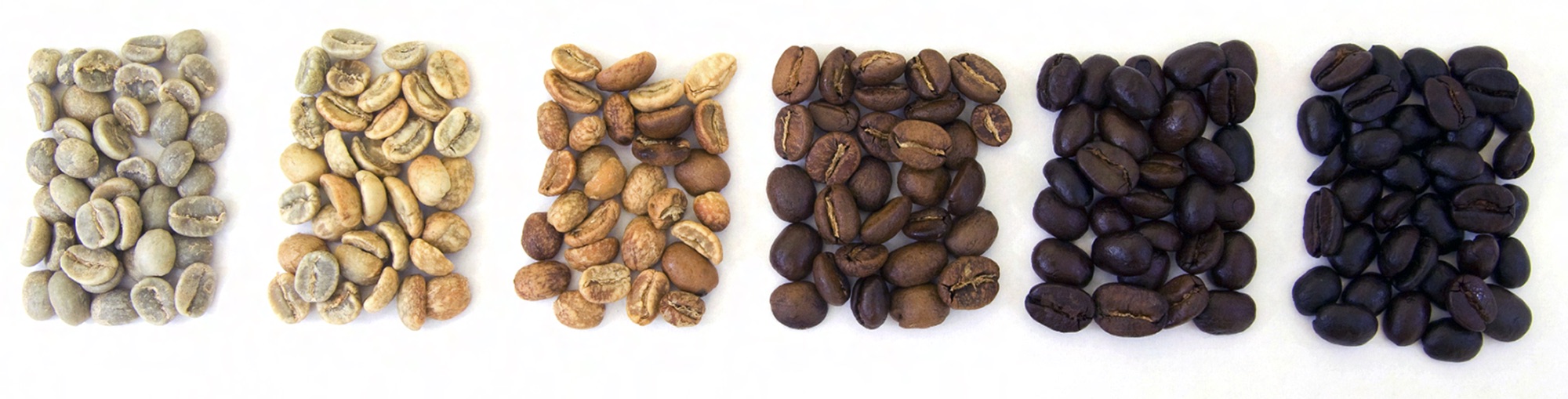
On extraction: because light-roasted coffee's cell walls are less damaged, FrontStreet Coffee can brew it with relatively "aggressive" parameters, a fine grind (fine sugar size), high water temperature (about 88–92°C), vigorous agitation (pour height, kettle swing), and a looser ratio (about 1:13.33–1:16.67). Of course, that is a broad generalization; everyone's palate differs, and so does everyone's ideal recipe.
Light roast has become so dominant in China's coffee scene that many enthusiasts shake their heads at dark-roasted beans, muttering "herbal decoction." That is understandable: trends reflect market demand, and market demand is shaped by how knowledge spreads.

As the standard-bearer of the second wave, Starbucks carries attributes opposite to the specialty ideal, and so many drinkers shun the dark roasts it promotes, repeating claims like "only inferior beans get dark roasted to hide defects," "all dark roasts taste the same, so origin character disappears," and "dark roast is unhealthy."
Can Specialty Coffee Be Dark Roasted?
Is any of that actually true? FrontStreet Coffee takes up the question here, starting with why dark roasting exists at all.
First: The mainstream SCA framework
Within today's mainstream SCA system, darker roasting modifies acidity that is too sharp or aggressive. Why were Mandheling and Kenya AA traditionally roasted darker? Mainly because their origins and processes produce intense acidity, and a darker roast softens its attack on the tongue, converting it into sweetness and body.

Second: The old Japanese kissaten tradition
Say "dark roast" and many people automatically think of Japan, just as "light roast" evokes the Nordic style for FrontStreet Coffee. Japanese coffee culture cannot be avoided in this discussion. In the philosophy of the old kissaten, coffee should offer the richest possible range of layers and an elegant sweet-bitter taste. Where flavor is concerned, the kissaten school holds that a coffee's character comes not only from the bean but also from what roasting itself can contribute; where third-wave thinking tries to preserve the bean's character intact, the kissaten tradition maximizes the sum of both.
Japanese coffee philosophy also counts an elegant sweet-bitterness, distinct from burnt bitterness, as good taste, which the SCA system does not. Under those long-standing cultural habits, darker roasts became the defining taste memory of the Japanese kissaten. Much of what we imagine as dark roast's burnt smokiness comes from high-heat, fast roasting; Japanese roasters insist on low heat and slow baking, which preserves noticeably more sweetness and body at the same roast depth.
Quality Still Matters in the Dark
So is it true that dark roasting wastes good beans because everything tastes the same anyway?
Of course not.
It is not that fine beef is unsuited to sukiyaki, or fine fish to a clay-pot fish head. Better ingredients always taste different from inferior ones.
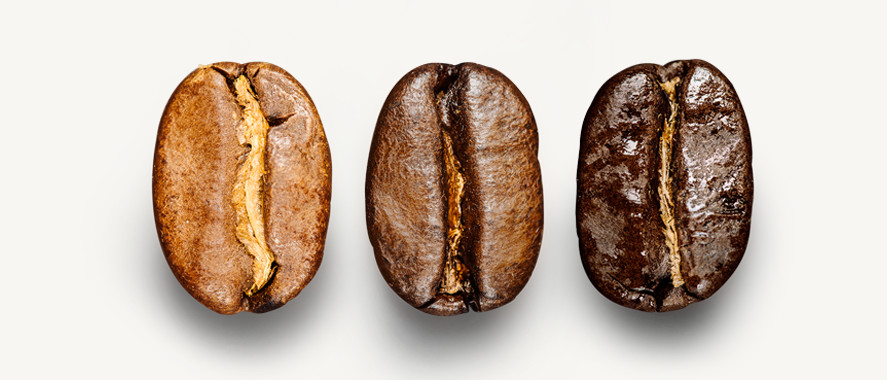
If you have been lucky enough to compare an extremely dark-roasted specialty-grade coffee with a regular commercial lot in an old kissaten, you will have found them worlds apart in sweetness, aroma, and layers. Dark roasts do not converge into sameness, the outcome depends on the roaster's skill and the green coffee's quality. That is exactly why a good dark roast is harder to find than a good light one.

Setting regional taste aside, dark roasting simply demands more precision, more control, and longer sustained focus than light roasting. It is said that mastering a great "charcoal-roast coffee" takes a roaster 30–40 years of practice to achieve consistently excellent quality, in an era before roast data existed to help. That alone shows how difficult dark roasting is, and why its punishing demands on accumulated experience have made it "non-mainstream" in specialty circles.
If you ever visit an old kissaten serving specialty coffee, you must try a cup, with the caveat that unforgettable dark roast requires three things: specialty-grade green coffee, a master with genuine skill, and decades of experience.

And dark roast is not the unhealthy option it is painted as. Roasted properly and skillfully, it largely avoids the concerns around carbonized compounds. Dark roast also degrades more trigonelline, producing more nicotinic acid (vitamin B3), a beneficial nutrient.
In recent years, scientists studying the compounds in coffee that stimulate gastric acid unexpectedly discovered an active substance, NMP (N-methylpyridium), which blocks stomach cells from producing hydrochloric acid, easing stomach discomfort. Intriguingly, NMP does not exist in green coffee, it forms during roasting, and the deeper the roast, the higher the content. Dark roast coffee is therefore less likely to upset your stomach, and the acids that typically cause discomfort are less abundant in dark beans. Professor Veronika Somoza of the University of Vienna's Department of Nutritional and Physiological Chemistry, who led the research, noted that NMP content in dark roast may be more than double that of light roast. So if light roast tends to leave your stomach churning, a darker roast may simply suit you better...

The catch: it is genuinely hard to tell by smell or appearance whether a dark roast is "properly done" or simply burnt, as with steak, the line between charred and a perfect Maillard crust is fine. Does that mean only tasting can tell? Unfortunately, dark roast coffee also has fewer extractable compounds than light roast, and with cell walls so heavily damaged, extraction is far easier to overshoot. Brew a dark roast exactly as you would a light one and a burnt, bitter cup is inevitable. The two roast levels differ so much in cell structure that their extraction philosophies must differ too, a sweet, rich dark roast still demands great care.

Unlike light roast, a dark roast's aroma and sweetness live in relatively larger-molecular "brown pigments," so it needs a somewhat longer extraction, yet because it extracts so easily, you must minimize disturbance: treat the bed as gently as possible and pour slowly to satisfy both demands. That is all from FrontStreet Coffee today. Happy brewing!
FrontStreet Coffee Recommendation
If the third-wave discussion above has you planning a pour-over session, FrontStreet Coffee's Yirgacheffe lineup is the natural starting point, this is the region the article name-checks, and the coffee that made floral, citrus-driven light roasts famous. Yirgacheffe is a small town in Ethiopia's southern Sidamo province at roughly 1,700–2,100 meters, with coffee grown above 1,800 meters, among the highest coffee zones on Earth. Its instantly recognizable white-floral aroma and lemon-citrus acidity made it a byword for Ethiopian specialty coffee; so famous had the name become that in 2010 the Ethiopian Commodity Exchange formally separated Yirgacheffe from Sidamo, creating the appellation we know today.
FrontStreet Coffee Washed Yirgacheffe: for newcomers to Ethiopia, start with the classic, white jasmine, bright citrus and lemon acidity, and a tea-like body at an approachable price, the first bean many drinkers ever called "specialty."
FrontStreet Coffee Worka Cooperative ( washed, Gedeb): Yirgacheffe's town area breaks down into micro-regions and even single villages, some with veteran cooperatives whose craft lifts the cup another notch. The most representative is the Worka Cooperative at Yirgacheffe's southeastern edge in the Gedeb zone, once part of the YCFCU union's Worka cooperative, later identified by coffee buyers as a "single-origin" lot as demand for traceability grew. Traditional washed processing has earned it the nickname "Yirgacheffe's last pure land": none of the traditional bitterness, just fresh bright citrus-lemon acidity and jasmine fragrance that coffee lovers fall for at first sip.
FrontStreet Coffee Red Cherry (natural): from the same region, this lot is a full-red-cherry natural, only perfectly ripe, defect-free cherries are picked, sorted again at the station, and laid straight onto raised beds, turned every 2–3 hours for the first days to prevent uneven heating and over-fermentation. After three to five weeks of sun, workers strip the dried outer fruit mechanically, weather permitting, and move the beans to the warehouse. Because the cherries dry whole, the cup combines classic Yirgacheffe character with tropical fruit: citrus acidity, berry juiciness, honeyed sweetness, and cream-smooth body.
Brewing: V60, 90–91°C water, 15 g of coffee at 1:15, ground to an EK43s setting of 10 (fine granulated sugar; 80% pass through a #20 sieve). FrontStreet Coffee's technique: bloom with 30 g of water for 30 seconds; pour 95 g to reach roughly 125 g on the scale within about a minute; when the level drops to two-thirds of the bed, pour the remaining 100 g to about 225 g, finishing around 1:35. Drawdown completes at 2:00–2:10, lift the dripper and serve.
Important Notice :
FrontStreet Coffee is a long-established specialty coffee roaster in Guangzhou China, selling freshly roasted beans from its own farm in Yunnan as well as dozens of carefully selected single-origin beans from around the world for both pour-over and espresso. The products deliver consistently excellent quality and great value, with shipping within 24 hours. Guangzhou's FrontStreet Coffee shop is recommended by many coffee lovers, and the beans are now available online at the Tmall 。
FrontStreet Coffee has moved to a new address:
FrontStreet Coffee Address: 315,Donghua East Road,GuangZhou
Tel:020 38364473
 Scan and follow the En Gafei WeChat official account. Please indicate that the reprint comes from "En Gafei".
![[FrontStreet Coffee Barista Notes] The Impact of FrontStreet Coffee's Espresso Grind Adjustment on Espresso Flavor](https://en.gafei.com/uploads/allimg/190420/17-1Z420195F4556-lp.png)