[FrontStreet Coffee Barista Notes] The Impact of FrontStreet Coffee's Espresso Grind Adjustment on Espresso Flavor
To pull a delicious espresso every day and serve a good latte, many baristas — ourselves included — keep dialing in espresso parameters daily. Even with beans from the same batch, day-to-day shifts in temperature and humidity affect the quality of every cup we serve, which is why adjusting parameters every day matters so much.
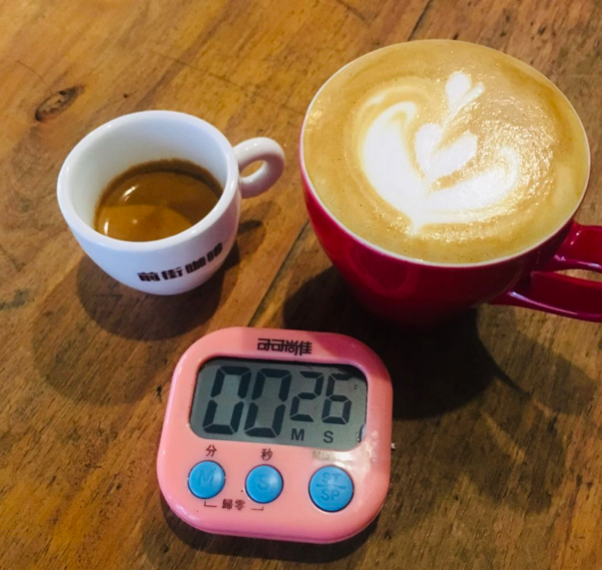
We've previously covered how increasing or decreasing the dose changes espresso. Today, let's talk about adjusting the grind. Usually we start by testing yesterday's parameters and making fine adjustments from there. Within a single batch of beans the state stays fairly consistent, but when a new batch comes in, dialing in gets harder: fresh beans have rested less, so they yield richer crema but a less mellow, full-bodied cup than properly aged beans.
Today we'll look at how grind size affects flavor when the beans are properly aged.
The test beans have rich crema and abundant fruit: FrontStreet Coffee's Premium Blend espresso beans, blended Brazil to Colombia at 6:4. The grinder is a Feima 900N, where smaller numbers mean a finer grind and larger numbers a coarser one.
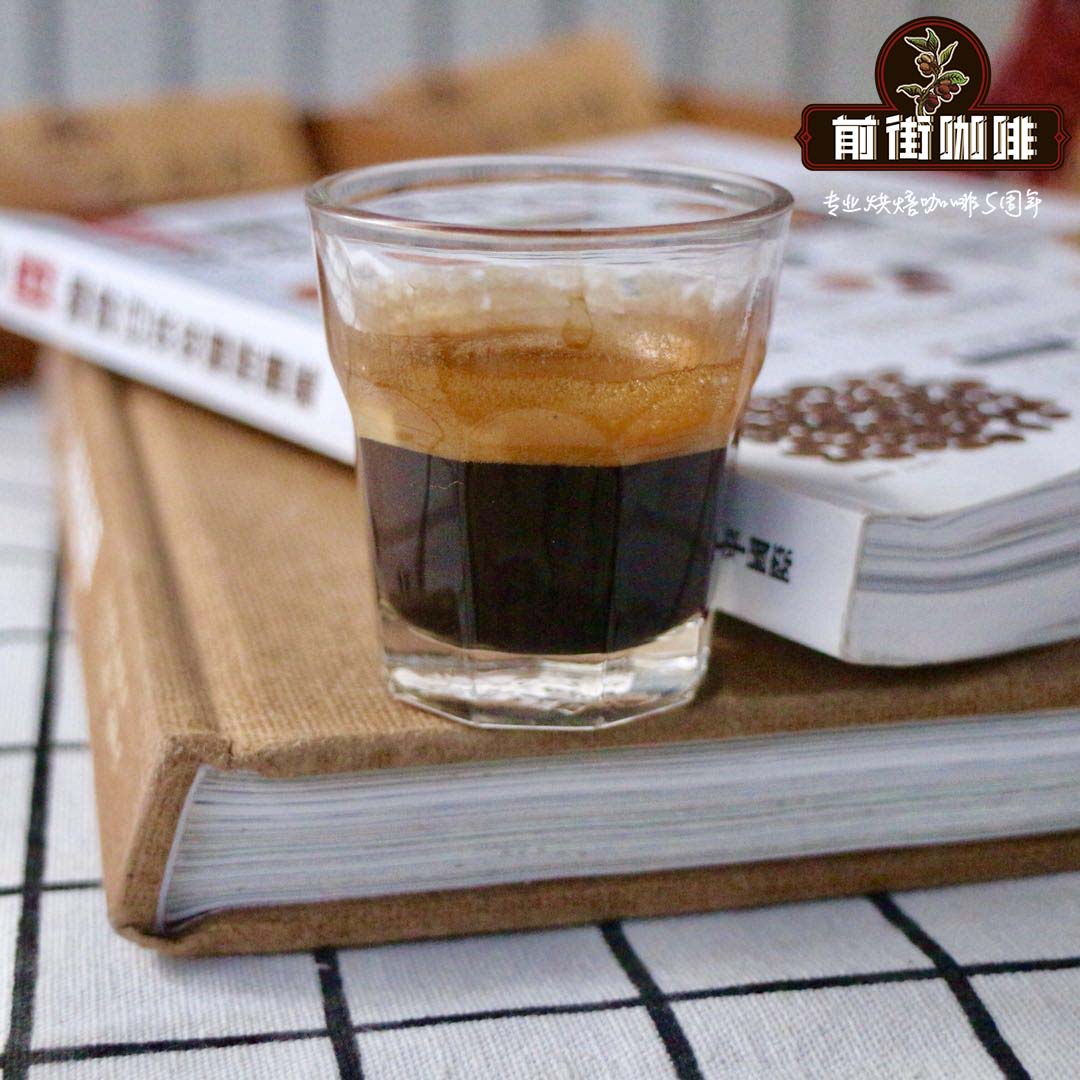
We used a double portafilter with a consistent 21-gram dose to extract 40 grams of liquid.
At every grind setting we prepared one espresso, one americano, and one cappuccino.
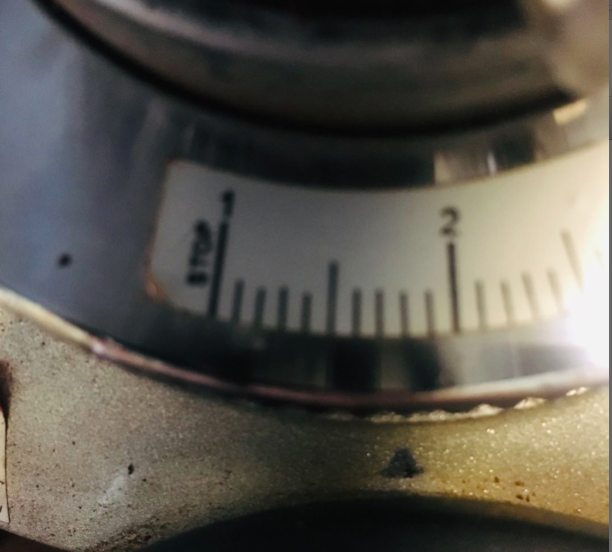
Grind Size 1.8
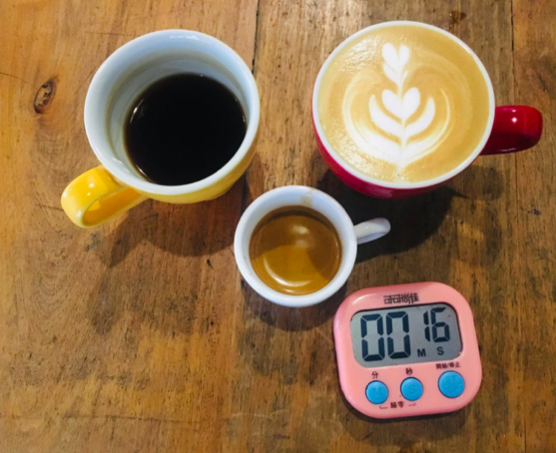
Parameters: grind size 1.8 / 21g of grounds / 41g of liquid / 16-second extraction
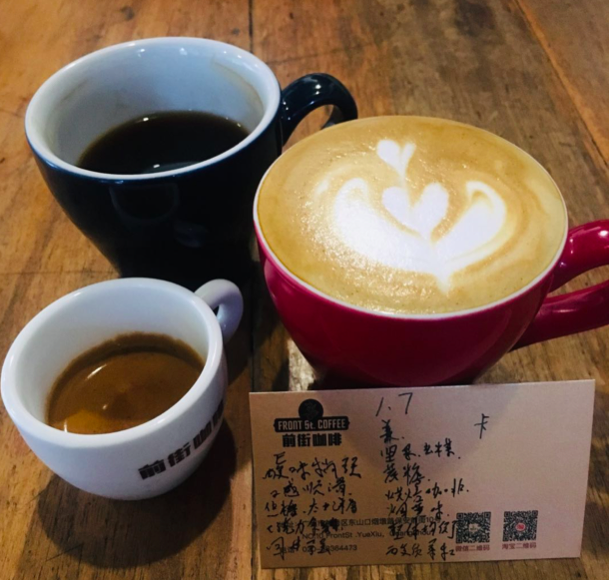
Espresso: citrus, lemon, and grapefruit, with caramel and nutty notes in the aftertaste and a subtle floral aroma. The body is relatively thin, with rather sharp acidity.
Americano: smoky, raspberry, and berry acidity, with nutty and tea-like notes. Even after dilution the acidity stays noticeable, and the originally sharp citrus turns into a softer berry acidity.
Cappuccino: milky fragrance, cream, and nougat, with a hint of tobacco — likely because the espresso was under-extracted, leaving a slight astringency in the cappuccino.
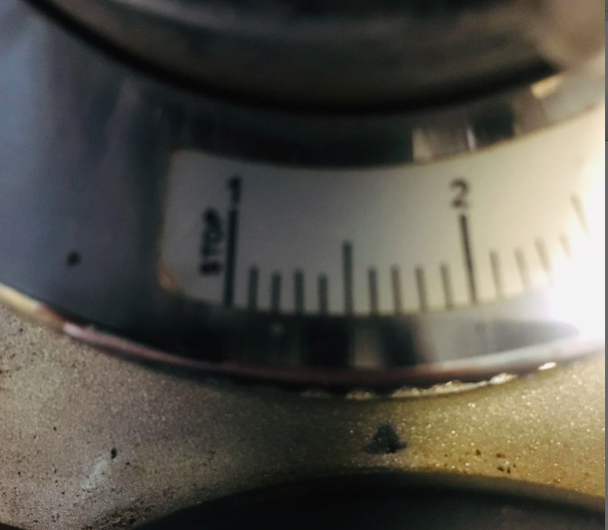
Grind Size 1.7
Parameters: grind size 1.7 / 21g of grounds / 40g of liquid / 23-second extraction
Espresso: fairly strong acidity, an overall smooth texture, and rich crema. Caramel, toffee, and dark chocolate, with a persistent aftertaste.
Americano: after dilution the nutty notes come forward, with genmaicha and smoky aromas. The aftertaste has caramel sweetness, with mellow acidity and balanced flavors.
Cappuccino: milk chocolate, with hazelnut and almond, and a charcoal coffee aroma in the aftertaste.
Grind Size 1.6
Parameters: grind size 1.6 / 21g of grounds / 41g of liquid / 26-second extraction
Espresso: a balanced, gentle entry, with noticeable sweetness in the aftertaste and balanced acidity and bitterness. Hazelnut, roasted almond, cream, and caramel, with berry-like acidity.
Americano: nutty, genmaicha, and berry acidity, with a caramel aftertaste. Bitterness and nutty notes are more pronounced overall, with weaker acidity.
Cappuccino: toffee aroma, with milk chocolate sweetness and nutty, hazelnut flavors. All told, the bitterness is more intense than in the previous two cups.
Espresso Comparison
Comparing the three espressos side by side, the coarsest grind [1.8] had the shortest extraction time, with flavors showing more fruit acidity and relatively weaker nutty notes. The [1.7] was more balanced, with fuller, mellower flavors and rich crema. The finest grind [1.6] had the longest extraction time, leaning more toward nuts and caramel, with the mellowest acidity of the three.
Americano Comparison
Once dilution let the flavors of all three espressos unfold, we found the [1.8] americano still had noticeable acidity, with some smoky defect notes — possibly from the short extraction time and uneven extraction along the way. The [1.7] americano was balanced, with nutty and genmaicha aromas; this cup showed smoky notes too, but they read more like sandalwood incense, making for a pleasant aromatic experience. The [1.6] matched its espresso, also leaning toward nutty aromas, with mellow acidity and rich overall flavor.
Cappuccino Comparison
The [1.8] cappuccino was more like a milk coffee, with noticeable sweetness. The [1.7] was balanced, the coffee's bitterness complemented by a sweet aftertaste. The [1.6] had rich nutty flavors with a chocolate-like bitterness.
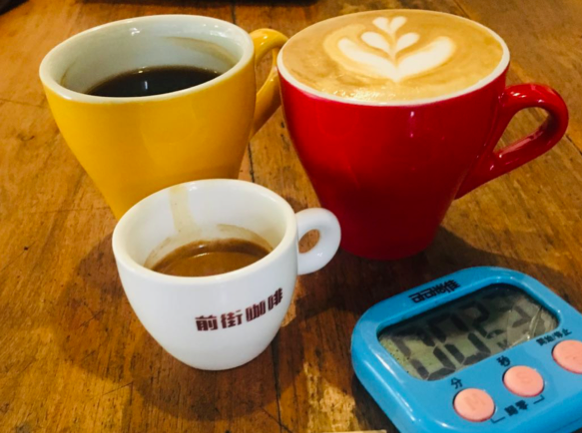
Of the three grind sizes, we'd lean toward the [1.7] as the production parameter, since it performs well across espresso, americano, and cappuccino. For service, overall performance matters more than excellence in any single drink.
FrontStreet Coffee Recommendation
Brazil is the world's largest coffee producer, and its beans are what give this blend its balance. FrontStreet's espresso blends all lean on Brazil for exactly that reason: moderate acidity and an excellent balance of sweetness, bitterness, and body. The FrontStreet Premium Blend used in this test is a Brazil–Colombia blend at 6:4, chosen for rich crema and abundant fruit; the espresso lineup also includes the Classic Blend with its rich crema, the nut-forward Fine Blend, the well-rounded Black Cocoa, and a Commercial Blend made for cafés. In every case the Brazilian component supplies chocolate and cream aromas, a gentle sweet-sour-bitter profile, and the balance that keeps extraction stable.
If you'd rather taste Brazil on its own, FrontStreet bottles the country in two distinctive single origins. The FrontStreet Cerrado Red Bourbon, a classic Cerrado single origin, is a red Bourbon given a medium roast; it shows cream peanut, toast, caramel, and hazelnut, round and low in acidity with a slight bittersweet edge, and works as well in a moka pot, espresso SOE, siphon, or French press as it does as pour-over. The FrontStreet Queen Estate Yellow Bourbon comes from Mogiana, near South Minas, where fertile red volcanic soil feeds the fruit; the rare Yellow Bourbon — a red Bourbon mutation — tastes of sugarcane sweetness with fruit and chocolate. Both are medium-roasted and, like FrontStreet Coffee's Premium Blend, built to stay balanced however you brew them.
Important Notice :
FrontStreet Coffee is a long-established specialty coffee roaster in Guangzhou China, selling freshly roasted beans from its own farm in Yunnan as well as dozens of carefully selected single-origin beans from around the world for both pour-over and espresso. The products deliver consistently excellent quality and great value, with shipping within 24 hours. Guangzhou's FrontStreet Coffee shop is recommended by many coffee lovers, and the beans are now available online at the Tmall 。
FrontStreet Coffee has moved to a new address:
FrontStreet Coffee Address: 315,Donghua East Road,GuangZhou
Tel:020 38364473
 Scan and follow the En Gafei WeChat official account. Please indicate that the reprint comes from "En Gafei".