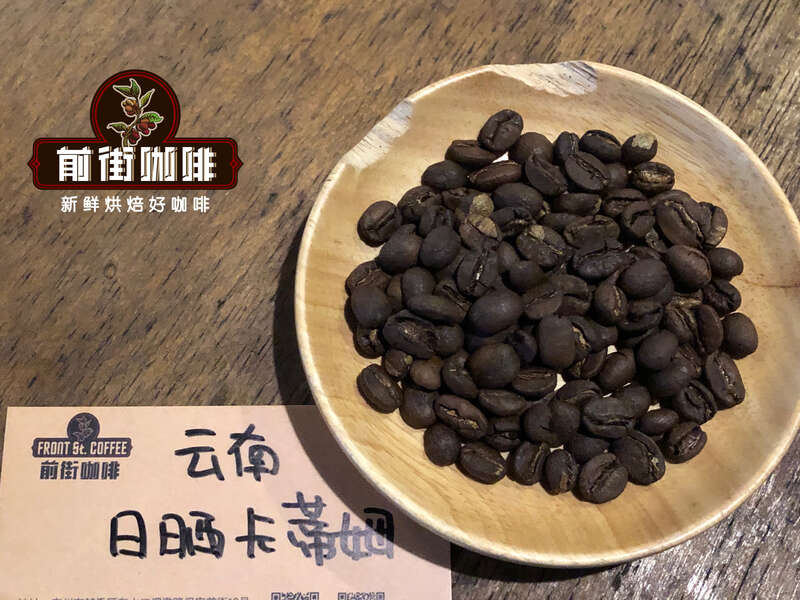
Flavor and Taste Characteristics of Brazilian Coffee: How to Brew Medium-Roasted Nutty Flavor Brazil Queen Estate Coffee Beans Using Pour-Over Method

Coffee is to Brazil what tea is to us. Located in South America, Brazil produces about 30% of the world's coffee annually, making it the world's leading coffee producer. Brazilian coffee is characterized by its low acidity, nutty flavors, balanced profile, and moderate body. For instance, the Brazilian Red Cherry Coffee from FrontStreet Coffee's staple bean series offers rich flavors of nuts, chocolate, and cream.

We know that Brazil was a Portuguese colony for a long time in history. To meet Western European demand, it continuously cultivated coffee as a single crop, making coffee the economic pillar of Brazil. Previously, the Brazilian government paid great attention to the coffee industry, maintaining strict control over Brazilian coffee. This intervention included price protection measures to prevent coffee overproduction. After the liberalization of the market, the Brazilian Association adopted policies opposite to those of the past for coffee-producing regions, implementing a non-interference policy that allows producers and exporters to negotiate directly.
Brazilian coffee was introduced from French Guiana in 1729. Brazil cultivates both Arabica and Robusta coffee varieties. Brazilian coffee beans are highly favored for their excellent quality, rich aroma, and mellow taste. Brazil currently primarily cultivates Red Bourbon, Yellow Bourbon, Mundo Novo, and Catuai varieties. Yellow Catuai comes from a hybrid of Mundo Novo and Caturra, first developed by the Brazilian Agricultural Research Institute. Like Red Catuai, Yellow Catuai has extremely high disease resistance and is suitable for cultivation in high-altitude areas. Both varieties carry delicate, clean acidity.
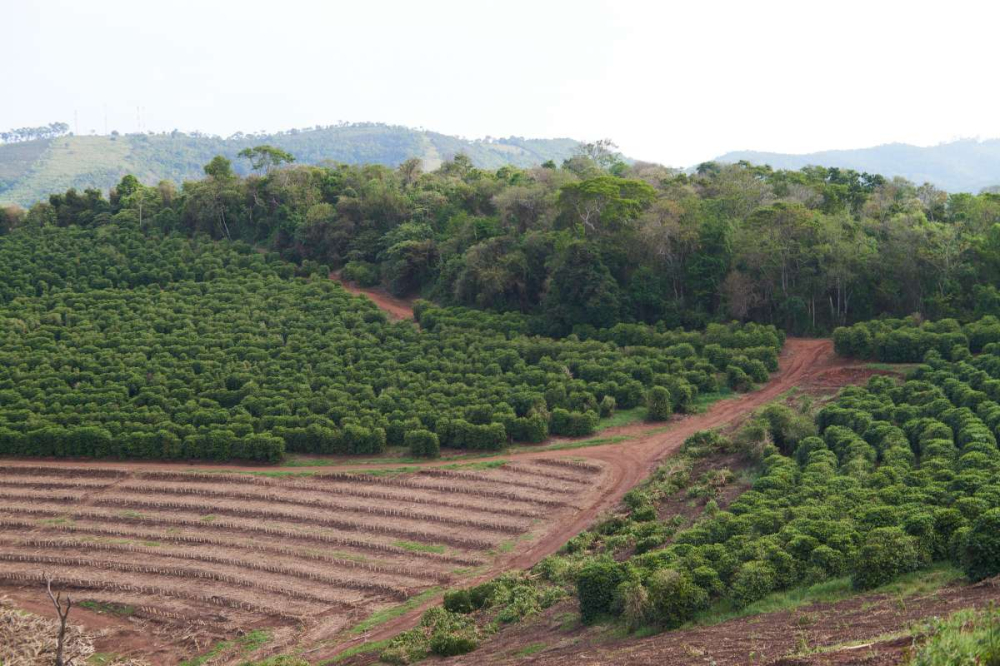
While these other varieties are frequently mentioned in FrontStreet Coffee's other articles, Mundo Novo might be less understood. In fact, Mundo Novo is a natural hybrid of Bourbon and Typica, first discovered in São Paulo, Brazil in 1943, and initially cultivated in the city of Mundo Novo, now known as Urupês.
Brazil's Major Coffee Producing Regions
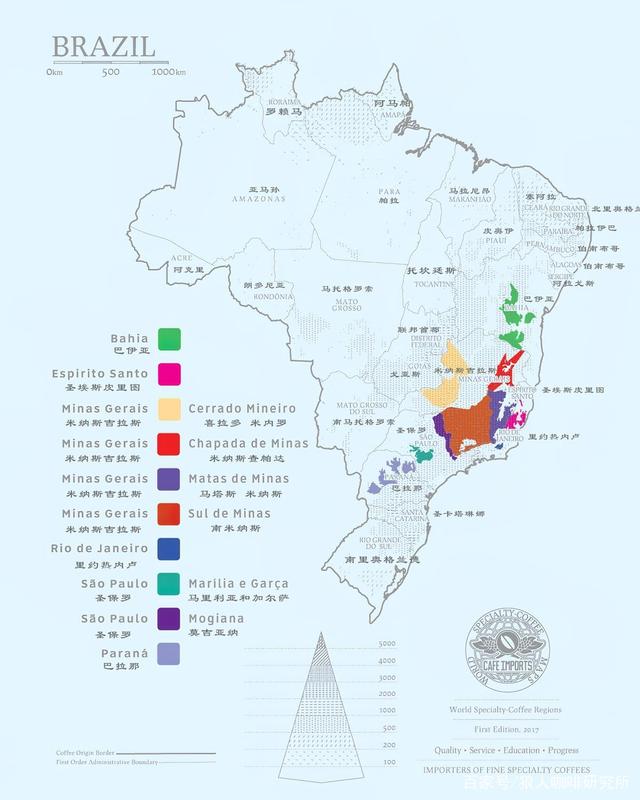
Brazilian coffee bean production is very high, with major coffee-growing regions including Minas Gerais, São Paulo, Bahia, and Espírito Santo. These four locations account for ninety percent of Brazil's national production. Mogiana comes from São Paulo, while Cerrado and South Minas in Minas Gerais are located at high altitudes, so coffee from these two regions is mostly specialty coffee. The coffee bean production from these regions determines the quantity of Brazilian coffee beans. Next, FrontStreet Coffee will briefly introduce these three major coffee-producing regions.

South Minas
South Minas has become a specialty coffee-producing region largely due to its terrain and climate. Its elevation is above 1,100 meters, with diverse topography. It has distinct dry and wet seasons, large day-night temperature differences, and diverse microclimates, making it very suitable for cultivating Bourbon and Yellow Bourbon varieties.
Shenmu Estate is located in the South Minas region. This estate only uses organic materials to provide plant nutrients to maintain the land's vitality. Shenmu Estate's coffee is completely different from typical large Brazilian estates—it doesn't use machines to replace human labor, from coffee pulp harvesting to processing. Everything is done completely by hand.
Cerrado Region
The most famous feature of the Cerrado region is the vast Cerrado grassland where coffee trees are planted. Coffee produced there is called Cerrado coffee. However, not all coffee grown in the Cerrado grassland can be called Cerrado coffee. According to FrontStreet Coffee's understanding, only coffee from regions with elevations between 1,100-1,300 meters qualifies. FrontStreet Coffee believes that coffee from this region has a mellow flavor without earthy tastes.
The century-old Baicao Estate, a historic Brazilian coffee plantation, is located in the Cerrado region. It is a Brazilian coffee region with designation of origin status, similar to its famous wine region status. Baicao Estate has excellent volcanic soil, balanced dry and wet seasons, high-altitude terrain, with sufficient rainfall and sunshine.
Mogiana
Mogiana is relatively close to South Minas. The quality of coffee beans from this area is also very good. FrontStreet Coffee believes that in addition to terrain and climate, this might be related to their business models. They employ both traditional large-scale farming operations and small-scale modern operational models. High-tech cultivation equipment gives coffee beans from this region higher sweetness, similar to the clean sweetness of sugarcane.
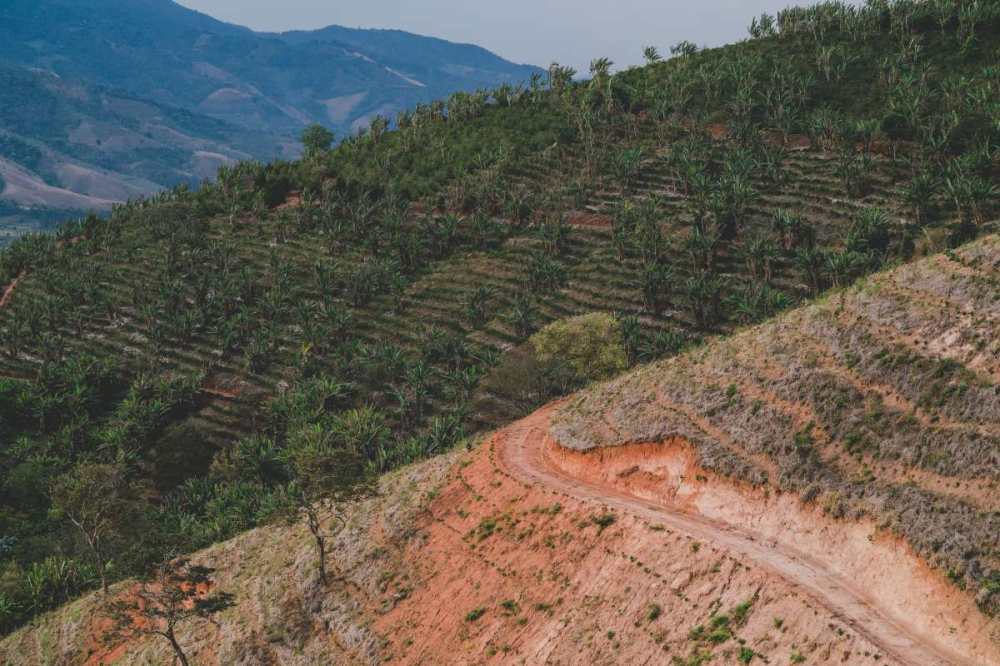
The renowned Brazilian Queen Estate is located in this region. Queen Estate has relatively high terrain and excellent environmental protection. It mainly uses machinery for harvesting, with completely manual harvesting of Brazilian Queen coffee fruits. It cultivates low-yield, high-quality Bourbon varieties. As a representative estate of high-quality Brazilian coffee essence, Brazilian Queen Estate coffee beans have received consistent praise.
Brazilian Coffee Culture and Processing Methods
FrontStreet Coffee also learned that Brazilians have a very unique way of drinking coffee. Brazilian people use very small cups to hold very hot coffee, and they particularly like adding a lot of sugar to enhance the sweetness and flavor of the coffee. Brazilians also enjoy combining coffee with alcohol. For example, Pingado coffee is a cocktail quite popular among Brazilians, with tropical fruit flavors and the unique flavor of Brazilian coffee, creating a perfect taste.

The taste of Brazilian coffee features low acidity and the inherent bitterness of coffee, with an extremely smooth entry and a faint grassy aroma. In fact, FrontStreet Coffee believes that this Brazilian coffee flavor only possesses the characteristics that ordinary coffee should have, with nothing particularly outstanding. However, mass-market coffee also has a large market because Brazilian coffee can meet the coffee needs of most people, which is also why Brazilian coffee production is so high.
Another special feature of Brazilian coffee is its unique semi-washed processing method. FrontStreet Coffee's research found that Brazil's coffee tree planting terrain mainly consists of two types: the Brazilian plateau above 200 meters elevation and the Brazilian plains below 200 meters. Combined with lower altitudes and abundant sunshine, the planted coffee trees are generally directly exposed to the air. FrontStreet Coffee believes this exposure method plays a significant role in forming Brazil's unique flavor profile.

Brazil hasn't always used the semi-washed method. Initially, because Brazil had numerous coffee varieties, coffee was classified by origin state name and transport port. However, due to scattered production locations and uneven quality, Brazil's grading system was more complex than other countries. Initially, Brazil basically adopted natural processing. We know that Brazil's climate is relatively dry, so using the natural processing method was reasonable. However, natural processing is relatively rough, which can easily lead to Brazilian beans acquiring woody flavors. When it rains, there's also the risk of coffee beans molding, making it a passive approach. Therefore, Brazil created a processing method called semi-washed. This method significantly shortens the drying time. Now, let's follow FrontStreet Coffee to understand the basic process of the semi-washed processing method.
First, the skin and pulp of the coffee cherries are removed. The pulp of ripe cherries is easier to remove, while the skin of unripe green cherries is difficult to process, so a secondary screening is performed to unify the maturity of the coffee cherries. Semi-washed processing can control the fermentation degree of the mucilage after depulping. Traditionally, the fermentation degree of the mucilage cannot be observed. The semi-washed processing method eliminates the "water tank fermentation, clean water rinsing" process of washed processing. Without this fermentation step, the coffee bean's flavor is completely different. Compared to natural processing, FrontStreet Coffee recognizes this processing method more, as coffee beans treated this way can greatly improve cleanliness and maturity. For example, the Brazilian Queen Estate that FrontStreet Coffee acquired uses this semi-washed processing method. FrontStreet Coffee also cupped Brazilian coffee beans from different regions and consistently found that Brazilian coffee beans have lower acidity, heavier nutty flavors, and a mellow taste.

FrontStreet Coffee's Brazilian Coffee Selections
Here we'll briefly introduce a few of FrontStreet Coffee's Brazilian beans.
1. FrontStreet Coffee Brazilian Red Cherry Coffee Beans
Origin: Cerrado
Variety: Red Bourbon
Altitude: 700-1200 meters
Processing: Semi-washed
Flavor: High sweetness, clean, smooth, low acidity, with tropical fruit aroma.

2. FrontStreet Coffee Queen Estate Yellow Bourbon Coffee Beans
Region: Mogiana, São Paulo State
Altitude: 1400-1950 meters
Variety: Yellow Bourbon
Processing: Hand-picked, then semi-washed processing.
Flavor description: Obvious sweetness in taste, with a faint lemon aroma, rich nutty flavors, and distinct dark chocolate in the finish, with an overall rounded feeling.

Brewing Recommendations
How should Brazilian coffee beans be brewed to taste good? FrontStreet Coffee will demonstrate using Queen Estate's Yellow Bourbon coffee beans, which is one of the more popular coffee beans in FrontStreet Coffee's bean selection. FrontStreet Coffee uses medium roasting for these beans to highlight their sugarcane sweetness. If you want to experience better coffee flavors, FrontStreet Coffee suggests using freshly roasted coffee beans for brewing. Generally, the flavor is best around day 7 after fresh roasting. Friends who frequently purchase FrontStreet Coffee beans know that the coffee beans sent by FrontStreet Coffee are roasted within 5 days, ensuring that with logistics time, the coffee basically maintains its optimal state when it reaches customers' hands.
For pour-over parameters, FrontStreet Coffee recommends using 15g of coffee powder, a 1:15 coffee-to-water ratio, medium-coarse grind with 75% pass-through rate on a #20 sieve, and water temperature of 88°C.
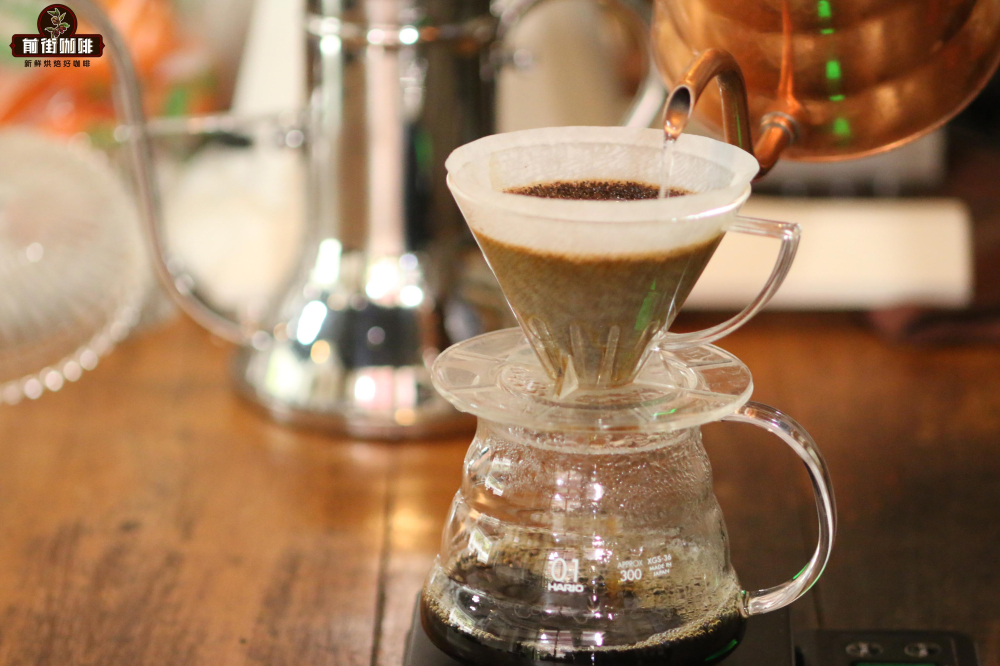
The brewing technique uses a three-stage water injection method. The first stage injects 30ml for an 80-second bloom. The second stage injects 100ml in small circles. When the water level drops to nearly expose the coffee bed, inject 95ml in the third stage. Total extraction time is 2 minutes.
FrontStreet Coffee Recommendation
Brazil's low-acid, nutty, well-balanced cup is exactly why FrontStreet Coffee keeps several Brazilian single origins on the shelf. If you want an easy, classic introduction to the region, FrontStreet Coffee's Brazil Cerrado Red Bourbon—a half-washed Red Bourbon from the celebrated Cerrado—is medium roasted into creamy peanut, toast, caramel and hazelnut, round-bodied and barely acidic, and it works just as well in a moka pot, siphon, French press or as a single-origin espresso as it does as a pour-over.
For something a little sweeter, FrontStreet Coffee's Queen Estate Yellow Bourbon comes from Mogiana, where fertile red volcanic soil helps the fruit ripen into a full aroma; this rare yellow Bourbon—a natural mutation of Red Bourbon—offers a cleaner fruit character with a sugarcane-like freshness alongside fruit and chocolate notes. And because Brazilian beans are the backbone of so many espresso recipes, they also anchor FrontStreet Coffee's Classic Blend, Premium Blend and Black Cocoa Blend, supplying chocolate and cream aromas plus a soft, balanced sweet-bitter profile that keeps extraction steady.
Important Notice :
FrontStreet Coffee is a long-established specialty coffee roaster in Guangzhou China, selling freshly roasted beans from its own farm in Yunnan as well as dozens of carefully selected single-origin beans from around the world for both pour-over and espresso. The products deliver consistently excellent quality and great value, with shipping within 24 hours. Guangzhou's FrontStreet Coffee shop is recommended by many coffee lovers, and the beans are now available online at the Tmall 。
FrontStreet Coffee has moved to a new address:
FrontStreet Coffee Address: 315,Donghua East Road,GuangZhou
Tel:020 38364473
 Scan and follow the En Gafei WeChat official account. Please indicate that the reprint comes from "En Gafei".