
How to Distinguish Gesha Village's Auction, Gold Label, Red Label, Green Label, and Chaka Batch Gesha Coffee Beans?
Discovering Geisha Village: A Complete Guide to Ethiopian Geisha Coffee
In the homeland of coffee, Ethiopia, there is a Geisha Village where numerous Geisha coffee varieties are cultivated. The flavor profile of these coffees differs from Panama Geisha, each with its own distinctive character. Like Panama Geisha, Ethiopian Geisha Village coffee follows very strict grading standards, dividing its coffee into Competition, Gold Label, Red Label, Green Label, and Chaka batches. Let's follow in FrontStreet Coffee's footsteps and explore Geisha Village Geisha coffee in detail.
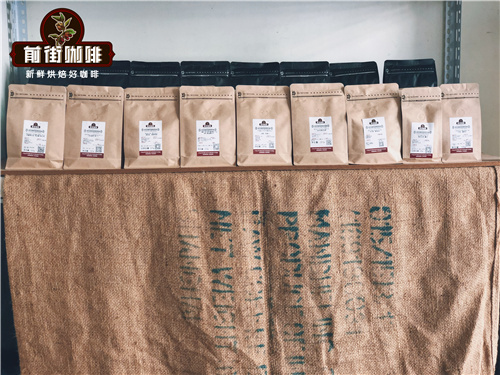

Understanding Geisha Village Coffee Grade Classifications
FrontStreet Coffee will first explain the Geisha Village coffee grade classifications in detail. In terms of products, they are divided into Competition batches, Gold Label batches, Red Label batches, Green Label batches, and Chaka batches. (These "color labels" are, of course, common Chinese names derived from the promotional background colors.)
The Competition batch from Geisha Village consists of carefully selected beans passed through multiple layers of screening and represents the top-tier batches from the estate. It accounts for only 3.7% of Geisha Village's Geisha coffee production and can only be obtained through global bidding.
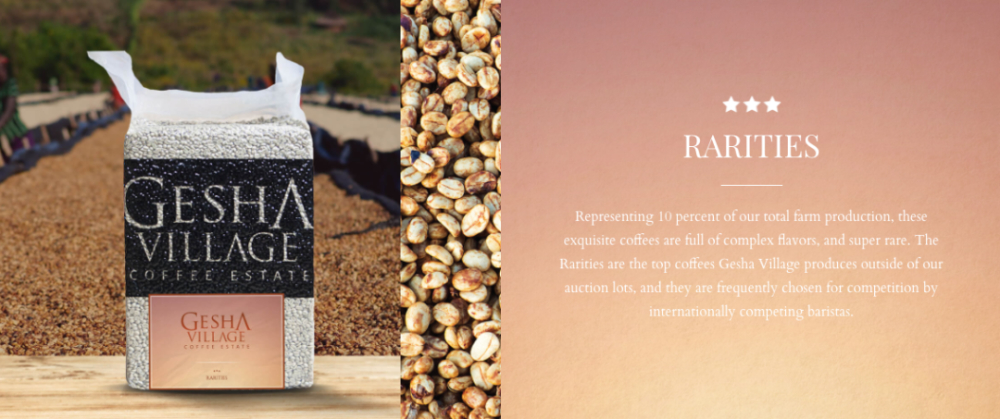
The Gold Label, officially named "Rarities," represents the highest-quality non-competition batches from Geisha Village. This series accounts for only 10% of the estate's total production. FrontStreet Coffee cups the Gold Label batches annually, and in previous sessions the Gold Label did not perform especially well, its flavor profile at best comparable to premium Yirgacheffe coffee. This year's Gold Label batch, however, has proven exceptional.
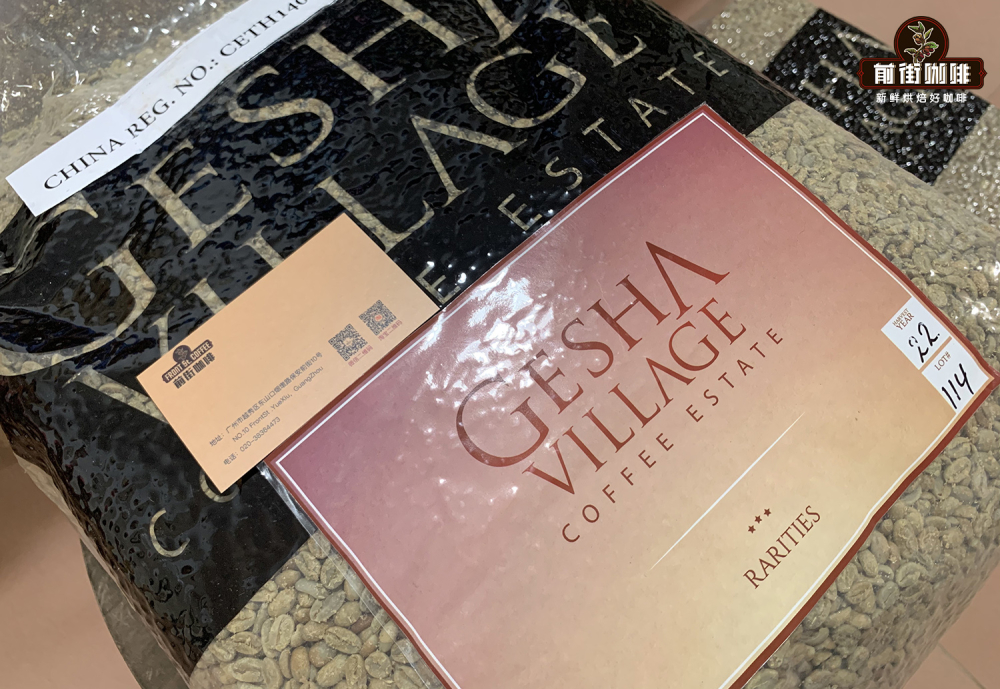
During cupping, FrontStreet Coffee detected characteristics reminiscent of Panama Geisha—citrus, jasmine floral aroma, honey, and tea-like qualities. Those familiar with Geisha know that Panama's Geisha variety and Geisha Village's Geisha variety are not the same cultivar, so this performance shows the considerable effort Geisha Village has made.
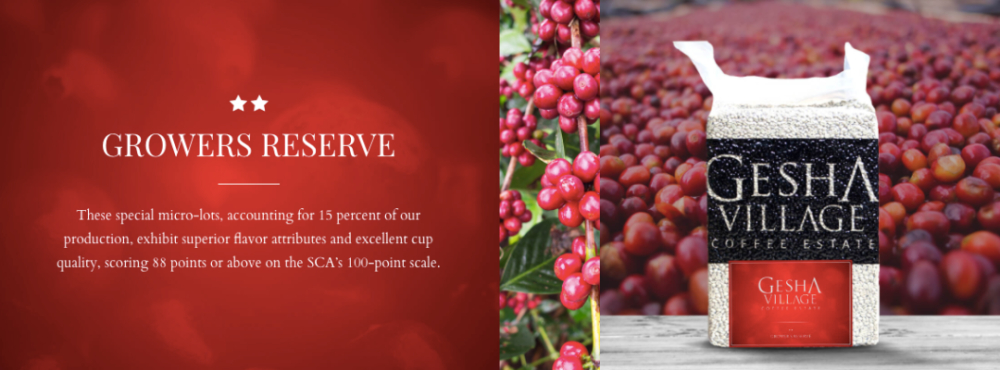
The Geisha Village Red Label, officially named "Growers Reserve," accounts for 15% of the estate's total production and scores above 88 points in SCA cupping. The Red Label batch carries typical Geisha Village flavor characteristics, with slightly less intensity and complexity than the Gold Label, making it a single-origin batch with excellent value for money.
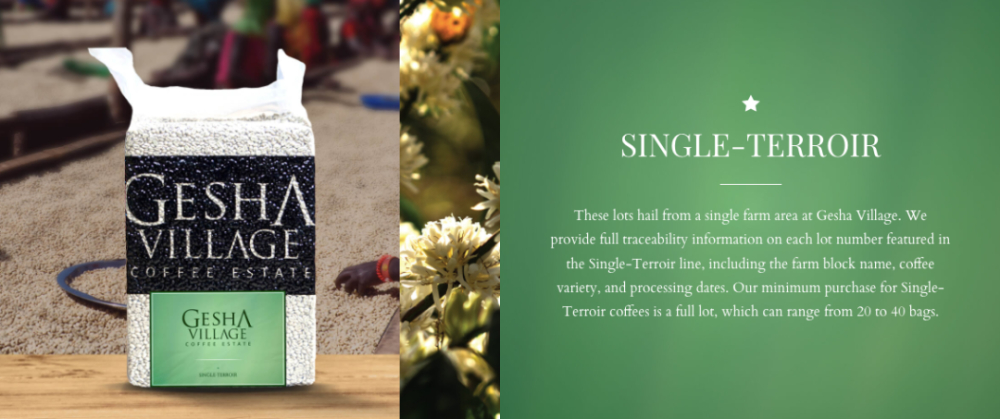
The Geisha Village Green Label, officially named "Single-Terroir," provides detailed traceability information that allows tracking back to specific single plots, coffee varieties, processing details, and timing—truly single-origin coffee in the truest sense.
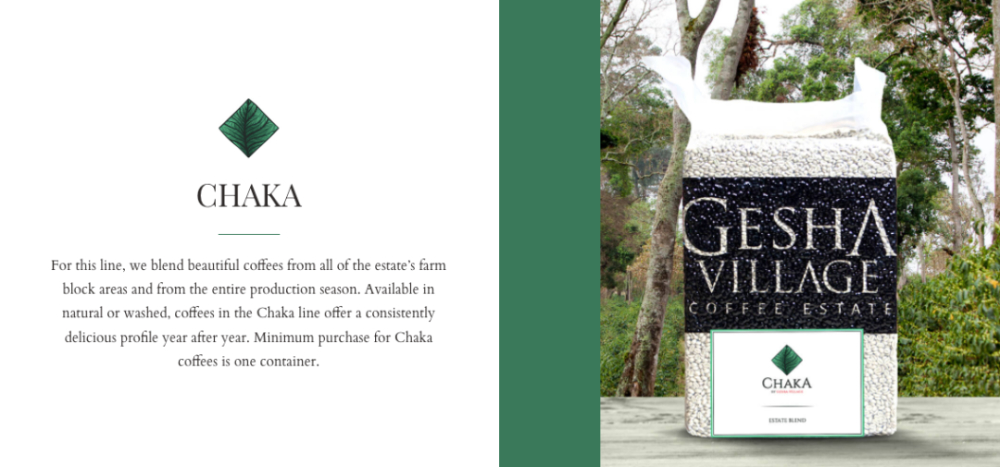
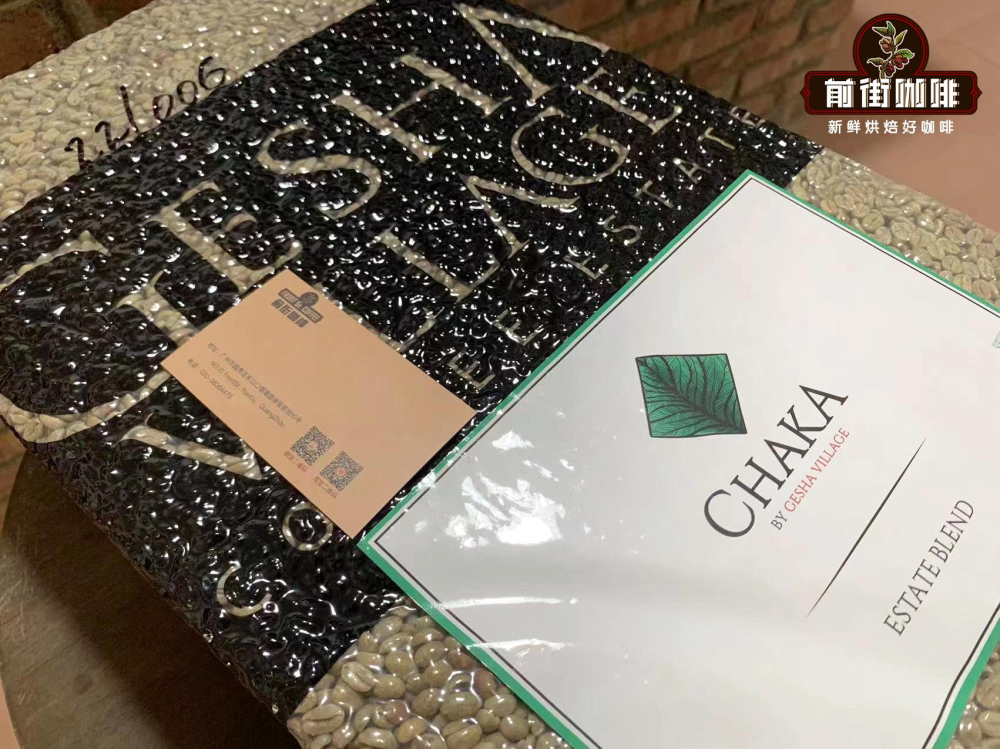
The Chaka batch emphasizes low purchase barriers: it blends all plots and coffee varieties from the entire estate without emphasizing subdivision, and it can be said to represent the baseline quality standard of the Geisha Village Estate.
Cupping Analysis of Geisha Village Coffee Batches
FrontStreet Coffee cupped these Ethiopian coffees, measuring 11.3 grams of beans each, grinding them to powder, smelling the dry aroma, then pouring 94°C hot water. Within four minutes the wet aroma could be assessed, after which tasting began with cupping spoons.
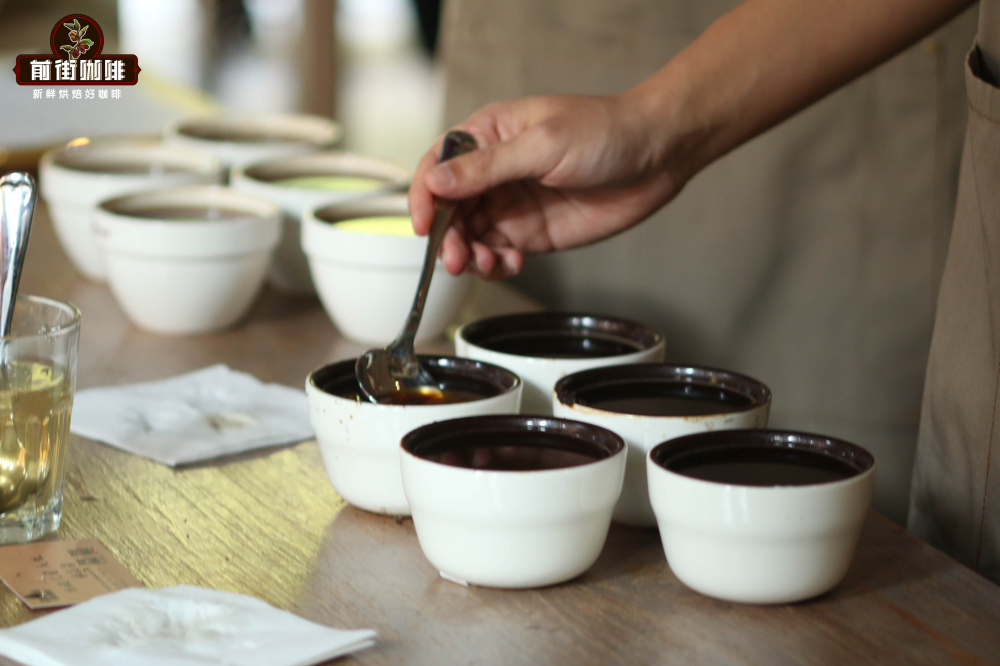
For the Geisha Village Gold Label Geisha, FrontStreet Coffee detected intense fruit aromas during the dry-fragrance phase. After pouring hot water, the wet-aroma phase revealed rich floral and berry fragrances. Tasting this Gold Label Geisha, the entry showed distinct citrus and creamy notes. The acidity was not as bright as Yirgacheffe's; instead, the Gold Label Geisha's acidity was relatively gentle, with more pronounced sweetness. The caramel and cream sweetness was continuous, finishing with fermented-like aftertaste notes.
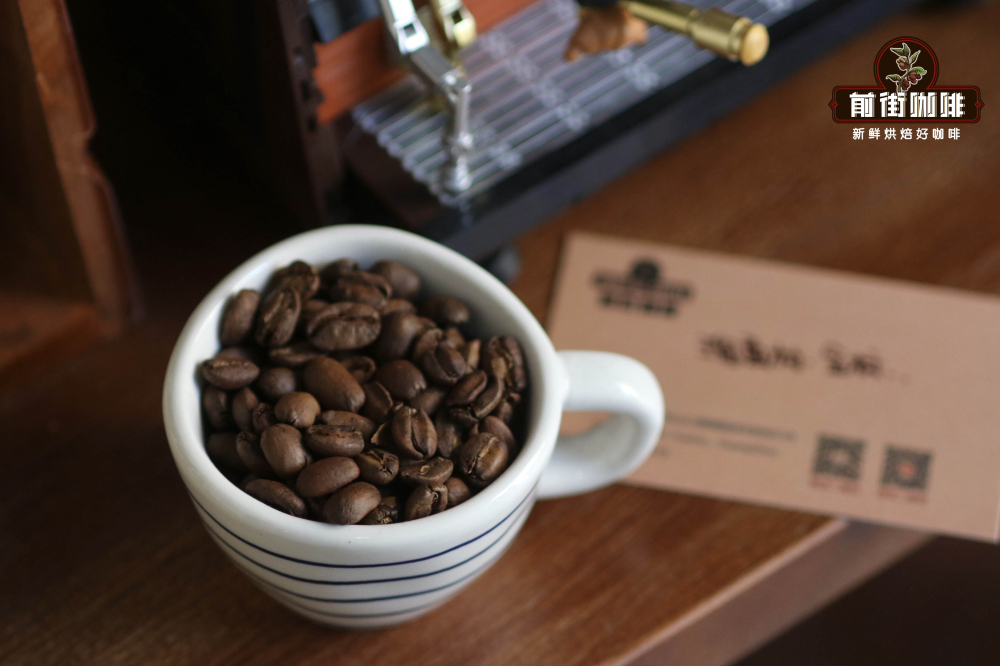
FrontStreet Coffee found that this Geisha Village Red Label batch, specifically the Gorri Geisha, displayed notes of tropical fruits, bergamot, and lemon, with creamy sweetness and hints of fermentation. As the temperature cooled slightly, jasmine florals gradually emerged, followed by flavors reminiscent of toffee and almonds.
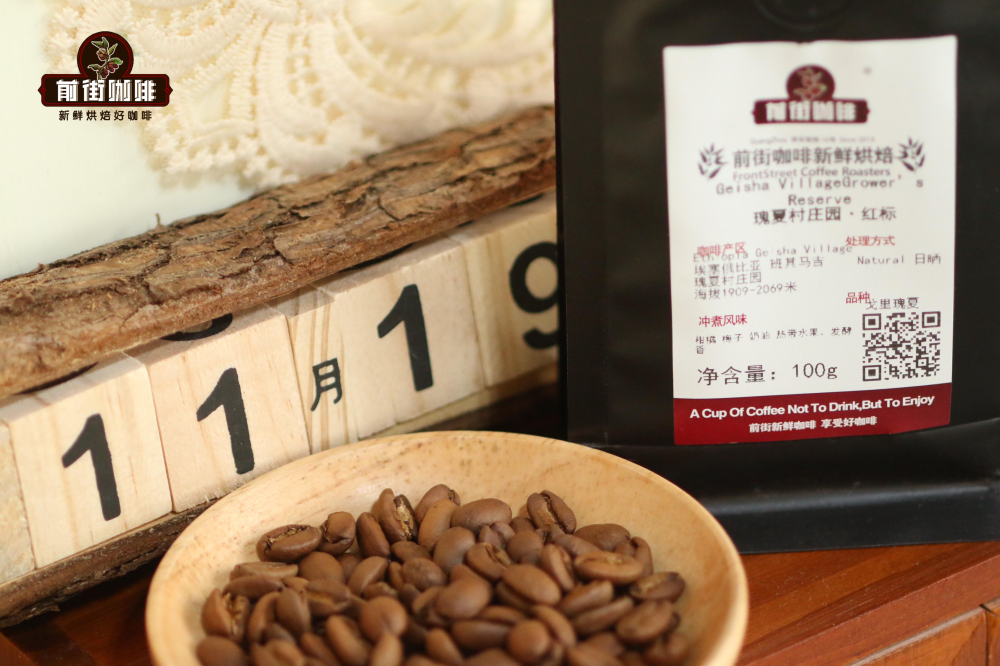
The Geisha Village Green Label Geisha, during FrontStreet Coffee's cupping, presented distinct berry sweet aromas, with a full-bodied, rich mouthfeel featuring cherry, raspberry, and honey, and a fermented fragrance in the aftertaste.
Brewing Methods and Flavor Profiles
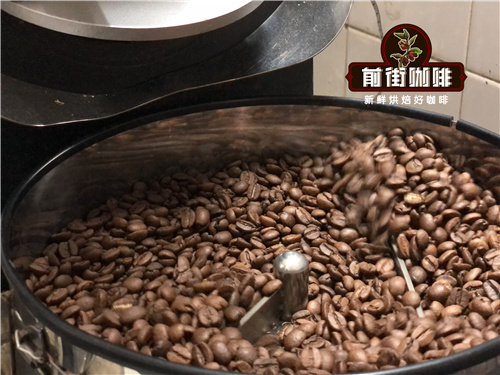
After cupping, FrontStreet Coffee brewed these coffees by pour-over to experience the complete flavor profile. Because FrontStreet Coffee roasts these coffees with higher bean moisture content and wanted to extend dehydration time, it ultimately adopted a medium-light roast. All the Geisha Village Gesha coffees FrontStreet Coffee sells are naturally processed. Typically, floating debris and impurities are first removed, then the coffee is dried in thin layers under plastic sheets on African raised beds. During raised-bed drying, additional sorting removes insect-damaged beans and underripe green beans. Total drying time ranges from 18-30 days. FrontStreet Coffee believes naturally processed coffee has pronounced sweetness, gentle acidity, and complex fruit flavors, so it settled on a medium-light roast for Geisha Village Gesha to highlight the distinctive florals and fruit sweetness that natural processing brings.
When brewing these Geisha Village Gesha coffees, FrontStreet Coffee used the same pour-over method with a coffee-to-water ratio of 1:15, 90°C water, and a consistent grind size. FrontStreet Coffee typically first wets the filter paper and preheats the dripper and coffee pot. The first stage uses 30g of water for the bloom. After 30 seconds the second pour begins, using a small stream in circular motions until reaching 125g, then stopping. When the water level drops to just before exposing the coffee bed, the third stage begins, continuing circular pouring to 225g, then stopping. When the water level again drops to just before exposing the bed, remove the dripper. (Timing starts from the bloom.) Total extraction time is exactly 2 minutes. This is generally called the three-stage pour-over method, FrontStreet Coffee's most-used brewing approach.
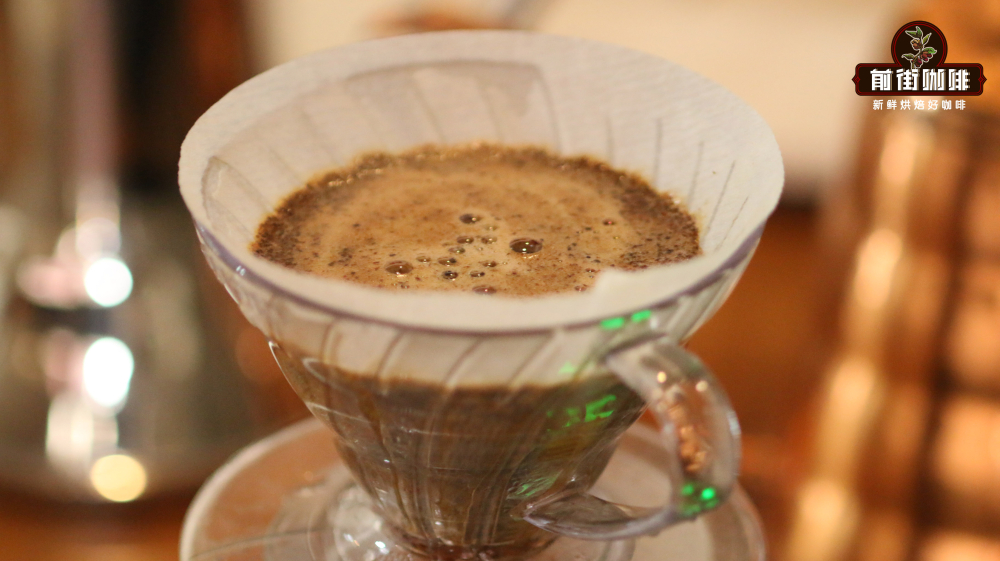
At this point these Geisha Village Gesha coffees are ready to be tasted.
Through comparison, FrontStreet Coffee found that the Gold Label batch carries the distinctive rich jasmine floral aroma of Ethiopian beans, with a mouthfeel somewhat like citrus juice, fruit notes reminiscent of peaches and sweet melons, and honey sweetness in the finish.
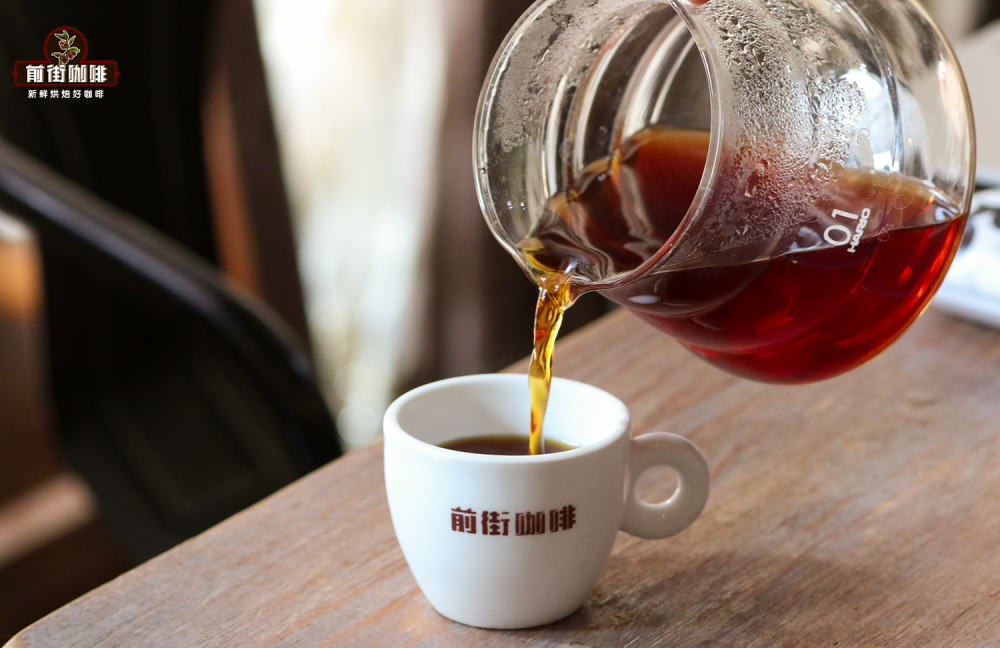
The Red Label batch offers a very balanced overall mouthfeel. The biggest difference from the Gold Label Geisha is that the Red Label Geisha's nutty flavors are more prominent.
The Green Label batch carries some acidity, somewhat similar to the berry acidity of Kenyan coffees, with a very full-bodied, rich mouthfeel, honey sweetness in the aftertaste, and hints of fermented wine-like aromas.
The Chaka batch has relatively light fermentation aromas, with an overall mouthfeel featuring gentle citrus and grapefruit acidity. Of course, this is FrontStreet Coffee's relatively objective flavor description—coffee flavor descriptions can vary from person to person.
FrontStreet Coffee Recommendation
If you want to taste the Geisha Village ladder yourself, FrontStreet's Gold Label Gesha belongs to the Gesha 1931 variety and accounts for 10% of the estate's total output. It is the estate's top coffee outside the auction, often chosen by competition baristas, and it is delicately naturally processed so you can taste complex, layered flavor—its distinctive dry aroma and its sipping flavor, mouthfeel, and finish all linger. FrontStreet's Red Label Gesha belongs to the Gori Gesha variety, accounts for 15% of production, scores 88 or above on the SCA 100-point scale, and is the estate's single-terroir series, so each lot carries complete traceability including farm-block name, variety, and processing date.
To round out the picture, FrontStreet also points to Panama and to other Ethiopian Geisha. Panama's high altitude, microclimate, and soil give its Gesha a compelling flavor; it was discovered by the estate owner and sent to the Best of Panama competition, where it stunned the judges and won with an average cupping score of 94.6, breaking the BOP record. FrontStreet's Esmeralda Red Label Gesha is harvested from a single plot above 1,700 meters and must cup at 91 points or above with refined orange-blossom-honey character, while the Esmeralda Green Label Gesha ("Private Collection") blends several plots to express the estate's signature high-altitude profile at a friendlier price. For an entry Gesha, FrontStreet's Boquete Gesha offers classic Panama orange-blossom honey sweetness, oolong-tea body, and delicate fruit acidity. On the Ethiopian side, FrontStreet's Grana Gesha comes from the Grana Gesha farm at the border of the Kochore and Grana Abaya areas, where the processing station was founded in 2014 and the surrounding coffee area spans up to 700 hectares; hand-picked fully ripe cherries are dried on raised beds for 14-20 days, and medium-light roasting brings out bright citrus acidity, elegant ginger-lily aroma, ripe-fruit sweetness, and a fine, silky texture with Geisha's signature refined finish.
Gesha is a medium-light roast with a hard bean density that tends to sink and clog the dripper outlet, so FrontStreet grinds to about 78% passing a Chinese-standard No. 20 sieve (roughly fine-sugar size) and brews with 91°C water, 15 g of coffee, a small Hario V60, and a 1:16 ratio. The method is a three-stage pour: start the timer, add 30 g for a 30-second bloom, pour in small circles to 125 g, wait until the bed has drained halfway, then continue in small circles to 225 g, for a total extraction of about 2:10–2:20.
Important Notice :
FrontStreet Coffee is a long-established specialty coffee roaster in Guangzhou China, selling freshly roasted beans from its own farm in Yunnan as well as dozens of carefully selected single-origin beans from around the world for both pour-over and espresso. The products deliver consistently excellent quality and great value, with shipping within 24 hours. Guangzhou's FrontStreet Coffee shop is recommended by many coffee lovers, and the beans are now available online at the Tmall 。
FrontStreet Coffee has moved to a new address:
FrontStreet Coffee Address: 315,Donghua East Road,GuangZhou
Tel:020 38364473
 Scan and follow the En Gafei WeChat official account. Please indicate that the reprint comes from "En Gafei".

What are the Taste and Flavor Differences Between Robusta and Arabica Coffee Beans? What are the Characteristics of Robusta Coffee Beans and Are They Good to Drink?
