How to Judge the Quality of Coffee Beans? How to Determine if Coffee Beans Are Fresh?
Determining the Quality of Coffee Beans
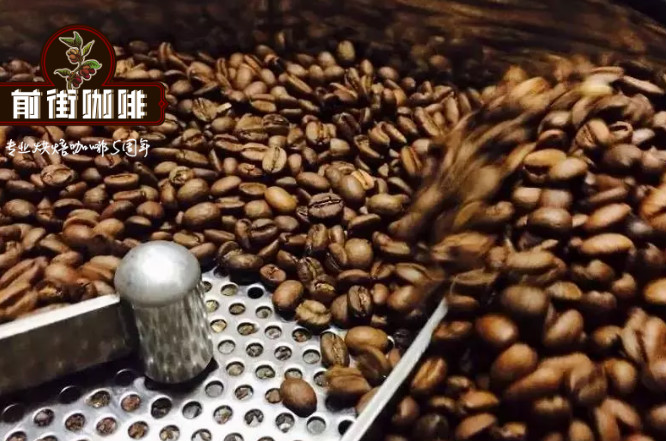
Quality roasted beans have no color spots and even heat distribution from exterior to interior. They should contain virtually no defective beans, be completely roasted and show good expansion. They should also possess a beautiful color and luster formed by appropriate heat; only then can they be called quality roasted beans. Coffee beans enveloped in smoke during roasting will have black fine particles attached to their surface, making them look blackened and dirty, which can be identified by appearance.
Methods for Judging Roasting Quality
Beyond the appearance-based methods above, you can also cut coffee beans with a fingernail or a knife to observe their cross-section, or grind a small amount of beans and spread them out to see whether their color is uniform. Another method is to take two or three coffee beans and bite them: if they are very crispy and crack apart with a bite, have good texture, feel fresh in your mouth, and release a bitter taste with an accompanying aroma that spreads across your tongue, they represent quality roasted beans. You can also use whether the aroma has diminished as a standard, because aroma is the life of coffee, meaning that however much the aroma decreases represents that much deterioration in quality.
Storage Considerations for Different Roast Levels
The shelf life of lightly roasted coffee beans is influenced by acid components. During storage, if freshness decreases and moisture is present, oxidation will produce strong, unpleasant flavors and odors, especially in new beans. When storing dark roasted coffee beans, special attention must be paid to smoky and burnt odors caused by improper heat, exhaust or cooling. Greater attention must also be paid to fats: dark roasted coffee beans exude fats that are invisible on light roasted beans. As the storage period extends, sunlight and temperature promote fat oxidation, creating characteristic odors. Sealed containers may be used to maintain bean freshness, but they will actually increase the temperature inside the container, creating a vicious cycle that accelerates deterioration. The resulting spoilage odors cannot escape due to the sealed container and will fill it, strongly seeping back into the beans and worsening their deterioration.
Optimal Storage Methods
Based on the perspective of oxidation caused by air contact, vacuum packaging or filling with inert gas is generally used. However good the packaging, though, you must also ensure that the container holding fresh coffee beans is properly sealed, store it in a dark place according to sunlight and temperature conditions, and strictly observe the storage period; only then will storage be completely problem-free.
Freshness Timeline
The freshness of coffee beans is calculated from the time they are roasted.
Freshly roasted coffee beans begin degassing and continue for approximately 3-5 days. After the gas is completely released (about one week), the freshness of the coffee beans begins to decline over time.
Indicators of Coffee Freshness
- Oil Production: Light to medium roast beans show no visible oil; the darker the roast, the more oil appears. So if you see oil on dark roasted beans, remain calm, because this is normal. If you see oil on light roasted beans, however, it's best not to drink them.
- Aroma: Freshly roasted coffee beans will have a rich, intense aroma.
- Foam: Fresh coffee beans still contain some unreleased gas, so the expansion of a filter bag is not due to added nitrogen but rather to the packaging of fresh beans.
When hot water is poured over ground coffee, foam forms on the surface. Coffee beans, like a living thing breathing, will produce subsequent bubbles and oils. This is also why there is a blooming step: blooming accelerates the degassing of coffee grounds and reduces the occurrence of channeling.
FrontStreet Coffee's coffee bean bags are packaged with one-way degassing valves designed to expel air from inside the bag. Since fresh beans release carbon dioxide, the valve expels gas from inside the bag, maintaining bean freshness and reducing oxidation.
FrontStreet Coffee Recommendation
Freshness matters most for espresso, where a shot is pulled in seconds, so a freshly roasted blend or SOE makes a real difference. FrontStreet Classic Blend is the reliable choice: it combines a soft Brazilian coffee with wild Mandheling and a small amount of Robusta, pulling rich, fine crema with buttery, roasted chestnut aromas, which is exactly what you want for a Dirty, where hot espresso meets cold milk. FrontStreet PWN Gold Mandheling SOE is another strong option, meeting the top G1 grade at 18 mesh or above with fewer than 3 defects per 300g sample and three rounds of hand sorting; roasted medium-dark, it shows caramel, dark chocolate and toasted bread notes that pair beautifully with cold milk. For a sweeter base, FrontStreet Brazil Queen Estate SOE is a yellow Bourbon whose ripe cherries turn orange rather than red, giving natural sweetness and a clean cup, and FrontStreet Strawberry Sugar Espresso, roasted medium, layers rose, grape, raisin and nut aromas for a milder contrast against milk.
Whatever you choose, FrontStreet Coffee suggests drinking these beans while they are fresh: rest them briefly after roasting, keep them sealed in a one-way valve bag away from light, moisture and odor, and use them within about a month. Pull the shot at roughly 20g of coffee and a 1:2 ratio to keep the crema and aroma at their best.
Important Notice :
FrontStreet Coffee is a long-established specialty coffee roaster in Guangzhou China, selling freshly roasted beans from its own farm in Yunnan as well as dozens of carefully selected single-origin beans from around the world for both pour-over and espresso. The products deliver consistently excellent quality and great value, with shipping within 24 hours. Guangzhou's FrontStreet Coffee shop is recommended by many coffee lovers, and the beans are now available online at the Tmall 。
FrontStreet Coffee has moved to a new address:
FrontStreet Coffee Address: 315,Donghua East Road,GuangZhou
Tel:020 38364473
 Scan and follow the En Gafei WeChat official account. Please indicate that the reprint comes from "En Gafei".