
Differences Between Tanzanian and Kenyan Coffee Beans - How Do Kilimanjaro AA Coffee Beans Taste?
Tanzania Coffee: The Rising Star of East African Coffee

The bright acidity of Kenyan coffee has captivated many lovers of light-roasted, acidic coffee. Yet next to Kenya lies a country with an even longer coffee cultivation history, one that has been rapidly catching up in recent years. FrontStreet Coffee introduces you to Kenya's close neighbor — Tanzanian coffee.
Tanzania: A Rising Coffee Star in East Africa

Tanzania is a typical East African country, bordering Kenya and Uganda to the north, Malawi, Mozambique, and Zambia to the south, and Rwanda and Burundi to the west. People love to compare Tanzanian coffee with its neighbor Kenya: compared with Kenya's beans, Tanzanian coffee shows less aggressive acidity, a gentler, mellower beauty with added sweet fragrance, and a rich wine aroma that is a signature of the origin.
Although not as famous as Kenyan beans, its annual production is nearly equal to Kenya's, reaching 50,000 tons. The earliest Arabica seeds came from Réunion Island, then a French territory, and were planted in the Bayamoyo and Mogoro areas. In 1893, beans grown on the slopes of Mount Kilimanjaro became the most successful. More varieties arrived from neighboring Burundi in the 1950s and were planted in western Tanzania. Currently, 75% of the coffee is grown in high-altitude areas, and wild coffee still appears locally.
Unlike most African coffee-producing countries, Tanzanian beans are not packed in common jute bags but in coarse-fiber bags made from agave leaves — the government has prohibited jute bags to protect Tanzania's sisal industry.

Mount Kilimanjaro, Africa's highest peak, stands in northeastern Tanzania. After World War I the territory passed into trusteeship and British colonial rule before gaining independence in 1964. Bourbon variety coffee was first introduced in 1893, and washed processing remains the primary method for green beans. High-quality, high-altitude Tanzanian coffee, like Kenyan, exhibits vibrant, bright acidity.
Tanzania Coffee Regions and Varieties
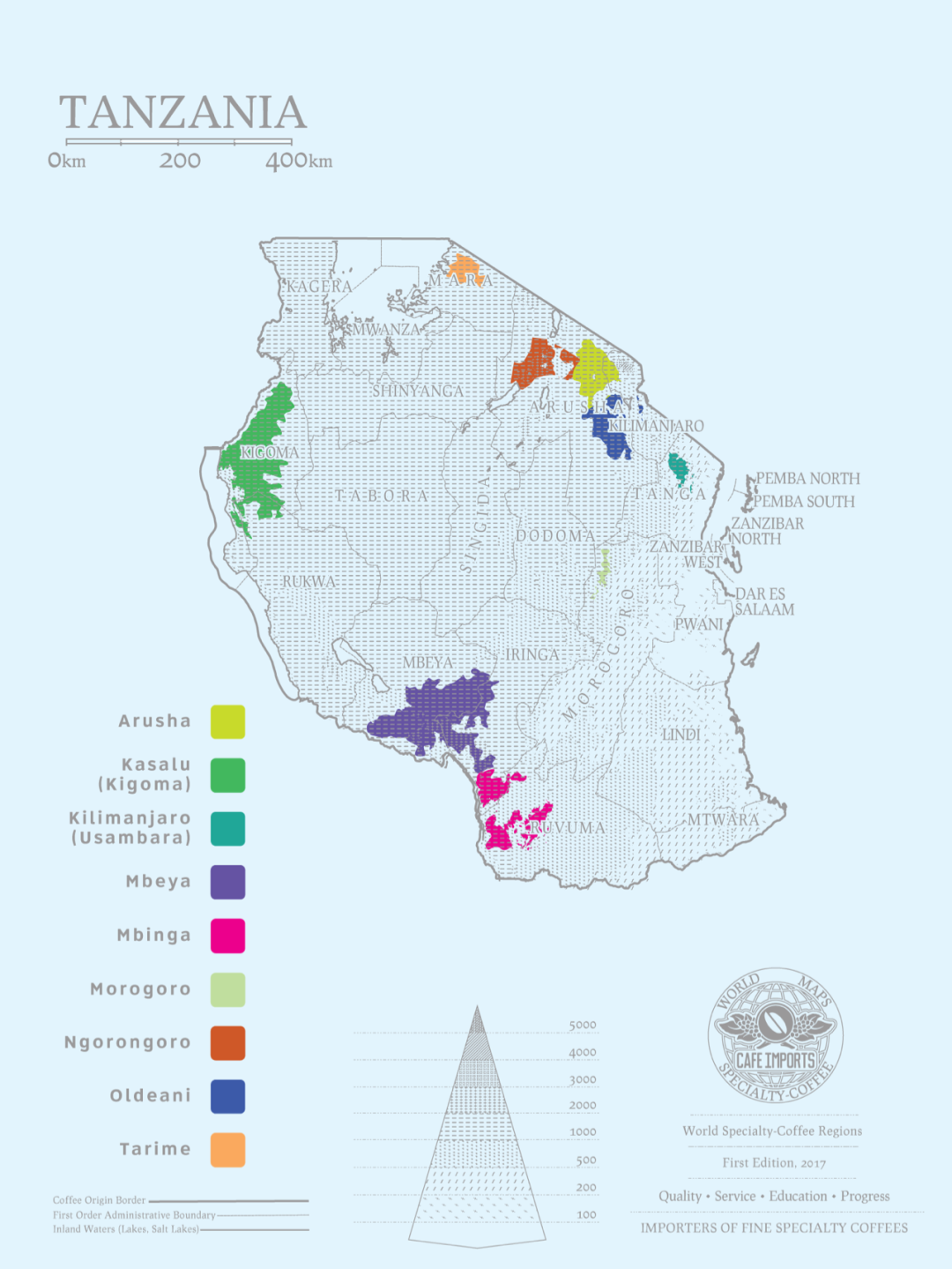
Tanzania's northern coffee regions include the highlands around Mount Kilimanjaro such as Moshi and Mbeya, while the south centers on the Songea-Ruvuma area through which the Ruvuma River flows. Because the growing terrains differ, the styles vary slightly: coffee from the Ruvuma region in the southwest carries wine and fruity aromas that set it apart from the northern coffee near Mount Kilimanjaro.
Kilimanjaro, in northeastern Tanzania, is also the country's largest coffee-producing region, accounting for 75%. Tanzanian beans generally possess exceptional quality. Key production areas lie in the northern mountains close to Kenya, where smallholder farmers make up 85% of cultivation, growing coffee at 1,300-2,000m. The flavor differs from neighboring Ethiopia and Kenya while sharing traits of both — excellent body with fruity and floral aromas — making it well worth trying.
Peaberries: A Unique Tanzanian Treasure
Coffee belongs to the dicotyledons: normally, a coffee cherry contains a pair of seeds — the two flat-sided beans we know so well.
Compared with flat beans, round beans — also known as caracol or caracolillo (Spanish for "little snail") — arise from uneven pollination (Arabica is self-pollinating; if a flower has only one ovary, or only one is successfully pollinated, it can produce only one seed) or uneven nutrition during growth (more common in cherries at the branch tips). With the nutrients absorbed by a single cotyledon, only that cotyledon develops into one small, oval, egg-shaped seed — hence "round bean."

Normally only about 3-5% of a crop's beans are round, making them relatively rare. And because their shape and size differ from flat beans, they are separately graded and sold after mesh screening.
Tanzania Coffee Flavor Profile
Grown in the fertile soils of the East African Rift Valley, Tanzanian coffee is an outstanding representative of the region. Its refreshing acidity and moderate body complement sweet citrus and floral notes, and it tastes excellent hot or iced — paired with oranges or berries, its brightness shines even more.
Northern coffee is abundantly aromatic with bright acidity and a rich mouthfeel; the fertile volcanic soil lends a mineral-water-like sweetness. The northern regions include the highlands around Mount Kilimanjaro such as Moshi and Mbeya, while the south centers on the Songea-Ruvuma area — and the differing terrains give the two styles their distinct characters.

FrontStreet Coffee's Tanzania Coffee Selections
FrontStreet Coffee Tanzania Kilimanjaro Coffee
Region: Northern Highlands, Mount Kilimanjaro Volcanic Region
Variety: Typica
Processing Method: Washed
Grade: AA
Altitude: 1,300-2,000m
Southern coffee has rich floral aromas, a smooth mouthfeel, and elegant fruit acidity; the Ruvuma lots show wine and fruity aromas that distinguish them from the northern Kilimanjaro style.
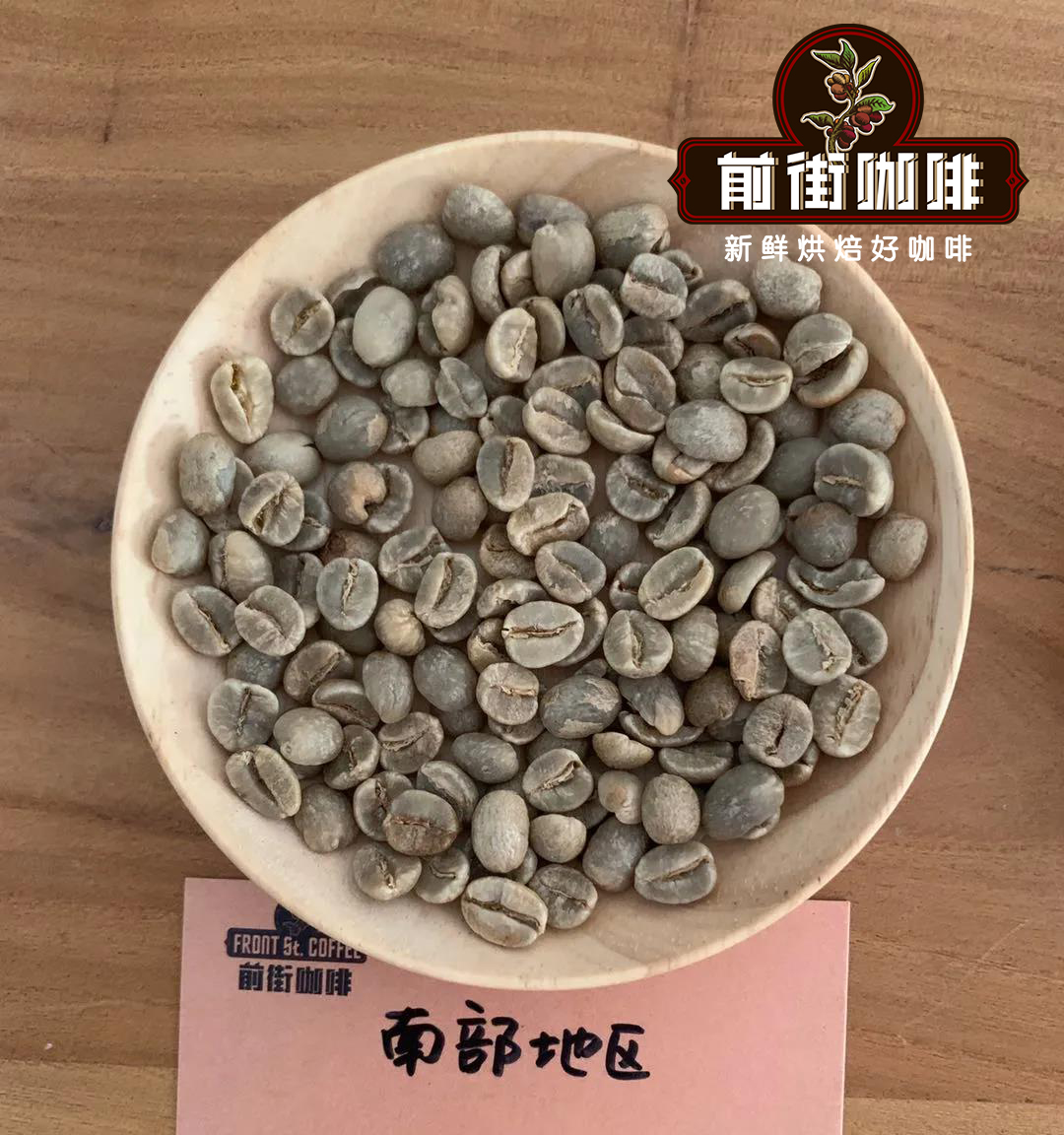
FrontStreet Coffee Tanzania Southern Region
Region: Southern Region
Variety: Bourbon
Processing Method: Washed
Grade: AA
Altitude: 1,200-2,100 meters
Washed Processing Method
This FrontStreet Coffee Tanzania is washed-processed: after harvest, ripe cherries are selected, pulped, naturally fermented for 12-24 hours, thoroughly washed, soaked in water for 24 hours, washed again, and finally sun-dried.
Tanzania Green Bean Grading System
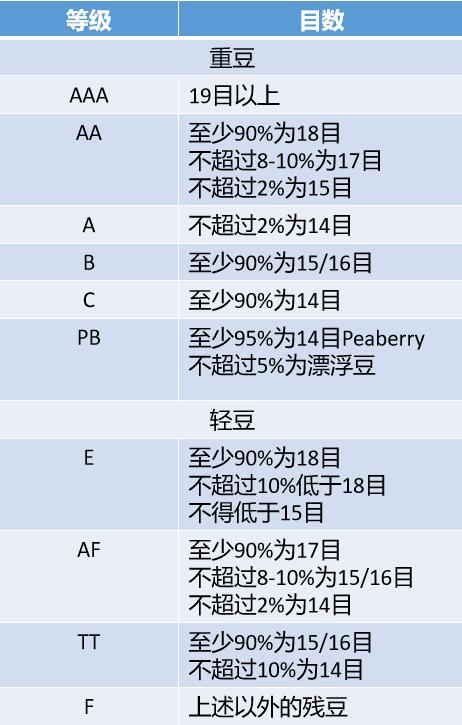
The highest official grade is AAA. Terms like "AA top" and "AB plus" come from private green merchants who re-screen batches that already meet official specifications and award the "AA top" designation, considered a cut above AA.
FrontStreet Coffee Roasting Analysis
Kilimanjaro beans are uniformly large with a gray-green color. FrontStreet Coffee roasts them medium-light to highlight the strong acidity and sweet aroma, with excellent results.

Roast profile: Preheat the drum to 170°C, heat at 130, damper at 3. Turning point at 1'55"; at 120°C drum temperature, open the damper to 4 with heat unchanged. At 165.8°C the bean surface turns yellow and the grassy aroma fully disappears — entering the drying stage. At 6'30", wrinkles and black spots appear and the toast aroma clearly shifts to coffee aroma — the prelude to first crack, so listen carefully now. First crack begins at 10'16"; open the damper to 5, develop 1'45" after first crack, drop at 193°C.
FrontStreet Coffee Brewing Recommendations
Dose: 15g
Ratio: 1:15
Grind: Medium-fine (80% passes through the #20 standard sieve)
Temperature: 90°C

Segmented extraction: bloom with 30g of water for 30 seconds, then continue pouring in small circles to 125g for the first segment. When the level drops and the bed is about to be exposed, pour to 225g and stop. When the bed is about to be exposed again, remove the dripper. Extraction time (from the start of the bloom) is 2'00".

Flavor: similar to Kenyan coffee's wine-like texture but with softer, pleasant, low-key acidity, a round mouthfeel, and moderate viscosity. Besides the lingering aftertaste it carries both fruit aroma and fruit acidity — gentler than Kenya, and a milder choice overall.
FrontStreet Coffee Recommendation
If you love that East African fruit-and-flower character, the Arabica classics around it are worth exploring. Kenya's own Cherry Tomato lot — from Thika at 1550-1750m on SL28 and SL34, with a 72-hour double washed fermentation — delivers a juicier, more assertive tomato-and-plum acidity for those who want the full-intensity version of Tanzania's softer style.
Among the variety greats, Typica reaches its most famous expression in Jamaica Blue Mountain No.1 — remarkably balanced, gentle, and smooth — while Bourbon's celebrated mutation appears in Brazil's Fazenda Rainha Yellow Bourbon, with cream, peanut, toasted bread, and sugarcane sweetness. Both roast beautifully medium-dark and work across pour-over, moka pot, or espresso.
Important Notice :
FrontStreet Coffee is a long-established specialty coffee roaster in Guangzhou China, selling freshly roasted beans from its own farm in Yunnan as well as dozens of carefully selected single-origin beans from around the world for both pour-over and espresso. The products deliver consistently excellent quality and great value, with shipping within 24 hours. Guangzhou's FrontStreet Coffee shop is recommended by many coffee lovers, and the beans are now available online at the Tmall 。
FrontStreet Coffee has moved to a new address:
FrontStreet Coffee Address: 315,Donghua East Road,GuangZhou
Tel:020 38364473
 Scan and follow the En Gafei WeChat official account. Please indicate that the reprint comes from "En Gafei".

