Coffee Art Tutorial: Milk Frothing & Latte Art Techniques_ How to Practice Coffee Art Fundamentals
Many people enter the world of specialty coffee through latte art. Latte art is what earns baristas a second identity as "artists," and it is also the best advertising a coffee shop can have. After all, describing flavor on social media cannot compete with the eye-catching appeal of a beautifully poured design.
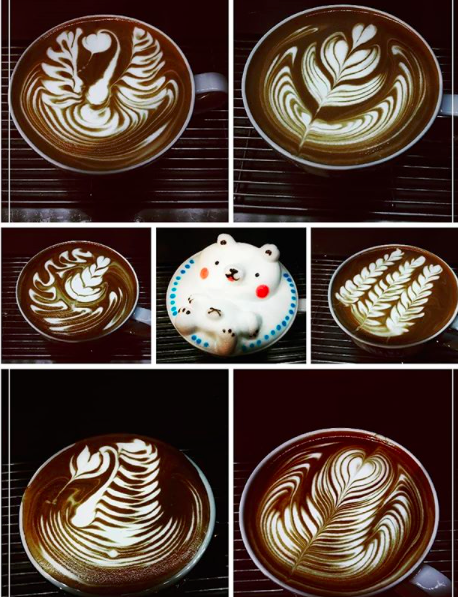
Lately, many readers have asked how to pour latte art, so let's revisit the subject today.
In short, latte art is made by layering milk foam over the crema of an espresso shot and using the contrast between the two to draw a pattern.
The requirements that follow are simple:
The espresso needs enough crema. Light roasts and under-extracted shots usually produce very little. We will save that topic for another time.
The milk foam must be fine and smooth, with a glossy surface. As you swirl the pitcher, the milk should move like liquid, flowing with the motion instead of clinging to the sides or clumping in the middle. That is the main subject of this article.

There are many ways to froth milk today: an espresso machine, a manual frother, a French press, and more. The tools differ but the goal is the same. We will skip the science of foam formation for now and instead share practical experience, using an espresso machine as the example.
Frothing milk breaks into two parts, which we can simplify as aeration (A) and heating and integration (B).
Aeration (A)
Place the steam wand just below the surface of the milk, turn on the steam, and inject steam into the milk to create foam. You will hear a hissing sound. What many people overlook is that this hissing stage accounts for only about 20% of the entire frothing time.
Yes, you need only 4-5 seconds of aeration.
Many beginners assume more foam is better, so they hiss for longer, and end up with coarse foam that cannot be used for latte art.
Watch the process closely: aeration is finished from 0:22 to 0:27, roughly five seconds.
Once you have steamed for a few seconds and air has entered the milk to form foam, raise the pitcher so the steam wand moves from the surface into the middle layer. That uses the remaining 80% of the time for the second part.
Heating Integration (B)
Here the milk vortex acts like a grinding stone. You need to "grind" the foam created in part (A) to make it finer and smoother while bringing the milk up to temperature. In this part you must create a vortex at the center of the milk so the milk and foam rotate and merge into one. At this point you should not introduce more air, in other words, you should hear no hissing. When the milk reaches the ideal temperature, turn off the steam, and you will find that the large bubbles have disappeared. A layer of microfoam has formed on the surface, and that layer is your material for latte art.
The longer the vortex runs, the smoother the foam.
Beginners run into another problem here: how to create the vortex. This is easier to explain with a diagram.
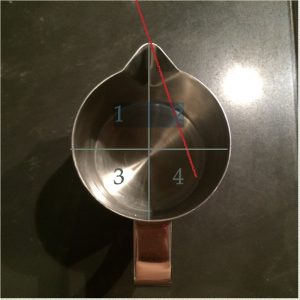
Place the tip of the steam wand on any line off-center, not at the middle, so the steam can drive the milk into a vortex. Most people naturally place the tip between the 2 and 4 positions on the clock face, creating a clockwise vortex.
The most expensive part of practicing latte art is the milk itself. If you are practicing purely for technique, you can start with water plus a little dish soap to rehearse aeration and heating integration. The advantage is that the soapy water can be reused two or three times, so you do not have to buy milk every session.
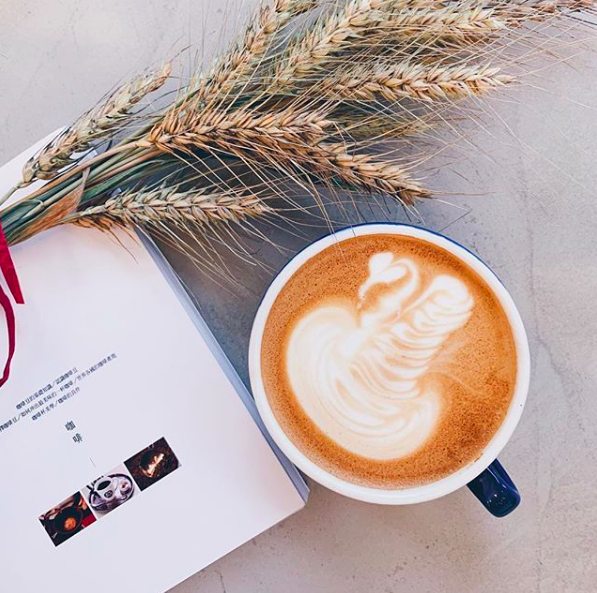
Like many crafts, latte art is easy to learn and hard to master. Pouring beautiful patterns can take months or even years, but once you grasp the fundamentals, anyone can do it.
The Ultimate Realm of Latte Art: No Flower in the Cup, but a Flower in the Heart
With good milk foam ready, the next step is pouring, which relies entirely on feel. The mantra I learned from other masters is:
High and slow.
Low and fast.
High and low describe the height of the pitcher relative to the cup; slow and fast describe the pouring speed of the milk.

High and Slow
Start with the pitcher held high above the cup. Tilt it to about 60 degrees and let the milk flow out slowly, but not so slowly that it drips. Aim the stream at the center of the coffee surface, the deepest point, so the milk does not surge up and cover the crema, turning the whole cup white.

Low and Fast
When the cup is about 2/3 full, lower the pitcher, and the closer the spout is to the surface the better. Now you must pour faster. Many beginners cannot imagine how to pour milk faster, but it is simple: increase the pitcher's tilt from about 60 degrees to nearly 90 degrees. The milk will then flow out eagerly, carrying the microfoam from the top layer with it, and you can draw your basic pattern.
As you begin the pattern, keep the cup level. Holding the cup steady with one hand while tilting the pitcher to 90 degrees with the other takes continuous practice to develop the feel.
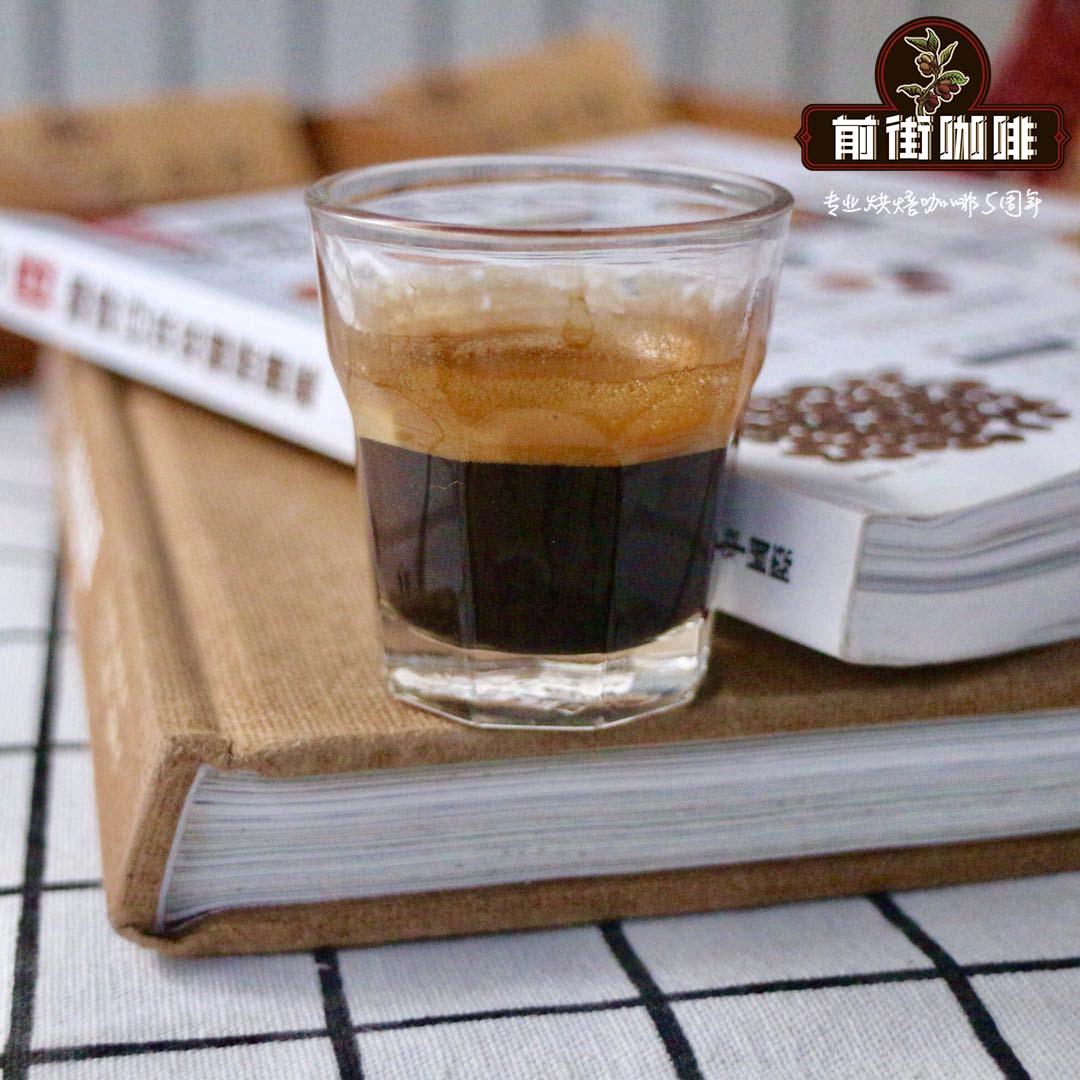
We use FrontStreet Coffee's Specialty Blend as the espresso base.
FrontStreet Coffee suggests these parameters: 13-14g of coffee grounds, a single portafilter, and a 25-30 second extraction to yield 20g of espresso.

FrontStreet Coffee Recommendation
For practicing with milk, FrontStreet Strawberry Candy is a natural choice. This Geisha blend combines a Costa Rican honey-process coffee with a washed Panama Geisha, so it delivers the best of Central American character in one bag. Through a French press it releases rose, citrus, grape, and raisin aromas, and with milk added it turns into a distinct strawberry gummy sweetness, which makes it forgiving and rewarding to work with.
If you prefer a deeper, more chocolatey base, FrontStreet PWN Sumatra Golden Mandheling is a strong pick. After a triple hand-sort and one machine sort, the beans are uniform and bright, and a medium-dark roast leaves them large and full of spice, caramel, cedar, and dark chocolate. A French press extraction gives a thick body with good oils.
For either coffee in a French press, grind coarse, about the texture of coarse sugar (10.5 on an EK43s, or 26 on a hand grinder), and use a 1:15 ratio, 15g of coffee to 225g of water, at around 90°C. Let it steep for 4 minutes before pressing slowly to the bottom and pouring off carefully.
Important Notice :
FrontStreet Coffee is a long-established specialty coffee roaster in Guangzhou China, selling freshly roasted beans from its own farm in Yunnan as well as dozens of carefully selected single-origin beans from around the world for both pour-over and espresso. The products deliver consistently excellent quality and great value, with shipping within 24 hours. Guangzhou's FrontStreet Coffee shop is recommended by many coffee lovers, and the beans are now available online at the Tmall 。
FrontStreet Coffee has moved to a new address:
FrontStreet Coffee Address: 315,Donghua East Road,GuangZhou
Tel:020 38364473
 Scan and follow the En Gafei WeChat official account. Please indicate that the reprint comes from "En Gafei".